This book explores the inter-relationships between Agatha Christie and her works to seek the wholeness in the Christie experience. The authors perceive an integration in personal experience and moral and aesthetic values between the woman and her art.
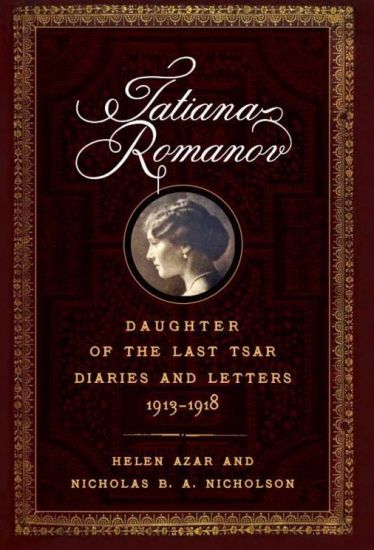
Translated for the First Time in English with Annotations by a Leading Expert, the Romanov Family s Final Years Through the Writings of the Second Oldest Daughter Grand Duchess Tatiana Nikolaevna of Russia was the second of the four daughters of Tsar Nicholas II and his wife, the Empress Alexandra Feodorovna. Long recognized by historians as the undisputed beauty of the family, Tatiana was acknowledged for her poise, her elegance, and her innate dignity within her own family. Helen Azar, translator of the diaries of Olga Romanov, and Nicholas B. A. Nicholson, Russian Imperial historian, have joined together to present a truly comprehensive picture of this extraordinarily gifted, complex, and intelligent woman in her own words. Tatiana Romanov, Daughter of the Last Tsar: Diaries and Letters, 1913 1918," presents translations of material never before published in Russian or in English, as well as materials never published in their entirety in the West.The brisk, modern prose of Tatiana s diary entries reveals the character of a young woman who was far more than the sheltered imperial beauty as she previously has been portrayed. While many historians and writers describe her as a cold, haughty, and distant aristocrat, this book shows instead a remarkably down-to-earth and humorous young woman, full of life and compassion. A detail-oriented and observant participant in some of the most important historical events of the early twentieth century, she left firsthand descriptions of the tercentenary celebrations of the House of Romanov, the early years of Russia s involvement in World War I, and the road to her family s final days in Siberian exile. Her writings reveal extraordinary details previously unknown or unacknowledged. Lavishly annotated for the benefit of the nonspecialist reader, this book is not only a reevaluation of Tatiana s role as more than just one of four sisters, but also a valuable reference on Russia, the First World War, the Russian Revolution, and the people closest to the Grand Duchess and her family."
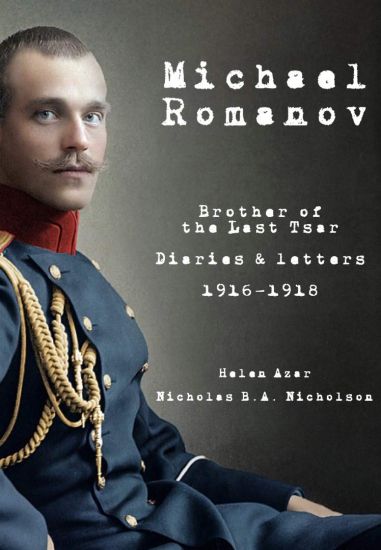
Grand Duke Michael Alexandrovich of Russia (1878-1918) was born the youngest son of Tsar Alexander III, ruler of the mightiest empire on earth. Upon the premature death of his elder brother Grand Duke George in 1899, Michael was thrust into the spotlight as the Heir-Tsesarevich of his older brother, Tsar Nicholas II, then the father of three girls. Even after the birth of an heir in 1904, Michael was pushed closer to the throne with each of the young boy's life-threatening bouts of hemophilia. By 1916, with World War I in full swing, Nicholas and and Empress Alexandra had become deeply unpopular not only in political circles but also with other members of the House of Romanov, who felt that the parlous times required drastic change. Michael found himself at the center of these events and was briefly even named Emperor as they unfolded. In Michael Romanov: Brother of the Last Tsar, translator Helen Azar and Romanov historian Nicholas B. A. Nicholson present for the first time in English Grand Duke Michael's annotated diaries and letters of 1916-1918. These newly available documents offer rare insight into the fall of the Russian Empire, the rise and fall of the Provisional Government that succeeded it, and the terrifying days of the Bolshevik Revolution, after which Michael found himself a prisoner doomed to meet his end in the remote city of Perm, at the edge of Siberia, just over a month before the former Tsar and his family were murdered in Ekaterinburg.
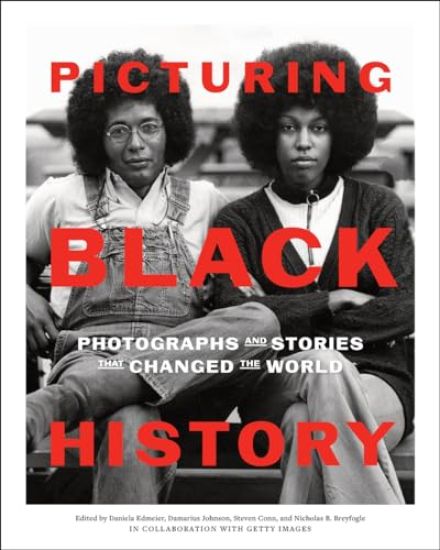
** Nominated for a NAACP Image Award ** A groundbreaking collection of photographs and essays that shed new light on the history of Black America, from the Picturing Black History project. “Stunning . . . Provides fresh perspective on historical photographs and snapshots of Black life.” —NEW YORK TIMES BOOK REVIEW“An astonishing work." —Henry Louis Gates, Jr.Picturing Black History uncovers untold stories and rarely seen images of the Black experience, providing new context around culturally significant moments. This beautiful collectible volume makes a thoughtful gift and is full of rousing, vibrant essays paired with rarely seen photographs that expand our understanding of Black history. The book is a collaborative effort between Getty Images, Origins: Current Events in Historical Perspective, and the History departments at The Ohio State and Miami Universities. It informs, educates, and inspires our current moment by exploring the past, blending the breadth and depth of Getty Images’s archives with the renowned expertise of Origins contributors and The Ohio State’s and Miami’s History departments, including Daniela Edmeier, Damarius Johnson, Nicholas Breyfogle, and Steve Conn. Created by a growing collective of professional historians, art historians, Black Studies scholars, and photographers and showcasing Getty Images’s unmatched collection of photographs, Picturing Black History embraces the power of visual storytelling to relay little-known stories of oppression and resistance, perseverance and resilience, freedom, dreams, imagination, and joy within the United States and around the world. In collecting these new photographic essays, this book furthers an ongoing dialogue on the significance of Black history and Black life, sharing new perspectives on the current status of prejudice and discrimination bias with a wider audience. Picturing Black History uses the latest academic learning and scholarship to recontextualize and dispel prejudices, while uncovering, digitizing, and preserving new archival materials to amplify a more inclusive visual landscape."Picturing Black History offers a trove of both famous and unseen photos with brief, poignant accompanying essays to show not only the centrality of Black people to American history but also how African Americans used the photographer’s lens to tell their own stories. The editors, authors, and Getty images have created a beautiful book that stands on its own as a work of art, a veritable museum in print.” —Henry Louis Gates, Jr., Alphonse Fletcher University Professor, Harvard University
This provocative, intellectually charged treatise serves as a concise introduction to emancipatory gerontology, examining multiple dimensions of persistent and hotly debated topics around aging, the life course, the roles of power, politics and partisanship, culture, economics, and communications. Critical perspectives are presented as definitions for reader understanding, with links to concepts of identity, knowledge construction, social networks, social movements, and inequalities. With today’s intensifying concentration of wealth and corporatization, precarity is the fate for growing numbers of the world’s population. Intersectionality as an analytic concept offers a new appreciation of how social advantage and disadvantage accumulate, and how constructions of race, ethnicity, class, ability, and gender influence aging.The book’s entries offer a bibliographic compendium, crediting the salience of early pioneering theorists and locating these within the cutting-edge of research (social, behavioral, policy, and gene–environment sciences) that currently advances our understandings of human development, trauma, and resilience. Accompanying these foundations are theories of resistance for advancing human rights and the dignity of marginalized populations.
This provocative, intellectually charged treatise serves as a concise introduction to emancipatory gerontology, examining multiple dimensions of persistent and hotly debated topics around aging, the life course, the roles of power, politics and partisanship, culture, economics, and communications. Critical perspectives are presented as definitions for reader understanding, with links to concepts of identity, knowledge construction, social networks, social movements, and inequalities. With today’s intensifying concentration of wealth and corporatization, precarity is the fate for growing numbers of the world’s population. Intersectionality as an analytic concept offers a new appreciation of how social advantage and disadvantage accumulate, and how constructions of race, ethnicity, class, ability, and gender influence aging.The book’s entries offer a bibliographic compendium, crediting the salience of early pioneering theorists and locating these within the cutting-edge of research (social, behavioral, policy, and gene–environment sciences) that currently advances our understandings of human development, trauma, and resilience. Accompanying these foundations are theories of resistance for advancing human rights and the dignity of marginalized populations.
Connectomic Medicine: A Guide to Brain AI in Treatment Decision Planning examines how to apply connectomics to clinical medicine, including discussions on techniques, applications, novel ideas, and in case examples that highlight the state-of-the-art. Written by pioneers, this volume serves as the foundation for all neuroscience clinicians/researchers venturing into the field of AI medicine, its realistic applications, and how to integrate AI connectomics into clinical practice. With widespread applications in neurology, neurosurgery and psychiatry, this book is appropriate for anyone interested in cerebral network anatomy, imaging techniques, and insights into this emerging field.
En cette poque o le nouveau fantasme Internet est de faire l'amour tellement le sexe s'y trouve facilement, un homme et une femme de leur temps se s duisent, se charment et s'exaltent au fil de leurs lettres de noblesse les mieux ficel es. Soyez t moin de cette d lectable romance sentimentale fortement ponctu e der f rences musicales que ces deux amoureux de la langue fran aise se sont v ritablement chang e au gr de ce qui allait produire cette "Relation textuelle", une relation qui d crit une r alit qui va bien au del de la fiction...
Many people struggle to find their purpose; however, their purpose may be to preach the gospel within their space, world, or sphere of influence. This is why we were created-to expand the Kingdom of God using our unique gifts, talents, and experiences across different spheres of society. We are called to influence cultures by bringing the gospel even into the marketplace. This book explains that we were created by God for good works and that we are part of a well-thought-out plan, regardless of how we were conceived. As believers, this is our inheritance, and we ought to walk in our identity as sons of God. We were created, molded, and fashioned in Christ to produce good works, not in our own strength and ability but through total reliance on Him. Dino B. Nicholas has written a wonderful book called Being Used Of God: A Reed Shaken in the Wind. Not only does he communicate the journey of great leaders who were used mightily by God throughout the scriptures, but he also discusses the startling message of Jesus: how He came not to be served but to serve. Jesus came to pour out His life in service; consequently, we ought to give our lives in service to Him and others. One incredible chapter in this book is "The Fear of God: The Defining Characteristic " In it, Dino Nicholas contrasts King Saul, who had the fear of man and the need to please people, with King David, who feared God and received the affirmation that he was a man after God's own heart who would fulfill His will and purposes. Dino Nicholas also describes the focus of the seeker church, which is not Christ-centered but man-centered. The main purpose of the seeker church is to give people what they want or meet their felt needs, thus denying Jesus as Lord in their lives. He likens today's church to the state of the Laodicean church, characterized by lukewarmness. Jesus wasn't speaking to unbelievers when He rebuked the Laodicean Church, which was neither cold nor hot. The Greek meaning of Laodicean actually means "in place of the people for common fairness," or in other words, "justice for the people." Dino Nicholas also poses a thought-provoking question: "Is it possible for a movement to be successful from a human perspective but be unacceptable to God?" I highly recommend this book for ministers and anyone who desires to be used by God, walking out their calling and purpose. Enjoy these pages, which are filled with rhema words and compelling truths that will stir and ignite a passionate desire to serve the Lord no matter the cost. May you answer the call to be used by God Dr. Hope McDowell GibsonFounder & President of HANS TV Network & Senior Pastor, No Limits Ministries International
Nicholas de Antioquia, um grande comerciante na regi o do Alto Egito, sempre grato por suas conquistas, ao ver uma estrela cadente no teatro da cidade de B-Qarin, sente nascer dentro de si um desejo muito forte de retribuir quela cidade e as pessoas daquela regi o que o ajudaram a chegar onde est . Construir um farol que ajudasse na navega o noturna, mas tamb m criar um local onde as pessoas pudessem apreciar a paisagem noturna e adquirir um pouco de conhecimento naquele lugar inspirador.Na constru o do farol, aparece Youssef um simples, mas talentoso carpinteiro que veio do outro lado do mar com sua fam lia, fugindo de uma persegui o, encontra Mizael que lhe oferece um emprego na sua modesta carpintaria, neste lugar tem um encontro com Abel. E esse encontro ir transformar a vida desse rapaz para sempre.No farol est The filus, homem de confian a de Nicholas, respons vel pela administra o do farol e da biblioteca, at que em um belo dia de s bado por volta do meio-dia, eis que chega um jovem a procura do amigo de Deus, pois em algo a lhe entregar. Ele se chama Num, vem da parte de seu pai que est doente, Lamed. A partir desse encontro a vida de The filus ir sofrer uma grande transforma o e lhe dar um sentido novo, apesar da idade avan ada.
Set as a fairy-tale in a small friendly village, we follow the story of Sophie and her two younger sisters, a kind hearted boy called Nicholas, and his cruel father, the landlord. Written as a children's short story, or to be read to younger children, this tale explores some of the mythical origins of our favourite Christmas traditions. Why do we have trimmings? Where did the idea for Christmas stockings and chocolate coins come from? And of course - Who is Santa Claus? Well, dear reader ... one version of events is here, in this book.
During World War II, the United States drafted 10.1 million men to serve in the military. Of that number, 52,000 were conscientious objectors, and 12,000 objected to noncombatant military service. Those 12,000 men served the country in Civilian Public Service, the program initiated by General Lewis Blaine Hershey, the director of Selective Service from 1941 to1970. Despite his success with this program, much of Hershey's work on behalf of conscientious objectors has been overlooked due to his later role in the draft during the Vietnam War. Seeking to correct these omissions in history, Nicholas A. Krehbiel provides the most comprehensive and well-rounded examination to date of General Hershey's work as the developer and protector of alternative service programs for conscientious objectors. Hershey, whose Selective Service career spanned three major wars and six presidential administrations, came from a background with a tolerance for pacifism. He served in the National Guard and later served in both World War I and the interwar army. A lifelong military professional, he believed in the concept of the citizen soldier - the civilian who responded to the duty of service when called upon. Yet embedded in that idea was his intrinsic belief in the American right to religious freedom and his notion that religious minorities must be protected. What to do with conscientious objectors has puzzled the United States throughout its history, and prior to World War II, there was no unified system for conscientious objectors. The Selective Service Act of 1917 only allowed conscientious objection from specific peace sects, and it had no provisions for public service. In action, this translated to poor treatment of conscientious objectors in military prisons and camps during World War I. In response to demands by the Historic Peace Churches (the Brethren, Mennonites, and the Society of Friends) and other pacifist groups, the government altered language in the Selective Service Act of 1940, stating that conscientious objectors should be assigned to noncombatant service in the military but, if opposed to that, would be assigned to 'work of national importance under civilian direction.' Under the direction of President Franklin D. Roosevelt and with the cooperation of the Historic Peace Churches, Hershey helped to develop Civilian Public Service in 1941, a program that placed conscientious objectors in soil conservation and forestry work camps, with the option of moving into detached services as farm laborers, scientific test subjects, and caregivers, janitors, and cooks at mental hospitals. Although the Civilian Public Service program only lasted until 1947, alternative service was required for all conscientious objectors until the end of the draft in 1973. Krehbiel delves into the issues of minority rights versus mandatory military service and presents General Hershey's pivotal role in the history of conscientious objection and conscription in American history. Archival research from both Historic Peace Churches and the Selective Service makes General Lewis B. Hershey and Conscientious Objection during World War II the definitive book on this subject.