Kirjojen hintavertailu. Mukana 11 699 587 kirjaa ja 12 kauppaa.

Kirjahaku

Etsi kirjoja tekijän nimen, kirjan nimen tai ISBN:n perusteella.

1000 tulosta hakusanalla Nicholas Hudson

Nicholas Culpeper

Nicholas Culpeper

Olav Thulesius

Palgrave Macmillan
1992
sidottu
'Olav Thulesius sets out to resurrect the sullied reputation of one of the most prolific writers of medical works during the Interregnum. - Thulesius has given us a welcome beginning of a study of a fascinating and neglected figure who made serious contributions to mid-seventeenth-century medicine while always living on the fringes of the established and licensed medical community.' - Martha Baldwin, Journal of the History or Medicine Was Nicholas Culpeper (1616-54) the father of English herbal medicine or a quacksalver and charlatan astrologer? This first modern biography shows a more complex picture. For example during the Civil War the Puritan Culpeper was wounded while fighting on the Parliamentarian side, as a physician of the poor, he had a burning desire to explain the secrets of medicine to ordinary people, He was not only the author of the famous herbal The English Physician but he also wrote the first book on midwifery and childcare and translated The London Pharmacopoeia.
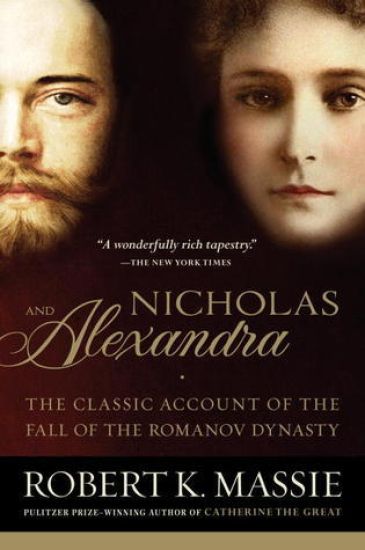
Nicholas and Alexandra

Nicholas and Alexandra

Robert K. Massie

Ballantine Books Inc.
2000
pokkari
Massie offers a moving, tragic, and unforgettable account of the extraordinary Imperial dynasty of Tsar Nicholas II, his doomed empire, and a revolution that would inexorably change the world forever. "A larger than life drama."--Saturday Review
Nicholas Nickleby; or, The Life and Adventures of Nicholas Nickleby is a novel by Charles Dickens
Nicholas Nickleby; or, The Life and Adventures of Nicholas Nickleby is a novel by Charles Dickens. Originally published as a serial from 1838 to 1839, it was Dickens's third novel. The novel centres on the life and adventures of Nicholas Nickleby, a young man who must support his mother and sister after his father dies. Nicholas Nickleby is Charles Dickens's third published novel. He returned to his favourite publishers and to the format that was considered so successful with The Pickwick Papers. The story first appeared in monthly parts, after which it was issued in one volume. The style is considered to be episodic and humorous, though the second half of the novel becomes more serious and tightly plotted. Dickens began writing Nickleby while still working on Oliver Twist and while the mood is considerably lighter, his depiction of the Yorkshire school run by Wackford Squeers is as moving and influential as those of the workhouse and criminal underclass in Twist.
Nicholas Love's Mirror and Late Medieval Devotio-Literary Culture
Surviving in 59 complete manuscript versions, few English texts of the late medieval period seem to have achieved the popularity of Nicholas Love's fifteenth-century translation and adaptation of the Latin Meditationes Vitae Christi - The Mirror of the Blessed Life of Jesus Christ. The Mirror has received surprisingly little scholarly attention and is often contextualized in terms of its role in the theological conflict between English ecclesiastical orthodoxy and the teachings of heresiarch John Wycliff. David Falls presents a new account of the text's history which de-centralises, but does not disregard, the influence of the Wycliffite controversy. Falls interrogates preconceptions and investigates new possibilities for understanding the composition, circulation, function and use of Love's Mirror by examining both the textual modifications and additions made by Love in his adaptation of the Latin, and places these alterations in context by examining individual copies of the Mirror. The manuscript copies are read as both sites of literary consumption and nexuses of textual transition, demonstrating that it was Love's ability to inscribe his work with "functional diversity" which explains the Mirror's popularity. This book presents a nuanced picture not only of the Mirror's production, circulation and function, but also the dynamic and flourishing devotio-literary culture of late medieval England in which Love's text operated.
Nicholas I and Official Nationality in Russia 1825 - 1855

Nicholas I and Official Nationality in Russia 1825 - 1855

Nicholas V. Riasanovsky

University of California Press
1969
pokkari
Nicholas I and Official Nationality in Russia, 1825 - 1855 developed from a much more modest interest in Uvarov's doctrine of "Orthodoxy, autocracy, and nationality." During the author's study of the Slavophiles in particular, he became increasing aware of the paucity of our knowledge of this so-called Official Nationality frequently combined with a deprecating attitude toward it. Unable to find a satisfactory analysis of the subject, the author proceeded to write his own. This book largely organized itself: an exposition and discussion of the ideology naturally occupied the central position, preceded by a brief treatment of its proponents. But Official Nationality reached beyond intellectual circles, lectures and books; indeed, for thirty years it ruled Russia. Therefore, the author found it necessary to write a chapter on the emperor who, in effect, personally dominated and governed the country throughout his reign; to add a section on the imperial family, the ministers, and some other high officials to an account of the intellectuals who supported the state; and to sketch the application of Official Nationalty both in home affairs and in foreign policy. In this manner this title is able to bring the state doctrine and its role in Russian history into proper focus.
Nicholas of Cusa: The Catholic Concordance

Nicholas of Cusa: The Catholic Concordance

Nicholas of Cusa

Cambridge University Press
1991
sidottu
Now available in paperback, this is the first English translation of the most important work of political thought of the fifteenth century. The Catholic Concordance is the first major treatise to argue for consent through representative councils as a major prerequisite for legitimate law and government, and is the most learned and original work associated with the conciliar movement in the late medieval church. Cusa’s arguments influenced such thinkers as Luther, Bruno and Locke, and Professor Sigmund’s introduction places his work in its full historical and philosophical context. The volume contains all the standard series features including a chronology, note on sources and bibliography, and as one of the earliest formulations of the view that political legitimacy rests on consent, The Catholic Concordance will be of interest to a wide range of scholars and students of the history of European ideas.
Nicholas of Cusa: The Catholic Concordance
Now available in paperback, this is the first English translation of the most important work of political thought of the fifteenth century. The Catholic Concordance is the first major treatise to argue for consent through representative councils as a major prerequisite for legitimate law and government, and is the most learned and original work associated with the conciliar movement in the late medieval church. Cusa’s arguments influenced such thinkers as Luther, Bruno and Locke, and Professor Sigmund’s introduction places his work in its full historical and philosophical context. The volume contains all the standard series features including a chronology, note on sources and bibliography, and as one of the earliest formulations of the view that political legitimacy rests on consent, The Catholic Concordance will be of interest to a wide range of scholars and students of the history of European ideas.
Nicholas Wiseman

Nicholas Wiseman

Brian Fothergill

Faber Faber
2013
nidottu
Nicholas Wiseman was not yet 26 years of age when he became rector of the English College in Rome. Pope Leo XII then made him curator of Arabic manuscripts in the Vatican, and professor of Oriental languages at the Roman University. But in 1840 this brilliant scholar returned to England, where he did much to bridge the gap between the Oxford Movement and the English Catholic community.However in 1850 Wiseman found himself at the centre of a violent political storm when Pius IX named him first Archbishop of Westminster. Wiseman's coach was pelted with stones; the cry of 'Papal Aggression' was taken up in official circles; and it was only Wiseman's eloquent pamphlet Appeal to the English People which served to usher in a more tolerant attitude.