Kirjojen hintavertailu. Mukana 12 390 323 kirjaa ja 12 kauppaa.

Kirjahaku

Etsi kirjoja tekijän nimen, kirjan nimen tai ISBN:n perusteella.

1000 tulosta hakusanalla Nicholas Shakespeare

Shakespeare: Three Problem Plays

Shakespeare: Three Problem Plays

Nicholas Marsh

Red Globe Press
2002
sidottu
Written in 1602-4, between Hamlet and the other great tragedies, Shakespeare's three Problem Plays are so called because they do not fit easily into the other groups of plays. They are awkward dramas, full of unresolved controversies, which leave audiences and readers unsettled by contradictory responses.Nicholas Marsh uses close analysis of extracts from the plays to explore how Shakespeare maintains competing discourses within a single text. In the first part of his study, Marsh highlights the multiple interpretations these plays provoke and provides useful sections on methods of analysis to encourage readers to develop their views independently. The second part of the book discusses the Problem Plays in relation to the playwright's other works, and examines their cultural and historical contexts. A comparison of five modern critical views and helpful suggestions for further reading provide a bridge to continuing study. In this essential guide to a complex set of plays, Marsh does not seek to reconcile the thorny issues these dramas leave open: rather, he equips the reader with the necessary critical tools to fashion their own synthesis.
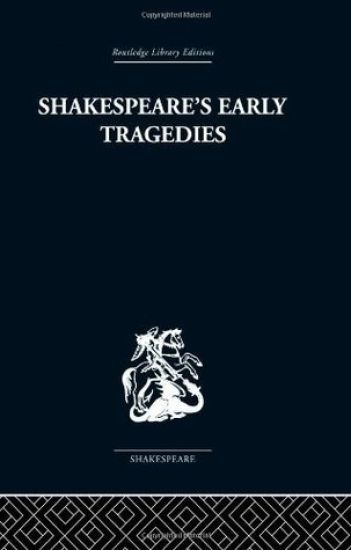
Shakespeare's Early Tragedies

Shakespeare's Early Tragedies

Nicholas Brooke

Routledge
2004
sidottu
First published in 1968. Shakespeare's Early Tragedies contains studies of six plays: Titus Andronicus, Richard III, Romeo and Juliet, Richard II, Julius Caesar and Hamlet. The emphasis is on the variety of the plays, and the themes, a variety which has been too often obscured by the belief in a single 'tragic experience'. The kind of experience the plays create and their quality as dramatic works for the stage are also examined. These essays develop an understanding of Shakespeare's use of the stage picture in relation to the emblematic imagery of Elizabethan poetry.
Shakespeare's Early Tragedies

Shakespeare's Early Tragedies

Nicholas Brooke

Routledge
2013
nidottu
First published in 1968. Shakespeare's Early Tragedies contains studies of six plays: Titus Andronicus, Richard III, Romeo and Juliet, Richard II, Julius Caesar and Hamlet. The emphasis is on the variety of the plays, and the themes, a variety which has been too often obscured by the belief in a single 'tragic experience'. The kind of experience the plays create and their quality as dramatic works for the stage are also examined. These essays develop an understanding of Shakespeare's use of the stage picture in relation to the emblematic imagery of Elizabethan poetry.
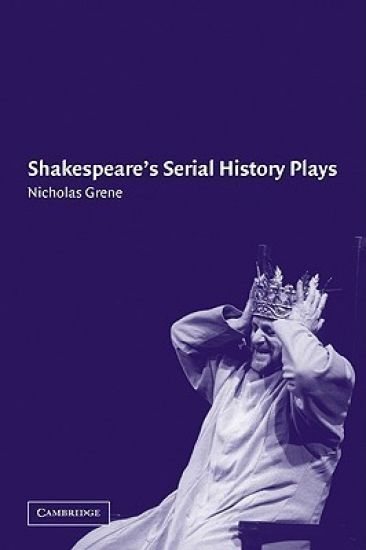
Shakespeare's Serial History Plays

Shakespeare's Serial History Plays

Nicholas Grene

Cambridge University Press
2007
pokkari
Shakespeare's Serial History Plays provides a re-reading of the two sequences of English history plays, Henry VI-Richard III and Richard II-Henry V. Reconsidering the chronicle sources and the staging practices of Shakespeare's time, Grene argues that the history plays were originally designed for serial performance. He charts the cultural and theatrical conditions that led to serial productions of the histories, in Europe as well as in the English-speaking world, and looks at their original creation in the 1590s and at modern productions or adaptations, from famous stagings such as the Royal Shakespeare Company's 1960s Wars of the Roses through to the present day. Grene focuses on the issues raised by the plays' seriality: the imagination of war, the emergence of character, and the uses of prophecies and curses through the first four; techniques of retrospection, hybrid dramatic forms, and questions of irony and agency in the second.
Shakespeare's Serial History Plays

Shakespeare's Serial History Plays

Nicholas Grene

Cambridge University Press
2002
sidottu
Shakespeare's Serial History Plays provides a re-reading of the two sequences of English history plays, Henry VI-Richard III and Richard II-Henry V. Reconsidering the chronicle sources and the staging practices of Shakespeare's time, Grene argues that the history plays were originally designed for serial performance. He charts the cultural and theatrical conditions that led to serial productions of the histories, in Europe as well as in the English-speaking world, and looks at their original creation in the 1590s and at modern productions or adaptations, from famous stagings such as the Royal Shakespeare Company's 1960s Wars of the Roses through to the present day. Grene focuses on the issues raised by the plays' seriality: the imagination of war, the emergence of character, and the uses of prophecies and curses through the first four; techniques of retrospection, hybrid dramatic forms, and questions of irony and agency in the second.
Shakespeare's Political Spirit

Shakespeare's Political Spirit

Nicholas Luke

Cambridge University Press
2024
sidottu
This exciting and challenging study reorients how we think about politics in Shakespeare and on the early modern stage. By reading Shakespeare's political drama as a negative mode of political experience and thought, Nicholas Luke allows us to appreciate the imaginative and disruptive elements of plays that might seem politically pessimistic. Drawing on a long religious and philosophical tradition of negativity and considering the writings of Hegel, Kierkegaard, Benjamin, Adorno, Derrida and Badiou, Luke pursues a phenomenology of political spirit that looks to the creative potential of experiences of failure, haunting, estrangement, impasse and dream. Through his notion of a negative political theology, he challenges traditional understandings of political theology and shows that Shakespeare's drama of negativity is more than a form of pessimistic critique, but rather a force of freedom and invention that animates the political imaginations of its audience.
Shakespeare’s Theatre of War

Shakespeare’s Theatre of War

Nicholas de Somogyi

Routledge
2016
nidottu
The period between 1585 (when Elizabeth formally committed her military support to the Dutch wars against Spain) and 1604 (when James at last brought it to an end) was one in which English life was preoccupied by the menace and actuality of war. The same period spans English drama’s coming of age, from Tamburlaine to Hamlet. In this thought-provoking book, Nick de Somogyi draws on a wide range of contemporary military literature (news-letters and war-treatises, maps and manuals), to demonstrate how deeply wartime experience influenced the production and reception of Elizabethan theatre. In a series of vivid parallels, the roles of soldier and actor, the setting of battlefield and stage, and the context of playhouse and muster are shown to have been rooted in the common experience of war. The local armoury served as a props department; the stage as a military lecture-hall. News from the front line has always been shrouded in the fog of war. Shakespeare’s Rumour is here seen as kindred to such equally dubious messengers as his Armado, Falstaff or Pistol; soldiers have always told tall tales, military ghost-stories that are here shown to have seeped into such narratives as The Spanish Tragedy and Henry V. This book concludes with a sustained account of Hamlet, a play which both dramatises the Elizabethan context of war-fever, and embodies in its three variant texts the war and peace that shaped its production. By affording scrutiny to each of its title’s components, Shakespeare’s Theatre of War provides a compelling argument for reassessing the drama of Shakespeare and his contemporaries within the enduring context of the military culture and wartime experience of his age.
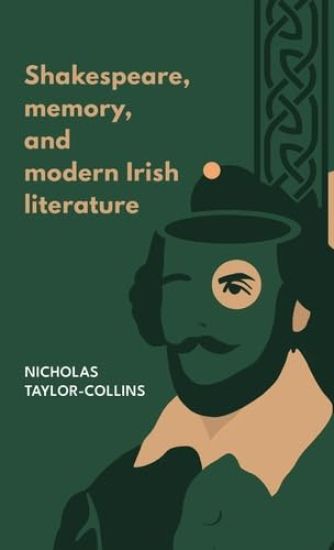
Shakespeare, Memory, and Modern Irish Literature

Shakespeare, Memory, and Modern Irish Literature

Nicholas Taylor-Collins

MANCHESTER UNIVERSITY PRESS
2023
sidottu
This original and innovative book proposes ‘dismemory’ as a new form of intertextual engagement with Shakespeare by modern and contemporary Irish writers. Through reflection on these canonical writers and ranging across thirteen Shakespeare plays, Taylor-Collins demonstrates how Irish writers who helped to fashion and critique the Irish nation state carry an indelible, if often subdued, mark of Shakespeare’s early modern English influence.The volume overall renews and revitalises the Shakespeare–modern Ireland connection: Taylor-Collins reveals Hamlet’s hauntological legacy in Playboy of the Western World, Ulysses, and Ghosts; how the corporal economies that exert pressure from Coriolanus and Ben Jonson flicker through to the antiheroes in Beckett’s Three Novels; and how the landed legacies of territorial contests in Shakespeare are engaged with in Yeats’s poetry, and similarly how the diseased muddiness in Hamlet is addressed by Heaney.
Shakespeare’s Theatre of War

Shakespeare’s Theatre of War

Nicholas de Somogyi

Ashgate Publishing Limited
1998
sidottu
The period between 1585 (when Elizabeth formally committed her military support to the Dutch wars against Spain) and 1604 (when James at last brought it to an end) was one in which English life was preoccupied by the menace and actuality of war. The same period spans English drama’s coming of age, from Tamburlaine to Hamlet. In this thought-provoking book, Nick de Somogyi draws on a wide range of contemporary military literature (news-letters and war-treatises, maps and manuals), to demonstrate how deeply wartime experience influenced the production and reception of Elizabethan theatre. In a series of vivid parallels, the roles of soldier and actor, the setting of battlefield and stage, and the context of playhouse and muster are shown to have been rooted in the common experience of war. The local armoury served as a props department; the stage as a military lecture-hall. News from the front line has always been shrouded in the fog of war. Shakespeare’s Rumour is here seen as kindred to such equally dubious messengers as his Armado, Falstaff or Pistol; soldiers have always told tall tales, military ghost-stories that are here shown to have seeped into such narratives as The Spanish Tragedy and Henry V. This book concludes with a sustained account of Hamlet, a play which both dramatises the Elizabethan context of war-fever, and embodies in its three variant texts the war and peace that shaped its production. By affording scrutiny to each of its title’s components, Shakespeare’s Theatre of War provides a compelling argument for reassessing the drama of Shakespeare and his contemporaries within the enduring context of the military culture and wartime experience of his age.
Shakespeare, Memory, and Modern Irish Literature

Shakespeare, Memory, and Modern Irish Literature

Nicholas Taylor-Collins

MANCHESTER UNIVERSITY PRESS
2026
nidottu
This original and innovative book proposes ‘dismemory’ as a new form of intertextual engagement with Shakespeare by modern and contemporary Irish writers. Through reflection on these canonical writers and ranging across thirteen Shakespeare plays, Taylor-Collins demonstrates how Irish writers who helped to fashion and critique the Irish nation state carry an indelible, if often subdued, mark of Shakespeare’s early modern English influence. The volume overall renews and revitalises the Shakespeare–modern Ireland connection: Taylor-Collins reveals Hamlet’s hauntological legacy in Playboy of the Western World, Ulysses, and Ghosts; how the corporal economies that exert pressure from Coriolanus and Ben Jonson flicker through to the antiheroes in Beckett’s Three Novels; and how the landed legacies of territorial contests in Shakespeare are engaged with in Yeats’s poetry, and similarly how the diseased muddiness in Hamlet is addressed by Heaney.
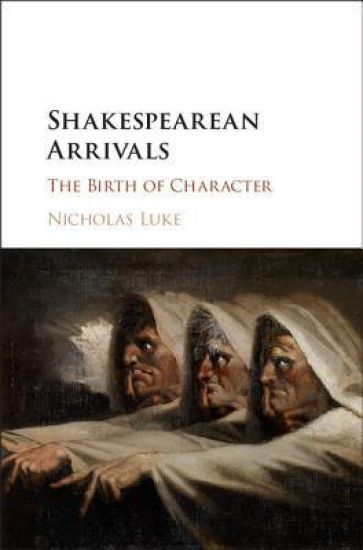
Shakespearean Arrivals

Shakespearean Arrivals

Nicholas Luke

Cambridge University Press
2018
sidottu
In this distinctive study, Nicholas Luke explores the abiding power of Shakespeare's tragedies by suggesting an innovative new model of his character creation. Rather than treating characters as presupposed beings, Luke shows how they arrive as something more than functional dramatis personae - how they come to life as 'subjects' - through Shakespeare's orchestration of transformational dramatic events. Moving beyond dominant critical modes, Luke combines compelling close readings of Romeo and Juliet, Othello, Hamlet, Macbeth, and King Lear with an accessible analysis of thinkers such as Badiou, Žižek, Bergson, Whitehead and Latour, and the 'adventist' Christian tradition flowing from Saint Paul through Luther to Kierkegard. Representing a significant intervention into the way we encounter Shakespeare's tragic figures, the book argues for a subjectivity which is not singular or abiding, but perilous and leaping.
Shakespearean Arrivals

Shakespearean Arrivals

Nicholas Luke

Cambridge University Press
2022
pokkari
In this distinctive study, Nicholas Luke explores the abiding power of Shakespeare's tragedies by suggesting an innovative new model of his character creation. Rather than treating characters as presupposed beings, Luke shows how they arrive as something more than functional dramatis personae - how they come to life as 'subjects' - through Shakespeare's orchestration of transformational dramatic events. Moving beyond dominant critical modes, Luke combines compelling close readings of Romeo and Juliet, Othello, Hamlet, Macbeth, and King Lear with an accessible analysis of thinkers such as Badiou, Žižek, Bergson, Whitehead and Latour, and the 'adventist' Christian tradition flowing from Saint Paul through Luther to Kierkegard. Representing a significant intervention into the way we encounter Shakespeare's tragic figures, the book argues for a subjectivity which is not singular or abiding, but perilous and leaping.
Shakespeare -"Othello"

Shakespeare -"Othello"

Potter Nicholas

Columbia University Press
2001
sidottu
This guide for students examines the history of critical reactions to Shakespeare's Othello . While the play has fascinated critics since Shakespeare's time, Potter's (Swansea Institute of Higher Education) main emphasis is on 20th century criticism. Coverage includes Thomas Rymer's A Short View of
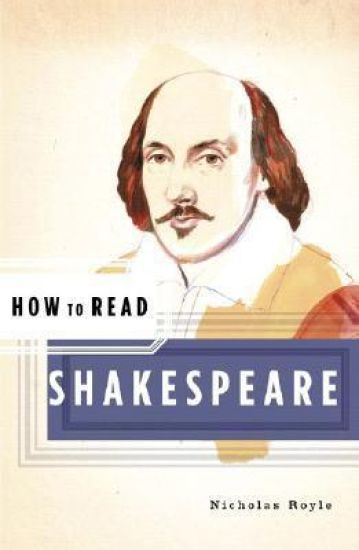
How to Read Shakespeare

How to Read Shakespeare

Nicholas Royle

WW Norton Co
2005
pokkari
Approaching the writing of major intellectuals, artists, and philosophers need no longer be daunting. How to Read is a new sort of introduction--a personal master class in reading--that brings you face to face with the work of some of the most influential and challenging writers in history. In lucid, accessible language, these books explain essential topics such as Shakespeare's passion for complexity and his enduring ability to portray the power of love. Nicholas Royle conveys the richness and complexity of Shakespeare's work by focusing, above all, on how to read and enjoy short passages and interpret specific words from the plays and poems themselves. Discussing poetry and the question of reading, to the nature of memory and forgetting, to the power of love, Royle covers many of Shakespeare's most prevalent themes. Attention is also given to important aspects of historical context and critical reception and debate, as well as to the effects of different interpretations and different media (stage, film, the Internet, and more). Royle's primary concern, however, is with letting the reader experience anew or for the first time the extraordinary pleasure and stimulation of reading Shakespeare. Extracts are taken from a range of Shakespeare's works including Romeo and Juliet, A Midsummer Night's Dream, Hamlet, Twelfth Night, Othello, The Winter's Tale, and the Sonnets."
The Life of William Shakespeare

The Life of William Shakespeare

Nicholas Rowe

PALLAS ATHENE PUBLISHERS
2024
nidottu
This rare text is the first ever biography of Shakespeare, written by one of the liveliest dramatists and poets of the early 18th century. This landmark in our understanding of the man and his work is introduced by one of the most original biographers of our own time and richly illustrated with contemporary images. Nicholas Rowe’s Some Account of the Life of Mr. William Shakespear was published in 1709 as the preface to his pioneering edition of the plays. Rowe, together with Thomas Betterton, the greatest actor of the period, carried out archival research and interviewed widely to collect as much information about Shakespeare as possible. This is as close as we will ever get to the people who knew and worked with Shakespeare. Rowe’s edition of the plays was also the first to be illustrated. This edition has 25 pages of these fascinating early images, mostly based on contemporary performance: a unique and charming picture of Shakespeare in performance.
Autobiography in Shakespeare's Plays

Autobiography in Shakespeare's Plays

W. Nicholas Knight

Peter Lang Publishing Inc
2004
nidottu
Shakespeare's authorship of his plays can no longer be in doubt with this book's clear identification of autobiographical passages throughout his work from his legal documents in Stratford and London courts. Shakespeare refers to the loss of his inheritance, by his father mortgaging it to his uncle, from early works such as "Taming of the Shrew" to the late "Lear." His mother is referred to in "As You Like It" and "Coriolanus"; his twins in "Comedy of Errors" and "Twelfth Night"; and the loss of his son from "Merchant of Venice" to "Macbeth." His daughters, as recipients of his accumulated wealth, are subjects of his concern from "Lear" to "The Tempest." More important, the knowledge of the law in his personal pursuits is revealed as a source for the legal content in his works, which found fit audiences among jurists at the Inns of Court law schools and in King James' Court. Shakespeare pleased the king on these matters enough to have him command his plays to be repeated on an occasion. For himself, Shakespeare learned from his own writing how to deal with the language of law theoretically and conceptually with such concepts as equity and mercy in Chancery. He used his own family life, personal documents, and legal problems to give impetus to his version of borrowed characters, plots, plays, and history. These personal events, from the placement of the references, give his plays, which sometimes end with a fictionalized, wish-fulfillment, or literary compensation, an autobiographical initial compulsion.
Shakespeare On Stage: Volume 2

Shakespeare On Stage: Volume 2

Julian Curry; Nicholas Hytner

Nick Hern Books
2017
nidottu
'This book gives some of the very best of Shakespeare’s twenty-first-century colleagues an opportunity to share insights that can only come from playing him' Nicholas Hytner, from his Foreword Twelve leading actors take us behind the scenes of landmark Shakespearean productions, each recreating in detail their memorable performance in a major role. Roger Allam on his Falstaff in both Henry IV plays at Shakespeare’s GlobeEileen Atkins on Viola in two productions of Twelfth Night seventeen years apartSimon Russell Beale on Cassius in Deborah Warner’s modern-dress Julius CaesarChiwetel Ejiofor on his Donmar Warehouse Othello, directed by Michael GrandageSara Kestelman on Hippolyta and Titania in Peter Brook’s iconic white-box DreamIan McKellen on one of Shakespeare’s most demanding of roles: King LearMichael Pennington on stepping in at the eleventh hour as Timon of AthensAlan Rickman on re-evaluating the melancholic Jaques in As You Like ItFiona Shaw on Shakespeare’s Shrew, Katherine, in Jonathan Miller’s productionPatrick Stewart on his Las Vegas-set Shylock, a role he has played many timesHarriet Walter on Imogen in Shakespeare’s late romance, Cymbeline, at the RSCZoë Wanamaker on her National Theatre Beatrice, directed by Nicholas Hytner Each actor leads us through the choices they made in rehearsal, and how the character works in performance, shedding new light on some of the most challenging roles in the canon. The result is a series of individual masterclasses that will be invaluable for other actors and directors, as well as students of Shakespeare – and fascinating for audiences of the plays. Shakespeare On Stage: Volume 2 was shortlisted for the 2018 Theatre Book Prize. ‘Absorbing and original… Curry’s actors are often thinking and talking as that other professional performer, Shakespeare himself, might have done.’ TLS on Shakespeare On Stage: Vol. 1
Cognition, Mindreading, and Shakespeare's Characters

Cognition, Mindreading, and Shakespeare's Characters

Nicholas R. Helms

Springer Nature Switzerland AG
2019
sidottu
Cognition, Mindreading, and Shakespeare's Characters brings cognitive science to Shakespeare, applying contemporary theories of mindreading to Shakespeare’s construction of character. Building on the work of the philosopher Alvin Goldman and cognitive literary critics such as Bruce McConachie and Lisa Zunshine, Nicholas Helms uses the language of mindreading to analyze inference and imagination throughout Shakespeare’s plays, dwelling at length on misread minds in King Lear, Much Ado About Nothing, Othello, and Romeo and Juliet. Shakespeare manipulates the mechanics of misreading to cultivate an early modern audience of adept mindreaders, an audience that continues to contemplate the moral ramifications of Shakespeare’s characters even after leaving the playhouse. Using this cognitive literary approach, Helms reveals how misreading fuels Shakespeare’s enduring popular appeal and investigates the ways in which Shakespeare’s characters can both corroborate and challenge contemporary cognitive theories of the human mind.