Kirjojen hintavertailu. Mukana 11 244 527 kirjaa ja 12 kauppaa.

Kirjahaku

Etsi kirjoja tekijän nimen, kirjan nimen tai ISBN:n perusteella.

1000 tulosta hakusanalla Oleg Sotnikov

Handbook of Non-Ferrous Metal Powders

Handbook of Non-Ferrous Metal Powders

Oleg D Neikov; N. A. Yefimov; Stanislav Naboychenko

Elsevier / The Lancet
2018
sidottu
Handbook of Non-Ferrous Metal Powders: Technologies and Applications, Second Edition, provides information on the manufacture and use of powders of non-ferrous metals that has taken place for many years in the area previously known as Soviet Russia. It presents the huge amount of knowledge and experience that has built up over the last fifty years. Originally published in Russia by several prominent scientists, researchers and engineers, this presents an update to the first book that includes sections on classification, properties, treatment methods and production. This updated edition contains new content on the powders, along with newer methods of 3D printing.
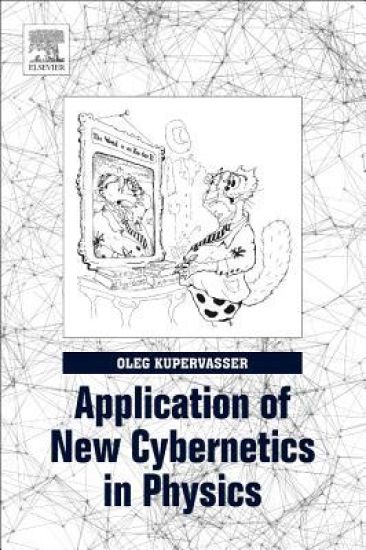
Application of New Cybernetics in Physics

Application of New Cybernetics in Physics

Oleg Kupervasser

Elsevier Science Publishing Co Inc
2017
nidottu
Application of New Cybernetics in Physics describes the application of new cybernetics to physical problems and the resolution of basic physical paradoxes by considering external observer influence. This aids the reader in solving problems that were solved incorrectly or have not been solved. Three groups of problems of the new cybernetics are considered in the book: (a) Systems that can be calculated based on known physics of subsystems. This includes the external observer influence calculated from basic physical laws (ideal dynamics) and dynamics of a physical system influenced even by low noise (observable dynamics). (b) Emergent systems. This includes external noise from the observer by using the black box model (complex dynamics), external noise from the observer by using the observer’s intuition (unpredictable dynamics), defining boundaries of application of scientific methods for system behavior prediction, and the role of the observer’s intuition for unpredictable systems. (c) Methods for solution of basic physical paradoxes by using methods of the new cybernetics: the entropy increase paradox, Schrödinger’s cat paradox (wave package reduction in quantum mechanics), the black holes information paradox, and the time wormholes grandfather paradox. All of the above paradoxes have the same resolution based on the principles of new cybernetics. Indeed, even a small interaction of an observer with an observed system results in their time arrows’ alignment (synchronization) and results in the paradox resolution and appearance of the universal time arrow.
Flowers of Greece and the Balkans

Flowers of Greece and the Balkans

Oleg Polunin

Oxford University Press
1987
nidottu
Almost 3,000 species of flowering plants are named or described and keyed in this, the third of Oleg Polunin's guides to the flowers of Europe. The author describes the 16 richest plant hunting areas from his own experience travelling in the area. The 461 colour photographs on 64 plates are supplemented by illustrations of characteristic plants in each region, and line drawings of diagnostic features of selected plants.
Inventing the Way of the Samurai

Inventing the Way of the Samurai

Oleg Benesch

Oxford University Press
2014
sidottu
Inventing the Way of the Samurai examines the development of the 'way of the samurai' - bushido - which is popularly viewed as a defining element of the Japanese national character and even the 'soul of Japan'. Rather than a continuation of ancient traditions, however, bushido developed from a search for identity during Japan's modernization in the late nineteenth century. The former samurai class were widely viewed as a relic of a bygone age in the 1880s, and the first significant discussions of bushido at the end of the decade were strongly influenced by contemporary European ideals of gentlemen and chivalry. At the same time, Japanese thinkers increasingly looked to their own traditions in search of sources of national identity, and this process accelerated as national confidence grew with military victories over China and Russia. Inventing the Way of the Samurai considers the people, events, and writings that drove the rapid growth of bushido, which came to emphasize martial virtues and absolute loyalty to the emperor. In the early twentieth century, bushido became a core subject in civilian and military education, and was a key ideological pillar supporting the imperial state until its collapse in 1945. The close identification of bushido with Japanese militarism meant that it was rejected immediately after the war, but different interpretations of bushido were soon revived by both Japanese and foreign commentators seeking to explain Japan's past, present, and future. This volume further explores the factors behind the resurgence of bushido, which has proven resilient through 130 years of dramatic social, political, and cultural change.
Inventing the Way of the Samurai

Inventing the Way of the Samurai

Oleg Benesch

Oxford University Press
2016
nidottu
Inventing the Way of the Samurai examines the development of the 'way of the samurai' - bushido - which is popularly viewed as a defining element of the Japanese national character and even the 'soul of Japan'. Rather than a continuation of ancient traditions, however, bushido developed from a search for identity during Japan's modernization in the late nineteenth century. The former samurai class were widely viewed as a relic of a bygone age in the 1880s, and the first significant discussions of bushido at the end of the decade were strongly influenced by contemporary European ideals of gentlemen and chivalry. At the same time, Japanese thinkers increasingly looked to their own traditions in search of sources of national identity, and this process accelerated as national confidence grew with military victories over China and Russia. Inventing the Way of the Samurai considers the people, events, and writings that drove the rapid growth of bushido, which came to emphasize martial virtues and absolute loyalty to the emperor. In the early twentieth century, bushido became a core subject in civilian and military education, and was a key ideological pillar supporting the imperial state until its collapse in 1945. The close identification of bushido with Japanese militarism meant that it was rejected immediately after the war, but different interpretations of bushido were soon revived by both Japanese and foreign commentators seeking to explain Japan's past, present, and future. This volume further explores the factors behind the resurgence of bushido, which has proven resilient through 130 years of dramatic social, political, and cultural change.
The Formation of Islamic Art

The Formation of Islamic Art

Oleg Grabar

Yale University Press
1988
pokkari
This classic work on the nature of early Islamic art has now been brought up to date in order to take into consideration material that has recently come to light. In a new chapter, Oleg Grabar develops alternate models for the formation of Islamic art, tightens its chronology, and discusses its implications for the contemporary art of the Muslim world. Reviews of the first edition: “Grabar examines the possible ramifications of sociological, economic, historical, psychological, ecological, and archaeological influences upon the art of Islam. . . [He] explains that Islamic art is woven from the threads of an Eastern, Oriental tradition and the hardy, surviving strands of Classical style, and [he] illustrates this web by means of a variety of convincing and well-chosen examples.”—Art Bulletin “A book of absorbing interest and immense erudition. . . All Islamic archaeologists and scholars will thank Professor Grabar for a profound and original study of an immense and complex field, which may provoke controversy but must impress by its mastery and charm by its modesty.”—Times Literary Supplement “Oleg Grabar, in this book of exceptional subtlety and taste, surveys and extends his own important contributions to the study of early Islamic art history and works out an original and imaginative approach to the elusive and complex problems of understanding Islamic art.”—American Historical Review
Master of the House

Master of the House

Oleg Khlevniuk

Yale University Press
2009
sidottu
Based on meticulous research in previously unavailable documents in the Soviet archives, this compelling book illuminates the secret inner mechanisms of power in the Soviet Union during the years when Stalin established his notorious dictatorship. Oleg V. Khlevniuk focuses on the top organ in Soviet Russia’s political hierarchy of the 1930s—the Political Bureau of the Central Committee of the Communist Party—and on the political and interpersonal dynamics that weakened its collective leadership and enabled Stalin’s rise. Khlevniuk’s unparalleled research challenges existing theories of the workings of the Politburo and uncovers many new findings regarding the nature of alliances among Politburo members, Sergei Kirov’s murder, the implementation of the Great Terror, and much more. The author analyzes Stalin’s mechanisms of generating and retaining power and presents a new understanding, unmatched in texture and depth, of the highest tiers of the Communist Party in a crucial era of Soviet history.
The History of the Gulag

The History of the Gulag

Oleg Khlevniuk

Yale University Press
2013
pokkari
"What a long, extraordinary process digging into the deepest secrets of the Gulag has been. Now, here is its history, fully, factually, and humanly effected for the present day by Oleg Khlevniuk."- Robert Conquest, from the forward The human cost of the Gulag, the Soviet labor camp system in which millions of people were imprisoned between 1920 and 1956, was staggering. Aleksandr Solzhenitsyn and others after him have written movingly about the Gulag, yet never has there been a thorough historical study of this unique and tragic episode in Soviet history. This groundbreaking book presents the first comprehensive, historically accurate account of the camp system. Russian historian Oleg Khlevniuk has mined the contents of extensive archives, including long-suppressed state and Communist Party documents, to uncover the secrets of the Gulag and how it became a central component of Soviet ideology and social policy. Khlevniuk argues persuasively that the Stalinist penal camps created in the 1930s were essentially different from previous camps. He shows that political motivations and paranoia about potential enemies contributed no more to the expansion of the Gulag than the economic incentive of slave labor did. And he offers powerful evidence that the Great Terror was planned centrally and targeted against particular categories of the population. Khlevniuk makes a signal contribution to Soviet history with this exceptionally informed and balanced view of the Gulag.
Stalin

Stalin

Oleg Khlevniuk

Yale University Press
2017
pokkari
The most authoritative and engrossing biography of the notorious dictator ever written, winner of the 2016 PROSE Award for Biography & Autobiography"Enthralling, brilliant, and groundbreaking, this book confirms Khlevniuk as probably the greatest living expert on Stalin. Essential reading."—Simon Sebag Montefiore, author of Stalin: the Court of the Red Tsar Josef Stalin exercised supreme power in the Soviet Union from 1929 until his death in 1953. During that quarter-century, by Oleg Khlevniuk’s estimate, he caused the imprisonment and execution of no fewer than a million Soviet citizens per year. Millions more were victims of famine directly resulting from Stalin's policies. What drove him toward such ruthlessness? This essential biography, by the author most deeply familiar with the vast archives of the Soviet era, offers an unprecedented, fine-grained portrait of Stalin the man and dictator. Without mythologizing Stalin as either benevolent or an evil genius, Khlevniuk resolves numerous controversies about specific events in the dictator’s life while assembling many hundreds of previously unknown letters, memos, reports, and diaries into a comprehensive, compelling narrative of a life that altered the course of world history. In brief, revealing prologues to each chapter, Khlevniuk takes his reader into Stalin’s favorite dacha, where the innermost circle of Soviet leadership gathered as their vozhd lay dying. Chronological chapters then illuminate major themes: Stalin’s childhood, his involvement in the Revolution and the early Bolshevik government under Lenin, his assumption of undivided power and mandate for industrialization and collectivization, the Terror, World War II, and the postwar period. At the book’s conclusion, the author presents a cogent warning against nostalgia for the Stalinist era.
Demonstrational Optics

Demonstrational Optics

Oleg M. Marchenko; Sergi Kazantsev; Laurentius Windholz

Kluwer Academic/Plenum Publishers
2003
sidottu
Demonstrational Optics presents a new didactical approach to the study of optics. Emphasizing the importance of elaborate new experimental demonstrations, pictorial illustrations, computer simulations and models of optical phenomena in order to ensure a deeper understanding of the general and statistical optics. It includes problems focused on the pragmatic needs of students, secondary school teachers, university professors and optical engineers. This volume aims to present improved teaching methods and practical explanations of optical phenomena. An important feature is the inclusion of elaborate pictorial approach to explaining optical phenomena in parallel to a general mathematical description. The modern approach developed here is also used to illustrate many basic phenomena, complimenting the existing literature. The volume contains a valuable compendium of optical experiments for university, college and senior-school physics teachers. Experiments and modern computer simulations are described within the volume in sufficient detail to allow successful reproduction in a classroom or lecture theatre.
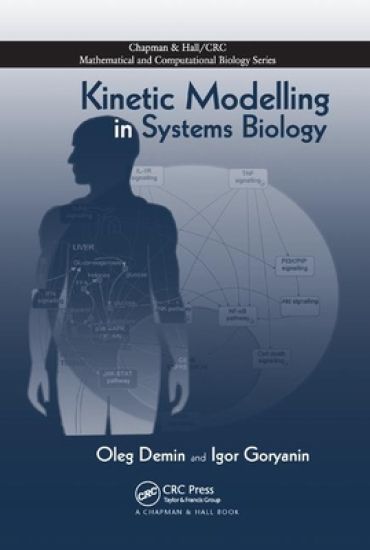
Kinetic Modelling in Systems Biology

Kinetic Modelling in Systems Biology

Oleg Demin; Igor Goryanin

CRC Press
2020
nidottu
With more and more interest in how components of biological systems interact, it is important to understand the various aspects of systems biology. Kinetic Modelling in Systems Biology focuses on one of the main pillars in the future development of systems biology. It explores both the methods and applications of kinetic modeling in this emerging field.The book introduces the basic biological cellular network concepts in the context of cellular functioning, explains the main aspects of the Edinburgh Pathway Editor (EPE) software package, and discusses the process of constructing and verifying kinetic models. It presents the features, user interface, and examples of DBSolve as well as the principles of modeling individual enzymes and transporters. The authors describe how to construct kinetic models of intracellular systems on the basis of models of individual enzymes. They also illustrate how to apply the principles of kinetic modeling to collect all available information on the energy metabolism of whole organelles, construct a kinetic model, and predict the response of the organelle to changes in external conditions. The final chapter focuses on applications of kinetic modeling in biotechnology and biomedicine.Encouraging readers to think about future challenges, this book will help them understand the kinetic modeling approach and how to apply it to solve real-life problems.Downloadable Resources FeaturesExtensively used throughout the text for pathway visualization and illustration, the EPE software is available on the accompanying downloadable resources. The downloadable resources also include pathway diagrams in several graphical formats, DBSolve installation with examples, and all models from the book with dynamic visualization of simulation results, allowing readers to perform in silico simulations and use the models as templates for further applications.
Fundamentals of Kinematics and Dynamics of Machines and Mechanisms
The study of the kinematics and dynamics of machines lies at the very core of a mechanical engineering background. Although tremendous advances have been made in the computational and design tools now available, little has changed in the way the subject is presented, both in the classroom and in professional references. Fundamentals of Kinematics and Dynamics of Machines and Mechanisms brings the subject alive and current. The author's careful integration of Mathematica software gives readers a chance to perform symbolic analysis, to plot the results, and most importantly, to animate the motion. They get to "play" with the mechanism parameters and immediately see their effects. The downloadable resources contain Mathematica-based programs for suggested design projects. As useful as Mathematica is, however, a tool should not interfere with but enhance one's grasp of the concepts and the development of analytical skills. The author ensures this with his emphasis on the understanding and application of basic theoretical principles, unified approach to the analysis of planar mechanisms, and introduction to vibrations and rotordynamics.
Chemical Reaction Networks

Chemical Reaction Networks

Oleg N. Temkin; Andrew V. Zeigarnik; D.G. Bonchev

CRC Press
2019
nidottu
Over the last decade, increased attention to reaction dynamics, combined with the intensive application of computers in chemical studies, mathematical modeling of chemical processes, and mechanistic studies has brought graph theory to the forefront of research. It offers an advanced and powerful formalism for the description of chemical reactions and their intrinsic reaction mechanisms. Chemical Reaction Networks: A Graph-Theoretical Approach elegantly reviews and expands upon graph theory as applied to mechanistic theory, chemical kinetics, and catalysis. The authors explore various graph-theoretical approaches to canonical representation, numbering, and coding of elementary steps and chemical reaction mechanisms, the analysis of their topological structure, the complexity estimation, and classification of reaction mechanisms. They discuss topologically distinctive features of multiroute catalytic and noncatalytic and chain reactions involving metal complexes. With it's careful balance of clear language and mathematical rigor, the presentation of the authors' significant original work, and emphasis on practical applications and examples, Chemical Reaction Networks: A Graph Theoretical Approach is both an outstanding reference and valuable tool for chemical research.
Demonstrational Optics

Demonstrational Optics

Oleg Marchenko; Sergi Kazantsev; Laurentius Windholz

Springer-Verlag New York Inc.
2006
sidottu
Demonstrational Optics presents a new didactical approach to the study of optics. Emphasizing the importance of elaborate new experimental demonstrations, pictorial illustrations, computer simulations and models of optical phenomena in order to ensure a deeper understanding of wave and geometric optics. It includes problems focused on the pragmatic needs of students, secondary school teachers, university professors and optical engineers. Part 2, Coherent and Statistical Optics, contains chapters on interference, diffraction, Fourier optics, light quanta, thermal radiation (Shot noise and Gaussian light), Correlation of light fields and Correlation of light intensities. A substantial part of this volume is devoted to thermal radiation and its properties, especially with partial coherence. A detailed treatment of the photo-effect with respect to statistical properties leads to the basics of statistical optics. To illustrate the phenomena covered by this volume, a large number of demonstration experiments are described and discussed. In the chapters devoted to statistical phenomena computer simulations are described, the code of all relevant programs being included.
Easy as p?

Easy as p?

Oleg Ivanov

Springer-Verlag New York Inc.
1998
nidottu
The present book is rare, even unique of its kind, at least among mathematics texts published in Russian. You have before you neither a textbook nor a monograph, although these selected chapters from elementary mathematics certainly constitute a fine educational tool. It is my opinion that this is more than just another book about mathematics and the art of teaching that subject. Without considering the actual topics treated (the author himself has described these in sufficient detail in of the book as a whole, the Introduction), I shall attempt to convey a general idea and describe the impressions it makes on the reader. Almost every chapter begins by considering well-known problems of elementary mathematics. Now, every worthwhile elementary problem has hidden behind its diverting formulation what might be called "higher mathematics," or, more simply, mathematics, and it is this that the author demonstrates to the reader in this book. It is thus to be expected that every chapter should contain subject matter that is far from elementary. The end result of reading the book is that the material treated has become for the reader "three-dimensional" as it were, as in a hologram, capable of being viewed from all sides.
Spymaster

Spymaster

Oleg Kalugin

Basic Books
2009
pokkari
Oleg Kalugin oversaw the work of American spies, matched wits with the CIA, and became one of the youngest generals in KGB history. Even so, he grew increasingly disillusioned with the Soviet system. In 1990, he went public, exposing the intelligence agency's shadowy methods. Revised and updated in the light of the KGB's enduring presence in Russian politics, Spymaster is Kalugin's impressively illuminating memoir of the final years of the Soviet Union.
Self-Similar Processes in Telecommunications

Self-Similar Processes in Telecommunications

Oleg Sheluhin; Sergey Smolskiy; Andrew Osin

John Wiley Sons Inc
2007
sidottu
For the first time the problems of voice services self-similarity are discussed systematically and in detail with specific examples and illustrations. Self-Similar Processes in Telecommunications considers the self-similar (fractal and multifractal) models of telecommunication traffic and efficiency based on the assumption that its traffic has fractal or multifractal properties (is self-similar). The theoretical aspects of the most well-known traffic models demonstrating self-similar properties are discussed in detail and the comparative analysis of the different models’ efficiency for self-similar traffic is presented. This book demonstrates how to use self-similar processes for designing new telecommunications systems and optimizing existing networks so as to achieve maximum efficiency and serviceability. The approach is rooted in theory, describing the algorithms (the logical arithmetical or computational procedures that define how a task is performed) for modeling these self-similar processes. However, the language and ideas are essentially accessible for those who have a general knowledge of the subject area and the advice is highly practical: all models, problems and solutions are illustrated throughout using numerous real-world examples. Adopts a detailed, theoretical, yet broad-based and practical mathematical approach for designing and operating numerous types of telecommunications systems and networks so as to achieve maximum efficiencyPlaces the subject in context, describing the current algorithms that make up the fractal or self-similar processes while pointing to the future development of the technologyOffers a comparative analysis of the different types of self-similar process usage within the context of local area networks, wide area networks and in the modeling of video traffic and mobile communications networksDescribes how mathematical models are used as a basis for building numerous types of network, including voice, audio, data, video, multimedia services and IP (Internet Protocol) telephony The book will appeal to the wide range of specialists dealing with the design and exploitation of telecommunication systems. It will be useful for the post-graduate students, lecturers and researchers connected with communication networks disciplines.
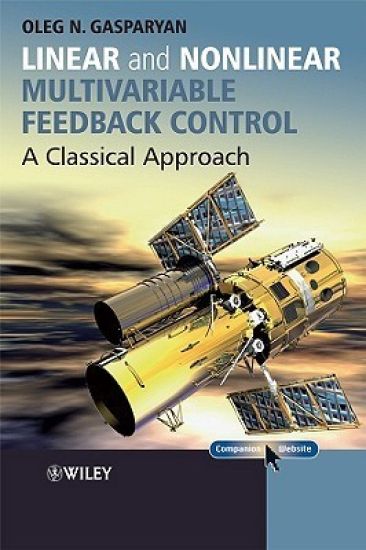
Linear and Nonlinear Multivariable Feedback Control
Automatic feedback control systems play crucial roles in many fields, including manufacturing industries, communications, naval and space systems. At its simplest, a control system represents a feedback loop in which the difference between the ideal (input) and actual (output) signals is used to modify the behaviour of the system. Control systems are in our homes, computers, cars and toys. Basic control principles can also be found in areas such as medicine, biology and economics, where feedback mechanisms are ever present. Linear and Nonlinear Multivariable Feedback Control presents a highly original, unified control theory of both linear and nonlinear multivariable (also known as multi-input multi-output (MIMO)) feedback systems as a straightforward extension of classical control theory. It shows how the classical engineering methods look in the multidimensional case and how practising engineers or researchers can apply them to the analysis and design of linear and nonlinear MIMO systems. This comprehensive book: uses a fresh approach, bridging the gap between classical and modern, linear and nonlinear multivariable control theories;includes vital nonlinear topics such as limit cycle prediction and forced oscillations analysis on the basis of the describing function method and absolute stability analysis by means of the primary classical frequency-domain criteria (e.g. Popov, circle or parabolic criteria);reinforces the main themes with practical worked examples solved by a special MATLAB-based graphical user interface, as well as with problems, questions and exercises on an accompanying website. The approaches presented in Linear and Nonlinear Multivariable Feedback Control form an invaluable resource for graduate and undergraduate students studying multivariable feedback control as well as those studying classical or modern control theories. The book also provides a useful reference for researchers, experts and practitioners working in industry