Kirjojen hintavertailu. Mukana 11 627 363 kirjaa ja 12 kauppaa.

Kirjahaku

Etsi kirjoja tekijän nimen, kirjan nimen tai ISBN:n perusteella.

1000 tulosta hakusanalla P David Marshall

Threats

Threats

David P. Barash

Oxford University Press Inc
2020
sidottu
"It's a rare author who can combine literary erudition and an easy fluency of style together with expert knowledge of psychology and evolutionary biology. David Barash adds to all this a far-seeing wisdom and a humane decency that shines through on every page. The concluding section on the senseless and dangerous futility of nuclear deterrence theory is an irrefutable tour de force which should be read by every politician and senior military officer. If only!" -- Richard Dawkins From hurricanes and avalanches to diseases and car crashes, threats are everywhere. Beyond objective threats like these, there are also subjective ones: situations in which individuals threaten each other or feel threatened by society. Animals, too, make substantial use of threats. Evolution manipulates threats like these in surprising ways, leading us to question the ethics of honest versus dishonest communication. Rarely acknowledged--and yet crucially important--is the fact that humans, animals, and even plants don't only employ threats, they often respond with counter-threats that ultimately make things worse. By exploring the dynamic of threat and counter-threat, this book expands on many fraught human situations, including the fear of death, of strangers, and of "the other." Each of these leads to unique challenges, such as the specter of eternal damnation, the murderous culture of guns and capital punishment, and the emergence of right-wing nationalist populism. Most worrisome is the illusory security of deterrence, the idea that we can use the threat of nuclear war to prevent nuclear war! Threats are so widespread that we often don't realize how deeply they are ingrained in our minds or how profoundly and counter-productively they operate. Animals, humans, societies, and even countries internalize threats, behind which lie a myriad of intriguing questions: How do we know when to take a threat seriously? When do threats make things worse? Can they make things better? What can we do to use them wisely rather than destructively? In a comprehensive exploration into questions like these, noted scientist David P. Barash explains some of the most important characteristics of life as we know it.
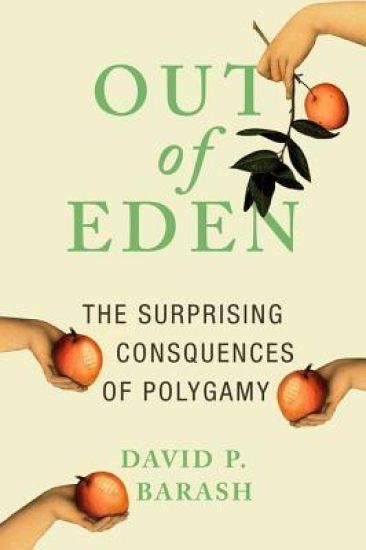
Out of Eden: The Surprising Consequences of Polygamy
In this changing world of what is socially and politically "correct," polygamy is perhaps the last great taboo. Over the last thousand years, monogamy - at least in name - has been the default setting for coupledom and procreation in the Western world. And yet, throughout history, there have been inklings that "one-man, one-woman" is an uncomfortable institution for human beings. The consistently high rate of marital "cheating" by both sexes, plus the persistent interest in a variety of sexual partners - on the part of women as well as men - suggest strongly that monogamy isn't easy, and certainly isn't "natural," for either sex. Esteemed writer and evolutionary biologist David P. Barash tackles this uncomfortable finding: that humans are actually biologically and anthropologically inclined toward polygamy. Drawing on decades of research, Barash presents a remarkable array of scientific evidence from evolutionary biology and cross-cultural studies that guide the reader through the hidden impacts of polygamy on such crucial behavior as violence, parenting, sexual preferences, adultery and efforts at monogamy itself, along with mind-bending speculation about the possible role of our polygamous predisposition when it comes to human genius, homosexuality and even monotheism. But take heart, monogamists Although our species has long been "out of Eden," this fascinating read is ultimately reassuring that "biology is not destiny."
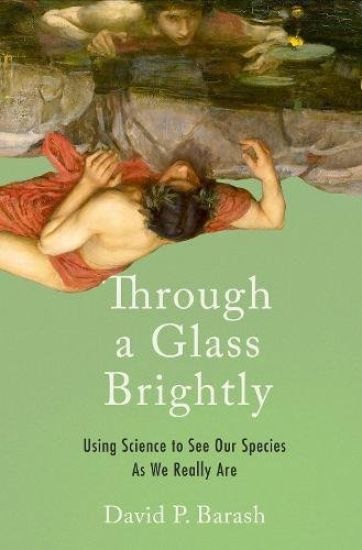
Through a Glass Brightly

Through a Glass Brightly

David P. Barash

Oxford University Press Inc
2018
sidottu
Human beings have long seen themselves as the center of the universe, the apple of God's eye, specially-created creatures who are somehow above and beyond the natural world. This viewpoint - a persistent paradigm of our own unique self-importance - is as dangerous as it is false. In Through a Glass Brightly, noted scientist David P. Barash explores the process by which science has, throughout time, cut humanity "down to size," and how humanity has responded. A good paradigm is a tough thing to lose, especially when its replacement leaves us feeling more vulnerable and less special. And yet, as science has progressed, we find ourselves - like it or not - bereft of many of our most cherished beliefs, confronting an array of paradigms lost. Barash models his argument around a set of "old" and "new" paradigms that define humanity's place in the universe. This new set of paradigms range from provocative revelations as to whether human beings are well designed, whether the universe has somehow been established with our species in mind (the so-called anthropic principle), whether life itself is inherently fragile, and whether Homo sapiens might someday be genetically combined with other species (and what that would mean for our self-image). Rather than seeing ourselves through a glass darkly, science enables us to perceive our strengths and weaknesses brightly and accurately at last, so that paradigms lost becomes wisdom gained. The result is a bracing, remarkably hopeful view of who we really are.
Wall Street Polices Itself

Wall Street Polices Itself

David P. McCaffrey; David W. Hart

Oxford University Press Inc
1998
sidottu
This book explains how the self regulatory system for U.S. securities firms works with three tiers of supervision. Overseeing the whole system is the U.S. Securities and Exchange Commission, which directly supervises the self-regulatory organizations such as the New York Stock Exchange and the National Association of Securities Dealers. In turn, these self-regulatory organizations oversee the broker-dealers who conduct the daily business of buying and selling securities. The system relies heavily on the firms' internal supervisory systems to prevent violations of securities laws, since they are in the best position to track their own internal activities. Firms may be fined, or subject to even more stringent penalties, if their supervisory systems fail. This book is an in-depth examination of how this regulatory system works, the types of regulatory problems with which broker-dealer firms must deal, why some firms have more problems than others, and what the experience with the system suggests about ways of improving self regulatory systems generally.
Saving Children from a Life of Crime

Saving Children from a Life of Crime

David P. Farrington; Brandon C. Welsh

Oxford University Press Inc
2006
sidottu
After decades of rigorous study in the United States and across the Western world, a great deal is known about the early risk factors for offending. High impulsiveness, low attainment, criminal parents, parental conflict, and growing up in a deprived, high-crime neighborhood are among the most important factors. There is also a growing body of high quality scientific evidence on the effectiveness of early prevention programs designed to prevent children from embarking on a life of crime. Drawing on the latest evidence, Saving Children from a Life of Crime is the first book to assess the early causes of offending and what works best to prevent it. Preschool intellectual enrichment, child skills training, parent management training, and home visiting programs are among the most effective early prevention programs. Criminologists David Farrington and Brandon Welsh also outline a policy strategy--early prevention--that uses this current research knowledge and brings into sharper focus what America's national crime fighting priority ought to be. At a time when unacceptable crime levels in America, rising criminal justice costs, and a punitive crime policy have spurred a growing interest in the early prevention of delinquency, Farrington and Welsh here lay the groundwork for change with a comprehensive national prevention strategy to save children from a life of crime.
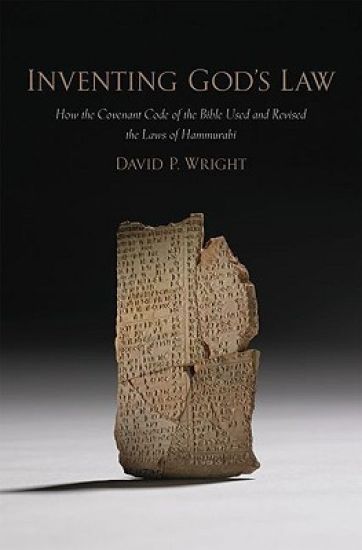
Inventing God's Law

Inventing God's Law

David P. Wright

Oxford University Press Inc
2009
sidottu
In this book David Wright draws on three of his influential published essays to create a boldly revisionist account of the origin of the so-called Covenant Collection of the Torah (Exodus 20:23-23:19). He argues that this body of law depends mainly on the Laws of Hammurabi and to some extent on other cuneiform law collections, that it is chiefly the work of a single author, that it is to a significant degree the result of intellectual interaction with the author's sources rather than a collection of Israelite/Judean legal traditions, and that it may have had a politically ideological purpose, somewhat similar to that of the Laws of Hammurabi. Wright presents his argument in three parts. Part One lays out the evidence for the Covenant Collection's dependence of the Laws of Hammurabi and other Akkadian law collections, and argues that the time frame for this dependence was in the Neo-Assyrian period (8th century BCE). Part Two explores the techniques and logic used by the author who composed the Covenant Collection. Part Three discusses the larger issues arising from these conclusions, including the degree to which the work reflects Israelite/Judean legal customs, the purpose and ideological nature of the work, other redactional models of the work, the Collection's connection to the larger Sinai narrative, and other biblical literature that appears to have been influenced by Mesopotamian ideas, perhaps in the Neo-Assyrian period. In addition to advancing our understanding of the Covenant Collection itself, Wright's groundbreaking work offers a new basis for the study of the history of biblical law.
Saving Children from a Life of Crime

Saving Children from a Life of Crime

David P. Farrington; Brandon C. Welsh

Oxford University Press Inc
2008
nidottu
After decades of rigorous study in the United States and across the Western world, a great deal is known about the early risk factors for offending. High impulsiveness, low attainment, criminal parents, parental conflict, and growing up in a deprived, high-crime neighborhood are among the most important factors. There is also a growing body of high quality scientific evidence on the effectiveness of early prevention programs designed to prevent children from embarking on a life of crime. Drawing on the latest evidence, Saving Children from a Life of Crime is the first book to assess the early causes of offending and what works best to prevent it. Preschool intellectual enrichment, child skills training, parent management training, and home visiting programs are among the most effective early prevention programs. Criminologists David Farrington and Brandon Welsh also outline a policy strategy - early prevention - that uses this current research knowledge and brings into sharper focus what America's national crime fighting priority ought to be. At a time when unacceptable crime levels in America, rising criminal justice costs, and a punitive crime policy have spurred a growing interest in the early prevention of delinquency, Farrington and Welsh here lay the groundwork for change with a comprehensive national prevention strategy to save children from a life of crime.
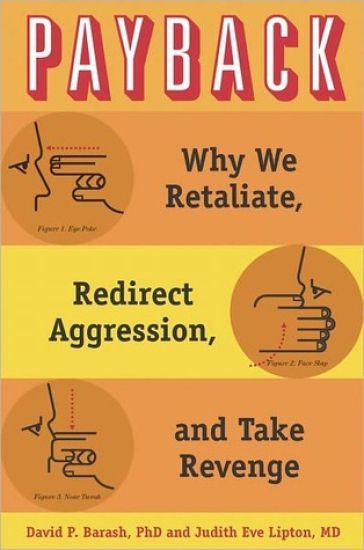
Payback

Payback

David P. Barash; Judith Eve Lipton

Oxford University Press Inc
2011
sidottu
From the child taunted by her playmates to the office worker who feels stifled in his daily routine, people frequently take out their pain and anger on others, even those who had nothing to do with the original stress. The bullied child may kick her puppy, the stifled worker yells at his children: Payback can be directed anywhere, sometimes at inanimate things, animals, or other people. In Payback, the husband-and wife team of evolutionary biologist David Barash and psychiatrist Judith Lipton offer an illuminating look at this phenomenon, showing how it has evolved, why it occurs, and what we can do about it. Retaliation and revenge are well known to most people. We all know what it is like to want to get even, get justice, or take revenge. What is new in this book is an extended discussion of redirected aggression, which occurs not only in people but other species as well. The authors reveal that it's not just a matter of yelling at your spouse "because" your boss yells at you. Indeed, the phenomenon of redirected aggression--so-called to differentiate it from retaliation and revenge, the other main forms of payback--haunts our criminal courts, our streets, our battlefields, our homes, and our hearts. It lurks behind some of the nastiest and seemingly inexplicable things that otherwise decent people do, from road rage to yelling at a crying baby. And it exists across boundaries of every kind--culture, time, geography, and even species. Indeed, it's not just a human phenomenon. Passing pain to others can be seen in birds and horses, fish and primates--in virtually all vertebrates. It turns out that there is robust neurobiological hardware and software promoting redirected aggression, as well as evolutionary underpinnings. Payback may be natural, the authors conclude, but we are capable of rising above it, without sacrificing self-esteem and social status. They show how the various human responses to pain and suffering can be managed--mindfully, carefully, and humanely.
The Thought and Art of Joseph Joubert (1754-1824)
This book rescues Joubert from the ranks of minor French moralistes, and, by tracing the development of his thought from his time as secretary to Diderot through to the period of his association with Chateaubriand, demonstrates that he was a writer on aesthetics of considerable sensitivity. Examination of his manuscripts and of his annotation to books in his library shows that Joubert's primary concern, during the period that witnessed the gradual but profound change from the intellectual values of the Enlightenment to those of the Romantic period, was to establish the status and nature of art and poetry. Reading widely among philosophers and poets from Plato and Homer to Kant and André Chénier, Joubert consigned his thoughts and perceptions to a series of carnets which form the basis of this study and bear witness to an unusually eclectic and enquiring mind. Joubert's significance is not confined to the Enlightenment and Romantic periods. He is unique among writers of his day in the way that his own interrogation of the very act of writing anticipates the aesthetic of later, highly influential writers such as Mallarmé.
Haydn and the Enlightenment

Haydn and the Enlightenment

David P. Schroeder

Clarendon Press
1997
nidottu
Schroeder here sets out to challenge the widely held view of Haydn as an inspired instrumental musician who composed in isolation from 18th-century enlightened thinking. By means of both documentary and musical investigation the author seeks instead to present him as a culturally and politically sensitive representative of the Age of Englightement. Haydn's awareness of contemporary aesthetic opinion and the tenets of the Enlightenment is reflected by the transformations in his own compositional style, and there are fascinating implications here for our understanding of instrumental music from the second half of the eighteenth century. Of fundamental importance in this survey is Haydn's relationship with his audience, which, it is argued, had a significant bearing on the nature of the works. The author suggests that Haydn was wellacquainted with the contemporary view that works of literature or music should serve a moral function and he points to numerous instances in the late symphonies where this end is effectively pursued. For the eighteenth century, however, morality did not imply dullness; indeed, its goals were best servedthrough wit, humour, popular appeal, and beauty, as well as through intellectual challenge.
The Logic of Leviathan

The Logic of Leviathan

David P. Gauthier

Oxford University Press
1979
nidottu
This book presents the most plausible reading of Thomas Hobbes's moral and political theory based on his book, Leviathan. Hobbes constructs a political theory that bases unlimited political authority on unlimited individualism. The conclusion requires the premiss; anything less than unlimited individualism would justify only limited political authority. But the premiss is too strong for the conclusions; as this book shows, from unlimited individualism only anarchy follows. The theory is a failure. But it has two outstanding merits. First of all, Hobbes introduces a number of important moral and political concepts that deserve our attention. Obligation is his basic moral concept, while authorisation is his basic political concept. Hobbes relies neither on the goodwill of men - their willingness to consider each other's interests for their own sake, and not as means to self-satisfaction - nor on the efficacy of institutions, as the means of both concentrating and limiting political power. Aside from political and moral theory, the book explores Hobbes's views on the nature of man, sovereignty, and God.
International Law and Infectious Diseases

International Law and Infectious Diseases

David P. Fidler

Oxford University Press
1999
sidottu
International Law and Infectious Diseases is the first comprehensive analysis of the intersection between international law and infectious diseases. Infectious diseases pose a global threat, and international law plays an important but under-explored role in infectious disease control. The book analyses the globalization of public health; and it examines the history of international law in this area, the International Health Regulations, and international law on trade, human rights, armed conflict and arms control, and the environment. Fidler develops the concepts of microbialpolitik and global health jurisprudence to provide a political perspective and a framework for future legal action. The aim of this series of monographs is to publish important and original pieces of research on all aspects of public international law. Topics that are given particular prominence are those, which, while of interest to the academic lawyer, also have important bearing on issues which, touch the actual conduct of international relations. None the less the series is wide in scope and includes monographs on the history and philosophical foundations of international law.
Operator Algebras and Their Modules

Operator Algebras and Their Modules

David P. Blecher; Christian Le Merdy

Clarendon Press
2004
sidottu
This invaluable reference is the first to present the general theory of algebras of operators on a Hilbert space, and the modules over such algebras. The new theory of operator spaces is presented early on and the text assembles the basic concepts, theory and methodologies needed to equip a beginning researcher in this area. A major trend in modern mathematics, inspired largely by physics, is toward `noncommutative' or `quantized' phenomena. In functional analysis, this has appeared notably under the name of `operator spaces', which is a variant of Banach spaces which is particularly appropriate for solving problems concerning spaces or algebras of operators on Hilbert space arising in 'noncommutative mathematics'. The category of operator spaces includes operator algebras, selfadjoint (that is, C*-algebras) or otherwise. Also, most of the important modules over operator algebras are operator spaces. A common treatment of the subjects of C*-algebras, nonselfadjoint operator algebras, and modules over such algebras (such as Hilbert C*-modules), together under the umbrella of operator space theory, is the main topic of the book. A general theory of operator algebras, and their modules, naturally develops out of the operator space methodology. Indeed, operator space theory is a sensitive enough medium to reflect accurately many important noncommutative phenomena. Using recent advances in the field, the book shows how the underlying operator space structure captures, very precisely, the profound relations between the algebraic and the functional analytic structures involved. The rich interplay between spectral theory, operator theory, C*-algebra and von Neumann algebra techniques, and the influx of important ideas from related disciplines, such as pure algebra, Banach space theory, Banach algebras, and abstract function theory is highlighted. Each chapter ends with a lengthy section of notes containing a wealth of additional information.
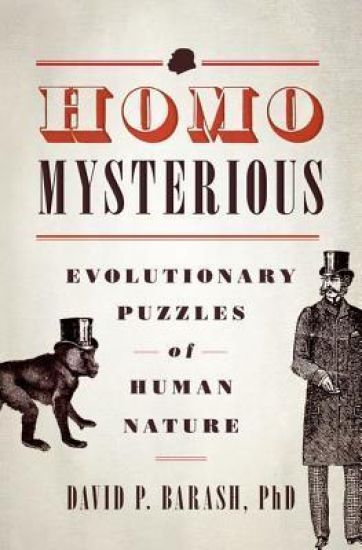
Homo Mysterious

Homo Mysterious

David P. Barash

Oxford University Press Inc
2013
nidottu
For all that science knows about the living world, notes David P. Barash, there are even more things that we don't know, genuine evolutionary mysteries that perplex the best minds in biology. Paradoxically, many of these mysteries are very close to home, involving some of the most personal aspects of being human. Homo Mysterious examines a number of these evolutionary mysteries, exploring things that we don't yet know about ourselves, laying out the best current hypotheses, and pointing toward insights that scientists are just beginning to glimpse. Why do women experience orgasm? Why do men have a shorter lifespan than women? Why does homosexuality exist? Why does religion exist in virtually every culture? Why do we have a fondness for the arts? Why do we have such large brains? And why does consciousness exist? Readers are plunged into an ocean of unknowns--the blank spots on the human evolutionary map, the terra incognita of our own species--and are introduced to the major hypotheses that currently occupy scientists who are attempting to unravel each puzzle (including some solutions proposed here for the first time). Throughout the book, readers are invited to share the thrill of science at its cutting edge, a place where we know what we don't know, and, moreover, where we know enough to come up with some compelling and seductive explanations. Homo Mysterious is a guide to creative thought and future explorations, based on the best, most current thinking by evolutionary scientists. It captures the allure of the "not-yet-known" for those interested in stretching their scientific imaginations.
Jonathan Edwards and the Psalms

Jonathan Edwards and the Psalms

David P. Barshinger

Oxford University Press Inc
2014
sidottu
Throughout church history, the book of Psalms has enjoyed wider use and acclaim than almost any other book of the Bible. Early Christians extolled it for its fullness of Christian doctrine, monks memorized and recited it daily, lay people have prayed its words as their own, and churches have sung from it as their premier hymn book. While the past half century has seen an extraordinary resurgence of interest in the thought of American theologian Jonathan Edwards, including his writings on the Bible, no scholar has yet explored his meditations on the Psalms. David P. Barshinger addresses this gap by providing a close study of his engagement with one of the Bibles most revered books. From his youth to the final days of his presidency at the College of New Jersey, Edwards was a devout student of Scriptureas more than 1,200 extant sermons, theological treatises, and thousands of personal manuscript pages devoted to biblical reflection bear witness. Using some of his writings that have previously received little to no attention, Jonathan Edwards and the Psalms offers insights on his theological engagement with the Psalms in the context of interpretation, worship, and preaching. Barshinger shows that he appropriated the history of redemption as an organizing theological framework within which to engage the Psalms specifically, and the Bible as a whole. This original study greatly advances Edwards scholarship, shedding new and welcome light on the theologians relationship to Scripture.
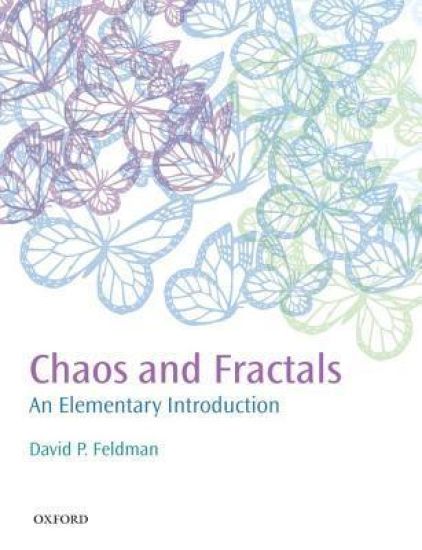
Chaos and Fractals

Chaos and Fractals

David P. Feldman

Oxford University Press
2012
sidottu
This book provides the reader with an elementary introduction to chaos and fractals, suitable for students with a background in elementary algebra, without assuming prior coursework in calculus or physics. It introduces the key phenomena of chaos - aperiodicity, sensitive dependence on initial conditions, bifurcations - via simple iterated functions. Fractals are introduced as self-similar geometric objects and analyzed with the self-similarity and box-counting dimensions. After a brief discussion of power laws, subsequent chapters explore Julia Sets and the Mandelbrot Set. The last part of the book examines two-dimensional dynamical systems, strange attractors, cellular automata, and chaotic differential equations. The book is richly illustrated and includes over 200 end-of-chapter exercises. A flexible format and a clear and succinct writing style make it a good choice for introductory courses in chaos and fractals.
Chaos and Fractals

Chaos and Fractals

David P. Feldman

Oxford University Press
2012
nidottu
This book provides the reader with an elementary introduction to chaos and fractals, suitable for students with a background in elementary algebra, without assuming prior coursework in calculus or physics. It introduces the key phenomena of chaos - aperiodicity, sensitive dependence on initial conditions, bifurcations - via simple iterated functions. Fractals are introduced as self-similar geometric objects and analyzed with the self-similarity and box-counting dimensions. After a brief discussion of power laws, subsequent chapters explore Julia Sets and the Mandelbrot Set. The last part of the book examines two-dimensional dynamical systems, strange attractors, cellular automata, and chaotic differential equations. The book is richly illustrated and includes over 200 end-of-chapter exercises. A flexible format and a clear and succinct writing style make it a good choice for introductory courses in chaos and fractals.
Homo Mysterious

Homo Mysterious

David P. Barash

Oxford University Press Inc
2012
sidottu
For all that science knows about the living world, there are even more things that we don't know, genuine evolutionary mysteries that perplex the best minds in biology. And paradoxically, many of these mysteries are very close to home: They involve some of the most personal aspects of being human, including such unresolved questions as why do women experience orgasm, menstruation and menopause, why do men have a shorter lifespan than women, and why does homosexuality exist? Ditto for other evolutionary mysteries of our own species: Why is religion a "cross-cultural universal," along with a fondness for the arts? Why do we have such large brains, and why does consciousness exist? Homo Mysterious examines these and other evolutionary mysteries, exploring things that we don't (yet) know about ourselves, laying out the best current hypotheses and pointing toward insights that scientists are just beginning to glimpse. Readers are invited to share the thrill of science at its exploratory margins, where we know what we don't know, and, moreover, we know enough to come up with some compelling and seductive explanations. Homo Mysterious is a guide to creative thought and future explorations, based on the most current thinking of evolutionary scientists. For those who are interested in stretching their scientific imaginations, this book will expose the lure of the not yet known.