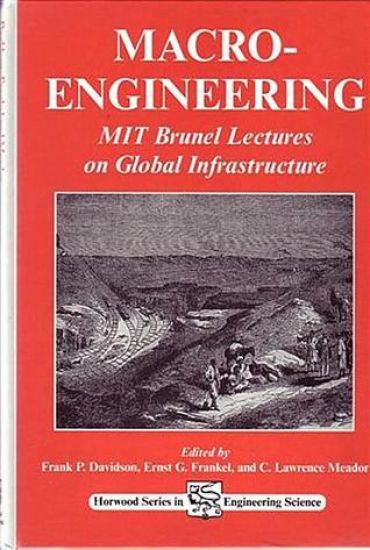
Macro-engineering projects--enormous undertakings such as the design and construction of new cities, energy islands, and even outer-space industrial complexes--require bold vision, courage, and optimism as well as engineering and management skills. The need for individuals with these qualities is growing as the United States faces its greatest chal
For some time there has existed a need for a new account of the life and stylistic development of David Teniers the Younger (1610-1690). This need is made all the more obvious by the fact that Adolf Rosenberg's book, writ-ten in 1898, remains a most complete study of Teniers. 1 De Peyre's Biogra-phie Critique of 1910 added little information not already published by Rosenberg.2 A number of recent articles have dealt with various aspects of Teniers's life or style, but none has been entirely satisfactory. 5 Some are incomplete; others contain errors gleaned from earlier sources. None has dealt with the artist's stylistic evolution from his early works to the works of the mature Teniers.
This book offers fresh perspectives and innovative thinking of macro-engineering as the most promising approach to macro-engineering projects in the U.S. industry. It also addresses the concerns of developing countries over the potential impact of macro-engineering projects.
This book presents a complete biography of David Teniers along with a detailed analysis of his style in various periods of his career. It discusses the artists who influenced Teniers and those he influenced, containing material about the painters with whom Teniers collaborated.
Advertising is no longer on the defensive. It has survived the snobbery of the 50s, the conspiracy theories of the 60s and the semiology of the 70s to be embraced and apotheosised by the 80s.The Consumerist Manifesto is the first book to examine the advertising process from within the agency itself, and from the wider perspective of advertising's dual relationship as both consumer and object, with contemporary cultural theory. Martin Davidson follows the creation of successful campaigns and explores how advertising has succeeded in setting the tone for even larger aspects of our material and personal lives. With the impact of postmodernism and popular culture, and the subsequent collapse of the old anti-advertising critique, the books reveals how advertising came to be embraced as the idiom of the enterprise culture, and how it became central to the decades assault on traditional notions of political and cultural value. Martin Davidson explores the wider implications of advertising's dominance for cultural theory, art, anthropology and language. Finally, Martin Davidson asks how this new critique will have to develop if the industry's new credibility is to be maintained.
Maryland is known as "Little America" and "America in Miniature" for its geographical range, from the vast estuary of the Chesapeake Bay to its Atlantic beaches, farm-rich Piedmont Plateau, and rugged Allegheny Mountains. As one of the thirteen original colonies, it is renowned for eighteenth-century architecture highlighting the transfer of the building traditions of its European settlers. The capital, Annapolis, offers some of colonial America’s most iconic buildings, while humbler examples chart the development of regional building types. Baltimore, the state’s industrial powerhouse and architectural epicenter from the mid-nineteenth century onward, features a wide range of the row houses that defined the city, as well as commercial, institutional, and industrial buildings created by some of the period’s greatest designers. Maryland has likewise been shaped by its innovative transportation networks, Chesapeake culture, mountain resorts, and proximity to the nation’s capital. Buildings of Maryland surveys over 500 representative sites, from tobacco plantations worked by enslaved laborers to free Black communities, from maritime settlements along the Chesapeake to traces of coal mining and railroad development across the mountains, and from row house neighborhoods and streetcar suburbs to well-known modernist planned communities. In this accessible guidebook, readers will encounter a wide range of places—the State House and the Basilica of the Assumption, the Chesapeake Bay Maritime Museum and the Harriet Tubman Underground Railroad Visitor Center, the U.S. Naval Academy and Oriole Park at Camden Yards, Columbia New Town and the Susquehanna Museum, Old Greenbelt and the Clara Barton House, Catoctin Mountain Park and Antietam National Battlefield—that chart the state’s history and rich architectural legacy.
A GROUNDBREAKING FUSION OF MEDITATIVE AND SHAMANIC TRADITIONS THAT ACCELERATES SOUL EVOLUTION. "John Davidson takes us into a powerful and deep exploration of the soul's path. The Soul's Critical Path offers a new and fresh perspective to help us on our spiritual journey. I found the book to be very insightful as well as brilliantly written." Sandra Ingerman, MA, author of Soul Retrieval and Medicine for the Earth Today, there is an unprecedented but confusing smorgasbord of spiritual traditions from which an awakening soul must pick and choose. Yet, even sophisticated spiritual techniques teach only two things: how to control attention and where to put it. Asia has taught us how to control attention. Shamanism urges us to bring that focused attention to the heart, body, earth, and other-dimensional intelligences. This is the terrain of the soul's journey. In The Soul's Critical Path, John Davidson describes an emerging fusion of meditation and shamanism that offers a grounded and visible soul pathway. Davidson, a retired attorney, openly shares his personal stories of challenges and insights from a mosaic of peak experiences with meditation, vision questing, personal relationships, Peruvian shamanism, and entheogenic plants. Connecting the dots of this diverse array, he describes five distinct stages through which all souls are challenged to evolve. Davidson explains how the discovery of an experiential soul perspective - the knowing that I am the soul - allows the awakening soul to remember who it is, ground itself in the portal of the heart, and bring a sense of love and safety to the body. With that experience, the body can release the fear that prevents it from receiving the soul as its mate. With body as its mate, the soul can transcend fate and discover the unique destiny that flows from the soul's purpose, the body's power, and the heart's passion.
Advertising is no longer on the defensive. It has survived the snobbery of the 50s, the conspiracy theories of the 60s and the semiology of the 70s to be embraced and apotheosised by the 80s. The Consumerist Manifesto is the first book to examine the advertising process from within the agency itself, and from the wider perspective of advertising's dual relationship as both consumer and object, with contemporary cultural theory. Martin Davidson follows the creation of successful campaigns and explores how advertising has succeeded in setting the tone for even larger aspects of our material and personal lives. With the impact of postmodernism and popular culture, and the subsequent collapse of the old anti-advertising critique, the books reveals how advertising came to be embraced as the idiom of the enterprise culture, and how it became central to the decades assault on traditional notions of political and cultural value. Martin Davidson explores the wider implications of advertising's dominance for cultural theory, art, anthropology and language. Finally, Martin Davidson asks how this new critique will have to develop if the industry's new credibility is to be maintained.
To find the truth she has to find herself.Alexandria seeks answers... and only one person seems to have them all. The world is in chaos. The battle of good versus evil rages on, but the factions in this battle are the creatures from darkest nightmare. Alexandria must face her own dark past, terror filled present, and unclear future. The true test of her character begins once she realizes that she may be civilization's only hope for survival or the instrument of its ultimate extinction.
This volume makes available a reflection on large-scale engineering for building a better world. International authorities from engineering, oceanography, academia, public service, and law describe how great and imaginative concepts may be refined, tested, adapted, financed, implemented and put to use. Here are records and commentaries about some of the world's significant engineering achievements, including the planning and design of Nigeria's new capital city, and the use of software by the US military to clean up the Exxon-Valdez oil spill pollution in Alaska.
Reprint of the original, first published in 1871. The publishing house Anatiposi publishes historical books as reprints. Due to their age, these books may have missing pages or inferior quality. Our aim is to preserve these books and make them available to the public so that they do not get lost.