Kirjojen hintavertailu. Mukana 11 244 527 kirjaa ja 12 kauppaa.

Kirjahaku

Etsi kirjoja tekijän nimen, kirjan nimen tai ISBN:n perusteella.

1000 tulosta hakusanalla Pascal Paul Piazza

Pascal

Pascal

Wolfgang Schneider

Vieweg+Teubner Verlag
1981
nidottu
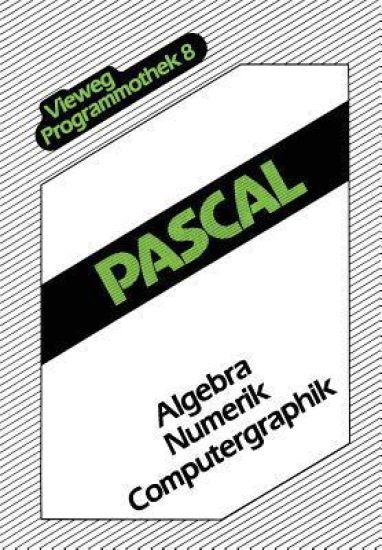
Die hohere Programmiersprache PASCAL findet z. Z. eine schnelle Verbreitung, da das systematische Programmieren in strukturierter Form unterstiitzt wird. Der PASCAL- Befehlsvorrat, auf den in diesem Buch eingegangen wird, wurde so ausgewahlt, daS er in allen modern en PASCAL-Versionen vorhanden ist, sich aber auf ein MindestmaB an Befehlen beschrankt. Der Programmieranfanger verliert auf diese Weise nicht den Oberblick bei der Vielfalt der Moglichkeiten. Es ist jedoch sichergestellt, daS er mit den elementaren Bestandteilen vollstandige Programme erstellen kann. Ein spaterer Obergang zum vollen PASCAL-Befehls-Vorrat ist jederzeit moglich. - In den einzelnen Kapiteln des Buches wird der Leser in knapper, praziser Weise mit den PASCAL-Regeln vertraut gemacht. Eine Vielzahl von Beispielen verdeutlichen die Regeln. Das Wichtigste wird einpragsam durch Merkregeln am Ende eines jeden Kapitels zusam- mengefaBt. Mit Hilfe von selbst zu losenden Obungsaufgaben kann der Leser iiberpriifen, ob er die PASCAL-Regeln beherrscht. Am SchluB des Buches zeigen 10 vollkommen programmierte und kommentierte Beispiele, wie man das Wissen aus den einzelnen Kapiteln anwendet, urn vollstandige Programme zu schreiben. Dabei wird u. a gezeigt, wie man Zinseszins und Renten ermittelt, eine Kurve einer mathematischen Funktion grafisch darstellt, die Zuverlassigkeit eines technischen Systems bestimmt oder eine Computergrafik erstellt. Die Zusammenfassung am Ende der einzelnen Kapitel erleichtern nach dem Erlernen von PASCAL das Nachschlagen wahrend der spateren selbstandigen Programmiertatigkeit. Wolfgang Schneider Cremlingen, Sommer 1980 VI In haltsverzeich n i s 1 Grundlagen der Datenverarbeitung .......................... . 1.1 Der 8egriff der Datenverarbeitung ......................... . 1.2 Die Arbeitsweise einer Datenverarbeitungsanlage (DVA) .......... . 2 Programmiersprachen..................................... 3 2.1 Allgemeines . . . . . . . . . . . . . . . . . . . . . . . . . . . . .. . . 3 . . . . . . . . .
Pascal

Pascal

Stephen Fedtke

Springer Vieweg
1987
nidottu
Die programmtechnische Umsetzung effizienter Algorithmen entscheidet wesentlich dartiber, ob sich deren besondere Eigenschaften auch im Laufzeitverhalten des Programms widerspiegeln werden. Der Software-Entwickler bestimmt im allgemeinen mit der Auswahl seiner Programmelemente und dem globalen Programmablauf die notwendige Rechenzeit sowie die Qualitat der Resultate seines Programms und ob die Effizienz des Algorithmus im programmierten Overhead, den Rechenungenauigkeiten etc. wieder untergeht. Das vorliegende Buch nimmt sich dieser Thematik an und behandelt Programmiertechniken in Standard-Pascal. Der Einsatz der Sprachelemente wird unter verschiedenen Aspekten vorgesteHt, ein Hauptschwerpunkt liegt bei der Rekursion. Der sinnvoHe und effiziente Einsatz der Rekursion und die programmtechnischen Realisierungen sind Thema eines eigenen Kapitels. Gleichzeitig werden Beurteilungen aus der Sicht des Compilers vorge- nommen. Die "Black Box" Compiler wird dem Programmentwickler dadurch trans- parenter, daS Programmtechniken aus der Sicht des Compilers beurteilt und die daraus resultierenden charakteristischen Programmerkmale erlauert werden. Das Spektrum der Anwendungen ist breit gewiihlt und reicht von der Booleschen Algebra und der numerischen Mathematik (Gleichungssysteme, Differentiation, Integration) tiber die Codierungstheorie und Kryptographie bis hin zur graphischen Datenverarbeitung. Die Behandlung des mathematischen Teils ist ausftihrlich gehalten. Dem Charakter der Pro- grammothek entsprechend gewinnt der Leser einen Einblick in die betreffenden Themen- bereiche, so daS ihm beste Voraussetzungen fUr selbstandtge Programmentwicklungen gegeben sind. An dieser Stelle mochte ich mich bei Herm Prof. Dr. Oskar Hermann, Herm Peter Stede, dem Rechenzentrum der Universitat Heidelberg, Herm Klaus Staab, dem Leiter des Klinik- rechenzentrums Heidelberg, sowie Herm Prof. Dr. Dr. Kohler, dem Herausgeber der Programmothek, fUr Anregungen fachlicher und technischer Art bedanken.
PASCAL

PASCAL

Wolfgang Schneider

Springer Vieweg
1983
nidottu
Die hohere Programmiersprache PASCAL findet z. Z. eine schnelle Verbreitung, da das systematische Programmieren in strukturierter Form unterstiitzt wird. Der PASCAL- Befehlsvorrat, auf den in diesem Buch eingegangen wird, wurde so ausgew?hlt, daB er in allen modernen PASCAL-Versionen vorhanden ist, sich aber auf ein MindestmaB an Befehlen beschr?nkt. Der Programmieranf?nger verliert auf diese Weise nicht den Oberblick bei der Vielfalt der Moglichkeiten. Es ist jedoch sichergestellt, daB er mit den elementaren Bestandteilen vollst?ndige Programme erstellen kann. Ein sp?terer Obergang zum vollen PASCAL-Befehls-Vorrat ist jederzeit moglich. In den einzelnen Kapiteln des Buches wird der Leser in knapper, pr?ziser Weise mit den PASCAL-Regeln vertraut gemacht. Eine Vielzahl von Beispielen verdeutlichen die Regeln. Das Wichtigste wird einpr?gsam durch Merkregeln am Ende eines jeden Kapitels zusam- mengefaBt. Mit Hilfe von seibst zu losenden Obungsaufgaben kann der Leser iiberpriifen, ob er die PASCAL-Regeln beherrscht. Am SchluB des Buches zeigen 1 O vollkommen programmierte und kommentierte Beispiele, wie man das Wissen aus den einzelnen Kapiteln anwendet, um vollst?ndige Programme zu schreiben. Dabei wird u. a gezeigt, wie man Zinseszins und Renten ermittelt, eine Kurve einer mathematischen Funktion grafisch darstellt, die Zuverl?ssigkeit eines technischen Systems bestimmt oder eine Computergrafik erstellt. Die Zusammenfassung am Ende der einzelnen Kapitel erleichtern nach dem Erlernen von PASCAL das Nachschlagen w?hrend der sp?teren selbst?ndigen Programmiert?tigkeit. Wolfgang Schneider VI 1 nhaltsverzeichnis 1 Grundlagen der Datenverarbeitung .......................... . 1.1 Der Begriff der Datenverarbeitung ......................... . 1.2 Die Arbeitsweise einer Datenverarbeitungsanlage {DVA) .......... . 2 Programmiersprachen . . . . . . . . . . . . . . . . . . . . . . . . . . . . 3 . . . . . . . . . 2.1 Allgemeines . . . . . . . . . . . . . . . . . . . . . . . . . . . . . . . . . . . . . . . . . 3 2.2 Maschinensprachen . . . . . . . . . . . . . . . . . . . . . . . . . . . 3 . . . . . . . . .
Pascal

Pascal

K. Däßler; M. Sommer

Springer-Verlag Berlin and Heidelberg GmbH Co. K
1985
nidottu
Über den Sinn der Normung von Programmiersprachen gehen die Meinungen weit auseinander und reichen von nutzlos bis unerlässlich. Sicher ist heute, daß zur Sicherstellung der Portabilität von Programmen zwischen Produkten verschiedener Hersteller ein Standard notwendig ist, und zwar sowohl für Anwender wie Hersteller. Einleuchtend ist aber auch, daß die Normung einer Programmiersprache wenig gemeinsam hat mit derjenigen von Schrauben oder Rädern, ist doch die Sprache ein Werkzeug von unverhältnismäßige größerer Komplexität. Die Länge des Normungs­ dokumentes darf daher nicht überraschen. Ebenso gehen die Ansichten über den richtigen Zeitpunkt einer Standardisierung auseinander. Während in gewissen Fällen ein Standard angestrebt wird, bevor die Sprache implementiert ist und damit ihre Zweckmäßigkeit erprobt werden kann, erfolgt sie bei Pascal fast 15 Jahre nach der Sprach-Definition. Dies ist reichlich spät, um die in dieser Zeit hervorgegangenen "Dialekte" und Varianten noch zu beeinflussen. Ein Normungs-Dokument ist eine trockene Lektüre. Die Autoren des Buches sind daher auf die gute Idee gekommen, dieses mit einem einführenden Text zusammenzulegen. Damit wird dem Leser die Möglichkeit geboten, gleichzeitig die Konzepte durch einen leichter verständlichen Text verstehen zu lernen und die Präzision des Normentextes zu nutzen. Auch gewährleistet die Einführung einen besseren Überblick. Es ist zu hoffen, daß sich beide Teile gegenseitig ergänzen und damit zu Beachtung und Erfolg verhelfen.
Pascal

Pascal

Holger Schnitker

Books on Demand
2004
pokkari
Den jungen Schüler Pascal aus Berlin trifft es hart: Seine Eltern verunglücken tödlich bei einem Flugzeugabsturz. Von einem auf den anderen Tag gerät sein gewohntes Leben aus den Fugen. Er wird bei einer Tante untergebracht, zu der er wenig Vertrauen hat. Da er auch bei seinen Freunden in Berlin nur Ablenkung, keinen Halt findet, zieht er sich immer mehr in seine eigene Welt zurück. Als das Zusammenleben mit seiner Tante unerträglich wird, steckt sie ihn kurzerhand in ein Internat, um sich mit Aussicht auf ein zukünftiges Erbe ihr Leben angenehmer zu gestalten. Im Internat findet Pascal neue Freunde, unter anderem Julia, und erfährt einen Zusammenhalt, der ihm bei der Lösung seiner Probleme behilflich wird ...
Pascal

Pascal

Lene Evensen; Pascal Dupuy

DINAMO FORLAG
2012
sidottu
Vår franske konditormester har bestemt seg for å dele sine yrkeshemmeligheter med oss. Lekker bok med mer enn 60 oppskrifter på konfekt, kaker, terter og selvfølgelig - makroner. Alt er enkelt beskrevet - dette kan alle få til! En bok av, med og om Pascal. Vi blir også kjent med mannen bak godsakene, et gastronomisk talent med litt av en askeladdhistorie i bagasjen.
Pascal: Reasoning and Belief

Pascal: Reasoning and Belief

Michael Moriarty

Oxford University Press
2020
sidottu
This book is a study of Blaise Pascal's defence of Christian belief in the Pensées. Michael Moriarty aims to expound--and in places to criticize--what he argues is a coherent and original apologetic strategy. Setting out the basic philosophical and theological presuppositions of Pascal's project, the present volume draws the distinction between convictions attained by reason and those inspired by God-given faith. It also presents Pascal's view of the contradictions within human nature, between the 'wretchedness' (our inability to live the life of reason, to attain secure and durable happiness) and the 'greatness' (the power of thought, manifested in the very awareness of our wretchedness). His mind-body dualism and his mechanistic conception of non-human animals are discussed. Pascal invokes the biblical story of the Fall and the doctrine of original sin as the only credible explanation of these contradictions. His analysis of human occupations as powered by the twin desire to escape from painful thoughts and to gratify one's vanity is subjected to critical examination, as is his conception of the self and self-love. Pascal argues that just as Christianity propounds the only explanation for the human condition, so it offers the only kind of happiness that would satisfy our deepest longings. He thus reasons that we have an interest in investigating its truth-claims as rooted in the Bible and in history. The closing chapters of this book discuss Pascal's view of Christian morality and the famous 'wager' argument for opting in favour of Christian belief.
Pascal's Wager

Pascal's Wager

Jeff Jordan

Clarendon Press
2006
sidottu
What if there is no strong evidence that God exists? Is belief in God when faced with a lack of evidence illegitimate and improper? Evidentialism answers yes. According to Evidentialism, it is impermissible to believe any proposition lacking adequate evidence. And if any thesis enjoys the status of a dogma among philosophers, it is Evidentialism. Presenting a direct challenge to Evidentialism are pragmatic arguments for theism, which are designed to support belief in the absence of adequate evidence. Pascal's Wager is the most prominent theistic pragmatic argument, and issues in epistemology, the ethics of belief, and decision theory, as well as philosophical theology, all intersect at the Wager. Other prominent theistic pragmatic arguments include William James's celebrated essay, 'The Will to Believe'; a posthumously published and largely ignored pragmatic argument authored by J.S. Mill, supporting the propriety of hoping that quasi-theism is true; the eighteenth-century Scottish essayist James Beattie's argument that the consoling benefit of theistic belief is so great that theistic belief is permissible even when one thinks that the existence of God is less likely than not; and an argument championed by the nineteenth-century French philosopher Jules Lachelier, which based its case for theistic belief on the empirical benefits of believing as a theist, even if theism was very probably false. In Pascal's Wager: Pragmatic Arguments and Belief in God, Jeff Jordan explores various theistic pragmatic arguments, and the objections employed against them. Jordan presents a new version of the Wager, what he calls the 'Jamesian Wager', and argues that the Jamesian Wager survives the objections hurled against theistic pragmatic arguments and provides strong support for theistic belief. In addition to arguing for a sound version of the Wager, Jordan also argues that there is a version of Evidentialism compatible with a principled use of pragmatic arguments, and that the Argument from Divine Silence fails. Objections found in Voltaire, Hume, and Nietzsche against the Wager are scrutinized, as are objections issued by Richard Swinburne, Richard Gale, and other contemporary philosophers. The ethics of belief, the many-gods objection, the problem of infinite utilities, and the propriety of a hope based acceptance are also examined.
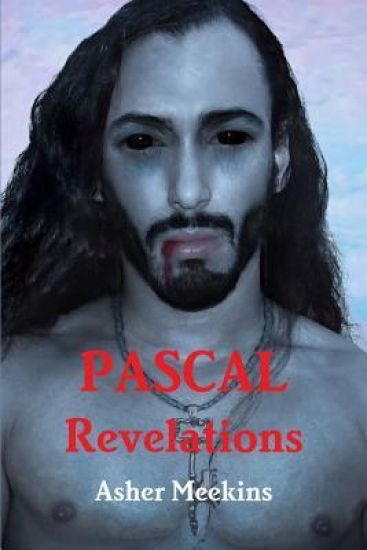
PASCAL REVELATIONS

PASCAL REVELATIONS

Asher Meekins

Lulu.com
2020
nidottu
Pascal is back.Parisian life at the gothic mansion, hidden on the outskirts of Paris has calmed down, and the vampire army has returned to normal life. Queen Ammonite has managed to regain her reign as leader of this coven, is this the calm before the storm, as rumbling gossip and lies have started to emerge. Unrest begins to eat away at the covens foundations. Teardrops disappearance causes Ammonites concerns to explode into a war that will invade the haute couture Parisian streets.Pascal is to find the rogue vampire Teardrop at all costs, the hunt is on, but the hunter becomes the hunted, as underhanded tactics divide Ammonites power and the loyalty to her. Truths will be told, and again the war begins, bringing in new troops and new battlegrounds.A fast-paced sequel that will keep you on the edge of your seat, a story you won't want to put down. Pascal Revelations will take you on a wild ride of horror, laughter, tears and action.
Pascal Programming for Libraries

Pascal Programming for Libraries

Charles H. Davis; Gerald Lundeen; Debora Shaw

Praeger Publishers Inc
1988
sidottu
Pascal Programming for Libraries is a practical introduction to computer programming designed specifically for library and information center applications. A graded text, this book provides detailed examples of straightforward programs, each fully illustrated and clearly explained. The examples begin with relatively simple computer code and progress to more complex examples using the highly acclaimed language TURBO Pascal, now widely used on personal computers. The applications illustrated deal with such operations as document retrieval, sorting, keyword indexing, selective dissemination of information, and rudimentary technical processes in libraries.
Pascal's Pensées

Pascal's Pensées

Blaise Pascal

Routledge
2019
sidottu
Published in 1950: The Penseés is a collection of philosophical fragments, notes and essays in which Pascal explores the contradictions of human nature in psychological, social, metaphysical and - above all - theological terms. Mankind emerges from Pascal's analysis as a wretched and desolate creature within an impersonal universe, but who can be transformed through faith in God's grace.
Pascal's Pensées

Pascal's Pensées

Blaise Pascal

Routledge
2020
nidottu
Published in 1950: The Penseés is a collection of philosophical fragments, notes and essays in which Pascal explores the contradictions of human nature in psychological, social, metaphysical and - above all - theological terms. Mankind emerges from Pascal's analysis as a wretched and desolate creature within an impersonal universe, but who can be transformed through faith in God's grace.
Pascal User Manual and Report

Pascal User Manual and Report

Kathleen Jensen; Niklaus Wirth

Springer-Verlag New York Inc.
1991
nidottu
puter system. In 1971 one computer system had a Pascal compiler. By 1974 the number had grown to 10 and in 1979 there were more than 80. Pascal is always available on those ubiquitous breeds of computer systems: personal computers andl professional workstations. Questions arising out of the Southampton Symposium on Pascal in 1977 [Reference 10] began the first organized effort to write an officially sanctioned, international Pascal Standard. Participants sought to consolidate the list of questions that naturally arose when people tried to implement Pascal compilers using definitions found in the Pascal User Manual and Report. That effort culminated in the ISO 7185 Pascal Standard [Reference 11] which officially defines Pascal and necessitated the revision of this book. We have chosen to modify the User Manual and the Report with respect to the Standard - not to make this book a substitute for the Standard. As a result this book retains much of its readability and elegance which, we believe, set it apart from the Standard. We updated the syntactic notation to Niklaus Wirth's EBNF and improved the style of programs in the User Manual. For the convenience of readers familiar with previous editions of this book, we have included Appendix E which summarizes the changes necessitated by the Standard.
Pascal at Work and Play

Pascal at Work and Play

Richard Forsyth

Chapman and Hall
1982
nidottu
This is both a first and a second level course in Pascal. It starts at an elementary level and works up to a point where problems of realistic complexity can be tackled. It is aimed at two audiences: on the one hand the computer professional who has a good knowledge of Cobol or Fortran but needs convincing that Pascal is worth learning, and on the other hand the amateur computer enthusiast who may have a smattering of Basic or may be an absolute beginner. Its approach is based on two principles that are not always widely recognized. The first is that computing is no longer a specialist subject. In the early days of computing a priesthood arose whose function was to minister to those awesome, and awesomely expensive, machines. Just as in the ancient world, when illiteracy was rife, the scribes formed a priestly caste with special status, so the programmers of yesteryear were regarded with reverence. But times are changing: mass computer­ literacy is on its way. We find already that when a computer enters a classroom it is not long before the pupils are explaining the finer points of its use to their teacher - for children seem to have greater programming aptitude than adults. This book, it is hoped, is part of that process of education by which the computer is brought down to earth; and therefore it attempts to divest computing of the mystique (and deliberate mystification) that still tends to surround the subject.
Pascal for Electronic Engineers
In the last few years there has been a tremendous increase in the number of Pascal courses taught at various levels in schools and universities. Also with the advances made in electronics it is possible today for the majority of people to own or have access to a microcomputer which invariably runs BASIC and Pascal. A number of Pascal implementations exist and in the last two years a new Pascal specification has emerged. This specification has now been accepted as the British Standard BS6192 (1982). This standard also forms the technical content of the proposed International Standard IS07185. In addition to a separate knowledge of electronic engineering and programming a marriage of engineering and computer science is required. The present method of teaching Pascal in the first year of electronic engineering courses is wasteful. Little, if any, benefit is derived from a course that only teaches Pascal and its use with abstract examples. What is required is continued practice in the use of Pascal to solve meaningful problems in the student's chosen discipline. The purpose of this book is to make the use of standard Pascal (BS6192) as natural a tool in solving engineering problems as possible. In order to achieve this aim, only problems in or related to electrical and elec­ tronic engineering are considered in this book. The many worked examples are of various degrees of difficulty ranging from a simple example to bias a transistor to programs that analyse passive RLC networks or synthesise active circuits.