Kirjojen hintavertailu. Mukana 11 244 527 kirjaa ja 12 kauppaa.

Kirjahaku

Etsi kirjoja tekijän nimen, kirjan nimen tai ISBN:n perusteella.

1000 tulosta hakusanalla Patrick Doherty

Patrick Geddes’ Contribution to Sociology and Urban Planning
This book explores Patrick Geddes’ significant contributions to urban planning and sociology. His vision of the city, rooted in the principles of social development and preservation of cultural and ecological resources, has inspired generations of urban planners, architects and social scientists engaged with contemporary urban issues.The book discusses Geddes’ early experiments with urban renewal in Edinburgh, the famous Cities and Town Planning Exhibition and his work in India for the improvement of cities and towns with minimal financial and human cost. It examines the theoretical underpinnings of his ideas in relation to issues such as better housing and health; the preservation of history and culture; the role of a citizen; university and urban renewal; and the contemporary urban ecological crisis among others. Furthermore, it looks at the question of sustainability in the context of Geddes’ vision of a more humane, social, natural and aesthetic town and city.A comprehensive review of Patrick Geddes’ ideas, this book underlines the relevance of his work to contemporary urban concerns and issues, especially in India. It will be of interest to scholars and researchers of sociology, urban studies, city planning, urban sociology, architecture, human geography, urban geography, settlement studies, development studies and environmental sustainability.
Patrick Suppes, Economics, and Economic Methodology
Patrick Suppes (1922–2014) was an extraordinarily wide-ranging scholar. Although best known as a philosopher of science, Suppes made substantial contributions to a remarkably wide range of different fields of research including many relevant to economics: decision theory, philosophy of economics, modeling theory, foundations of measurement, philosophy of psychology (and thus what is now behavioral economics), and many other fields. This collection recognizes Suppes’s contributions to economics and economic methodology with a symposium of papers that examine, build on, and/or assess Suppes’s research in these areas. The authors include philosophers, economists, game theorists, historians of economics, and many whose research combine these fields. This book honors Patrick Suppes, while at the same time, exhibiting the richness of contemporary philosophy of economics. It was originally published as a special issue of the Journal of Economic Methodology.
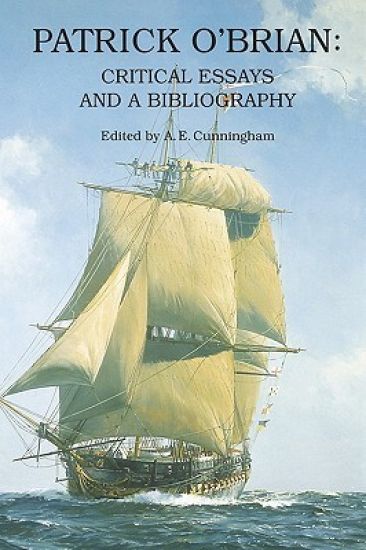
Patrick O'Brian

Patrick O'Brian

Patrick O'Brian; A. E. (EDT) Cunningham

WW Norton Co
1994
sidottu
Patrick O'Brian is the well-known author of the Aubrey/Maturin novels, set during the Napoleonic wars. They are acknowledged by critics and readers alike as classic works of fiction and are attracting an increasingly wide audience. Patrick O'Brian is also a translator of note and the author of several biographies and other works of nonfiction. His first books appeared over forty years ago to wide and enduring critical acclaim.
Patrick O'Brian

Patrick O'Brian

WW Norton Co
2005
sidottu
This is the story of Patrick O'Brian's life up to his decision to move to Collioure in the south of France. His childhood; his precocious writing success; his sailing experiences; and the truth behind his first marriage, divorce, and name change are set forth with candor and sympathy. Along the way Nikolai Tolstoy reveals the seeds of inspiration that would one day lead to comparisons to Jane Austen and even Homer. Tolstoy was O'Brian's stepson, and their acquaintance lasted forty-five years. He stayed with his mother and O'Brian at their French home and was a frequent correspondent with the reclusive author, discovering facets of his character and creative genius that were hidden from others. Over the years he accumulated a vast collection of the author's papers, correspondence, and notebooks, many of which are reproduced here. On the basis of this trove of original material, Tolstoy has written the definitive biography that O'Brian and his admirers deserve.
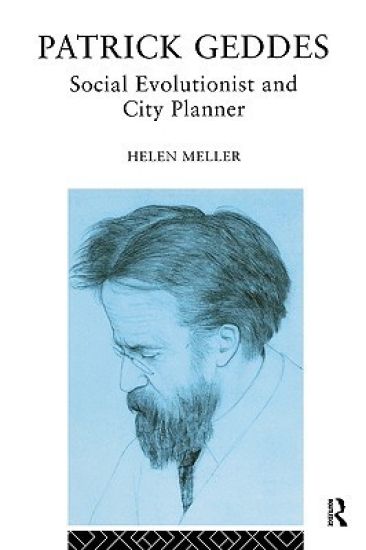
Patrick Geddes

Patrick Geddes

Helen Meller

Routledge
1994
nidottu
One of the great social thinkers of the late nineteenth and early twentieth century, Sir Patrick Geddes (1854-1932) enjoyed a career of astonishing diversity. This new analysis of his life and work reviews his ideas and philosophy of planning, providing a scholarly yet accessible account for those interested in the history of planning, urban design, social theory and nineteenth century British history.
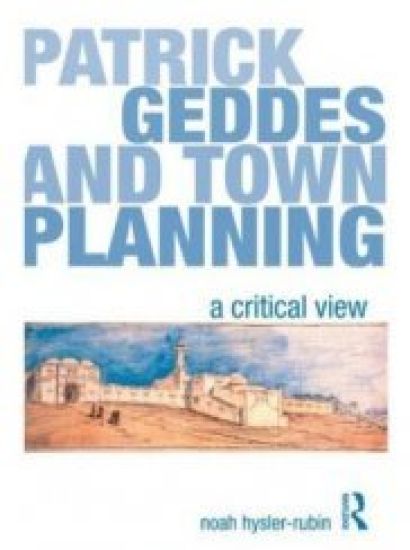
Patrick Geddes and Town Planning

Patrick Geddes and Town Planning

Noah Hysler-Rubin

Routledge
2011
sidottu
Patrick Geddes is considered a forefather of the modern urban planning movement. This book studies the various, and even opposing ways, in which Geddes has been interpreted up to this day, providing a new reading of his life, writing and plans. Geddes' scrutiny is presented as a case study for Town Planning as a whole. Tying together for the first time key concepts in cultural geography and colonial urbanism, the book proposes a more vigorous historiography, exposing hidden narratives and past agendas still dominating the disciplinary discourse. Written by a cultural geographer and a town planner, this book offers a rounded, full-length analysis of Geddes' vision and its material manifestation, functioning also as a much needed critical tool to evaluate Modern Town Planning as an academic and practical discipline. The book also includes a long overdue model of his urban theory.
Patrick Geddes and Town Planning

Patrick Geddes and Town Planning

Noah Hysler-Rubin

Routledge
2011
nidottu
Patrick Geddes is considered a forefather of the modern urban planning movement. This book studies the various, and even opposing ways, in which Geddes has been interpreted up to this day, providing a new reading of his life, writing and plans. Geddes' scrutiny is presented as a case study for Town Planning as a whole. Tying together for the first time key concepts in cultural geography and colonial urbanism, the book proposes a more vigorous historiography, exposing hidden narratives and past agendas still dominating the disciplinary discourse. Written by a cultural geographer and a town planner, this book offers a rounded, full-length analysis of Geddes' vision and its material manifestation, functioning also as a much needed critical tool to evaluate Modern Town Planning as an academic and practical discipline. The book also includes a long overdue model of his urban theory.
Passages from the Diary of General Patrick Gordon
First published in 1968. This is a volume of selected passages from the extensive diary of General Gordon: the soldier of fortune, whose memoirs are now introduced to the Spadling Club, who had been but a short while dead when public attention was turned to the eight or ten thick quartos, in which, for forty years, he had recorded, day by day, the incidents of his eventful life. So early as 1724, a translation of the Journal from its original English into Russian. In printing these selections, an attempt has been made so far to connect them together, by an outline of Gordon's life in the interval, with occasional quotations from some of the more memorable pages of his Journal, such as those in which he notes the beginnings of his intimacy with Peter the Great or chronicles the prompt and vigorous acts by which he quelled the revolt of the Strelitzes.
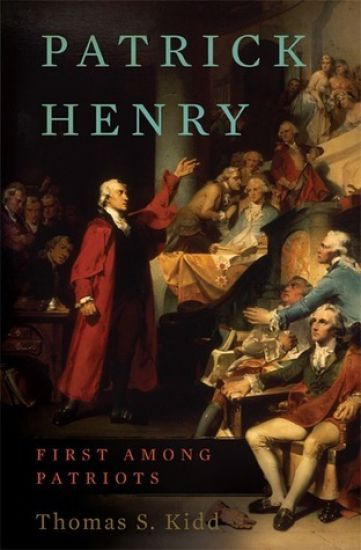
Patrick Henry

Patrick Henry

Kidd Thomas

Basic Books
2011
sidottu
Most Americans know Patrick Henry as a fiery speaker whose pronouncement Give me liberty or give me death!" rallied American defiance to the British Crown. But Henry's skills as an orator,sharpened in the small towns and courtrooms of colonial Virginia,are only one part of his vast, but largely forgotten, legacy. As historian Thomas S. Kidd shows, Henry cherished a vision of America as a virtuous republic with a clearly circumscribed central government. These ideals brought him into bitter conflict with other Founders and were crystallized in his vociferous opposition to the U.S. Constitution. In Patrick Henry , Kidd pulls back the curtain on one of our most radical, passionate Founders, showing that until we understand Henry himself, we will neglect many of the Revolution's animating values.