Kirjojen hintavertailu. Mukana 11 244 527 kirjaa ja 12 kauppaa.

Kirjahaku

Etsi kirjoja tekijän nimen, kirjan nimen tai ISBN:n perusteella.

1000 tulosta hakusanalla Patrick Parrinder

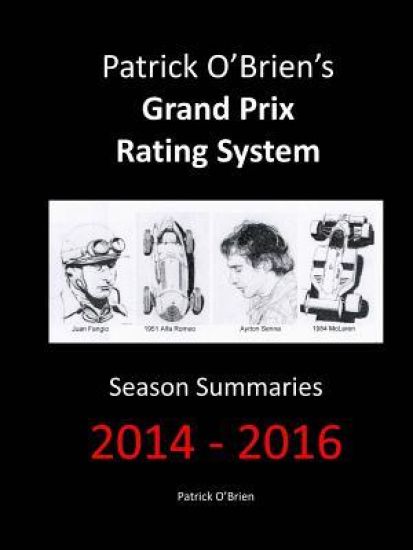
Patrick O’Brien’s Grand Prix Rating System: Season Summary Tables 1894 – 2016
The 2013 Formula One season was dominated by the Vettel/ Red Bull-Renault package, which won 13 of the 19 races. Many reckon that Vettel is one of the great drivers. Some however argue that Vettel was fortunate in having the fastest car, the Red Bull-Renault. Just how good was Vettel compared with his peers? This publication compares grand prix and Formula One drivers, cars and packages in simple arithmetic terms. For the first time the driver has been separated from the car and each is expressed as separate performance elements that make up the performance package. Just how much current four-time champion Vettel contributes to the Red Bull-Renault's recent dominance is explained and quantified. The author's analysis starts from the first car race in 1894, from Paris to Rouen, and includes over 1,200 grand prix races. The 17th volume of the Patrick O'Brien Grand Prix Rating System, this book is an appendix of season-summary tables from 1894-2016.
Patrick Kelly

Patrick Kelly

Laura L. Camerlengo; Dilys E. Blum

Yale University Press
2021
sidottu
“I want my clothes to make you smile!”—Patrick Kelly Patrick Kelly (1954–1990) was known for his bold, bright, and joyful fashion creations that resonated in the streets and nightclubs and on the runways of New York, Paris, and beyond. The first American and the first Black designer to be admitted to the governing body of the French fashion industry, Kelly boasted celebrity couture clients including Madonna, Cicely Tyson, and Gloria Steinem. His designs are distinguished by a combination of playful aesthetics and a willingness to brazenly foreground race and heritage and push cultural boundaries, including racial tropes like golliwogs, or Black baby dolls. Generously illustrated with hundreds of images of runway photography, garments on mannequins, and never-before-published archival materials, this book is an unprecedented exploration of Kelly’s influential career, which was tragically cut short by complications from AIDS. More than 80 of Kelly’s most beloved works are featured alongside thoughtful essays focusing on his work in relationship to French fashion, Queer identity, Black identity, and his exuberant runway shows. Also featured is a detailed timeline decorated with archival photographs and drawings, making this volume the definitive resource on Kelly’s life and work.Published in association with the Fine Arts Museums of San FranciscoExhibition Schedule:de Young, Fine Arts Museums of San Francisco (October 23, 2021–April 24, 2022)Peabody Essex Museum, Salem, MA (June 25–November 6, 2022)
Patrick Henry, The Orator

Patrick Henry, The Orator

David Mccants

Greenwood Press
1990
sidottu
Best known for his Liberty or Death address, the oratorical essence of the American Revolution, Patrick Henry, Virginia patriot, statesman, and foremost orator of the Revolutionary period, is scrutinized in this eighth volume in the Greenwood Press Great American Orators series. Taken as a whole the volumes chronicle the role of public discourse in the United States and fill the void that has existed in American public address. In Patrick Henry, The Orator, David A. McCants develops fresh perspectives on an illustrious orator who excelled in two of the classical genres of rhetoric--the forensic and the deliberative. McCants gives a creative and compelling interpretation of the rhetorical efficacy of Henry's Liberty or Death speech, making a strong prima facie case for his evangelical explication. Rhetorical topics such as delivery, modes of proof, style, organization, effect, and more are examined within the context of the historical exigencies that motivated Henry and shaped his responses. The culture and politics of eighteenth-century Virginia as well as biographical factors that shaped Henry's development are explored in depth. Also included are six important speech texts with critical materials that provide students and scholars of the history and criticism of American public address a more comprehensive basis for understanding Henry's rhetorical reputation.Patrick Henry's development as a popular orator is traced in Part I, which presents critical analyses of the orator and his speeches during his Protest and National periods and in legal venues. In these chapters McCants focuses on the rhetorical considerations of speaker and speech, purpose and effect. Part II contains texts of the important addresses discussed in the preceding critical analyses. These collected speeches and speech reports include The Parsons' Cause Case, the conclusion of the Caesar-Brutus speech in the Stamp Act Debate of May 1765, the Liberty or Death speech, two speeches from the Ratifying Convention Debate, and Patrick Henry's defense in the British Debts Case. A chronology of major speeches lists all of Henry's known addresses as well as the places and dates of the speeches and attests to the scope of rhetoric in the United States. The bibliography contains carefully described historical collections and gathers together primary and secondary sources that bear on the speaker and the oratory. An index closes the volume. Students and scholars of rhetoric, public oratory, and American history will find this notable study an invaluable research tool.
Patrick White's Fiction

Patrick White's Fiction

Carolyn Bliss

Palgrave Macmillan
1986
sidottu
This study examines all eleven novels of Patrick White, the great Australian writer and Nobel Prize-winner. It begins from the observation that major characters in his novels undergo a necessary, redemptive, or facilitating failure. This failure paradoxically enables their success within the context of what White has called the 'overreaching grandeur' which circumscribes human existence. Evolution of this theme is traced through forty years of White's fiction: from his first novel, Happy Valley (1939), to his most recent work, The Twyborn Affair (1979). Comprehensive in its scope, this book is informed by a thorough knowledge of White's poetry, plays, short stories, and autobiography, as well as his novels. It is also unique in stressing that White's world view derives from a distinctly Australian experience. It thus links him to a country in which he is deeply rooted and to a heritage he continued to affirm.
Patrick White

Patrick White

John Colmer

Routledge
2019
sidottu
Patrick White is a giant among the moderns. His massive novels, which chart the lonely paths to truth, challenge orthodox notions about fiction and reality. He has created a wholly new kind of prose to embody his prophetic visions of truth and his fierce denunciations of modern society.Originally published in 1984, John Colmer’s study of the Nobel Prize winning Australian novelist was the first to survey all his published works. It differs from earlier studies in using fresh autobiographical material, in revealing the links between the plays and the fiction and in stressing White’s vision of duality rather than his much praised affirmations of harmony. Where previous studies have been exegetical this one is also evaluative. It illustrates the process by which White has come to recognize the necessity for the reintegration of the alienated visionary into society.
Patrick White

Patrick White

John Colmer

Routledge
2021
nidottu
Patrick White is a giant among the moderns. His massive novels, which chart the lonely paths to truth, challenge orthodox notions about fiction and reality. He has created a wholly new kind of prose to embody his prophetic visions of truth and his fierce denunciations of modern society.Originally published in 1984, John Colmer’s study of the Nobel Prize winning Australian novelist was the first to survey all his published works. It differs from earlier studies in using fresh autobiographical material, in revealing the links between the plays and the fiction and in stressing White’s vision of duality rather than his much praised affirmations of harmony. Where previous studies have been exegetical this one is also evaluative. It illustrates the process by which White has come to recognize the necessity for the reintegration of the alienated visionary into society.
Patrick Geddes’ Contribution to Sociology and Urban Planning
This book explores Patrick Geddes’ significant contributions to urban planning and sociology. His vision of the city, rooted in the principles of social development and preservation of cultural and ecological resources, has inspired generations of urban planners, architects and social scientists engaged with contemporary urban issues.The book discusses Geddes’ early experiments with urban renewal in Edinburgh, the famous Cities and Town Planning Exhibition and his work in India for the improvement of cities and towns with minimal financial and human cost. It examines the theoretical underpinnings of his ideas in relation to issues such as better housing and health; the preservation of history and culture; the role of a citizen; university and urban renewal; and the contemporary urban ecological crisis among others. Furthermore, it looks at the question of sustainability in the context of Geddes’ vision of a more humane, social, natural and aesthetic town and city.A comprehensive review of Patrick Geddes’ ideas, this book underlines the relevance of his work to contemporary urban concerns and issues, especially in India. It will be of interest to scholars and researchers of sociology, urban studies, city planning, urban sociology, architecture, human geography, urban geography, settlement studies, development studies and environmental sustainability.
Patrick Suppes, Economics, and Economic Methodology
Patrick Suppes (1922–2014) was an extraordinarily wide-ranging scholar. Although best known as a philosopher of science, Suppes made substantial contributions to a remarkably wide range of different fields of research including many relevant to economics: decision theory, philosophy of economics, modeling theory, foundations of measurement, philosophy of psychology (and thus what is now behavioral economics), and many other fields. This collection recognizes Suppes’s contributions to economics and economic methodology with a symposium of papers that examine, build on, and/or assess Suppes’s research in these areas. The authors include philosophers, economists, game theorists, historians of economics, and many whose research combine these fields. This book honors Patrick Suppes, while at the same time, exhibiting the richness of contemporary philosophy of economics. It was originally published as a special issue of the Journal of Economic Methodology.
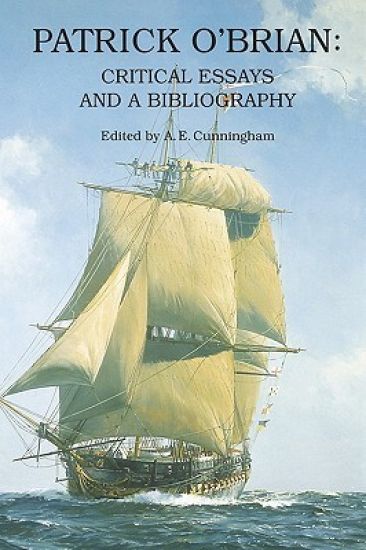
Patrick O'Brian

Patrick O'Brian

Patrick O'Brian; A. E. (EDT) Cunningham

WW Norton Co
1994
sidottu
Patrick O'Brian is the well-known author of the Aubrey/Maturin novels, set during the Napoleonic wars. They are acknowledged by critics and readers alike as classic works of fiction and are attracting an increasingly wide audience. Patrick O'Brian is also a translator of note and the author of several biographies and other works of nonfiction. His first books appeared over forty years ago to wide and enduring critical acclaim.
Patrick O'Brian

Patrick O'Brian

WW Norton Co
2005
sidottu
This is the story of Patrick O'Brian's life up to his decision to move to Collioure in the south of France. His childhood; his precocious writing success; his sailing experiences; and the truth behind his first marriage, divorce, and name change are set forth with candor and sympathy. Along the way Nikolai Tolstoy reveals the seeds of inspiration that would one day lead to comparisons to Jane Austen and even Homer. Tolstoy was O'Brian's stepson, and their acquaintance lasted forty-five years. He stayed with his mother and O'Brian at their French home and was a frequent correspondent with the reclusive author, discovering facets of his character and creative genius that were hidden from others. Over the years he accumulated a vast collection of the author's papers, correspondence, and notebooks, many of which are reproduced here. On the basis of this trove of original material, Tolstoy has written the definitive biography that O'Brian and his admirers deserve.
Patrick Geddes

Patrick Geddes

Helen Meller

Routledge
1994
nidottu
One of the great social thinkers of the late nineteenth and early twentieth century, Sir Patrick Geddes (1854-1932) enjoyed a career of astonishing diversity. This new analysis of his life and work reviews his ideas and philosophy of planning, providing a scholarly yet accessible account for those interested in the history of planning, urban design, social theory and nineteenth century British history.
Patrick Geddes and Town Planning

Patrick Geddes and Town Planning

Noah Hysler-Rubin

Routledge
2011
sidottu
Patrick Geddes is considered a forefather of the modern urban planning movement. This book studies the various, and even opposing ways, in which Geddes has been interpreted up to this day, providing a new reading of his life, writing and plans. Geddes' scrutiny is presented as a case study for Town Planning as a whole. Tying together for the first time key concepts in cultural geography and colonial urbanism, the book proposes a more vigorous historiography, exposing hidden narratives and past agendas still dominating the disciplinary discourse. Written by a cultural geographer and a town planner, this book offers a rounded, full-length analysis of Geddes' vision and its material manifestation, functioning also as a much needed critical tool to evaluate Modern Town Planning as an academic and practical discipline. The book also includes a long overdue model of his urban theory.
Patrick Geddes and Town Planning

Patrick Geddes and Town Planning

Noah Hysler-Rubin

Routledge
2011
nidottu
Patrick Geddes is considered a forefather of the modern urban planning movement. This book studies the various, and even opposing ways, in which Geddes has been interpreted up to this day, providing a new reading of his life, writing and plans. Geddes' scrutiny is presented as a case study for Town Planning as a whole. Tying together for the first time key concepts in cultural geography and colonial urbanism, the book proposes a more vigorous historiography, exposing hidden narratives and past agendas still dominating the disciplinary discourse. Written by a cultural geographer and a town planner, this book offers a rounded, full-length analysis of Geddes' vision and its material manifestation, functioning also as a much needed critical tool to evaluate Modern Town Planning as an academic and practical discipline. The book also includes a long overdue model of his urban theory.
Passages from the Diary of General Patrick Gordon
First published in 1968. This is a volume of selected passages from the extensive diary of General Gordon: the soldier of fortune, whose memoirs are now introduced to the Spadling Club, who had been but a short while dead when public attention was turned to the eight or ten thick quartos, in which, for forty years, he had recorded, day by day, the incidents of his eventful life. So early as 1724, a translation of the Journal from its original English into Russian. In printing these selections, an attempt has been made so far to connect them together, by an outline of Gordon's life in the interval, with occasional quotations from some of the more memorable pages of his Journal, such as those in which he notes the beginnings of his intimacy with Peter the Great or chronicles the prompt and vigorous acts by which he quelled the revolt of the Strelitzes.
Patrick Henry

Patrick Henry

Kidd Thomas

Basic Books
2011
sidottu
Most Americans know Patrick Henry as a fiery speaker whose pronouncement Give me liberty or give me death!" rallied American defiance to the British Crown. But Henry's skills as an orator,sharpened in the small towns and courtrooms of colonial Virginia,are only one part of his vast, but largely forgotten, legacy. As historian Thomas S. Kidd shows, Henry cherished a vision of America as a virtuous republic with a clearly circumscribed central government. These ideals brought him into bitter conflict with other Founders and were crystallized in his vociferous opposition to the U.S. Constitution. In Patrick Henry , Kidd pulls back the curtain on one of our most radical, passionate Founders, showing that until we understand Henry himself, we will neglect many of the Revolution's animating values.