Kirjojen hintavertailu. Mukana 11 699 587 kirjaa ja 12 kauppaa.

Kirjahaku

Etsi kirjoja tekijän nimen, kirjan nimen tai ISBN:n perusteella.

1000 tulosta hakusanalla Patrick T. R. Gray

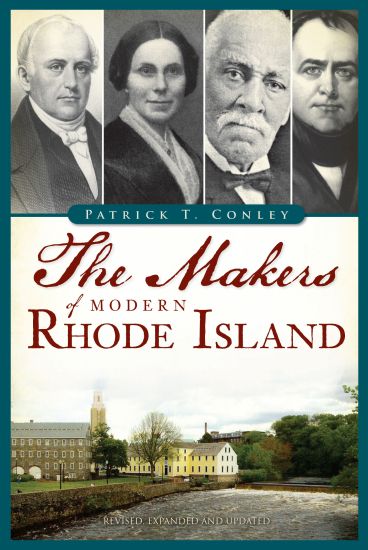
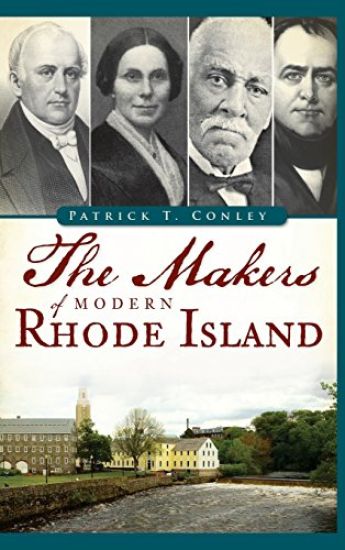
The Makers of Modern Rhode Island

The Makers of Modern Rhode Island

Patrick T. Conley

History Press
2023
nidottu
Picking up where Rhode Island's Founders left off Dr. Patrick T. Conley, Rhode Island's preeminent historian and president of the Rhode Island Heritage Hall of Fame, takes us through the Ocean State's history from 1790 to 1860. Learn how Samuel Slater, the Father of the Factory System, pioneered the making of modern Rhode Island, how Elizabeth Buffum Chace founded the Rhode Island Women's Suffrage Association and what political circumstances led Governor Thomas Wilson Dorr to the Dorr War in 1842. This newly revised and updated edition includes colorful biographical sketches of fifty-six influential Rhode Islanders who helped shape the state's urban and industrial development into the modern Rhode Island of today, including some lesser-known Rhode Islanders, including Eliza Jumel and Adin Ballou.
One Day at the Feed Store

One Day at the Feed Store

Patrick T Donnelly

Lulu Publishing Services
2016
pokkari
The sky was a deep blue that you only see on cold winter days. Their breath was like large clouds of steam rolling into the frigid air. Billy and Ely headed up the slope to check on the next set, and to their amazement, once again they had been blessed. Through the woods and fields around his home Ely taught Billy all about the outdoors. Little did Billy know that those days would help mold him into the man he needed to be as he grew and his skills were called upon to help keep the place we call home safe for all. Join Billy and Ely as the adventure begins one day at the feed store and takes him to all parts of the globe!
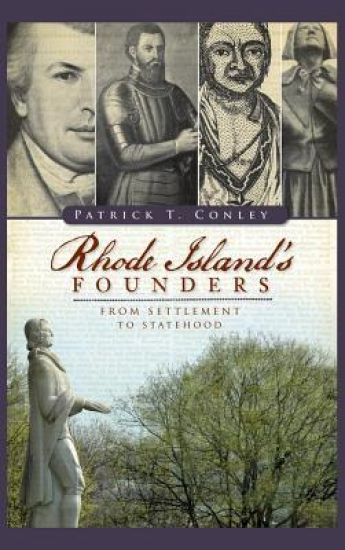
Rhode Island Founders: From Settlement to Statehood

Rhode Island Founders: From Settlement to Statehood

Patrick T. Conley

History Press Library Editions
2010
sidottu
Dr. Patrick T. Conley, Rhode Island's preeminent historian, journeys with us to early America, where Rhode Island's founders laid the groundwork for America's policy of religious freedom. Learn what led Roger Williams to write The Bloudy Tenent of Persecution and discover how James Franklin, older brother of Benjamin, left a lasting impact on the future of American publishing. Find out why Mary Dyer fought for her religious beliefs until she became one of the "Boston martyrs"; how Anne Hutchinson overcame a male-dominated society to allow women the right to preach and teach; and how General Nathanael Greene helped to liberate the South during the American Revolution. These colorful biographies of political, military and religious leaders, artists and craftsmen, scientists and philanthropists illuminate the beginning of America's smallest state, but one that has always exhibited remarkable diversity.
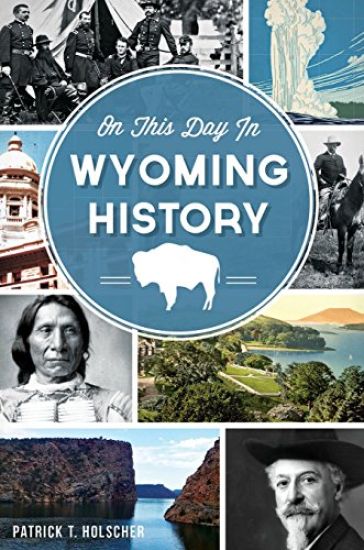
On This Day in Wyoming History

On This Day in Wyoming History

Patrick T. Holscher

History Press Library Editions
2014
sidottu
Wyoming might be known as the least populous state, but this land of mountains and prairies is home to enough history to provide an entertaining footnote for each day of the year. On September 6, 1870, Wyoming was the first state to give women the right to vote, and on March 1, 1872, Yellowstone became the world's first National Park. JCPenney opened its doors in Kemmerer on April 14, 1902, while May 1, 1883, marks Buffalo Bill Cody's very first Wild West Show. Join Pat Holscher on a day-by-day look at some of the Equality State's most fascinating factoids.
Aboard the Fabre Line to Providence: Immigration to Rhode Island

Aboard the Fabre Line to Providence: Immigration to Rhode Island

Patrick T. Conley; William J. Jennings

History Press Library Editions
2013
sidottu
In an era when immigration was at its peak, the Fabre Line offered the only transatlantic route to southern New England. One of its most important ports was in Providence, Rhode Island. Nearly eighty-four thousand immigrants were admitted to the country between the years 1911 and 1934. Almost one in nine of these individuals elected to settle in Rhode Island after landing in Providence, amounting to around eleven thousand new residents. Most of these immigrants were from Portugal and Italy, and the Fabre Line kept up a brisk and successful business. However, both the line and the families hoping for a new life faced major obstacles in the form of World War I, the immigration restriction laws of the 1920s, and the Great Depression. Join authors Patrick T. Conley and William J. Jennings Jr. as they chronicle the history of the Fabre Line and its role in bringing new residents to the Ocean State.
The Makers of Modern Rhode Island

The Makers of Modern Rhode Island

Patrick T. Conley

History Press Library Editions
2012
sidottu
Picking up where Rhode Island's Founders left off Dr. Patrick T. Conley, Rhode Island's preeminent historian and president of the Rhode Island Heritage Hall of Fame, takes us through the Ocean State's history from 1790 to 1860. Learn how Samuel Slater, the so-called Father of the Factor System, pioneered the making of modern Rhode Island, how Elizabeth Buffum Chace founded the Rhode Island Women's Suffrage Association and what political circumstances led Governor Thomas Wilson Dorr to the Dorr War in 1842. This volume includes colorful biographical sketches of fifty-six influential Rhode Islanders who helped shape the state's urban and industrial development into the modern Rhode Island of today.
The Leaders of Rhode Island's Golden Age

The Leaders of Rhode Island's Golden Age

Patrick T. Conley

History Press Library Editions
2019
sidottu
Picking up where The Makers of Modern Rhode Island left off, Dr. Patrick T. Conley, president of the Rhode Island Heritage Hall of Fame, takes us through the golden age of the state's history, from 1861 to 1900. It was during this period that Rhode Island played a leadership role in the Industrial Revolution. From military leaders like General Ambrose Burnside to social reformers such as Sarah Elizabeth Doyle and architects Charles F. McKim and Stanford White, they ensured that the state's contributions to the nation would never be forgotten. This volume includes more than one hundred biographical sketches of influential Rhode Islanders who helped make this brief span of time the greatest in the state's history.
Wasted

Wasted

Patrick T. Murphy

Ivan R Dee, Inc
1997
sidottu
The public guardian of Cook County, Illinois, charges that the child welfare bureaucracy, designed to help children, is instead helping to destroy them. Murphy explains the facts and failures of the child welfare system—and offers solutions—better than any expert I've ever read on the subject....A first-rate read—poignant and instructive. —Edward I. Koch
Wasted

Wasted

Patrick T. Murphy

Ivan R Dee, Inc
2000
pokkari
This is a book about how a system designed to help children is instead helping to destroy them. For almost thirty years Patrick Murphy has represented abused and neglected children in court cases at every level of the state and federal judiciary, including the U.S. Supreme Court. He has labored in the trenches of the child welfare and juvenile justice systems. In Wasted, Mr. Murphy charges that the child welfare bureaucracy is stuck in hundred-year-old realities and the politics of the 1960s and 1970s. The concern of state agencies and the courts for family preservation, he argues, has now gone too far. Keeping families together by lavishing public resources on abusive parents who can’t and won’t change their behavior is harming their children. Too many of them are suffering continued abuse, degradation, neglect, injury, even death. The system is sending all the wrong messages, Mr. Murphy insists: struggling poor parents are ignored by the government while abusers get help; confidentiality protects state agencies that make mistakes; a resistance to trans-racial placement and adoption ensures that many African-American children will never find a permanent home. Meanwhile America’s underclass continues to grow and ossify because we refuse to grapple with its racial implications. Wasted pulls no punches in describing the mess, but Mr. Murphy also offers a prescription for fixing what’s broke.