Kirjojen hintavertailu. Mukana 12 390 323 kirjaa ja 12 kauppaa.

Kirjahaku

Etsi kirjoja tekijän nimen, kirjan nimen tai ISBN:n perusteella.

1000 tulosta hakusanalla Paul Freeman

Children and their Urban Environment

Children and their Urban Environment

Claire Freeman; Paul Tranter

Earthscan Ltd
2011
sidottu
In our fast-changing urban world, the impacts of social and environmental change on children are often overlooked. Children and their Urban Environment examines these impacts in detail, looking at the key activities, spaces and experiences children have and how these can be managed to ensure that children benefit from change. The authors highlight the importance of planners, architects and housing professionals in creating positive environments for children and involving them in the planning process. They argue that children's lives are becoming simultaneously both richer and more deprived, and that, despite apparently increasing wealth, disparities between children are increasing further. Each chapter includes international examples of good practice and policy innovations for redressing the balance in favour of child supportive environments. The book seeks to embrace childhood as a time of freedom, social engagement and environmental adventure and to encourage creation of environments that better meet the needs of children. The authors argue that in doing so, we will build more sustainable neighbourhoods, cities and societies for the future.
Planning with children for better communities

Planning with children for better communities

Claire Freeman; Paul Henderson; Jane Kettle

Policy Press
1999
nidottu
Following the UN Convention on the Rights of the Child (1989), the case for children's involvement in decision-making processes has been championed by pressure groups and voluntary organisations. Planning with children for better communities argues that there is now a need to transfer these ideas and experiences to mainstream services of local authorities, regeneration agencies and other organisations. In addition to clarifying why the issue of children's participation should be prioritised, the authors use examples and case studies from a variety of professions and disciplines in order to explain different methods which can be used to support participation. The book: analyses children's and young people's contemporary place in local communities; locates debates about children's and young people's participation in local communities within government social and economic policy; captures children's and young people's views and experiences of community life. The authors conclude that there should be greater recognition of the right of children to determine significant decisions affecting them - children have a clear entitlement to involvement in key decisions which influence their lives. Planning with children for better communities is important reading for local authority planners and policy makers, project workers, community development workers, children's rights officers, youth workers, play workers and students of social and community work and politics. It should also be read by those people in the voluntary and community sector concerned with children's issues relating to planning and community development.
Managing Environmental Risk Through Insurance

Managing Environmental Risk Through Insurance

Paul K. Freeman; Howard Kunreuther

Springer
2012
nidottu
Can insurance be used as a means to obtain compliance with environmental policy? Answering this question requires examination of a broad mosaic of academic issues, including current systems available for providing compensation and deterrence, use of contracts (including insurance) as substitutes for tort law, limitations of regulatory policy-making by government agencies, pre-conditions for creation of insurance products, and market mechanisms necessary for insurance to be purchased or sold. The purpose of Managing Environmental Risk Through Insurance is to highlight the potential role that insurance and performance standards can play in managing environmental risk. Insurance can play a significant role in dealing with one of the most problematic issues facing society today - how to compensate for environmental exposures. This book analyzes the ability of insurance to play a role in managing environmental risk. It begins by outlining the role insurance plays in society in contrast to other societal tools for addressing risk: government benefit programs and imposition of involuntary liability using the court system. By so doing, the book describes the comparative advantages of insurance. The book then analyzes the insurability of the risks. Finally, the book applies the insurability analysis to three concrete environmental examples.
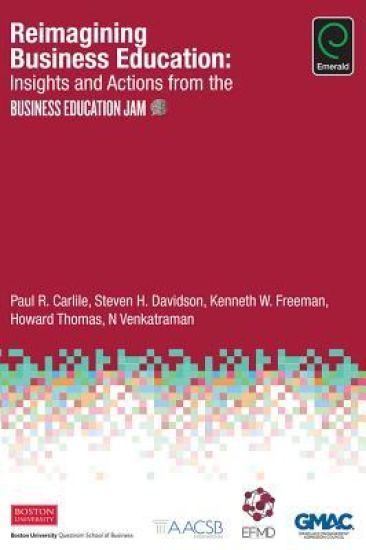
Reimagining Business Education

Reimagining Business Education

Paul R. Carlile; Steven H. Davidson; Kenneth W. Freeman; Howard Thomas; N. Venkatraman

Emerald Publishing Limited
2016
sidottu
'Reimagining Business Education’ discusses the rationale for, and design of, the first Business Education Jam. It reviews key challenges facing business education and articulates a vision for how the role and delivery of business education could be reimagined. This book is critically important during a time when business schools, as an industry, struggle to identify the innovations necessary to meet the needs of a changing world. The Jam was the first open platform for dialogue of its kind for business education and continues to make an impact - including use by Schools and Deans around the world to guide strategic planning efforts; program directors as they drive innovation in their programs; and industry executives as they identify ways to better engage with business education. This book takes this collaborative effort a step further to break down traditional models and structures as we seek to reimagine the future of business education in a more open and connected world.
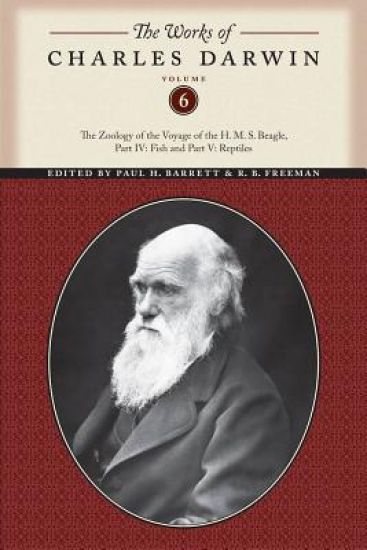
The Works of Charles Darwin, Volumes 1-29 (complete set)

The Works of Charles Darwin, Volumes 1-29 (complete set)

Charles Darwin; Paul H. Barrett; R. B. Freeman

New York University Press
2010
pokkari
Are they needed? To be sure. The Darwinian industry, industrious though it is, has failed to provide texts of more than a handful of Darwin's books. If you want to know what Darwin said about barnacles (still an essential reference to cirripedists, apart from any historical importance) you are forced to search shelves, or wait while someone does it for you; some have been in print for a century; various reprints have appeared and since vanished." —Eric Korn, Times Literary Supplement Charles Robert Darwin (1809–1882) has been widely recognized since his own time as one of the most influential writers in the history of Western thought. His books were widely read by specialists and the general public, and his influence had been extended by almost continuous public debate over the past 150 years. New York University Press's new paperback edition makes it possible to review Darwin's public literary output as a whole, plus his scientific journal articles, his private notebooks, and his correspondence. This is complete edition contains all of Darwin's published books, featuring definitive texts recording original pagination with Darwin's indexes retained. The set also features a general introduction and index, and introductions to each volume.
Iterative Learning Control Algorithms and Experimental Benchmarking

Iterative Learning Control Algorithms and Experimental Benchmarking

Eric Rogers; Bing Chu; Christopher Freeman; Paul Lewin

John Wiley Sons Inc
2023
sidottu
Iterative Learning CONTROL ALGORITHMS AND EXPERIMENTAL BENCHMARKING Iterative Learning Control Algorithms and Experimental Benchmarking Presents key cutting edge research into the use of iterative learning control The book discusses the main methods of iterative learning control (ILC) and its interactions, as well as comparator performance that is so crucial to the end user. The book provides integrated coverage of the major approaches to-date in terms of basic systems, theoretic properties, design algorithms, and experimentally measured performance, as well as the links with repetitive control and other related areas. Key features: Provides comprehensive coverage of the main approaches to ILC and their relative advantages and disadvantages. Presents the leading research in the field along with experimental benchmarking results. Demonstrates how this approach can extend out from engineering to other areas and, in particular, new research into its use in healthcare systems/rehabilitation robotics. The book is essential reading for researchers and graduate students in iterative learning control, repetitive control and, more generally, control systems theory and its applications.
Lonely Planet South America

Lonely Planet South America

Isabel Albiston; Bárbara Bianchi; Alex Egerton; Bailey Freeman; Victoria Gill; Anthony Ham; Trent Holden; Mark Johanson; Brendan Sainsbury; Carinya Sharples; Paul Smith; Wendy Yanagihara

Lonely Planet Global Limited
2025
nidottu
Lonely Planet's local travel experts reveal all you need to know to plan the trip of a lifetime to South America.Discover popular and off the beaten track experiences from spotting giant tortoises, marine iguanas, and more on the Galapagos' Isla Isabela, to visiting the sublime Inca citadel of Machu Picchu, and exploring the charming coastal town of Cartagena with its pastel-toned balconies and buzzing street food stalls.Build a trip to remember with Lonely Planet's South America travel guide:Our classic guidebook format provides you with the most comprehensive level of information for planning multi-week tripsUpdated with an all new structure and design so you can navigate South America and connect experiences together with easeCreate your perfect trip with exciting itineraries for extended journeys combined with suggested day trips, walking tours, and activities to match your passionsGet fresh takes on must-visit sights and expert local recommendations on when to go, eating, drinking, nightlife, shopping, accommodation, adventure activities, festivals, and moreEssential information toolkit containing tips on arriving; transport; making the most of your time and money; LGBTIQ+ travel advice; useful words and phrases; accessibility; and responsible travelConnect with South American culture through stories that delve deep into local life, history, and traditions Inspiring full-colour travel photography and mapsCovers: Argentina; Bolivia; Brazil; Chile; Colombia; Ecuador; French Guiana; Guyana; Paraguay; Peru; Suriname; Uruguay; VenezuelaCreate a trip that's uniquely yours and get to the heart of this extraordinary part of the world with Lonely Planet's South America.
Advances in Ophthalmology and Optometry, 2016

Advances in Ophthalmology and Optometry, 2016

Myron Yanoff; Madhura A. Tamhankar; Elaine Wu; Allan E. Wulc; Jessica Ackert; Mary Aronow; Alan S. Crandall; Paul B. Freeman; Ronni M. Lieberman; Joseph M. Ortiz; Leonard J. Press; Aparna Ramasubramanian

Elsevier - Health Sciences Division
2016
sidottu
Advances in Ophthalmology and Optometry reviews the most current practices in both ophthalmology and optometry. A distinguished editorial board, headed by Dr. Myron Yanoff, identifies key areas of major progress and controversy and invites expert ophthalmologists and Optometrists to contribute original articles devoted to these topics. These insightful overviews bring concepts to a clinical level and explore their everyday impact on patient care. Topics will cover all specialty areas, highlighting the most current and relevant information in the field.
Advances in Ophthalmology and Optometry, 2017

Advances in Ophthalmology and Optometry, 2017

Myron Yanoff; Madhura A. Tamhankar; An Vo; Allan E. Wulc; Jesse L. Berry; Alan S. Crandall; Paul B. Freeman; Ronni M. Lieberman; Joseph M. Ortiz; Leonard J. Press; Aparna Ramasubramanian; Narsing Rao

Elsevier - Health Sciences Division
2017
sidottu
Advances in Ophthalmology and Optometry reviews the most current practices in both ophthalmology and optometry. A distinguished editorial board, headed by Dr. Myron Yanoff, identifies key areas of major progress and controversy and invites expert ophthalmologists and optometrists to contribute original articles devoted to these topics. Topics covered this volume include, but are not limited to, technology in the evolution of eye care, myopia, anti-VEGF medications in retinopathy of prematurity, current management of retinoblastoma, secondary angle-closure glaucoma, management of conjunctival bleb leaks, newer therapies for giant cell arteritis, nystagmus, corneal crosslinking, corneal inlays for treatment of presbyopia, orbital floor management, refinements in the conjunctivomullerectomy procedure, emerging intraocular infections of global significance, and recent advances in ocular imaging, among others.
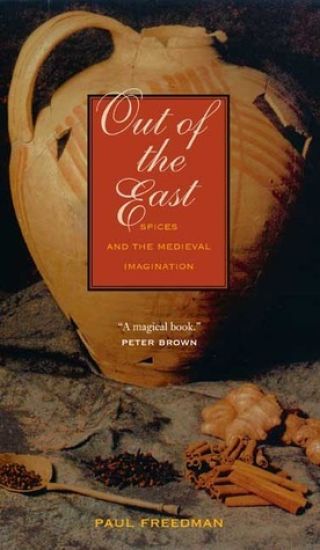
Out of the East

Out of the East

Paul Freedman

Yale University Press
2009
pokkari
How medieval Europe’s infatuation with expensive, fragrant, and exotic spices led to an era of colonial expansion and the discovery of new worlds The demand for spices in medieval Europe was extravagant and was reflected in the pursuit of fashion, the formation of taste, and the growth of luxury trade. It inspired geographical and commercial exploration ,as traders pursued such common spices as pepper and cinnamon and rarer aromatic products, including ambergris and musk. Ultimately, the spice quest led to imperial missions that were to change world history.This engaging book explores the demand for spices: why were they so popular, and why so expensive? Paul Freedman surveys the history, geography, economics, and culinary tastes of the Middle Ages to uncover the surprisingly varied ways that spices were put to use--in elaborate medieval cuisine, in the treatment of disease, for the promotion of well-being, and to perfume important ceremonies of the Church. Spices became symbols of beauty, affluence, taste, and grace, Freedman shows, and their expense and fragrance drove the engines of commerce and conquest at the dawn of the modern era.
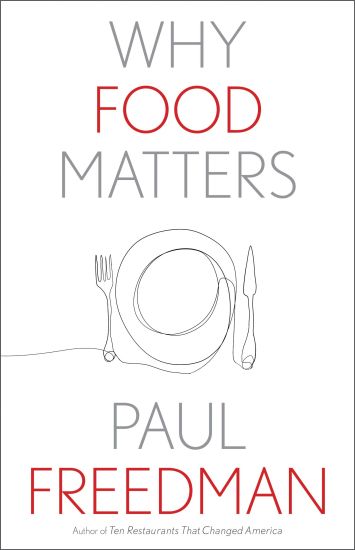
Why Food Matters

Why Food Matters

Paul Freedman

Yale University Press
2021
sidottu
From the author of Ten Restaurants That Changed America, an exploration of food’s cultural importance and its crucial role throughout human history“A rich and fascinating narrative that reaches deep into the historical and cultural larder of societal experience, powerfully illustrating the myriad ways that food matters as an essential condiment for humanity.”—Danny Meyer, founder of Union Square Hospitality Group and Shake Shack Why does food matter? Historically, food has not always been considered a serious subject on par with, for instance, a performance art like opera or a humanities discipline like philosophy. Necessity, ubiquity, and repetition contribute to the apparent banality of food, but these attributes don’t capture food’s emotional and cultural range, from the quotidian to the exquisite. In this short, passionate book, Paul Freedman makes the case for food’s vital importance, stressing its crucial role in the evolution of human identity and human civilizations. Freedman presents a highly readable and illuminating account of food’s unique role in our lives. It is a way to express community and celebration, but it can also be divisive. This wide-ranging book is a must-read for food lovers and all those interested in how cultures and identities are formed and maintained.
Why Food Matters

Why Food Matters

Paul Freedman

YALE UNIVERSITY PRESS
2022
pokkari
From the author of Ten Restaurants That Changed America, an exploration of food’s cultural importance and its crucial role throughout human history“A rich and fascinating narrative that reaches deep into the historical and cultural larder of societal experience, powerfully illustrating the myriad ways that food matters as an essential condiment for humanity.”—Danny Meyer, founder of Union Square Hospitality Group and Shake Shack Why does food matter? Historically, food has not always been considered a serious subject on par with, for instance, a performance art like opera or a humanities discipline like philosophy. Necessity, ubiquity, and repetition contribute to the apparent banality of food, but these attributes don’t capture food’s emotional and cultural range, from the quotidian to the exquisite. In this short, passionate book, Paul Freedman makes the case for food’s vital importance, stressing its crucial role in the evolution of human identity and human civilizations. Freedman presents a highly readable and illuminating account of food’s unique role in our lives. It is a way to express community and celebration, but it can also be divisive. This wide-ranging book is a must-read for food lovers and all those interested in how cultures and identities are formed and maintained.
The Origins of Peasant Servitude in Medieval Catalonia

The Origins of Peasant Servitude in Medieval Catalonia

Paul Freedman

Cambridge University Press
1991
sidottu
This 1991 book describes the history of peasants in Catalonia, the wealthiest and politically dominant part of the medieval Kingdom of Aragon, between the ninth and fifteenth centuries. It focuses on the period from 1000 to 1300, when free peasants who had held property under favourable frontier conditions were progressively subjugated by their lords. Between 1462 and 1486 Catalan peasants mounted the most successful peasants' war of the Middle Ages, and achieved the formal abolition of servitude. Professor Freedman seeks to explain both the process by which servitude was strengthened over the centuries, and its eventual weakening before a direct moral and military challenge. He addresses both the causes of enserfment and the limitations on its effectiveness. The book integrates archival evidence with the theories of society elaborated by medieval jurists. Comparisons are drawn between Catalonia and other regions, and its experience is situated within a spectrum of different social and economic conditions.
The Origins of Peasant Servitude in Medieval Catalonia

The Origins of Peasant Servitude in Medieval Catalonia

Paul Freedman

Cambridge University Press
2004
pokkari
This book describes the history of peasants in Catalonia, the wealthiest and politically dominant part of the medieval Kingdom of Aragon, between the ninth and fifteenth centuries. It focuses on the period from 1000 to 1300, when free peasants who had held property under favourable frontier conditions were progressively subjugated by their lords. Between 1462 and 1486 Catalan peasants mounted the most successful peasants’ war of the Middle Ages, and achieved the formal abolition of servitude. Professor Freedman seeks to explain both the process by which servitude was strengthened over the centuries, and its eventual weakening before a direct moral and military challenge. He addresses both the causes of enserfment and the limitations on its effectiveness. The book integrates archival evidence with the theories of society elaborated by medieval jurists. Comparisons are drawn between Catalonia and other regions, and its experience is situated within a spectrum of different social and economic conditions.
Images of the Medieval Peasant

Images of the Medieval Peasant

Paul Freedman

Stanford University Press
1999
sidottu
The medieval clergy, aristocracy, and commercial classes tended to regard peasants as objects of contempt and derision. In religious writings, satires, sermons, chronicles, and artistic representations peasants often appeared as dirty, foolish, dishonest, even as subhuman or bestial. Their lowliness was commonly regarded as a natural corollary of the drudgery of their agricultural toil. Yet, at the same time, the peasantry was not viewed as "other" in the manner of other condemned groups, such as Jews, lepers, Muslims, or the imagined "monstrous races" of the East. Several crucial characteristics of the peasantry rendered it less clearly alien from the elite perspective: peasants were not a minority, their work in the fields nourished all other social orders, and, most important, they were Christians. In other respects, peasants could be regarded as meritorious by virtue of their simple life, productive work, and unjust suffering at the hands of their exploitive social superiors. Their unrewarded sacrifice and piety were also sometimes thought to place them closest to God and more likely to win salvation. This book examines these conflicting images of peasants from the post-Carolingian period to the German Peasants' War. It relates the representation of peasants to debates about how society should be organized (specifically, to how human equality at Creation led to subordination), how slavery and serfdom could be assailed or defended, and how peasants themselves structured and justified their demands. Though it was argued that peasants were legitimately subjugated by reason of nature or some primordial curse (such as that of Noah against his son Ham), there was also considerable unease about how the exploitation of those who were not completely alien—who were, after all, Christians—could be explained. Laments over peasant suffering as expressed in the literature might have a stylized quality, but this book shows how they were appropriated and shaped by peasants themselves, especially in the large-scale rebellions that characterized the late Middle Ages.
Images of the Medieval Peasant

Images of the Medieval Peasant

Paul Freedman

Stanford University Press
1999
pokkari
The medieval clergy, aristocracy, and commercial classes tended to regard peasants as objects of contempt and derision. In religious writings, satires, sermons, chronicles, and artistic representations peasants often appeared as dirty, foolish, dishonest, even as subhuman or bestial. Their lowliness was commonly regarded as a natural corollary of the drudgery of their agricultural toil. Yet, at the same time, the peasantry was not viewed as "other" in the manner of other condemned groups, such as Jews, lepers, Muslims, or the imagined "monstrous races" of the East. Several crucial characteristics of the peasantry rendered it less clearly alien from the elite perspective: peasants were not a minority, their work in the fields nourished all other social orders, and, most important, they were Christians. In other respects, peasants could be regarded as meritorious by virtue of their simple life, productive work, and unjust suffering at the hands of their exploitive social superiors. Their unrewarded sacrifice and piety were also sometimes thought to place them closest to God and more likely to win salvation. This book examines these conflicting images of peasants from the post-Carolingian period to the German Peasants' War. It relates the representation of peasants to debates about how society should be organized (specifically, to how human equality at Creation led to subordination), how slavery and serfdom could be assailed or defended, and how peasants themselves structured and justified their demands. Though it was argued that peasants were legitimately subjugated by reason of nature or some primordial curse (such as that of Noah against his son Ham), there was also considerable unease about how the exploitation of those who were not completely alien—who were, after all, Christians—could be explained. Laments over peasant suffering as expressed in the literature might have a stylized quality, but this book shows how they were appropriated and shaped by peasants themselves, especially in the large-scale rebellions that characterized the late Middle Ages.