Kirjojen hintavertailu. Mukana 11 244 527 kirjaa ja 12 kauppaa.

Kirjahaku

Etsi kirjoja tekijän nimen, kirjan nimen tai ISBN:n perusteella.

1000 tulosta hakusanalla Paul Tengesdal

Paul

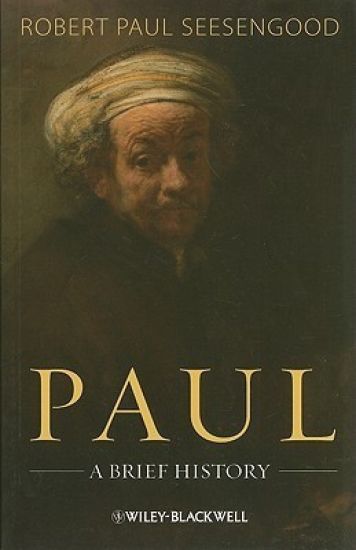
Paul

Robert Paul Seesengood

Wiley-Blackwell (an imprint of John Wiley Sons Ltd)
2010
nidottu
Seesengood traces the life and impact of Paul – one of Christianity’s most influential figures – through the major periods Christian history. Exploring the changing interpretations of Paul and his work, the author throws new light on his writings and on religious history. Offers a unique, insightful journey through the many and varied interpretations of Paul’s life and work over 2,000 years – from the Gnostic controversy, to Luther and the Reformation, to contemporary debates over religion and science Explains Paul’s pivotal role within Christian history, and how his missionary journeys, canonized epistles and theological insights were cornerstones of the early Church and central to the formation of Christian doctrine Argues that each new interpretation of Paul is the result of a fresh set of cultural, social and ideological circumstances – and so questions whether it is ever possible to discover the real Paul
Paul

Paul

Jerry L. Sumney

Abingdon Press
2014
nidottu
Covering the entire Pauline corpus the reader finds a man who was adept at persuasive arguments and providing theological answers to real and, often, thorny congregational issues. Readers have a keen understanding of Paul's place in the early church, the relationship between church and synagogue, and the relationship between the teaching of Paul and that of Jesus. These discussions set Paul firmly within the church that existed before he joined, finding that he became an adherent to much that preceded him.
Paul

Paul

Michael Wolter

Baylor University Press
2015
sidottu
In this newly translated volume, Michael Wolter (University of Bonn, Germany) outlines the architecture of the Apostle's theology. Wolter contends that it is indeed possible to discover Paul's core theological commitments, despite the fact that the sources for Paul's theology—his letters—are diverse, contextually dependent snapshots of the Apostle's thinking at a particular moment in time.Wolter frames Paul's enterprise as a theology of mission and conversion—a mission that accounts for the life and preaching of Paul and a conversion that highlights the experience of Christ shared by all believers. Pauline theology finds expression in the phrase "faith in Christ," which refers to the complete reorientation and exclusive new identity of the Christian.Wolter places Paul's theology into a narrative context, often referred to by Paul himself, that emphasizes the time before Paul's conversion, Paul's encounter with the risen Christ, and the complex events leading to the Antioch incident. Wolter then explores the theology of Paul's Gospel and the response to this good news—faith—before detailing eleven interlocking and overlapping elements of Paul's thought.Wolter's outline successfully delineates a theology common to all of Paul's letters, and does so without collapsing the texts into a timeless whole. By using the language of Paul himself, Wolter reveals the unity of Paul's theology while simultaneously unpacking it via categories drawn from modern scholarship. Wolter's Paul is as vibrant as it is careful—as compelling as it is relevant.
Paul

Paul

Michael Wolter

Baylor University Press
2015
sidottu
In this newly translated volume, Michael Wolter (University of Bonn, Germany) outlines the architecture of the Apostle's theology. Wolter contends that it is indeed possible to discover Paul's core theological commitments, despite the fact that the sources for Paul's theology - his letters - are diverse, contextually dependent snapshots of the Apostle's thinking at a particular moment in time.Wolter frames Paul's enterprise as a theology of mission and conversion - a mission that accounts for the life and preaching of Paul and a conversion that highlights the experience of Christ shared by all believers. Pauline theology finds expression in the phrase ""faith in Christ,"" which refers to the complete reorientation and exclusive new identity of the Christian.Wolter places Paul's theology into a narrative context, often referred to by Paul himself, that emphasizes the time before Paul's conversion, Paul's encounter with the risen Christ, and the complex events leading to the Antioch incident. Wolter then explores the theology of Paul's Gospel and the response to this good news - faith - before detailing eleven interlocking and overlapping elements of Paul's thought.Wolter's outline successfully delineates a theology common to all of Paul's letters, and does so without collapsing the texts into a timeless whole. By using the language of Paul himself, Wolter reveals the unity of Paul's theology while simultaneously unpacking it via categories drawn from modern scholarship. Wolter's Paul is as vibrant as it is careful - as compelling as it is relevant.
Paul

Paul

John Mench

Liferich
2019
pokkari
Paul was born in Tarsus about 4B.C.E. His father was a faithful Jew, a Roman, and a successful tent manufacturer. This book emphasizes three families and their relationship with birth, love, travel, religion, and death. The first family is that of Omar and his wife Ruth. They have four children, Aaron; their oldest son, his brother, Hezekiah, Yona the only daughter, and Paul, the youngest child. The second family is Zacharias, his wife Elizabeth, and son, John. The third family is that of Joseph and his wife Mary. They have a large family; Jesus was their first born, James, twins Salome and Thomas, Simon, and finally Judah. My story reveals how these three families were involved in the formation and dissemination of the Christian religion. It is a story loosely based on the stories of the Bible. My intent is to entertain you and hopefully stimulate your thought process, about Bible stories, by providing the human interactions concerning these three families.