Kirjojen hintavertailu. Mukana 11 699 587 kirjaa ja 12 kauppaa.

Kirjahaku

Etsi kirjoja tekijän nimen, kirjan nimen tai ISBN:n perusteella.

1000 tulosta hakusanalla Peter Adam

Philosophy in the Islamic World

Philosophy in the Islamic World

Peter Adamson

Oxford University Press
2018
nidottu
The latest in the series based on the popular History of Philosophy podcast, this volume presents the first full history of philosophy in the Islamic world for a broad readership. It takes an approach unprecedented among introductions to this subject, by providing full coverage of Jewish and Christian thinkers as well as Muslims, and by taking the story of philosophy from its beginnings in the world of early Islam all the way through to the twentieth century. Major figures like Avicenna, Averroes, and Maimonides are covered in great detail, but the book also looks at less familiar thinkers, including women philosophers. Attention is also given to the philosophical relevance of Islamic theology (kalam) and mysticism--the Sufi tradition within Islam, and Kabbalah among Jews--and to science, with chapters on disciplines like optics and astronomy. The book is divided into three sections, with the first looking at the first blossoming of Islamic theology and responses to the Greek philosophical tradition in the world of Arabic learning. This 'formative period' culminates with the work of Avicenna, the pivotal figure to whom most later thinkers feel they must respond. The second part of the book discusses philosophy in Muslim Spain (Andalusia), where Jewish philosophers come to the fore, though this is also the setting for such thinkers as Averroes and Ibn Arabi. Finally, a third section looks in unusual detail at later developments, touching on philosophy in the Ottoman, Mughal, and Safavid empires and showing how thinkers in the nineteenth to the twentieth century were still concerned to respond to the ideas that had animated philosophy in the Islamic world for centuries, while also responding to political and intellectual challenges from the European colonial powers.
Medieval Philosophy

Medieval Philosophy

Peter Adamson

Oxford University Press
2019
sidottu
Peter Adamson presents a lively introduction to six hundred years of European philosophy, from the beginning of the ninth century to the end of the fourteenth century. The medieval period is one of the richest in the history of philosophy, yet one of the least widely known. Adamson introduces us to some of the greatest thinkers of the Western intellectual tradition, including Peter Abelard, Anselm of Canterbury, Thomas Aquinas, John Duns Scotus, William of Ockham, and Roger Bacon. And the medieval period was notable for the emergence of great women thinkers, including Hildegard of Bingen, Marguerite Porete, and Julian of Norwich. Original ideas and arguments were developed in every branch of philosophy during this period - not just philosophy of religion and theology, but metaphysics, philosophy of logic and language, moral and political theory, psychology, and the foundations of mathematics and natural science.
Classical Indian Philosophy

Classical Indian Philosophy

Peter Adamson; Jonardon Ganeri

Oxford University Press
2020
sidottu
Peter Adamson and Jonardon Ganeri present a lively introduction to one of the world's richest intellectual traditions: the philosophy of classical India. They begin with the earliest extant literature, the Vedas, and the explanatory works that these inspired, known as Upani?ads. They also discuss other famous texts of classical Vedic culture, especially the Mahabharata and its most notable section, the Bhagavad-Gita, alongside the rise of Buddhism and Jainism. In this opening section, Adamson and Ganeri emphasize the way that philosophy was practiced as a form of life in search of liberation from suffering. Next, the pair move on to the explosion of philosophical speculation devoted to foundational texts called 'sutras,' discussing such traditions as the logical and epistemological Nyaya school, the monism of Advaita Vedanta, and the spiritual discipline of Yoga. In the final section of the book, they chart further developments within Buddhism, highlighting Nagarjuna's radical critique of 'non-dependent' concepts and the no-self philosophy of mind found in authors like Dignaga, and within Jainism, focusing especially on its 'standpoint' epistemology. Unlike other introductions that cover the main schools and positions in classical Indian philosophy, Adamson and Ganeri's lively guide also pays attention to philosophical themes such as non-violence, political authority, and the status of women, while considering textual traditions typically left out of overviews of Indian thought, like the Carvaka school, Tantra, and aesthetic theory as well. Adamson and Ganeri conclude by focusing on the much-debated question of whether Indian philosophy may have influenced ancient Greek philosophy and, from there, evaluate the impact that this area of philosophy had on later Western thought.
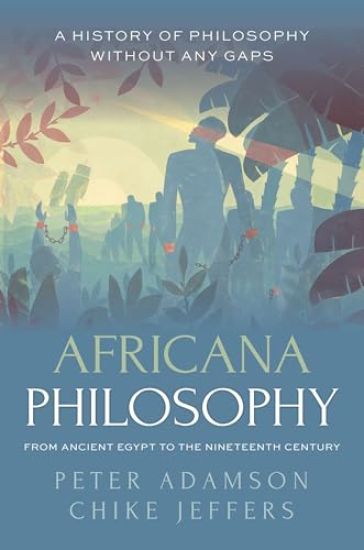
Africana Philosophy from Ancient Egypt to the Nineteenth Century

Africana Philosophy from Ancient Egypt to the Nineteenth Century

Peter Adamson; Chike Jeffers

Oxford University Press
2025
sidottu
In this latest instalment of the series A History of Philosophy Without Any Gaps, Peter Adamson and Chike Jeffers delve into the fascinating world of Africana Philosophy. Africana Philosophy from Ancient Egypt to the Nineteenth Century is the first of two volumes in the History of Philosophy Without Any Gaps series to bring readers the story of Africana philosophy. This diverse topic is defined as philosophy emerging from and distinctively related to Africa or the African diaspora. The story starts at the very beginning by asking what it would mean to engage philosophically with evidence left by prehistoric peoples of Africa, and proceeds to discuss the philosophical traditions of ancient Egypt, late ancient and early modern Ethopia, and Islamic philosophy in West Africa. A number of chapters then explore the idea of philosophy in African oral traditions, considering the methodological debates that have raged between African philosophers like John Mbiti, Paulin Hountondji, and Henry Odera Oruka. Peter Adamson and Chike Jeffers also consider philosophical responses to the situation brought about by the transatlantic slave trade and the early colonization of Africa. Starting from early figures like Anton Wilhelm Amo and Phillis Wheatley, and the ideas that drove the Haitian Revolution, extensive discussion is then given to Africana philosophy of the nineteenth century. The incendiary ideas of David Walker, the nuanced rhetoric of Frederick Douglass, and the clashing approaches of Booker T. Washington and W.E.B. Du Bois are among the highlights here. Significant attention is given to female thinkers like Maria W. Stewart, Sojourner Truth, Anna Julia Cooper, and Ida B. Wells. The coverage is also geographically diverse, with chapters on figures who worked not only in Africa and the United States, but also Brazil, Canada, Britain, France, and the Caribbean.
Byzantine and Renaissance Philosophy

Byzantine and Renaissance Philosophy

Peter Adamson

Oxford University Press
2025
nidottu
Peter Adamson presents an engaging and wide-ranging introduction to the thinkers and movements of two great intellectual cultures: Byzantium and the Italian Renaissance. First, he traces the development of philosophy in the Eastern Christian world, from such early figures as John of Damascus in the eighth century to the late Byzantine scholars of the fifteenth century. Adamson introduces major figures like Michael Psellos, Anna Komnene, and Gregory Palamas, and examines the philosophical significance of such cultural phenomena as iconoclasm and conceptions of gender. We discover the little-known traditions of philosophy in Syriac, Armenian, and Georgian. These chapters also explore the scientific, political, and historical literature of Byzantium. There is a close connection to the second half of the book, since thinkers of the Greek East helped to spark the humanist movement in Italy. Adamson tells the story of the rebirth of philosophy in Italy in the fifteenth and sixteenth centuries. We encounter such famous names as Christine de Pizan, Niccolò Machiavelli, Giordano Bruno, and Galileo, but as always in this book series such major figures are read alongside contemporaries who are not so well known, including fascinating figures like Lorenzo Valla, Girolamo Savonarola, and Bernardino Telesio. Major historical themes include the humanist engagement with ancient literature, the emergence of women humanists, the flowering of Republican government in Renaissance Italy, the continuation of Aristotelian and scholastic philosophy alongside humanism, and breakthroughs in science. All areas of philosophy, from theories of economics and aesthetics to accounts of the human mind, are featured. This is the sixth volume of Adamson's History of Philosophy Without Any Gaps series, taking us to the threshold of the early modern era.
Philosophy in the Reformation

Philosophy in the Reformation

Peter Adamson

Oxford University Press
2026
sidottu
In this latest volume of A History of Philosophy Without Any Gaps, Peter Adamson presents a lively and accessible introduction to European philosophy during the fifteenth and sixteenth centuries. Philosophy in the Reformation focuses on the parallel and intertwining emergence of humanism and of religious reform, as figures like Erasmus, Luther, and Calvin remade the intellectual and spiritual life of Europe. In the first three parts of the book, philosophical developments in central Europe, France, and Britain are examined. A wide range of topics and controversies are discussed, from debates over free will to the legitimacy of tyrannicide. This was also the time of the Northern Renaissance, which saw a resurgence of ancient concepts like skepticism and atomist theories of matter. The volume's final section charts the Catholic reaction to these epochal events in the Counter-Reformation, and especially the ideas of Spanish thinkers like Molina and Suárez. Quite a few familiar figures are discussed, such as Montaigne and Copernicus. But as always in this series, Adamson lavishes attention on fascinating figures who are often ignored in the history of philosophy, like John Dee, Robert Fludd, and Oliva Sabuco (who is just one of numerous women intellectuals covered). Another feature of the book is its attention to literature and the arts: the reader will learn how the achievements of Dürer, Michelangelo, Shakespeare, and Cervantes relate to philosophical currents of the time. The eighth volume in the A History of Philosophy Without Any Gaps series takes us to the threshold of the early modern era and sets the stage for the developments that unfolded during the Enlightenment.
Philosophy in the Islamic World

Philosophy in the Islamic World

Peter Adamson

Oxford University Press
2016
sidottu
The latest in the series based on the popular History of Philosophy podcast, this volume presents the first full history of philosophy in the Islamic world for a broad readership. It takes an approach unprecedented among introductions to this subject, by providing full coverage of Jewish and Christian thinkers as well as Muslims, and by taking the story of philosophy from its beginnings in the world of early Islam all the way through to the twentieth century. Major figures like Avicenna, Averroes, and Maimonides are covered in great detail, but the book also looks at less familiar thinkers, including women philosophers. Attention is also given to the philosophical relevance of Islamic theology (kalam) and mysticism--the Sufi tradition within Islam, and Kabbalah among Jews--and to science, with chapters on disciplines like optics and astronomy. The book is divided into three sections, with the first looking at the first blossoming of Islamic theology and responses to the Greek philosophical tradition in the world of Arabic learning. This 'formative period' culminates with the work of Avicenna, the pivotal figure to whom most later thinkers feel they must respond. The second part of the book discusses philosophy in Muslim Spain (Andalusia), where Jewish philosophers come to the fore, though this is also the setting for such thinkers as Averroes and Ibn Arabi. Finally, a third section looks in unusual detail at later developments, touching on philosophy in the Ottoman, Mughal, and Safavid empires and showing how thinkers in the nineteenth to the twentieth century were still concerned to respond to the ideas that had animated philosophy in the Islamic world for centuries, while also responding to political and intellectual challenges from the European colonial powers.
Classical Philosophy

Classical Philosophy

Peter Adamson

Oxford University Press
2014
sidottu
Classical Philosophy is the first of a series of books in which Peter Adamson aims ultimately to present a complete history of philosophy, more thoroughly but also more enjoyably than ever before. In short, lively chapters, based on the popular History of Philosophy podcast, he offers an accessible, humorous, and detailed look at the emergence of philosophy with the Presocratics, the probing questions of Socrates, and the first full flowering of philosophy with the dialogues of Plato and the treatises of Aristotle. The story is told 'without any gaps', discussing not only such major figures but also less commonly discussed topics like the Hippocratic Corpus, the Platonic Academy, and the role of women in ancient philosophy. Within the thought of Plato and Aristotle, the reader will find in-depth introductions to major works, such as the Republic and the Nicomachean Ethics, which are treated in detail that is unusual in an introduction to ancient philosophy. Adamson looks at fascinating but less frequently read Platonic dialogues like the Charmides and Cratylus, and Aristotle's ideas in zoology and poetics. This full coverage allows him to tackle ancient discussions in all areas of philosophy, including epistemology, metaphysics, philosophy of language, philosophy of science, ethics and politics. Attention is also given to the historical and literary context of classical philosophy, with exploration of how early Greek cosmology responded to the poets Homer and Hesiod, how Socrates was presented by the comic playwright Aristophanes and the historian Xenophon, and how events in Greek history may have influenced Plato's thought. This is a new kind of history which will bring philosophy to life for all readers, including those coming to the subject for the first time.
Philosophy in the Islamic World

Philosophy in the Islamic World

Peter Adamson

Oxford University Press
2015
nidottu
In the history of philosophy, few topics are so relevant to today's cultural and political landscape as philosophy in the Islamic world. Yet, this remains one of the lesser-known philosophical traditions. In this Very Short Introduction, Peter Adamson explores the history of philosophy among Muslims, Jews, and Christians living in Islamic lands, from its historical background to thinkers in the twentieth century. Introducing the main philosophical themes of the Islamic world, Adamson integrates ideas from the Islamic and Abrahamic faiths to consider the broad philosophical questions that continue to invite debate: What is the relationship between reason and religious belief? What is the possibility of proving God's existence? What is the nature of knowledge? Drawing on the most recent research in the field, this book challenges the assumption of the cultural decline of philosophy and science in the Islamic world by demonstrating its rich heritage and overlap with other faiths and philosophies.
Don't Think for Yourself

Don't Think for Yourself

Peter Adamson

UNIVERSITY OF NOTRE DAME PRESS
2022
sidottu
How do we judge whether we should be willing to follow the views of experts or whether we ought to try to come to our own, independent views? This book seeks the answer in medieval philosophical thought. In this engaging study into the history of philosophy and epistemology, Peter Adamson provides an answer to a question as relevant today as it was in the medieval period: how and when should we turn to the authoritative expertise of other people in forming our own beliefs? He challenges us to reconsider our approach to this question through a constructive recovery of the intellectual and cultural traditions of the Islamic world, the Byzantine Empire, and Latin Christendom. Adamson begins by foregrounding the distinction in Islamic philosophy between taqlid, or the uncritical acceptance of authority, and ijtihad, or judgment based on independent effort, the latter of which was particularly prized in Islamic law, theology, and philosophy during the medieval period. He then demonstrates how the Islamic tradition paves the way for the development of what he calls a "justified taqlid," according to which one develops the skills necessary to critically and selectively follow an authority based on their reliability. The book proceeds to reconfigure our understanding of the relation between authority and independent thought in the medieval world by illuminating how women found spaces to assert their own intellectual authority, how medieval writers evaluated the authoritative status of Plato and Aristotle, and how independent reasoning was deployed to defend one Abrahamic faith against the other. This clear and eloquently written book will interest scholars in and enthusiasts of medieval philosophy, Islamic studies, Byzantine studies, and the history of thought.
Don't Think for Yourself

Don't Think for Yourself

Peter Adamson

UNIVERSITY OF NOTRE DAME PRESS
2024
nidottu
How do we judge whether we should be willing to follow the views of experts or whether we ought to try to come to our own, independent views? This book seeks the answer in medieval philosophical thought. In this engaging study into the history of philosophy and epistemology, Peter Adamson provides an answer to a question as relevant today as it was in the medieval period: how and when should we turn to the authoritative expertise of other people in forming our own beliefs? He challenges us to reconsider our approach to this question through a constructive recovery of the intellectual and cultural traditions of the Islamic world, the Byzantine Empire, and Latin Christendom. Adamson begins by foregrounding the distinction in Islamic philosophy between taqlid, or the uncritical acceptance of authority, and ijtihad, or judgment based on independent effort, the latter of which was particularly prized in Islamic law, theology, and philosophy during the medieval period. He then demonstrates how the Islamic tradition paves the way for the development of what he calls a "justified taqlid," according to which one develops the skills necessary to critically and selectively follow an authority based on their reliability. The book proceeds to reconfigure our understanding of the relation between authority and independent thought in the medieval world by illuminating how women found spaces to assert their own intellectual authority, how medieval writers evaluated the authoritative status of Plato and Aristotle, and how independent reasoning was deployed to defend one Abrahamic faith against the other. This clear and eloquently written book will interest scholars in and enthusiasts of medieval philosophy, Islamic studies, Byzantine studies, and the history of thought.
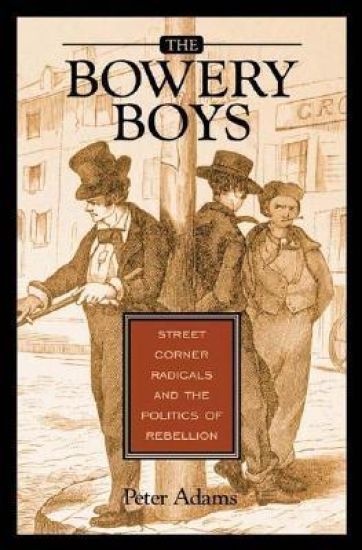
The Bowery Boys

The Bowery Boys

Peter Adams

Praeger Publishers Inc
2005
sidottu
In the decades before the Civil War, the miserable living conditions of New York City's lower east side nurtured the gangs of New York. This book tells the story of the Bowery Boys, one gang that emerged as part urban legend and part street fighters for the city's legions of young workers. Poverty and despair led to a gang culture that was easily politicized, especially under the leadership of Mike Walsh who led a distinct faction of the Bowery Boys that engaged in the violent, almost anarchic, politics of the city during the 1840s and 1850s. Amid the toppled ballot boxes and battles for supremacy on the streets, many New Yorkers feared Walsh's gang was at the frontline of a European-style revolution.A radical and immensely popular voice in antebellum New York, Walsh spoke in the unvarnished language of class conflict. Admired by Walt Whitman and feared by Tammany Hall, Walsh was an original, wildly unstable character who directed his aptly named Spartan Band against the economic and political elite of New York City and New England. As a labor organizer, state legislator, and even U.S. Congressman, the leader of the Bowery Boys fought for shorter working hours, the right to strike, free land for settlers on the American frontier, against child labor, and to restore dignity to the city's growing number of industrial workers.
Studies on Plotinus and al-Kindi

Studies on Plotinus and al-Kindi

Peter Adamson

Routledge
2020
nidottu
This book collects 15 papers on the greatest philosopher of late antiquity and founder of Neoplatonism, Plotinus (d.270), and the founding figure of philosophy in the Islamic world: al-KindÄ« (d. ca. 873). A number of the contributions focus on the text that joins the two: the so-called Theology of Aristotle, in fact an Arabic version of Plotinus’ Enneads produced in al- KindÄ«’s translation circle. Across several papers, Adamson argues that this translation is best understood as a reinterpretation of Plotinus designed to appeal to contemporary readers in the culture of the ’AbbÄsid era. Two contributions also analyze the notes on the Theology written by the great Avicenna. Other papers look at aspects of al-KindÄ«’s own thought, exploring his ideas concerning metaphysics, free will astrology, and optics. The traditions of Plotinus and al-KindÄ« are also treated, with papers on Plotinus’ student Porphyry and his Arabic reception, and on followers of al-KindÄ«. Adamson argues that we can identify what he calls a 'Kindian tradition' in the 9th-10th centuries. He discusses the philosophical presuppositions of this movement, and the use of al-KindÄ«’s ideas made by one particular representative of the Kindian tradition, the Persian thinker Miskawayh.
Studies on Early Arabic Philosophy

Studies on Early Arabic Philosophy

Peter Adamson

Routledge
2019
nidottu
Philosophy in the Islamic world from the 9th to 11th centuries was characterized by an engagement with Greek philosophical works in Arabic translation. This volume collects papers on both the Greek philosophers in their new Arabic guise, and on reactions to the translation movement in the period leading up to Avicenna. In a first section, Adamson provides general studies of the ’formative’ period of philosophy in the Islamic world, discussing the Arabic reception of Aristotle and of his commentators. He also argues that this formative period was characterized not just by the use of Hellenic materials, but also by a productive exchange of ideas between Greek-inspired ’philosophy (falsafa)’ and Islamic theology (kalām). A second section considers the underappreciated philosophical impact of Galen, using Arabic sources to understand Galen himself, and exploring the thought of the doctor and philosopher al-RāzÄ«, who drew on Galen as a chief inspiration. A third section looks at al-FārābÄ« and the so-called ’Baghdad school’ of the 10th century, examining their reaction to Aristotle’s Metaphysics, his epistemology, and his famous deterministic ’sea battle’ argument. A final group of papers is devoted to Avicenna’s philosophy, which marks the beginning of a new era of philosophy in the Islamic world.
Politics, Faith, and the Making of American Judaism

Politics, Faith, and the Making of American Judaism

Peter Adams

The University of Michigan Press
2014
nidottu
In 1862, in the only instance of a Jewish expulsion in America, General Ulysses S. Grant banished Jewish citizens from the region under his military command. Although the order was quickly revoked by President Lincoln, it represented growing anti-Semitism in America. Convinced that assimilation was their best defense, Jews sought to Americanize by shedding distinctive dress, occupations, and religious rituals.American Jews recognized the benefit and urgency of bridging the divide between Reform and Orthodox Judaism to create a stronger alliance to face the challenges ahead. With Grant’s 1868 presidential campaign, they also realized they could no longer remain aloof from partisan politics. As they became a growing influence in American politics, both political parties courted the new Jewish vote.Once in office, Grant took notice of the persecution of Jews in Romania and Russia, and he appointed more Jews to office than any president before him. Indeed, Simon Wolf, a Washington lawyer who became one of Grant’s closest advisers, was part of a new generation of Jewish leaders to emerge in the post–Civil War era—thoroughly Americanized, politically mature, and committed to the modernized Judaism of the Reform movement.In Politics, Faith, and the Making of American Judaism, Peter Adams recounts the history of the American Jewish Community’s assimilation efforts, organization, and political mobilization in the late 19th century, as political and cultural imperatives crafted a new, American brand of Judaism.
Politics, Faith, and the Making of American Judaism

Politics, Faith, and the Making of American Judaism

Peter Adams

The University of Michigan Press
2014
sidottu
In 1862, in the only instance of a Jewish expulsion in America, General Ulysses S. Grant banished Jewish citizens from the region under his military command. Although the order was quickly revoked by President Lincoln, it represented growing anti-Semitism in America. Convinced that assimilation was their best defense, Jews sought to Americanize by shedding distinctive dress, occupations, and religious rituals.American Jews recognized the benefit and urgency of bridging the divide between Reform and Orthodox Judaism to create a stronger alliance to face the challenges ahead. With Grant’s 1868 presidential campaign, they also realized they could no longer remain aloof from partisan politics. As they became a growing influence in American politics, both political parties courted the new Jewish vote.Once in office, Grant took notice of the persecution of Jews in Romania and Russia, and he appointed more Jews to office than any president before him. Indeed, Simon Wolf, a Washington lawyer who became one of Grant’s closest advisers, was part of a new generation of Jewish leaders to emerge in the post–Civil War era—thoroughly Americanized, politically mature, and committed to the modernized Judaism of the Reform movement.In Politics, Faith, and the Making of American Judaism, Peter Adams recounts the history of the American Jewish Community’s assimilation efforts, organization, and political mobilization in the late 19th century, as political and cultural imperatives crafted a new, American brand of Judaism.
The Insurrectionist

The Insurrectionist

Peter Adams

LOUISIANA STATE UNIVERSITY PRESS
2023
sidottu
Peter Adams's The Insurrectionist is the first comprehensive biography of Major General Edwin A. Walker, a figure who, in the 1950s and 1960s, became a leader of a far-right political movement known for its elaborate conspiracy theories, authoritarianism, and uncompromising white supremacy. Sixty years before the January 6, 2021, attack on the U.S. Capitol, Edwin Walker was charged with insurrection and seditious conspiracy. He was arrested on orders from the attorney general after leading a deadly riot against federal marshals as they protected the first African American student attempting to register at the University of Mississippi. Those who flocked to Walker's side believed an invisible government working with coconspirators in the Kremlin and United Nations would soon enslave America under a one-world dictatorship. Walker's deep state conspiracy theory has echoed through American political culture into the age of QAnon, finding a new home among today's far-right extremists.
The Kennedy Moment

The Kennedy Moment

Peter Adamson

MYRIAD EDITIONS
2019
nidottu
Daring, ingenious and profoundly moving, The Kennedy Moment is masterful storytelling from an author whose career has put him at the heart of international affairs. Dr Michael Lowell--a mild-mannered American, unshakeably decent and at the top of his profession--accepts an invitation to a weekend reunion of Oxford college friends. He is looking forward to meeting some of them--including front-line Canadian medic H l ne Hevr and the Australian advertising genius Toby Jenks. But the big attraction is the serene young woman from Karachi who rejected him twenty years ago because he was 'just a little bit too dull'. As the weekend gets underway and old loves and tensions arise, an audacious suggestion is made. It begins as a joke. But it is a joke that none of them can forget. Moving between Oxford, New York, Washington, Geneva and Abidjan, this compelling political thriller is the story of five ordinary people who find themselves drawn into an extraordinary conspiracy--a gamble that could force the hand of governments and affect the lives of millions. But if it should go wrong, the risk to their own lives is incalculable.