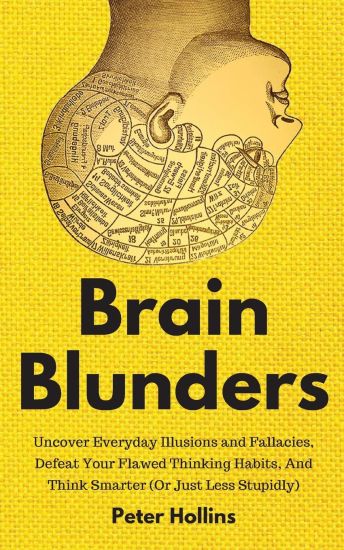
We defy common sense and good judgment on a daily basis. Learn to tame your stupid brain. We reason poorly, think incorrectly, and overlook the truth every single day. We can't be perfect, but at least we can be a little less wrong from time to time. Cure your mental glitches, blind spots, and errors in reasoning and logic. Brain Blunders is a book that will get you to think about how you think. You are not so smart; in fact, humans are not so smart This book is equal parts entertainment, neuroscience textbook, and field guide to better living. Written in an easy and humorous manner, discover the origins of the irrationalities you see all around you. Take a deep look into the roots of illogical and rash decisions - how they form, and how they persist in our lives. Get your fill of understanding human psychology and the peculiar choices we all make from time to time. We all recognize our big blunders, but it's the subconscious ones that define us. Develop clarity of thought and see the patterns of human error. Peter Hollins has studied psychology and peak human performance for over a dozen years and is a bestselling author. He has worked with dozens of individuals to unlock their potential and path towards success. His writing draws on his academic, coaching, and research experience. Discover your brain's subtle tricks and everyday illusions. -Why our concept of free will is illusory at best. -The roots of superstitious and magical thinking. -How advertisers are so effective at emptying our wallets. -How our memories are both incredible and horrific at the same time. -Why we are pretty sure we're above average in things we're terrible at. -The real reason that we see animals in clouds and faces in toast.
We defy common sense and good judgment on a daily basis. Learn to tame your stupid brain. We reason poorly, think incorrectly, and overlook the truth every single day. We can't be perfect, but at least we can be a little less wrong from time to time. Cure your mental glitches, blind spots, and errors in reasoning and logic. Brain Blunders is a book that will get you to think about how you think. You are not so smart; in fact, humans are not so smart This book is equal parts entertainment, neuroscience textbook, and field guide to better living. Written in an easy and humorous manner, discover the origins of the irrationalities you see all around you. Take a deep look into the roots of illogical and rash decisions - how they form, and how they persist in our lives. Get your fill of understanding human psychology and the peculiar choices we all make from time to time. We all recognize our big blunders, but it's the subconscious ones that define us. Develop clarity of thought and see the patterns of human error. Peter Hollins has studied psychology and peak human performance for over a dozen years and is a bestselling author. He has worked with dozens of individuals to unlock their potential and path towards success. His writing draws on his academic, coaching, and research experience. Discover your brain's subtle tricks and everyday illusions. -Why our concept of free will is illusory at best. -The roots of superstitious and magical thinking. -How advertisers are so effective at emptying our wallets. -How our memories are both incredible and horrific at the same time. -Why we are pretty sure we're above average in things we're terrible at. -The real reason that we see animals in clouds and faces in toast.
Brain Haulage was formed by Charles Edward Brain in 1950 and played a major role in the container revolution in the UK, completely changing the way goods were transported over the world. Peter Sumpter was a driver with Brain Haulage until it closed in 1992 and is an unofficial archivist of the brand, having taken hundreds of photographs and chronicling his adventures in a diary for over 20 years. Brain Haulage Ltd tells the history of Brain and the container revolution as well as the story of Charles Brain; from his early years working for the L.M.S. Railway at Camden Town, to his time in the R.A.F. during the second world war, to eventually starting his own haulage company. The rest of the story is from Peter's own diary and the many ex-drivers and Brains staff he worked with over the years. Including over 300 previously unpublished photographs Brain Haulage Ltd is a unique book, ideal for anyone interested in containers and their revolution, as well as road transport and haulage trade enthusiasts.
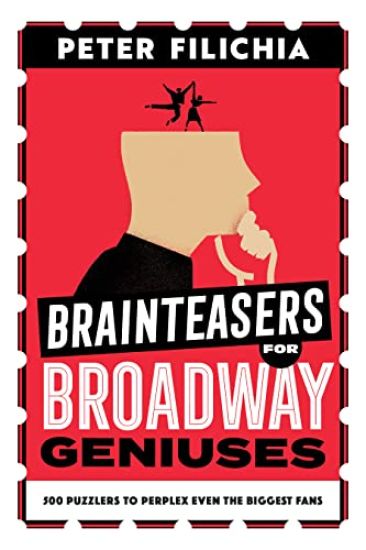
Filichia presents brainteasers that require more than an ordinary knowledge of Broadway facts that will send even the most seasoned theater lovers looking for answers. With shows from each decade, Broadway lovers who are around the age of Old Deuteronomy in Cats or as young as dear Evan Hansen will find questions that require more than an ordinary knowledge of beloved musicals. Are you a Broadway genius?
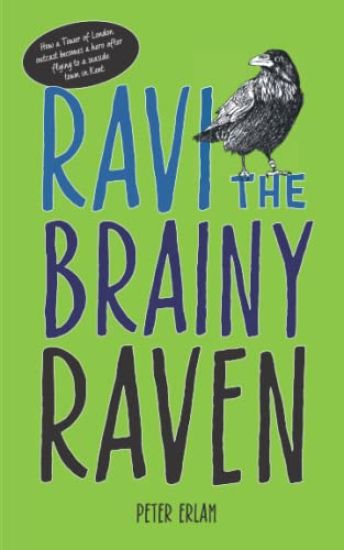
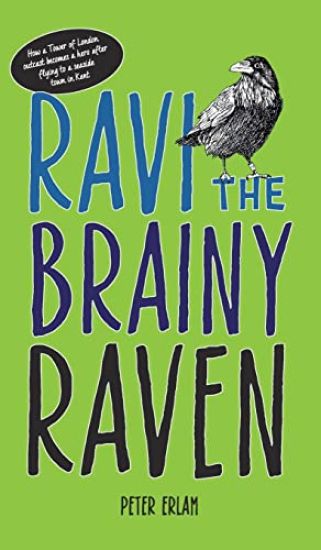
Ravens are said to be the Einsteins of the bird world. That means Ravi is, sometimes, super clever. But our hero can also be super naughty, a habit that gets him thrown out of the elite team of royal ravens at the Tower of London. His pride is badly dented and he decides to leave the capital and make a fresh start on the Kent coast. Will he manage to repair his reputation? Events take an interesting turn when Ravi flies into the lives of two young sisters - and their magic basket...
Ravens are said to be the Einsteins of the bird world. That means Ravi is, sometimes, super clever. But our hero can also be super naughty, a habit that gets him thrown out of the elite team of royal ravens at the Tower of London. His pride is badly dented and he decides to leave the capital and make a fresh start on the Kent coast. Will he manage to repair his reputation? Events take an interesting turn when Ravi flies into the lives of two young sisters - and their magic basket...
The Well-Tuned Brain is a call to action. Swept along by the cascading advances of today’s technology, most of us take for granted that progress brings improvement. Despite spectacular material advance, however, the evidence grows that we are failing to create a sustainable future for humanity. We are out of tune with the planet that nurtures us. Technology itself is not the problem, as Whybrow explains, but rather our behavior. Throughout its evolution the ancient brain that guides us each day has been focused on short-term survival. But fortunately we are intensely social creatures. Without the caring behaviors that flow from intimate attachments to others, we would be relying on a brain that is only marginally adapted to the complexity of the problems we must now face together. Today we must grapple with survival, not in its immediacy but over the long term. The first step in finding our way forward is to reexamine who we are as creatures of this planet. To this end, Whybrow takes us on a fascinating tour of self-discovery, drawing extensively upon his decades of experience as a psychiatrist and his broad knowledge of neuroscience and human behavior. Illustrated throughout with engaging personal stories, the book’s trove of cutting-edge science is enriched by philosophical, historical, and cultural perspectives. What emerges is a summons to rediscover the essential virtues of earlier nurturing, of mentored education, and an engagement with the natural world through curiosity and imagination. Neuroscience can open the search for a better future. But technology alone will not save us. To achieve success we will need the strength and wisdom of our better nature as humane social beings.
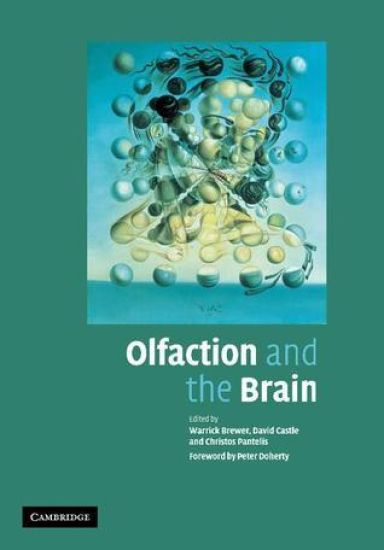
Olfaction and its relation to mental health is an area of growing interest, evidenced by the 2004 Nobel Prize in Physiology or Medicine being awarded for discoveries relating to odorant receptors and the organization of the olfactory system. Olfaction is of particular interest to specialists seeking a fuller understanding of schizophrenia. Clear deficits in the sense of smell could predict schizophrenia in apparently unaffected individuals. In this book, first published in 2006, Warrick Brewer and his team of experts set out our understanding of olfaction and mental health, relating it to broader principles of neural development and processing as a foundation for understanding psychopathology. The neuropathological, neuropsychological and neuropsychiatric aspects of olfactory function and dysfunction are all covered (drawing on neuroimaging techniques where appropriate), and indications for future research and applications are discussed.
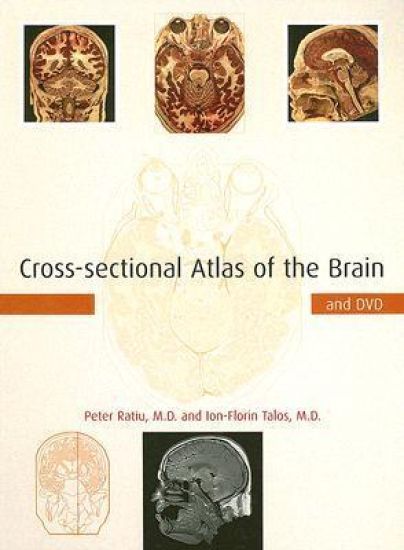
Cross-sectional Atlas of the Brain provides for the first time a set of high-resolution color cross-sections of the human brain (six times higher than that of the only complete data set available to date), each image accompanied by state-of-the-art MRI and CT scans of the same specimen. The sections were made at an interval of 147 micrometers of frozen tissue, virtually artifact free, with the blood vessels filled at sub-millimeter level. The more than two hundred detailed and fully annotated images in this atlas provide a complete body of reference to the gross anatomy of the brain. The accompanying line drawings of these images provide a roadmap for easy orientation.The unparalleled resolution of the images also made it possible to derive cross-sections of the same specimen in all standard orientations--sagittal, coronal, and axial--through multi-planar computer-aided reformatting. This feature, which eliminates inter-subject variability, has never before been available in an anatomical atlas and makes the atlas especially useful for identifying and following anatomical structures in each plane. About the Companion DVD(View a sample in PDF format)While the book itself contains 93 images (44 axial, 28 coronal, and 21 sagittal), the DVD contains the complete series of 1,481 axial images from one anatomic specimen from which the 44 axial images in the book were selected. These images were made at a resolution of 1525x1146 or 147 µm/pixel with a digital camera. The axial images are accompanied by 1,528 sagittal and 1,146 coronal images that were made by reformatting and reslicing the axial images. By placing these images side-by-side-by-side the DVD allows the user to see a particular region of the brain in all three orientations-axial, sagittal and coronal-simultaneously. These images are further accompanied by radiologic data. The DVD also allows the user to view a synchronized slide show of the images in all three planes. Images on the DVD that also appear in the book are highlighted with a blue background. Cross-sectional Atlas of the Brain will be an essential reference for neuroscientists and clinicians (neurologists, radiologists, and neurosurgeons).
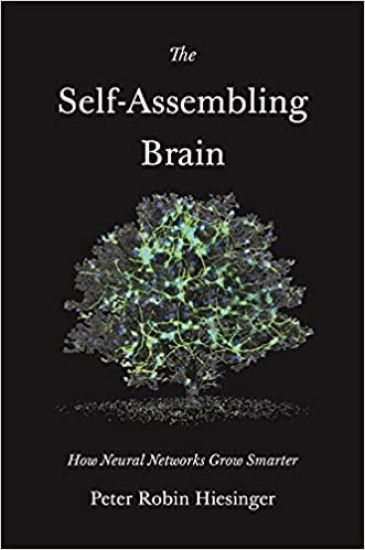
What neurobiology and artificial intelligence tell us about how the brain builds itself How does a neural network become a brain? While neurobiologists investigate how nature accomplishes this feat, computer scientists interested in artificial intelligence strive to achieve this through technology. The Self-Assembling Brain tells the stories of both fields, exploring the historical and modern approaches taken by the scientists pursuing answers to the quandary: What information is necessary to make an intelligent neural network?As Peter Robin Hiesinger argues, “the information problem” underlies both fields, motivating the questions driving forward the frontiers of research. How does genetic information unfold during the years-long process of human brain development—and is there a quicker path to creating human-level artificial intelligence? Is the biological brain just messy hardware, which scientists can improve upon by running learning algorithms on computers? Can AI bypass the evolutionary programming of “grown” networks? Through a series of fictional discussions between researchers across disciplines, complemented by in-depth seminars, Hiesinger explores these tightly linked questions, highlighting the challenges facing scientists, their different disciplinary perspectives and approaches, as well as the common ground shared by those interested in the development of biological brains and AI systems. In the end, Hiesinger contends that the information content of biological and artificial neural networks must unfold in an algorithmic process requiring time and energy. There is no genome and no blueprint that depicts the final product. The self-assembling brain knows no shortcuts.Written for readers interested in advances in neuroscience and artificial intelligence, The Self-Assembling Brain looks at how neural networks grow smarter.
What neurobiology and artificial intelligence tell us about how the brain builds itself How does a neural network become a brain? While neurobiologists investigate how nature accomplishes this feat, computer scientists interested in artificial intelligence strive to achieve this through technology. The Self-Assembling Brain tells the stories of both fields, exploring the historical and modern approaches taken by the scientists pursuing answers to the quandary: What information is necessary to make an intelligent neural network?As Peter Robin Hiesinger argues, “the information problem” underlies both fields, motivating the questions driving forward the frontiers of research. How does genetic information unfold during the years-long process of human brain development—and is there a quicker path to creating human-level artificial intelligence? Is the biological brain just messy hardware, which scientists can improve upon by running learning algorithms on computers? Can AI bypass the evolutionary programming of “grown” networks? Through a series of fictional discussions between researchers across disciplines, complemented by in-depth seminars, Hiesinger explores these tightly linked questions, highlighting the challenges facing scientists, their different disciplinary perspectives and approaches, as well as the common ground shared by those interested in the development of biological brains and AI systems. In the end, Hiesinger contends that the information content of biological and artificial neural networks must unfold in an algorithmic process requiring time and energy. There is no genome and no blueprint that depicts the final product. The self-assembling brain knows no shortcuts.Written for readers interested in advances in neuroscience and artificial intelligence, The Self-Assembling Brain looks at how neural networks grow smarter.
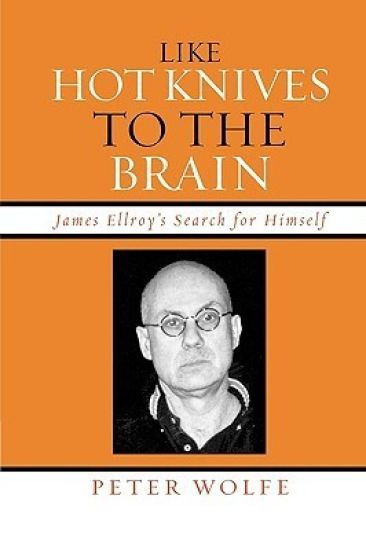
Often more disturbing than entertaining, James Ellroy is an author who never shies away from the ugly or repellent. Eminent crime fiction scholar Peter Wolfe examines how Ellroy transcends the genres of pulp and neo-noir fiction to write stories that are both psychologically haunting and culturally relevant. Wolfe skillfully combines biography—including the unsolved murder of Ellroy's mother—with literary analysis to provide a fascinating and readable study of this popular author. The first in-depth companion to the work of James Ellroy, Like Hot Knives to the Brain will interest students of popular culture, mystery readers, and crime buffs everywhere.
Each year, thousands of people are diagnosed with a brain tumour. With his new book, Dr. Peter McLaren Black provides an accessible medical resource for adult patients and their families. This invaluable resource tells patients everything they need to know to understand and address their diagnosis: "What Is a Brain Tumour?" provides straightforward information on brain tumour diagnoses, the different types of tumours, and where to go for treatment; "Coping with Shock" addresses the emotional impact on the patient and their family, offering specific advice on support groups and managing work and finances; "Treatment Options" outlines the complex array of available treatments in a sequential, logical, and thorough manner; and "Recovery" addresses issues ranging from physical scars to speech and occupational therapy. Equipped with this informative book, patients and their family and friends can learn how to fight brain tumours effectively, putting them on the path to wellness.
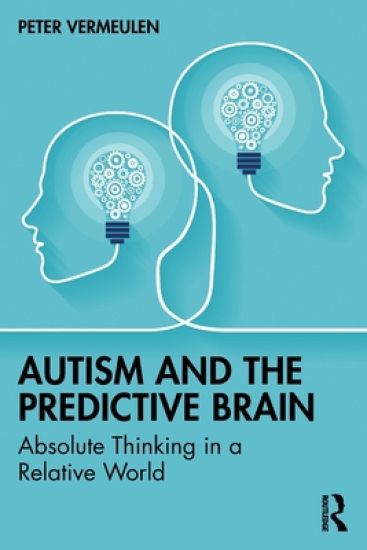
What if our previous teachings and beliefs regarding processing stimuli, reading emotions and understanding human behaviour is all untrue? In this book, Peter Vermeulen investigates new findings on the predictive brain and what these insights mean for autism and current interventions. Recent research has shown that the classic ideas about how the human brain first needs to process incoming information about the world before it can react are no longer tenable. Rather, to survive in the volatile, uncertain, complex and ambiguous environment of modern society, what we need is a brain that predicts the world quickly and unconsciously, while taking proper account of the context. This book explains the new theories relating to the predictive brain, summarising some of the more recent highly technical research studies about the predictive mind and autism into as accessible and understandable language as possible. Shedding new light on the predictive brain and its relation to autism, the chapters lead readers to the inevitable conclusion that many of the current interventions used in connection with autism urgently need updating and outline possibilities for revising. This approachable book synthesises advanced research for professionals across disciplines working with people with autism spectrum disorder along with readers who have or have family members with ASD.
What if our previous teachings and beliefs regarding processing stimuli, reading emotions and understanding human behaviour is all untrue? In this book, Peter Vermeulen investigates new findings on the predictive brain and what these insights mean for autism and current interventions. Recent research has shown that the classic ideas about how the human brain first needs to process incoming information about the world before it can react are no longer tenable. Rather, to survive in the volatile, uncertain, complex and ambiguous environment of modern society, what we need is a brain that predicts the world quickly and unconsciously, while taking proper account of the context. This book explains the new theories relating to the predictive brain, summarising some of the more recent highly technical research studies about the predictive mind and autism into as accessible and understandable language as possible. Shedding new light on the predictive brain and its relation to autism, the chapters lead readers to the inevitable conclusion that many of the current interventions used in connection with autism urgently need updating and outline possibilities for revising. This approachable book synthesises advanced research for professionals across disciplines working with people with autism spectrum disorder along with readers who have or have family members with ASD.
Olfaction and its relation to mental health is an area of growing interest, evidenced by the 2004 Nobel Prize in Physiology or Medicine being awarded for discoveries relating to odorant receptors and the organization of the olfactory system. Olfaction is of particular interest to specialists seeking a fuller understanding of schizophrenia. Clear deficits in the sense of smell could predict schizophrenia in apparently unaffected individuals. In this book, first published in 2006, Warrick Brewer and his team of experts set out our understanding of olfaction and mental health, relating it to broader principles of neural development and processing as a foundation for understanding psychopathology. The neuropathological, neuropsychological and neuropsychiatric aspects of olfactory function and dysfunction are all covered (drawing on neuroimaging techniques where appropriate), and indications for future research and applications are discussed.