Die Arbeit beschaftigt sich mit bisher wenig bekannten Themen. Im Vordergrund stehen die Vogteifrage beim Deutschen Orden sowie die Beziehungen dieses Ordens und der Johanniter zum elsassischen Adel im 13. und fruhen 14. Jahrhundert. Die Untersuchung ist verfassungs- und sozialgeschichtlich orientiert. Sie kann zur oft umstrittenen Vogteiproblematik nicht nur des Deutschen Ordens neue Ergebnisse vorlegen. Bei der Untersuchung der Kontakte von Deutschem Orden und Johannitern zum Adel, der Hauptrekrutierungsbasis beider Ritterorden, werden adelige Schenkungsmotive und die Frage von Ordenseintritt und Mitgift ausfuhrlich untersucht. Den Abschluss bildet eine Prosopographie aller elsassischen Konvente beider Ritterorden. Daran schliesst sich die sozialgeschichtliche Auswertung an, welche erstmals die beiden Ritterorden parallel betrachtet."
Das alte Raetien - Staatlich und kultur-historisch ist ein unver nderter, hochwertiger Nachdruck der Originalausgabe aus dem Jahr 1872. Hansebooks ist Herausgeber von Literatur zu unterschiedlichen Themengebieten wie Forschung und Wissenschaft, Reisen und Expeditionen, Kochen und Ern hrung, Medizin und weiteren Genres. Der Schwerpunkt des Verlages liegt auf dem Erhalt historischer Literatur. Viele Werke historischer Schriftsteller und Wissenschaftler sind heute nur noch als Antiquit ten erh ltlich. Hansebooks verlegt diese B cher neu und tr gt damit zum Erhalt selten gewordener Literatur und historischem Wissen auch f r die Zukunft bei.
THE BESTSELLING BOOK THAT INSPIRED THE OSCAR AND BAFTA AWARD-WINNING FILM One man saved the British Royal Family in the first decades of the 20th century - amazingly he was an almost unknown, and certainly unqualified, speech therapist called Lionel Logue. Logue wasn't a British aristocrat or even an Englishman - he was a commoner and an Australian to boot. Nevertheless it was the outgoing, amiable Logue who single-handedly turned the famously nervous, tongue-tied, Duke of York into the man who was capable of becoming King. Had Logue not saved Bertie (as the man who was to become King George VI was always known) from his debilitating stammer, and pathological nervousness in front of a crowd or microphone, then it is almost certain that the House of Windsor would have collapsed. The King's Speech is the previously untold story of the extraordinary relationship between Logue and the haunted young man who became King George VI, drawn from Logue's unpublished personal diaries. They throw extraordinary light on the intimacy of the two men - and the vital role the King's wife, the late Queen Elizabeth, the Queen Mother, played in bringing them together to save her husband's reputation and his career as King. The King's Speech is an intimate portrait of the British monarchy at a time of its greatest crisis, seen through the eyes of an Australian commoner who was proud to serve, and save, his King.
The broadcast that George VI made to the nation on the outbreak of war in September 1939 - which formed the climax of the multi Oscar-winning film The King's Speech - was the product of years of hard work with Lionel Logue, his iconoclastic Australian-born speech therapist. Yet the relationship between the two men did not end there. Far from it: in the years that followed, Logue was to play an even more important role at the monarch's side.The King's War follows this relationship through the dark days of Dunkirk and the drama of D-Day to eventual victory in 1945 - and beyond. It is written by Peter Conradi, a Sunday Times journalist, and Mark Logue, Lionel's grandson, whose previous book, The King's Speech: How One Man Saved the British Monarchy, was a best-seller in Britain and America and translated into more than 20 languages.The King's War is a fascinating portrait of two men and their respective families - the Windsors and the Logues - as they together faced up to the greatest challenge in Britain's history.
The broadcast that George VI made to the nation on the outbreak of war in September 1939 - which formed the climax of the multi Oscar-winning film The King's Speech - was the product of years of hard work with Lionel Logue, his iconoclastic Australian-born speech therapist. Yet the relationship between the two men did not end there. Far from it: in the years that followed, Logue was to play an even more important role at the monarch's side.The King's War follows this relationship through the dark days of Dunkirk and the drama of D-Day to eventual victory in 1945 - and beyond. It is written by Peter Conradi, a Sunday Times journalist, and Mark Logue, Lionel's grandson, whose previous book, The King's Speech: How One Man Saved the British Monarchy, was a best-seller in Britain and America and translated into more than 20 languages.The book draws on exclusive material from the Logue Archive - the collection of diaries, letters and other documents left by Lionel and his feisty wife, Myrtle. It provides a fascinating portrait of two men and their respective families - the Windsors and the Logues - as they together faced up to the greatest challenge in Britain's history.
Traditional secret-based credentials can't scale to meet the complexity and size of cloud and on-premises infrastructure. Today's applications are spread across a diverse range of clouds and colocation facilities, as well as on-prem data centers. Each layer of this modern stack has its own attack vectors and protocols to consider. How can you secure access to diverse infrastructure components, from bare metal to ephemeral containers, consistently and simply? In this practical book, authors Ev Kontsevoy, Sakshyam Shah, and Peter Conrad break this topic down into manageable pieces. You'll discover how different parts of the approach fit together in a way that enables engineering teams to build more secure applications without slowing down productivity. With this book, you'll learn: The four pillars of access: connectivity, authentication, authorization, and audit Why every attack follows the same pattern, and how to make this threat impossible How to implement identity-based access across your entire infrastructure with digital certificates Why it's time for secret-based credentials to go away How to securely connect to remote resources including servers, databases, K8s Pods, and internal applications such as Jenkins and GitLab Authentication and authorization methods for gaining access to and permission for using protected resources
Other Choices is a fast moving story about Ed, a new kid in town who refuses to follow the crowd. He finds himself at odds with his classmates, especially Robert, a bully who is the captain of the hockey team. Ed refuses to be told what to do by his brother or by his classmates. Ignoring their threats, he does what he wants. When he is challenged, Ed discovers that he has the inner strength to do what he thinks is right.Ed’s story is about not giving in to peer pressure and bullying and about making other choices.
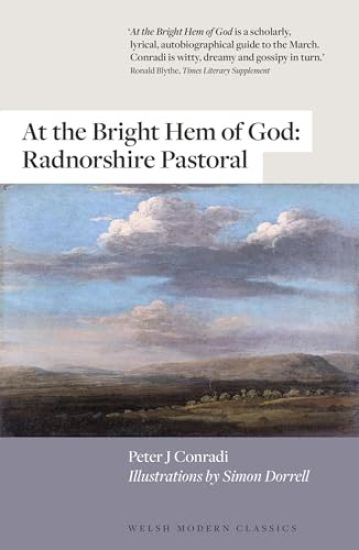
Radnorshire, a county rural and remote. The lives of its sparse population continue to be shaped by the wild landscape of valleys and mountains in ways that for Britain now lie in the past. Yet down the centuries Radnorshire has fascinated and inspired, as a place of contemplation, exploration, creation and retreat. In At the Bright Hem of God Peter J. Conradi examines both his own relationship with the place and responses to it by writers from Gerald of Wales, who passed through in 1176, to the present day. On the way he takes in fifteenth-century court poets; the metaphysicals Herbert, Vaughan and Traherne; the Romantic poets and Rousseau (who almost lived there and whose ideas did); diarist Francis Kilvert and his editor William Plomer; artist Eric Gill and poet David Jones; Bruce Chatwin, whose On the Black Hill is the most famous Radnorshire novel; and poets R.S. Thomas, Roland Mathias and Ruth Bidgood, the county’s current remembrancer. The result is an astonishing account, a trip across landscapes and borders - physical, emotional and intellectual - the culmination of over forty years of visiting and living there. Conradi’s perceptive narrative is complemented by superb ink drawings by the Radnorshire artist Simon Dorrell to produce a beautiful book, a love letter to a place still hidden from most of the country.
Frank Cottrell Boyce; William Dalrymple; Margaret Drabble; Simon Callow; Tony Robinson; Tracey Emin; J.K. Rowling; Holly Johnson; Pete Townshend; Melvyn Bragg; Jeffrey Boakye; Onjali Rauf; Will Hutton; Prue Leith; Jonathan Meades; Chris Riddell; Philip Ardagh; Mary Beard; Brian Catling; Shami Chakrabarti; Chris Cleave; Peter J Conradi; Lindsey Davis
How are great turning points in history experienced by individuals?As Britain pulls away from Europe great British writers come together to give voice to their innermost feelings. These writers include novelists, writers of books for children, of comic books, humourists, historians, biographers, nature writers, film writers, travel writers, writers young and old and from an extraordinary range of backgrounds. Most are famous perhaps because they have won the Booker or other literary prizes, written bestsellers, changed the face of popular culture or sold millions of records. Others are not yet household names but write with depth of insight and feeling.There is some extraordinary writing in this book. Some of these pieces are expressions of love of particular places in Europe. Some are true stories, some nostalgic, some hopeful. Some are cries of pain. There are hilarious pieces. There are cries of pain and regret. Some pieces are quietly devastating. All are passionate.Conceived as a love letter to Europe, this book may also help reawaken love for Britain. It shows the unique richness and diversity of British cultures, a multitude of voices in harmony.Contributors include:Hugh Aldersey-Williams, Philip Ardagh, Jake Arnott, Patricia Atkinson, Paul Atterbury, Richard Beard, Mary Beard, Don Boyd, Melvyn Bragg, Gyles Brandreth, Kathleen Burke, James Buxton, Philip Carr, Brian Catling, Shami Chakrabarti, Chris Cleave, Mark Cocker, Peter Conradi , Heather Cooper, Frank Cottrell-Boyce, Roger Crowley, David Crystal, William Dalrymple, Lindsey Davies, Margaret Drabble, Mark Ellen, Richard Evans, Michel Faber, Sebastian Faulks, Ranulph Fiennes, Robert Fox, James Fox, Neil Gaiman, Evelyn Glennie, James Hanning, Nick Hayes, Alan Hollinghurst, Gabby Hutchinson-Crouch, Will Hutton, Robert Irwin, Holly Johnson , Liane Jones, Ruth Jones, Sam Jordison, Kapka Kassabova, AL Kennedy, Hermione Lee, Prue Leith, Patrick Lenox, Roger Lewis, David Lindo, Penelope Lively, Beth Lync, Richard Mabey, Sue MacGregor, Ian Martin, Frank McDonough, Jonathan Meades, Andrew Miller, Deborah Moggach, Ben Moor, Alan Moore, Paul Morley, Jackie Morris, Charles Nicholl, Richard Overy, Chris Riddell, Adam Roberts, Tony Robinson, Lee Rourke, Sophie Sabbage, Marcus Sedgwick, Richard Shirreff, Paul Stanford, Isy Suttie, Sandi Toksvig, Colin Tudge, Ed Vulliamy, Anna Whitelock, Kate Williams, Michael Wood, Louisa Young
This work has been selected by scholars as being culturally important and is part of the knowledge base of civilization as we know it.This work is in the public domain in the United States of America, and possibly other nations. Within the United States, you may freely copy and distribute this work, as no entity (individual or corporate) has a copyright on the body of the work.Scholars believe, and we concur, that this work is important enough to be preserved, reproduced, and made generally available to the public. To ensure a quality reading experience, this work has been proofread and republished using a format that seamlessly blends the original graphical elements with text in an easy-to-read typeface.We appreciate your support of the preservation process, and thank you for being an important part of keeping this knowledge alive and relevant.
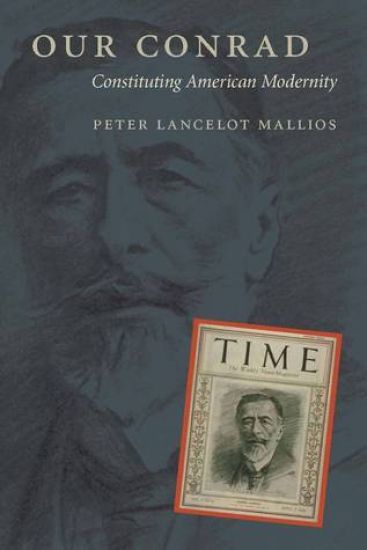
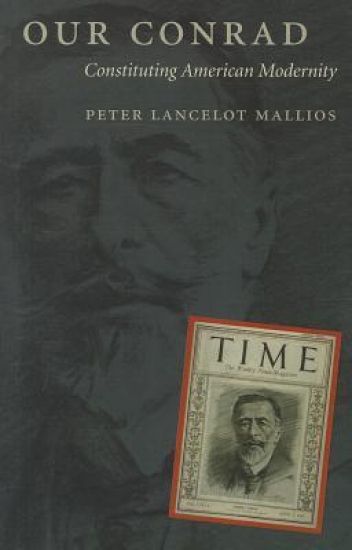
Our Conrad is about the American reception of Joseph Conrad and its crucial role in the formation of American modernism. Although Conrad did not visit the country until a year before his death, his fiction served as both foil and mirror to America's conception of itself and its place in the world. Peter Mallios reveals the historical and political factors that made Conrad's work valuable to a range of prominent figures—including Fitzgerald, Faulkner, Richard Wright, Woodrow Wilson, and Theodore and Edith Roosevelt—and explores regional differences in Conrad's reception. He proves that foreign-authored writing can be as integral a part of United States culture as that of any native. Arguing that an individual writer's apparent (national, gendered, racial, political) identity is not always a good predictor of the diversity of voices and dialogues to which he gives rise, this exercise in transnational comparativism participates in post-Americanist efforts to render American Studies less insular and parochial.
Our Conrad is about the American reception of Joseph Conrad and its crucial role in the formation of American modernism. Although Conrad did not visit the country until a year before his death, his fiction served as both foil and mirror to America's conception of itself and its place in the world. Peter Mallios reveals the historical and political factors that made Conrad's work valuable to a range of prominent figures—including Fitzgerald, Faulkner, Richard Wright, Woodrow Wilson, and Theodore and Edith Roosevelt—and explores regional differences in Conrad's reception. He proves that foreign-authored writing can be as integral a part of United States culture as that of any native. Arguing that an individual writer's apparent (national, gendered, racial, political) identity is not always a good predictor of the diversity of voices and dialogues to which he gives rise, this exercise in transnational comparativism participates in post-Americanist efforts to render American Studies less insular and parochial.
Before he published his first novel in 1895, Joseph Conrad spent twenty years in the merchant navy, eventually obtaining his master's ticket and commanding the barque Otago, in which he sailed a notable passage from Sydney to Mauritius. This book traces his sea-career, and shows how Captain Jozef Konrad Korzeniowski, master mariner, became Joseph Conrad, master novelist. Conrad was injured on the Highland Forest, burned out of the Palestine, falsely censured for professional misconduct by the master of the Riversdale, survived a brief and dangerous posting as a river-boat captain on the Congo???and finally served as first officer on the famous Torrens, a passenger ship sailing between Adelaide and Great Britain.