Kirjojen hintavertailu. Mukana 11 627 484 kirjaa ja 12 kauppaa.

Kirjahaku

Etsi kirjoja tekijän nimen, kirjan nimen tai ISBN:n perusteella.

1000 tulosta hakusanalla Peter F. Drucker

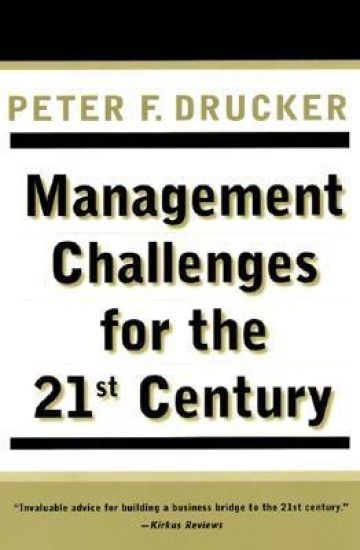
Management Challenges for the 21st Century

Management Challenges for the 21st Century

Peter F. Drucker

HarperBusiness
2011
nidottu
Peter F. Drucker discusses how the new paradigms of management have changed and will continue to change our basic assumptions about the practices and principles of management. Forward-looking and forward-thinking, Management Challenges for the 21st Century combines the broad knowledge, wide practical experience, profound insight, sharp analysis, and enlightened common sense that are the essence of Drucker's writings and "landmarks of the managerial profession." --Harvard Business Review
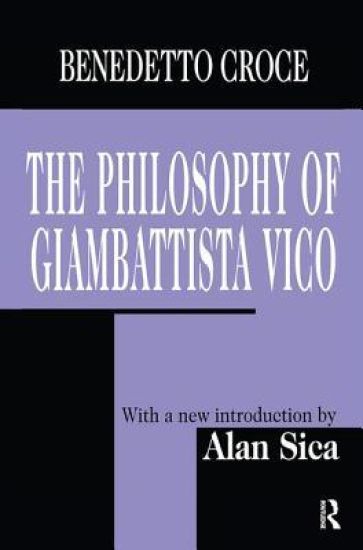
The Philosophy of Giambattista Vico

The Philosophy of Giambattista Vico

Peter F. Drucker

Routledge
2017
sidottu
Giambattista Vico (1668-1744) is often regarded as the beleaguered, neglected genius of pre-Enlightenment Naples. His work-though known to Herder, Coleridge, Matthew Arnold, and Michelet-widely and deeply appreciated only during the twentieth century. Although Vico may be best known for the use James Joyce made of his theories in Finnegans Wake, Croce's insightful analysis of Vico's ideas played a large role in alerting readers to his unique voice. Croce's volume preceded Joyce's creation of "Mr. John Baptister Vickar" by a quarter century.During the last 25 years Vico's ideas about history, language, anti-Cartesian epistemology, and rhetoric have begun to receive the recognition their admirers have long claimed they deserve. Increasing numbers of publications appear annually which bear the stamp of Vico's thinking. Even if he is not yet so renowned as some of his contemporaries, such as Locke, Voltaire, or Montesquieu, there are good reasons to believe that in the future he will be equally honored as a cultural theorist. As a theorist of historical process and its language, there is no more innovative voice than his until the twentieth century-which explains in part why such figures as Joyce and R.G. Collingwood freely drew on Vico's work, particularly his New Science, while creating their own. If Vico was Naples' most brilliant, if uncelebrated, citizen prior to the Enlightenment taking hold in Southern Italy, then Croce (1866-1952) is surely the city's most important thinker of modern times, and the single indispensable Italian philosopher since Vico's death. When a genius of Croce's interpretative prowess, evaluates the work of another, it is inevitable that an explosive mixture will result.A great virtue of this book is its fusion of Croce's unique brand of idealism and aesthetic philosophy with Vico's epistemological, ethical, and historical theories. If Vico's theory of cyclical changes in history, the corsi e ricorsi, remains fruitful, it might be argued that Croce's evaluation of his countryman' ideas represented the next turn of the philosophical wheel toward enlightenment.
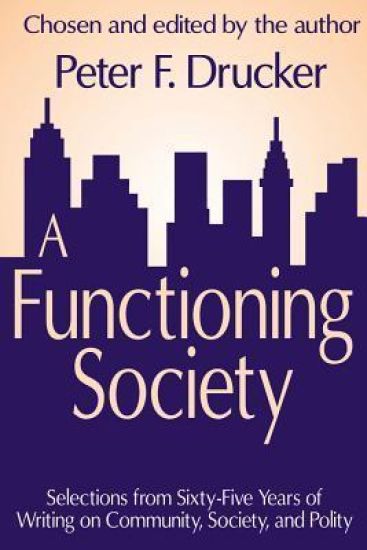
A Functioning Society

A Functioning Society

Peter F. Drucker

AldineTransaction
2011
nidottu
Peter F. Drucker may be best known as a writer on business and management, but these subjects were not his foremost intellectual concern. Drucker's primary concerns were community, in which the individual has status, and society, in which the individual has function. Here he has assembled selections from his vast writings on these subjects. This collection presents the full range of Drucker's thought on community, society, and political structure and constitutes an ideal introduction to his ideas.The volume is divided into seven parts. The selections in parts 1 and 2 were mostly written during World War Two and in the wake of the Great Depression. Part 3 deals with the limits of governmental competence in the social and economic realm. It contains some of Drucker's most influential writings concerned with the difference between big government and effective government. The chapters in part 4 explore autonomous centers of power outside government and within society. Part 5 contains chapters from Drucker's path-breaking work on the corporation as a social organization rather than merely an economic one. The rise of the so-called "knowledge industries" forms the background for part 6. The concluding part 7 is devoted entirely to Drucker's long essay "The Next Society." Drucker examines the emergence of new institutions and new theories arising from the information revolution and the social changes they are helping to bring about.In organizing these representative writings, Drucker chose to be topical rather than chronological, with each excerpt presenting a basic theme of his life's work. As is characteristic of his efforts, A Functioning Society appeals both the general reader as well as a cross-disciplinary scholarly readership.
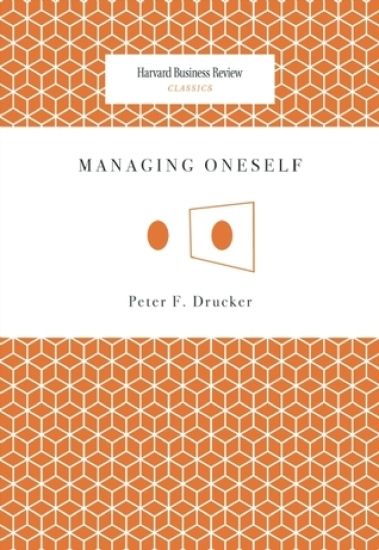
Managing Oneself

Managing Oneself

Peter F. Drucker

Harvard Business Review Press
2008
pokkari
We live in an age of unprecedented opportunity: with ambition, drive, and talent, you can rise to the top of your chosen profession regardless of where you started out. But with opportunity comes responsibility. Companies today aren't managing their knowledge workers careers. Instead, you must be your own chief executive officer. That means it's up to you to carve out your place in the world and know when to change course. And it's up to you to keep yourself engaged and productive during a career that may span some 50 years. In Managing Oneself, Peter Drucker explains how to do it. The keys: Cultivate a deep understanding of yourself by identifying your most valuable strengths and most dangerous weaknesses; Articulate how you learn and work with others and what your most deeply held values are; and Describe the type of work environment where you can make the greatest contribution. Only when you operate with a combination of your strengths and self-knowledge can you achieve true and lasting excellence. Managing Oneself identifies the probing questions you need to ask to gain the insights essential for taking charge of your career. Peter Drucker was a writer, teacher, and consultant. His 34 books have been published in more than 70 languages. He founded the Peter F. Drucker Foundation for Nonprofit Management, and counseled 13 governments, public services institutions, and major corporations.
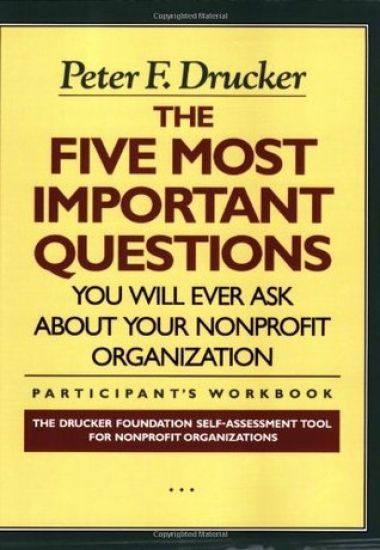
The Five Most Important Questions You Will Ever Ask About Your Nonprofit Organization
Everything you ever wanted to know about growing grapes The Five Most Important Questions You Will Ever Ask About Your Nonprofit Organization presents a proven self-assessment tool for all nonprofit leaders. In answering simple questions about the mission, strategic vision, central values, and long-term plan, you'll uncover key insights that lead to more effective leadership and a greater organizational impact. These tools are versatile enough to apply to progress assessment, team building, planning and evaluation, and individual work, and are designed to help improve achievement and results.
The Theory of the Business (Harvard Business Review Classics)

The Theory of the Business (Harvard Business Review Classics)

Peter F. Drucker

Harvard Business Review Press
2017
pokkari
Peter F. Drucker argues that what underlies the current malaise of so many large and successful organizations worldwide is that their theory of the business no longer works. The story is a familiar one: a company that was a superstar only yesterday finds itself stagnating and frustrated, in trouble and, often, in a seemingly unmanageable crisis. The root cause of nearly every one of these crises is not that things are being done poorly. It is not even that the wrong things are being done. Indeed, in most cases, the right things are being done—but fruitlessly. What accounts for this apparent paradox? The assumptions on which the organization has been built and is being run no longer fit reality. These are the assumptions that shape any organization's behavior, dictate its decisions about what to do and what not to do, and define what an organization considers meaningful results. These assumptions are what Drucker calls a company's theory of the business. The Harvard Business Review Classics series offers you the opportunity to make seminal Harvard Business Review articles a part of your permanent management library. Each highly readable volume contains a groundbreaking idea that continues to shape best practices and inspire countless managers around the world—and will have a direct impact on you today and for years to come.
What Makes an Effective Executive (Harvard Business Review Classics)

What Makes an Effective Executive (Harvard Business Review Classics)

Peter F. Drucker

Harvard Business Review Press
2017
pokkari
In his sixty-five-year consulting career, Peter F. Drucker, widely regarded as the father of modern management, identified eight practices that can make any executive effective. Leadership is not about charisma or extroversion. It's about these practices: Effective executives ask, "What needs to be done?" They also ask, "What is right for the enterprise?" They develop action plans. They take responsibility for decisions. They take responsibility for communicating. They focus on opportunities rather than problems. They run productive meetings. And they think and say "we" rather than "I." Since 1922, Harvard Business Review has been a leading source of breakthrough ideas in management practice. The Harvard Business Review Classics series now offers you the opportunity to make these seminal pieces a part of your permanent management library. Each highly readable volume contains a groundbreaking idea that continues to shape best practices and inspire countless managers around the world.
Managing Oneself

Managing Oneself

Peter F. Drucker

Harvard Business Review Press
2017
sidottu
Peter Drucker is widely regarded as the father of modern management, offering penetrating insights into business that still resonate today. But Drucker also offers deep wisdom on how to manage our personal lives and how to become more effective leaders. In these two classic articles from Harvard Business Review, Drucker reveals the keys to becoming your own chief executive officer as well as a better leader of others. "Managing Oneself" identifies the probing questions you need to ask to gain the insights essential for taking charge of your career, while "What Makes an Effective Executive" outlines the key behaviors you must adopt in order to lead. Together, they chart a powerful course to help you carve out your place in the world.
Die fünf entscheidenden Fragen des Managements

Die fünf entscheidenden Fragen des Managements

Peter F. Drucker

Wiley-VCH Verlag GmbH
2022
nidottu
Anwendbar in den verschiedensten Bereichen und Branchen beschreitet Peter F. Drucker in diesem Buch neue Wege, was Organisationsbewertung sowie effektive Strategien und Managementleitsätze für Unternehmen betrifft und weist damit abermals den Weg in die Zukunft. Mit fünf einfachen und doch komplexen Fragen schaffen es Peter Drucker und seine Mitautoren (u. a. Jim Collins, Philip Kotler und James Kouzes) auf die essenziellen Bestandteile und Verbesserungsmöglichkeiten des Managements von Unternehmen aufmerksam zu machen. Sie sind ein Instrument zur Selbsteinschätzung für Manager und Organisationen, ein Bekenntnis zur Zukunft, ein Versprechen für den Kunden, eine Begeisterung für die Mission des Unternehmens und der volle Arbeitseinsatz, die Organisationen und Führungspersönlichkeiten Energie und Mut zum Wachsen verleihen. Damit wird sich die Arbeitsweise in Unternehmen von Grund auf verändern. Wenn sich Manager trauen diese Fragen zu stellen, werden sie Antworten darauf finden, warum sie tun, was sie tun und wie sie es in Zukunft noch besser machen können.
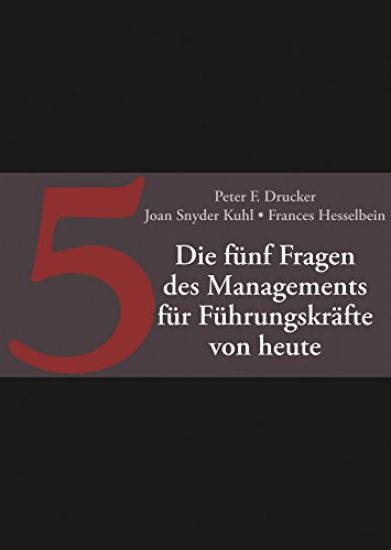
Die fünf Fragen des Managements für Führungskräfte von heute

Die fünf Fragen des Managements für Führungskräfte von heute

Peter F. Drucker; Joan Snyder Kuhl; Frances Hesselbein

Wiley-VCH Verlag GmbH
2015
sidottu
Zeitlose Weisheit zugeschnitten auf die Bedürfnisse von heutigen Führungskräften - das bietet der Ableger des erfolgreichen Buches "Die fünf entscheidenden Fragen des Managements" von Peter Drucker. Basierend auf diesem Klassiker werden wieder die 5 entscheidenden Fragen zusammengestellt. Gleichzeitig bietet das Buch aber auch noch eine neue Perspektive für Führungskräfte, die noch neu auf ihrer Position sind. Indem sie sich die Fragen "Was ist unsere Mission?", "Wer ist unser Kunde?", "Worauf legt der Kunde wert?", "Was sind unsere Ergebnisse?" und "Was ist unser Plan?" stellen, können die Nachwuchsmanager besser verstehen, warum sie machen, was sie machen, und wie sie ihre Arbeit verbessern können.
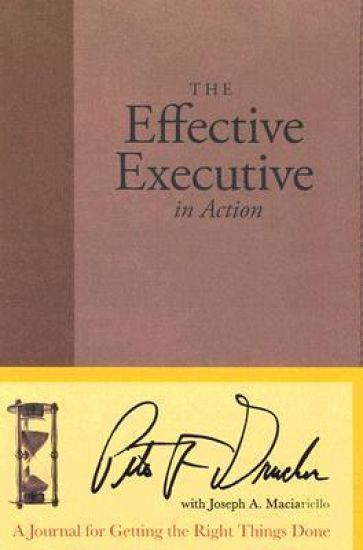
The Effective Executive in Action

The Effective Executive in Action

Peter F. Drucker; Joseph A. Maciariello

HarperBusiness
2007
sidottu
Peter Drucker's work has been considered the foremost management thought for most of the twentieth century and into the twenty-first. Here Drucker and Maciariello provide executives, managers, and knowledge workers with a guide to effective action - the central theme of Drucker's work. This journal will provide an interactive format where managers and executives can record their thoughts on the ideas from "The Effective Executive". The journal will teach leaders how to become more effective and how to lead according to the five main pillars of Drucker's philosophy on effective leaders.
The End of Economic Man: a Study of the New Totalitarianism

The End of Economic Man: a Study of the New Totalitarianism

Peter F. (Peter Ferdinand) Drucker

Hassell Street Press
2021
sidottu
This work has been selected by scholars as being culturally important and is part of the knowledge base of civilization as we know it.This work is in the public domain in the United States of America, and possibly other nations. Within the United States, you may freely copy and distribute this work, as no entity (individual or corporate) has a copyright on the body of the work.Scholars believe, and we concur, that this work is important enough to be preserved, reproduced, and made generally available to the public. To ensure a quality reading experience, this work has been proofread and republished using a format that seamlessly blends the original graphical elements with text in an easy-to-read typeface.We appreciate your support of the preservation process, and thank you for being an important part of keeping this knowledge alive and relevant.
The End of Economic Man: a Study of the New Totalitarianism

The End of Economic Man: a Study of the New Totalitarianism

Peter F. (Peter Ferdinand) Drucker

Hassell Street Press
2021
nidottu
This work has been selected by scholars as being culturally important and is part of the knowledge base of civilization as we know it.This work is in the public domain in the United States of America, and possibly other nations. Within the United States, you may freely copy and distribute this work, as no entity (individual or corporate) has a copyright on the body of the work.Scholars believe, and we concur, that this work is important enough to be preserved, reproduced, and made generally available to the public. To ensure a quality reading experience, this work has been proofread and republished using a format that seamlessly blends the original graphical elements with text in an easy-to-read typeface.We appreciate your support of the preservation process, and thank you for being an important part of keeping this knowledge alive and relevant.
The Effective Executive

The Effective Executive

Peter F Drucker

HARPERCOLLINS PUBLISHERS INC
2006
nidottu
What makes an effective executive?The measure of the executive, Peter F. Drucker reminds us, is the ability to "get the right things done." This usually involves doing what other people have overlooked as well as avoiding what is unproductive. Intelligence, imagination, and knowledge may all be wasted in an executive job without the acquired habits of mind that mold them into results.Drucker identifies five practices essential to business effectiveness that can, and must, be learned: Managing time Choosing what to contribute to the organization Knowing where and how to mobilize strength for best effect Setting the right priorities Knitting all of them together with effective decision-making Ranging widely through the annals of business and government, Peter F. Drucker demonstrates the distinctive skill of the executive and offers fresh insights into old and seemingly obvious business situations.