Kirjojen hintavertailu. Mukana 11 244 527 kirjaa ja 12 kauppaa.

Kirjahaku

Etsi kirjoja tekijän nimen, kirjan nimen tai ISBN:n perusteella.

1000 tulosta hakusanalla Peter J. Fast

Class 1 Devices

Class 1 Devices

Peter J. Ogrodnik

Academic Press Inc
2014
nidottu
The Case Studies in Medical Devices Design series consists of practical, applied case studies relating to medical device design in industry. These titles complement Ogrodnik’s Medical Device Design and will assist engineers with applying the theory in practice. The case studies presented directly relate to Class I, Class IIa, Class IIb and Class III medical devices. Designers and companies who wish to extend their knowledge in a specific discipline related to their respective class of operation will find any or all of these titles a great addition to their library. Class 1 Devices is a companion text to Medical Devices Design: Innovation from Concept to Market. The intention of this book, and its sister books in the series, is to support the concepts presented in Medical Devices Design through case studies. In the context of this book the case studies consider Class I (EU) and 510(k) exempt (FDA) . This book covers classifications, the conceptual and embodiment phase, plus design from idea to PDS.
Medical Device Design

Medical Device Design

Peter J. Ogrodnik

Academic Press Inc
2019
nidottu
Medical Device Design: Innovation from Concept to Market, Second Edition provides the bridge between engineering design and medical device development. There is no single text that addresses the plethora of design issues a medical devices designer meets when developing new products or improving older ones; this book fills that need. It addresses medical devices' regulatory (FDA and EU) requirements, shows the essential methodologies medical designers must understand to ensure their products meet requirements, and brings together proven design protocols, thus enabling engineers and medical device manufacturers to rapidly bring new products to the marketplace. This book is unique because it takes the reader through the process of medical device development, from very early stages of conceptualization, to commercialization on the global market. This rare resource can be used by both professionals and newcomers to device design.
Live Right for Your Type

Live Right for Your Type

Peter J. D'Adamo

Penguin Books Ltd
2002
pokkari
Achieve total physical and emotional well-being in 2020 by living right for your blood type. ___________Your blood type is the key to living a healthy and vibrant life. It can affect your mental health, the way you digest your food and the efficiency of your metabolic and immune systems. New research has indicated that there's a blood-type profile for almost every aspect of our lives, not just our diet, and thanks to that new research, your blood type reveals how you can live a better life. This ground-breaking book will give you individualized prescriptions according to blood type.Each blood-type prescription is divided into five life areas. In this book you'll find recommendations, guidelines, and informational charts for: · Lifestyle· Stress and Emotional Balance· Maximizing Health· Overcoming Disease· Strategies for AgingBased on your blood type, you'll learn whether you should: - Eat three regular meals a day, or small, frequent ones?- Have a regimented or flexible routine?- Go to sleep at the same time every night or have a flexible bedtime?- Do without rest periods or take them religiously?- Achieve emotional balance through exercise, meditation, or herbs?With Live Right for Your Type you'll get a individualized prescription for maximising health, metabolism and vitality in every stage of your life.
Social Theory

Social Theory

Peter J. Kivisto

Oxford University Press Inc
2020
nidottu
Edited by Peter J. Kivisto, this acclaimed collection of accessible primary source readings enables students to experience "firsthand" a wide range of perspectives that are shaping current sociological theory. Now in its sixth edition, Social Theory: Roots and Branches covers both classical theory (the roots) and contemporary theory (the branches) and shows how they are linked. Part One features work from such well-known classical theorists as Marx, Durkheim, Weber, and Simmel. It also presents selections by theorists outside of the discipline and from writers who are often overlooked in competing collections, including W. E. B. Du Bois, Charlotte Perkins Gilman, and Harriet Martineau. Part Two offers readings that illustrate major contemporary theoretical approaches, ending with a section on cutting-edge directions in theoretical discourse.
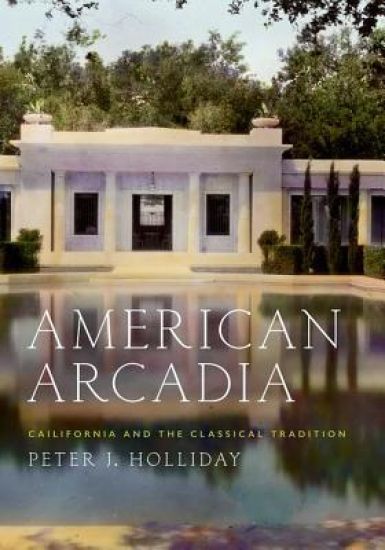
American Arcadia

American Arcadia

Peter J. Holliday

Oxford University Press Inc
2016
sidottu
A vivid and engaging exploration of California's debt to the ancient world. Discussing the influence of the classics on America is nothing new; indeed, classical antiquity could be considered second only to Christianity as a force in modeling America's national identity. What has never been explored until now is how, from the beginning, Californians in particular chose to visually and culturally craft their new world using the rhetoric of classical antiquity. Through a lively exploration of material culture, literature, and architecture, American Arcadia offers a tour through California's development as a Mediterranean haven from the late nineteenth century to the present. In its earliest days, California was touted as the last opportunity for alienated Yankees to establish the refined gentleman-farmer culture envisioned by Jefferson and build new cities free of the filth and corruption of those they left back East. Through architecture and landscape design Californians fashioned an Arcadian setting evocative of ancient Greece and Rome.Later, as Arcadia gave way to urban sprawl, entire city plans were drafted to conjure classical antiquity, self-styled villas dotted the hills, and utopian communities began to shape the state's social atmosphere. Art historian Peter J. Holliday traces the classical influence primarily through the evidence of material culture, yet the book emphasizes the stories and people, famous and forgotten, behind the works, such as Florence Yoch, the renowned landscape designer and set designer for Gone with the Wind, and "Sister Aimee" Semple McPherson, the most publicized Christian evangelist of her day, whose sermons filled the Pantheon-like Angelus Temple. Telling stories from the creation of the famed aqueducts that turned the semi-arid landscape to a cornucopia of almonds, alfalfa, and oranges to the birth of the body-sculpting movement, American Arcadia offers readers a new way of seeing our past and ourselves.
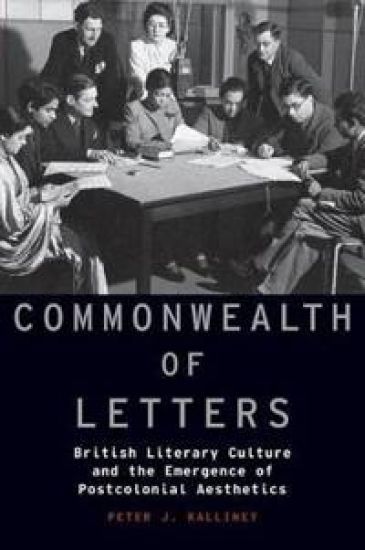
Commonwealth of Letters

Commonwealth of Letters

Peter J. Kalliney

Oxford University Press Inc
2016
nidottu
Commonwealth of Letters examines midcentury literary institutions integral to modernism and postcolonial writing. Several organizations central to interwar modernism, such as the BBC, influential publishers, and university English departments, became important sites in the emergence of postcolonial literature after the war. How did some of modernism's leading figures of the 1930s--such as T.S. Eliot, Louis MacNeice, and Stephen Spender--come to admire late colonial and early postcolonial literature in the 1950s? Similarly, why did late colonial and early postcolonial writers--including Chinua Achebe, Kamau Brathwaite, Claude McKay, and Ngugi wa Thiong'o--actively seek alliances with metropolitan intellectuals? Peter Kalliney's original and extensive archival work on modernist cultural institutions demonstrates that this disparate group of intellectuals had strong professional incentives to treat one another more as fellow literary professionals, and less as political or cultural antagonists. Surprisingly, metropolitan intellectuals and their late colonial counterparts leaned heavily on modernist theories of aesthetic autonomy to facilitate their collaborative ventures. For white, metropolitan writers, T.S. Eliot's notion of impersonality could help recruit new audiences and conspirators from colonized regions of the world. For black, colonial writers, aesthetic autonomy could be used to imagine a literary sphere uniquely resistant to the forms of racial prejudice endemic to the colonial system. This strategic collaboration did not last forever, but as Commonwealth of Letters shows, it left a lasting imprint on the ultimate disposition of modernism and the evolution of postcolonial literature.
Quantum Ontology

Quantum Ontology

Peter J. Lewis

Oxford University Press Inc
2016
nidottu
Metaphysicians should pay attention to quantum mechanics. Why? Not because it provides definitive answers to many metaphysical questions-the theory itself is remarkably silent on the nature of the physical world, and the various interpretations of the theory on offer present conflicting ontological pictures. Rather, quantum mechanics is essential to the metaphysician because it reshapes standard metaphysical debates and opens up unforeseen new metaphysical possibilities. Even if quantum mechanics provides few clear answers, there are good reasons to think that any adequate understanding of the quantum world will result in a radical reshaping of our classical world-view in some way or other. Whatever the world is like at the atomic scale, it is almost certainly not the swarm of particles pushed around by forces that is often presupposed. This book guides readers through the theory of quantum mechanics and its implications for metaphysics in a clear and accessible way. The theory and its various interpretations are presented with a minimum of technicality. The consequences of these interpretations for metaphysical debates concerning realism, indeterminacy, causation, determinism, holism, and individuality (among other topics) are explored in detail, stressing the novel form that the debates take given the empirical facts in the quantum domain. While quantum mechanics may not deliver unconditional pronouncements on these issues, the range of possibilities consistent with our knowledge of the empirical world is relatively small-and each possibility is metaphysically revisionary in some way. This book will appeal to researchers, students, and anybody else interested in how science informs our world-view.
Quantum Ontology

Quantum Ontology

Peter J. Lewis

Oxford University Press Inc
2016
sidottu
Metaphysicians should pay attention to quantum mechanics. Why? Not because it provides definitive answers to many metaphysical questions-the theory itself is remarkably silent on the nature of the physical world, and the various interpretations of the theory on offer present conflicting ontological pictures. Rather, quantum mechanics is essential to the metaphysician because it reshapes standard metaphysical debates and opens up unforeseen new metaphysical possibilities. Even if quantum mechanics provides few clear answers, there are good reasons to think that any adequate understanding of the quantum world will result in a radical reshaping of our classical world-view in some way or other. Whatever the world is like at the atomic scale, it is almost certainly not the swarm of particles pushed around by forces that is often presupposed. This book guides readers through the theory of quantum mechanics and its implications for metaphysics in a clear and accessible way. The theory and its various interpretations are presented with a minimum of technicality. The consequences of these interpretations for metaphysical debates concerning realism, indeterminacy, causation, determinism, holism, and individuality (among other topics) are explored in detail, stressing the novel form that the debates take given the empirical facts in the quantum domain. While quantum mechanics may not deliver unconditional pronouncements on these issues, the range of possibilities consistent with our knowledge of the empirical world is relatively small-and each possibility is metaphysically revisionary in some way. This book will appeal to researchers, students, and anybody else interested in how science informs our world-view.
Foundations of Global Health

Foundations of Global Health

Peter J. Brown; Svea Closser

Oxford University Press Inc
2018
nidottu
Foundations of Global Health: An Interdisciplinary Reader is a collection of highly readable articles with a significant amount of original text by the editors. Supplementary instructive materials include "conceptual tools" summaries, background information on authors and context, provocative section and article introductions, discussion questions, and suggestions for further reading and internet exploration. Like the field of global health itself, the readings focus on the public health challenges faced by low- and middle-income countries as well as the persistent problems of health disparities in high-income countries.
Tornado God

Tornado God

Peter J. Thuesen

Oxford University Press Inc
2020
sidottu
One of the earliest sources of humanity's religious impulse was severe weather, which ancient peoples attributed to the wrath of storm gods. Enlightenment thinkers derided such beliefs as superstition and predicted they would pass away as humans became more scientifically and theologically sophisticated. But in America, scientific and theological hubris came face-to-face with the tornado, nature's most violent windstorm. Striking the United States more than any other nation, tornadoes have consistently defied scientists' efforts to unlock their secrets. Meteorologists now acknowledge that even the most powerful computers will likely never be able to predict a tornado's precise path. Similarly, tornadoes have repeatedly brought Americans to the outer limits of theology, drawing them into the vortex of such mysteries as how to reconcile suffering with a loving God and whether there is underlying purpose or randomness in the universe. In this groundbreaking history, Peter Thuesen captures the harrowing drama of tornadoes, as clergy, theologians, meteorologists, and ordinary citizens struggle to make sense of these death-dealing tempests. He argues that, in the tornado, Americans experience something that is at once culturally peculiar (the indigenous storm of the national imagination) and religiously primal (the sense of awe before an unpredictable and mysterious power). He also shows that, in an era of climate change, the weather raises the issue of society's complicity in natural disasters. In the whirlwind, Americans confront the question of their own destiny-how much is self-determined and how much is beyond human understanding or control.
Technology Tips for Ensemble Teachers

Technology Tips for Ensemble Teachers

Peter J. Perry

Oxford University Press Inc
2019
sidottu
Written by veteran music educator Peter J. Perry, Technology Tips for Ensemble Teachers presents a collection of practical tips to help today's school music ensemble director incorporate and implement technology in all aspects of large ensemble instruction. This go-to guide offers specific methods for the use of technology in ensemble instruction, identifies applicable technologies, and details proven ways to successfully use those technologies in instruction. Tips throughout the book vary in type and complexity, allowing directors of all technical abilities to use the book effectively to meet the unique needs of their ensembles and students. They also offer content-specific examples for technologies in band, orchestra, jazz ensemble, and chorus instruction, as well as emerging ensemble settings such as percussion ensembles, guitar ensembles, rock bands, a capella groups, and iPad ensembles. With a special focus on current technologies including mobile devices, Technology Tips for Ensemble Teachers is a timely and useful resource for directors as students and classrooms become ever more technology-oriented.
Technology Tips for Ensemble Teachers

Technology Tips for Ensemble Teachers

Peter J. Perry

Oxford University Press Inc
2019
nidottu
Written by veteran music educator Peter J. Perry, Technology Tips for Ensemble Teachers presents a collection of practical tips to help today's school music ensemble director incorporate and implement technology in all aspects of large ensemble instruction. This go-to guide offers specific methods for the use of technology in ensemble instruction, identifies applicable technologies, and details proven ways to successfully use those technologies in instruction. Tips throughout the book vary in type and complexity, allowing directors of all technical abilities to use the book effectively to meet the unique needs of their ensembles and students. They also offer content-specific examples for technologies in band, orchestra, jazz ensemble, and chorus instruction, as well as emerging ensemble settings such as percussion ensembles, guitar ensembles, rock bands, a capella groups, and iPad ensembles. With a special focus on current technologies including mobile devices, Technology Tips for Ensemble Teachers is a timely and useful resource for directors as students and classrooms become ever more technology-oriented.
Henry Enfield Roscoe

Henry Enfield Roscoe

Peter J.T. Morris; Peter Reed

OXFORD UNIVERSITY PRESS INC
2024
sidottu
Little known today, Henry Enfield Roscoe was one of the most prominent chemists and educational reformers in Victorian Britain. Having studied in Heidelberg, he worked to transform English education by using Germany as a model. He made Owens College, Manchester, viable and converted it into Victoria University (now the University of Manchester). He then campaigned for the reform of technical education in an alliance with like-minded campaigners which resulted in the Technical Instruction Act of 1889. Roscoe was also the Liberal MP for South Manchester between 1885 and 1895, one of the few academic chemists to become a member of the House of Commons. In his "retirement," he helped found the Lister Institute of Preventive Medicine. Yet, despite his extensive impact on Britain at the time and our society today, he remains largely forgotten. In this detailed biography, authors Morris and Reed provide a timely and original contribution to the history of nineteenth-century British science and its relation to education, industry, and government policy, highlighting Roscoe's significant contributions and legacy as one of the leading scientists of his generation.
Power, Image, and Memory

Power, Image, and Memory

Peter J. Holliday

OXFORD UNIVERSITY PRESS INC
2024
sidottu
Those who write history determine its narrative, whether through written text or through the visual language of art and public monuments. Power, Image, and Memory examines a wide variety of artistic traditions, showing how art commemorating historical events can shape collective memory, and with it, the identities of social groups and nations. From the Mesopotamians to the present day, leaders and societies have used art to frame and memorialize important events. This account establishes a dialogue among traditions in a series of case studies, ranging from the reliefs at Ramses' temple at Abu Simbel and the ancient Greek "Alexander Mosaic" to the Heian Period Japanese scroll of the Night Attack on the Sanjo Palace, the Benin Bronzes, Diego Velázquez's Surrender at Breda, and Picasso's Guernica. Weaving together meticulous historic detail, theory, and visual analysis, this volume offers a complex picture of the power of art and memory, as well as of the life of these monuments and messages over time, distanced from their original cultures and context. With insights relevant to contemporary debates reexamining historic monuments, Power, Image, and Memory sheds new light on the power of art to shape social memory and identity.
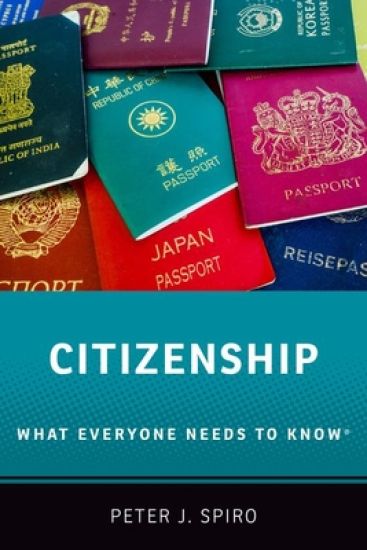
Citizenship

Citizenship

Peter J. Spiro

Oxford University Press Inc
2020
nidottu
Almost everyone has citizenship, and yet it has emerged as one of the most hotly contested issues of contemporary politics. Even as cosmopolitan elites and human rights advocates aspire to some notion of "global citizenship," populism and nativism have re-ignited the importance of national citizenship. Either way, the meaning of citizenship is changing. Citizenship once represented solidarities among individuals committed to mutual support and sacrifice, but as it is decoupled from national community on the ground, it is becoming more a badge of privilege than a marker of equality. Intense policy disagreement about whether to extend birthright citizenship to the children of unauthorized immigrants opens a window on other citizenship-related developments. At the same time that citizenship is harder to get for some, for others it is literally available for purchase. The exploding incidence of dual citizenship, meanwhile, is moving us away from a world in which states jealously demanded exclusive affiliation, to one in which individuals can construct and maintain formal multinational identities. Citizenship does not mean the same thing to everyone, nor have states approached citizenship policy in lockstep. Rather, global trends point to a new era for citizenship as an institution. In Citizenship: What Everyone Needs to Know®, legal scholar Peter J. Spiro explains citizenship through accessible terms and questions: what citizenship means, how you obtain citizenship (and how you lose it), how it has changed through history, what benefits citizenship gets you, and what obligations it extracts from you—all in comparative perspective. He addresses how citizenship status affects a person's rights and obligations, what it means to be stateless, the refugee crisis, and whether or not countries should terminate the citizenship of terrorists. He also examines alternatives to national citizenship, including sub-national and global citizenship, and the phenomenon of investor citizenship. Spiro concludes by considering whether nationalist and extremist politics will lead to a general retreat from state-based forms of association and the end of citizenship as we know it. Ultimately, Spiro provides historical and critical perspective to a concept that is a part of our everyday discourse, providing a crucial contribution to our understanding of a central organizing principle of the modern world.
Citizenship

Citizenship

Peter J. Spiro

Oxford University Press Inc
2020
sidottu
Almost everyone has citizenship, and yet it has emerged as one of the most hotly contested issues of contemporary politics. Even as cosmopolitan elites and human rights advocates aspire to some notion of "global citizenship," populism and nativism have re-ignited the importance of national citizenship. Either way, the meaning of citizenship is changing. Citizenship once represented solidarities among individuals committed to mutual support and sacrifice, but as it is decoupled from national community on the ground, it is becoming more a badge of privilege than a marker of equality. Intense policy disagreement about whether to extend birthright citizenship to the children of unauthorized immigrants opens a window on other citizenship-related developments. At the same time that citizenship is harder to get for some, for others it is literally available for purchase. The exploding incidence of dual citizenship, meanwhile, is moving us away from a world in which states jealously demanded exclusive affiliation, to one in which individuals can construct and maintain formal multinational identities. Citizenship does not mean the same thing to everyone, nor have states approached citizenship policy in lockstep. Rather, global trends point to a new era for citizenship as an institution. In Citizenship: What Everyone Needs to Know®, legal scholar Peter J. Spiro explains citizenship through accessible terms and questions: what citizenship means, how you obtain citizenship (and how you lose it), how it has changed through history, what benefits citizenship gets you, and what obligations it extracts from you--all in comparative perspective. He addresses how citizenship status affects a person's rights and obligations, what it means to be stateless, the refugee crisis, and whether or not countries should terminate the citizenship of terrorists. He also examines alternatives to national citizenship, including sub-national and global citizenship, and the phenomenon of investor citizenship. Spiro concludes by considering whether nationalist and extremist politics will lead to a general retreat from state-based forms of association and the end of citizenship as we know it. Ultimately, Spiro provides historical and critical perspective to a concept that is a part of our everyday discourse, providing a crucial contribution to our understanding of a central organizing principle of the modern world.
Reflecting on the Inevitable

Reflecting on the Inevitable

Peter J. Adams

Oxford University Press Inc
2020
nidottu
Death studies have, over the last twenty years, witnessed a flourishing of research and scholarship particularly in areas such as dying and bereavement, cultural practices and fear of dying. But, despite its importance, a specific focus on the nature of personal mortality has attracted surprisingly little attention. Reflecting on the Inevitable combines evidence from several disciplinary fields to explore the varying ways each of us engages with the prospect of personal mortality. Chapters are organized around the question of how an ongoing relationship might be possible when the threat of consciousness coming to an end points to an unspeakable nothingness. The book then argues that, despite this threat, an ongoing relationship with one's own death is still possible by means of conceptual devices, or 'enabling frames', that help shape personal mortality into a relatable object. In each chapter the subtleties and applicability of key ideas are enhanced through a series of illustrative narratives built up around the lives of four people at different ages living in two adjacent houses. Reflecting on the Inevitable is relevant not only to academics of death studies, but also those training and practicing in people-helping professions, as well as anyone experiencing or attempting to make sense of major life events.
Reading Romantics

Reading Romantics

Peter J. Manning

Oxford University Press Inc
1990
sidottu
These thirteen essays, some previously published and others appearing here for the first time, are united by a continuing endeavour to join formalism with wider concerns. They seek to reconnect literature with the motives from which it springs and the social relations within which it exists. There is fusion of psychoanalytic insight, textual criticism, and historical scholarship. Amongst the writers discussed are Wordsworth and Byron.
Trumpet Blues

Trumpet Blues

Peter J. Levinson

Oxford University Press Inc
2002
nidottu
Swing is back in style, and with it a renewed interest in the Big Band Era. And few players dominated that era more than Harry James, whose soaring trumpet solos and romantic hit tunes influenced popular music for a generation. Now, Peter J. Levinson, who knew Harry James personally, has written a revealing biography of this jazz icon, based on nearly 200 interviews with musicians and friends. Harry James led a truly colorful life, and in Trumpet Blues Levinson captures it all. Beginning with James's childhood in a traveling circus, we follow the young trumpeter's meteoric rise in the 1930s and witness his electrifying performances with the Benny Goodman Orchestra. We see how James formed his own band in 1939, an incubator for many pop music stars of the 1940s and '50s, including Frank Sinatra, Connie Haines, Dick Haymes, Helen Forrest, and Kitty Kallen. Combined with James's superb musicianship, peerless trumpet technique and talented sidemen, this stellar group dominated the war years and the immediate post-war period. And James himself, especially after his marriage to film goddess Betty Grable, became one of America's most famous personalities and lived like true Hollywood royalty. Levinson describes their twenty-two-year marriage with insight and sympathy. But he shows how James's marriage—and his triumphant late-1950s comeback in Nevada's casinos—were slowly undermined by his penchant for compulsive gambling, womanizing, and alcoholism. He gives us the inside story of James's sybaritic lifestyle, and probes the profound psychological reasons for James's destructive behavior. The first biography ever written on Harry James, Trumpet Blues is a scintillating portrait of Swing's brightest star—his life, his loves, and the music that defined an era.
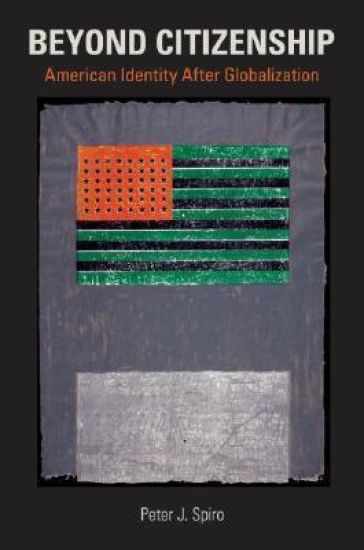
Beyond Citizenship

Beyond Citizenship

Peter J. Spiro

Oxford University Press Inc
2008
sidottu
American identity has always been capacious as a concept but narrow in its application. Citizenship has mostly been about being here, either through birth or residence. The territorial premises for citizenship have worked to resolve the peculiar challenges of American identity. But globalization is detaching identity from location. What used to define American was rooted in American space. Now one can be anywhere and be an American, politically or culturally. Against that backdrop, it becomes difficult to draw the boundaries of human community in a meaningful way. Longstanding notions of democratic citizenship are becoming obsolete, even as we cling to them. Beyond Citizenship charts the trajectory of American citizenship and shows how American identity is unsustainable in the face of globalization. Peter J. Spiro describes how citizenship law once reflected and shaped the American national character. Spiro explores the histories of birthright citizenship, naturalization, dual citizenship, and how those legal regimes helped reinforce an otherwise fragile national identity. But on a shifting global landscape, citizenship status has become increasingly divorced from any sense of actual community on the ground. As the bonds of citizenship dissipate, membership in the nation-state becomes less meaningful. The rights and obligations distinctive to citizenship are now trivial. Naturalization requirements have been relaxed, dual citizenship embraced, and territorial birthright citizenship entrenched--developments that are all irreversible. Loyalties, meanwhile, are moving to transnational communities defined in many different ways: by race, ethnicity, gender, religion, age, and sexual orientation. These communities, Spiro boldly argues, are replacing bonds that once connected people to the nation-state, with profound implications for the future of governance. Learned, incisive, and sweeping in scope, Beyond Citizenship offers a provocative look at how globalization is changing the very definition of who we are and where we belong.