
Kirjahaku
Etsi kirjoja tekijän nimen, kirjan nimen tai ISBN:n perusteella.
1000 tulosta hakusanalla Peter M. Franzese
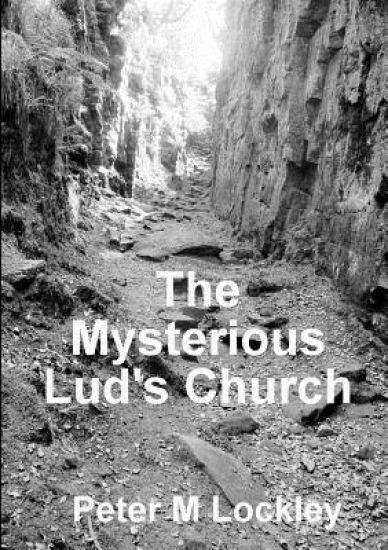
Thomas Travis, a brilliant local surgeon, is a single father of a very troubled teenage daughter Ruby. Ruby is being bullied at school and cyber bullied. This is causing her to self-harm and even attempt suicide. On one summer Sunday her father persuades Ruby to accompany him on a long hike across The Roaches in the Staffordshire Peak District. Towards the end of the walk, by the side of a forest they come across a spectacular 60ft chasm in the hillside known as Lud's Church. From that point on both their lives will never be the same again. A story of mystery, romance and adventure.
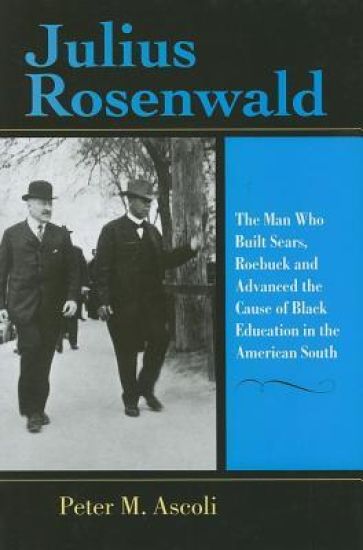
In this richly revealing biography of a major, but little-known, American businessman and philanthropist, Peter M. Ascoli brings to life a portrait of Julius Rosenwald, the man and his work. The son of first-generation German Jewish immigrants, Julius Rosenwald, known to his friends as "JR," apprenticed for his uncles, who were major clothing manufacturers in New York City. It would be as a men's clothing salesperson that JR would make his fateful encounter with Sears, Roebuck and Company, which he eventually fashioned into the greatest mail order firm in the world. He also founded Chicago's Museum of Science and Industry. And in the American South Rosenwald helped support the building of the more than 5,300 schools that bore his name. Yet the charitable fund he created during World War I went out of existence in 1948 at his expressed wish. Ascoli provides a fascinating account of Rosenwald's meteoric rise in American business, but he also portrays a man devoted to family and with a desire to help his community that led to a lifelong devotion to philanthropy. He tells about Rosenwald's important philanthropic activities, especially those connected with the Rosenwald schools and Booker T. Washington, and later through the Rosenwald Fund. Ascoli's account of Rosenwald is an inspiring story of hard work and success, and of giving back to the nation in which he prospered.

The jargon of economics and finance contains numerous colorful terms for market-asset prices at odds with any reasonable economic explanation. Examples include "bubble," "tulipmania," "chain letter," "Ponzi scheme," "panic," "crash," "herding," and "irrational exuberance." Although such a term suggests that an event is inexplicably crowd-driven, what it really means, claims Peter Garber, is that we have grasped a near-empty explanation rather than expend the effort to understand the event.In this book Garber offers market-fundamental explanations for the three most famous bubbles: the Dutch Tulipmania (1634-1637), the Mississippi Bubble (1719-1720), and the closely connected South Sea Bubble (1720). He focuses most closely on the Tulipmania because it is the event that most modern observers view as clearly crazy. Comparing the pattern of price declines for initially rare eighteenth-century bulbs to that of seventeenth-century bulbs, he concludes that the extremely high prices for rare bulbs and their rapid decline reflects normal pricing behavior. In the cases of the Mississippi and South Sea Bubbles, he describes the asset markets and financial manipulations involved in these episodes and casts them as market fundamentals.

Seeking to understand the doctrine of justification by way of biblical hermeneutics, this book uncovers the differences between Martin Luther and the Council of Trent that set them on a collision course for conflict, and the church toward what has arguably been its most significant division in the West. As Catholics and Lutherans continue to engage in dialogue about their shared faith and differing confessions, the need remains for a discerning study of the ways in which the Bible functioned in the Reformation's central theological clash: the understanding and import of the doctrine of justification. Peter Folan's incisive analysis in this volume fulfills that need. Through a careful reading of the debate's most significant texts, he shows both how Martin Luther and the Council of Trent relied upon scripture to arrive at their respective formulations of the doctrine and how such seemingly divergent conclusions about the human person's salvation in Christ could be grounded in the same sacred book. This study begins with an examination of the key texts that Luther and his allies produced on justification and then turns to their Catholic respondents, whose work would ultimately inform the Council of Trent's decree on the doctrine. By comparing precisely which texts both parties relied upon to articulate and defend their positions, Folan puts into sharp relief how infrequently both sides made use of the same biblical passages and, when they did avail themselves of the same passages, just how distinct their interpretive tendencies were. This book will be a critical addition to the libraries of scholars and students in Catholic and Lutheran biblical hermeneutics, Catholic-Lutheran dialogue, ecumenical studies, and church history.

The President and Congress in Postauthoritarian Chile
Peter M. Siavelis
Pennsylvania State University Press
2000
sidottu
As many formerly authoritarian regimes have been replaced by democratic governments in Latin America, Eastern Europe, and elsewhere, questions have arisen about the stability and durability of these new governments. One concern has to do with the institutional arrangements for governing bequeathed to the new democratic regimes by their authoritarian predecessors and with the related issue of whether presidential or parliamentary systems work better for the consolidation of democracy.In this book, Peter Siavelis takes a close look at the important case of Chile, which had a long tradition of successful legislative resolution of conflict but was left by the Pinochet regime with a changed institutional framework that greatly strengthened the presidency at the expense of the legislature. Weakening of the legislature combined with an exclusionary electoral system, Siavelis argues, undermines the ability of Chile's National Congress to play its former role as an arena of accommodation, creating serious obstacles to interbranch cooperation and, ultimately, democratic governability.Unlike other studies that contrast presidential and parliamentary systems in the large, Siavelis examines a variety of factors, including socioeconomic conditions and characteristics of political parties, that affect whether or not one of these systems will operate more or less successfully at any given time. He also offers proposals for institutional reform that could mitigate the harm he expects the current political structure to produce.

The President and Congress in Postauthoritarian Chile
Peter M. Siavelis
Pennsylvania State University Press
1999
pokkari
As many formerly authoritarian regimes have been replaced by democratic governments in Latin America, Eastern Europe, and elsewhere, questions have arisen about the stability and durability of these new governments. One concern has to do with the institutional arrangements for governing bequeathed to the new democratic regimes by their authoritarian predecessors and with the related issue of whether presidential or parliamentary systems work better for the consolidation of democracy.In this book, Peter Siavelis takes a close look at the important case of Chile, which had a long tradition of successful legislative resolution of conflict but was left by the Pinochet regime with a changed institutional framework that greatly strengthened the presidency at the expense of the legislature. Weakening of the legislature combined with an exclusionary electoral system, Siavelis argues, undermines the ability of Chile's National Congress to play its former role as an arena of accommodation, creating serious obstacles to interbranch cooperation and, ultimately, democratic governability.Unlike other studies that contrast presidential and parliamentary systems in the large, Siavelis examines a variety of factors, including socioeconomic conditions and characteristics of political parties, that affect whether or not one of these systems will operate more or less successfully at any given time. He also offers proposals for institutional reform that could mitigate the harm he expects the current political structure to produce.
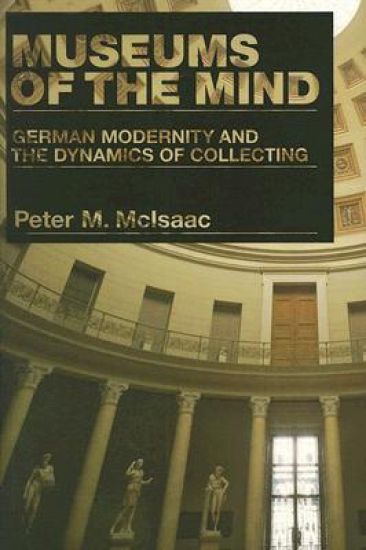
Museums of the Mind is the first book to explore the evolving relationship of collecting and the German literary imagination since the invention of the public museum. This study shows that in addition to redefining categories of art, history, and identity in modernity, the museum transforms the relationship between material objects and imaginative narratives. Using new categories, Peter McIsaac constructs a critical genealogy using key texts by Johann Goethe, Adalbert Stifter, Wilhelm Raabe, Rainer Maria Rilke, Ingeborg Bachmann, Siegfried Lenz, W. G. Sebald, and Durs Grünbein and the material record of Germanophone museums. McIsaac rethinks how fundamental cultural “truths” define what it means to belong to acculturated communities, showing that the activation of meaning in museums depends foremost on what people bring, in their minds, to those real and imagined environments, resulting in what McIsaac calls museums of the mind. This notion elucidates the vital shifts wrought by museum culture over the past two centuries and illuminates how museums, literature, and digital media shape thought and behavior today.

Museums of the Mind is the first book to explore the evolving relationship of collecting and the German literary imagination since the invention of the public museum. This study shows that in addition to redefining categories of art, history, and identity in modernity, the museum transforms the relationship between material objects and imaginative narratives. Using new categories, Peter McIsaac constructs a critical genealogy using key texts by Johann Goethe, Adalbert Stifter, Wilhelm Raabe, Rainer Maria Rilke, Ingeborg Bachmann, Siegfried Lenz, W. G. Sebald, and Durs Grünbein and the material record of Germanophone museums. McIsaac rethinks how fundamental cultural “truths” define what it means to belong to acculturated communities, showing that the activation of meaning in museums depends foremost on what people bring, in their minds, to those real and imagined environments, resulting in what McIsaac calls museums of the mind. This notion elucidates the vital shifts wrought by museum culture over the past two centuries and illuminates how museums, literature, and digital media shape thought and behavior today.
Today in Texas, over 1500 colonias in the counties along the Mexican border are home to some 400,000 people. Often lacking basic services, such as electricity, water and sewerage, fire protection, policing, schools, and health care, these "irregular" subdivisions offer the only low-cost housing available to the mostly Hispanic working poor. This book presents the results of a major study of colonias in three transborder metropolitan areas and uncovers the reasons why colonias are spreading so rapidly. Peter Ward compares Texas colonias with their Mexican counterparts, many of which have developed into fully integrated working-class urban communities. He describes how Mexican governments have worked with colonia residents to make physical improvements and upgrade services-a model that Texas policymakers can learn from, Ward asserts. Finally, he concludes with a hard-hitting checklist of public policy initiatives that need to be considered as colonia housing policy enters its second decade in Texas.
Growing Up Brown
Peter M. Jamero; Dorothy Laigo Cordova; Fred Cordova
University of Washington Press
2006
pokkari
"I may have been like other boys, but there was a major difference -- my family included 80 to 100 single young men residing in a Filipino farm-labor camp. It was as a 'campo' boy that I first learned of my ancestral roots and the sometimes tortuous path that Filipinos took in sailing halfway around the world to the promise that was America. It was as a campo boy that I first learned the values of family, community, hard work, and education. As a campo boy, I also began to see the two faces of America, a place where Filipinos were at once welcomed and excluded, were considered equal and were discriminated against. It was a place where the values of fairness and freedom often fell short when Filipinos put them to the test.""-- Peter JameroPeter Jamero's story of hardship and success illuminates the experience of what he calls the "bridge generation" -- the American-born children of the Filipinos recruited as farm workers in the 1920s and 30s. Their experiences span the gap between these early immigrants and those Filipinos who owe their U.S. residency to the liberalization of immigration laws in 1965. His book is a sequel of sorts to Carlos Bulosan's America Is in the Heart, with themes of heartbreaking struggle against racism and poverty and eventual triumph.Jamero describes his early life in a farm-labor camp in Livingston, California, and the path that took him, through naval service and graduate school, far beyond Livingston. A longtime community activist and civic leader, Jamero describes decades of toil and progress before the Filipino community entered the sociopolitical mainstream. He shares a wealth of anecdotes and reflections from his career as an executive of health and human service programs in Sacramento, Washington, D.C., Seattle, and San Francisco.

Growing Up Brown
Peter M. Jamero; Dorothy Laigo Cordova; Fred Cordova
University of Washington Press
2015
sidottu
"I may have been like other boys, but there was a major difference -- my family included 80 to 100 single young men residing in a Filipino farm-labor camp. It was as a 'campo' boy that I first learned of my ancestral roots and the sometimes tortuous path that Filipinos took in sailing halfway around the world to the promise that was America. It was as a campo boy that I first learned the values of family, community, hard work, and education. As a campo boy, I also began to see the two faces of America, a place where Filipinos were at once welcomed and excluded, were considered equal and were discriminated against. It was a place where the values of fairness and freedom often fell short when Filipinos put them to the test.""-- Peter JameroPeter Jamero's story of hardship and success illuminates the experience of what he calls the "bridge generation" -- the American-born children of the Filipinos recruited as farm workers in the 1920s and 30s. Their experiences span the gap between these early immigrants and those Filipinos who owe their U.S. residency to the liberalization of immigration laws in 1965. His book is a sequel of sorts to Carlos Bulosan's America Is in the Heart, with themes of heartbreaking struggle against racism and poverty and eventual triumph.Jamero describes his early life in a farm-labor camp in Livingston, California, and the path that took him, through naval service and graduate school, far beyond Livingston. A longtime community activist and civic leader, Jamero describes decades of toil and progress before the Filipino community entered the sociopolitical mainstream. He shares a wealth of anecdotes and reflections from his career as an executive of health and human service programs in Sacramento, Washington, D.C., Seattle, and San Francisco.
This wide-ranging book investigates the emergence of modern ideas about the natural world in Britain from 1680–1860 through an examination of the cultural values common to the sciences, art, literature, and natural theology. During this critical period, spanned by Newtonian science, natural theology, Darwin’s Origin of Species, and Ruskin’s Modern Painters, the fundamental conception of nature and humanity’s place within it changed. P. M. Harman calls for a new understanding of the varied ways in which the British comprehended natural beauty, from the perception of nature as a “design” flowing from God’s creative power to the Darwinian naturalistic aesthetic. Harman connects a variety of differing views of nature deriving from religion, science, visual art, philosophy, and literature to developments in agriculture, manufacturing, and the daily lives of individuals. This ambitious and accessible book represents intellectual history at its best.
When most people think about Catholicism and science, they will automatically think of one of the famous events in the history of science - the condemnation of Galileo by the Roman Catholic Church. But the interaction of Catholics with science has been - and is - far more complex and positive than that depicted in the legend of the Galileo affair. Understanding the natural world has always been a strength of Catholic thought and research - from the great theologians of the Middle Ages to the present day - and science has been a hallmark of Catholic education for centuries.Catholicism and Science, a volume in the Greenwood Guides to Science and Religion series, covers all aspects of the relationship of science and the Church: How Catholics interacted with the profound changes in the physical sciences (natural philosophy) and biological sciences (natural history) during the Scientific Revolution; how Catholic scientists reacted to the theory of evolution and their attempts to make evolution compatible with Catholic theology; and the implications of Roman Catholic doctrinal and moral teachings for neuroscientific research, and for investigation into genetics and cloning.The volume includes primary source documents, a glossary and timeline of important events, and an annotated bibliography of the most useful works for further research

Head and Neck Imaging, by Drs. Peter M. Som and Hugh D. Curtin, delivers the encyclopedic and authoritative guidance you’ve come to expect from this book - the expert guidance you need to diagnose the most challenging disorders using today’s most accurate techniques. New state-of-the-art imaging examples throughout help you recognize the imaging presentation of the full range of head and neck disorders using PET, CT, MRI, and ultrasound. Enhanced coverage of the complexities of embryology, anatomy, and physiology, including original color drawings and new color anatomical images from Frank Netter, help you distinguish subtle abnormalities and understand their etiologies. Access to the complete book’s contents is available online at www.expertconsult.com, which allows you to compare its images onscreen with the imaging findings you encounter in practice. Compare your imaging findings to thousands of crystal-clear examples representing every type of head and neck disorder…both inside the book and onscreen at www.expertconsult.com. Gain an international perspective from global authorities in the field. Find information quickly with a logical organization by anatomic region. Master the latest approaches to image-guided biopsies and treatments. Utilize PET/CT scanning to its fullest potential, including head and neck cancer staging, treatment planning, and follow up to therapy. Visualize head and neck anatomy better than ever before with greatly expanded embryology, physiology and anatomy content, including original drawings and new color anatomical images. Grasp the finer points of head and neck imaging quickly with more images, more detail in the images, and more anatomic atlases with many examples of anatomic variants. Access the complete content- and illustrations online at www.expertconsult.com - fully searchable!

Endocrine Pathology, An Issue of Surgical Pathology Clinics
Peter M. Sadow
Elsevier - Health Sciences Division
2015
sidottu
Early identification and diagnosis by type and stage is the key to high survival rates with thyroid cancer. To present the pathologist with current clinical information on diagnosis, differential diagnosis, staging, and prognosis of thyroid cancers, topics presented are: Poorly differentiated thyroid carcinoma; Paraganglimoa; Immunohistochemical markers for evaluation and prognosis in thyroid carcinoma; Familial endocrine syndromes; Parathyroid enoplasia; Inflammatory lesions of the thyroid associated with cancer; Assessing biological aggression in adrenal cortical neoplasia; Pituitary neoplasia; and Pancreatic endocrine neoplasia. Peter Sadow, whose clinical practice and research involve studying the mechanisms of endocrine carcinogenesis through translational studies involving the proteomics and genomics of endocrine neoplasms, primarily of the thyroid and adrenal glands, leads this issue.

Peter Manley Scott offers a theological and ethical reading of our present situation. Due to the vigour of its re-engineering of the world by its technologies, western society has entered into a postnatural condition in which standard divisions between the natural and the artificial are no longer convincing. This postnatural development is liberating - both theologically and politically. Scott develops an 'anthropology' that does not repeat Christianity's history of anthropocentrism but instead criticises it by exploring the mutual entanglement of animals, humans and other creatures. Deeply disrespectful of traditional centres of power, his ethical critiques of 'pioneering' technologies expose their anti-social and anti-ecological tendencies and identify possible paths of oppositional political action. This is ethical theology at its best: deeply informed by theological tradition, immersed in contemporary political-technological problematics in radically oppositional ways, and yet fiercely hopeful of a good outcome for animals - human and non-human - and other life in history.
Why did the United States invade the sovereign state of Grenada in October 1983, risking world condemnation and the possible escalation of violence outside the borders of the tiny Caribbean island? According to the contributors to this book, the invasion—code-named "Urgent Fury"--was a product of the increasing concern with political instability in
Dr Volten analyses the foreign policy-making process in the Soviet Union, particularly in connection with the Brezhnev's Peace programme in the 1970s, which was supposed to normalise political-economic relations with the West and curb military rivalry.
This book centres on the use of the Bible within contemporary digital social media culture and gives an overview of its use online with examples from brand-new research from the CODEC Research Centre at Durham University, UK. It examines the shift from a propositional to a therapeutic approach to faith from a sociological standpoint.The book covers two research projects in particular: the Twitter Gospels and Online Moralistic Therapeutic Deism. It explores the data as they relate to Abby Day’s concept of performative belief, picking up on Mia Lövheim’s challenge to see how this concept works out in digital culture and social media. It also compares the data to various construals of contemporary approaches to faith performative faith, including Christian Smith and Melissa Lundquist Denton’s concept of moralistic therapeutic deism. Other research is also compared to the findings of these projects, including a micro-project on Celebrities and the Bible, to give a wider perspective on these issues in both the UK and the USA.As a sociological exploration of Digital Millennial culture and its relationship to sacred texts, this will be of keen interest to scholars of Biblical studies, religion and digital media, and contemporary lived religion.