Kirjojen hintavertailu. Mukana 11 244 527 kirjaa ja 12 kauppaa.

Kirjahaku

Etsi kirjoja tekijän nimen, kirjan nimen tai ISBN:n perusteella.

1000 tulosta hakusanalla Philip Kitcher

The American War 1812–14

The American War 1812–14

Philip Katcher

Osprey Publishing
1990
nidottu
Typically the United States is said to have declared war on Great Britain in 1812 because of the Royal Navy's impressment of American seamen and the British desire to create an Indian buffer state. An Englishman William Cobbett, described the real cause of the conflict: 'There seemed to be wanting just such a war as this to complete the separation of England from America; and to make the latter feel that she had no safety against the former but in the arms of her free citizens.' Regardless of the reasons, however, on 4 June 1812, U.S.President James Madison, asked Congress to declare war.
Army of the Potomac

Army of the Potomac

Philip Katcher

Osprey Publishing
1974
nidottu
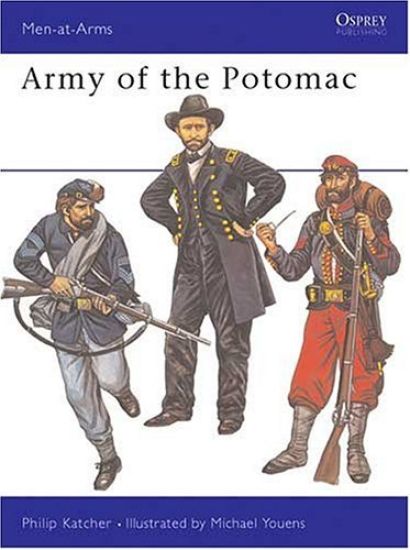
In October 1861 the Army of the Potomac officially came into being.For General George B. McClellan, the dejected Union troops who poured into Washington fresh from defeat at Bull Run on Monday 22 July, 1861, were to provide the raw material which he would train, equip, organise and ultimately transform from a mere mob into an effective fighting force.This entertaining volume from the same team of author Philip Katcher and artist Michael Youens who produced Men-at-Arms 37 The Army of Northern Virginia, explores how this transition came about, with a particular emphasis on weapons, uniforms and equipment.
The Army of Northern Virginia

The Army of Northern Virginia

Philip Katcher

Osprey Publishing
1975
nidottu
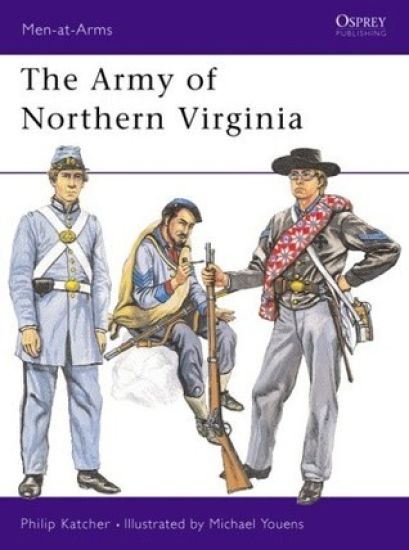
On the 27 June, 1862, with the American Civil War already a year old, General Robert E. Lee assumed personal command of troops engaged in driving the Federal Army of the Potomac out of Richmond – troops which would henceforth be known as The Army of Northern Virginia. Philip Katcher explores in absorbing detail all aspects of the army, including infantry, cavalry, artillery, technical and medical corps, paying particular attention to equipment, weapons and uniforms. Contemporary and museum photographs, together with the author's expert text, combine to a paint a vivid and accurate picture of what life was like for the average confederate soldier.
The Mexican-American War 1846–48

The Mexican-American War 1846–48

Philip Katcher

Osprey Publishing
1989
nidottu
‘There never was so fine an American army,’ wrote second-lieutenant, John Sedgwick, in describing the troops under Major-General Zachary Taylor in 1846. Another then second-lieutenant, destined to see many more armies; U.S. Grant, also thought highly of them: ‘The rank and file were probably inferior … to the volunteers that participated in all the later battles of the war; but they were brave men, and then drill and discipline brought out all there was in them.’ Philip Katcher writes the story of the regulars and volunteers who fought in the Mexican-American War, detailing the infantry, cavalry, artillery and staff of both the American and Mexican armies.
Armies of the Vietnam War 1962–75

Armies of the Vietnam War 1962–75

Philip Katcher

Osprey Publishing
1980
nidottu
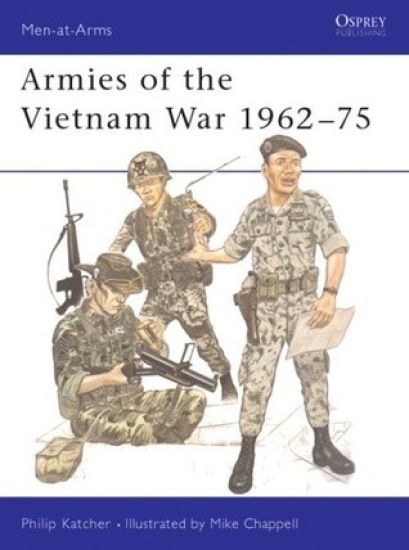
Philip Katcher provides an overview to the conflict that engulfed Vietnam following the division of the country into two along the 17th Parallel in 1954.The uniforms and insignia of the US forces, including the army, Special Forces, air force, navy and marine corps, are dealt with in detail, together with those of the ARVN, the Allied Forces (such as the Royal Thai Army and Korean troops), and also the Communist NLF (Viet Cong) and NVA forces.Mike Chappell's colourful artwork provides plenty of detail to accompany this authoritative text.
The US Army 1941–45

The US Army 1941–45

Philip Katcher

Osprey Publishing
1978
nidottu
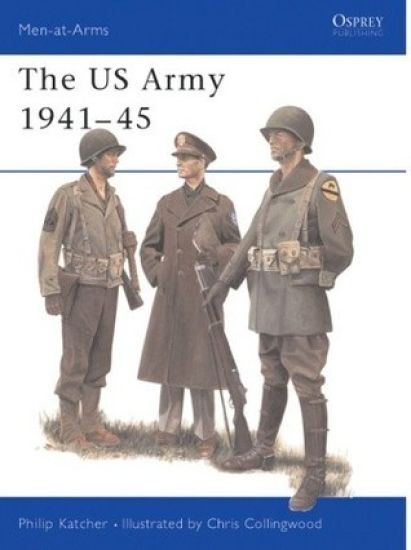
At the time of the Second World War, the United States Army took an unusual approach, for the period, towards the design of its uniforms.Rather than attempt to find an all-purpose outfit, such as the British battledress, it attempted to design special-purpose dress for every possible duty, from combat in cold climates to dress parades in hot ones.Alongside illustrations, photographs and colour plates, Philip Katcher provides an extensive examination of the many different types of uniform and equipment which saw service during the conflict.
US Cavalry on the Plains 1850–90

US Cavalry on the Plains 1850–90

Philip Katcher

Osprey Publishing
1992
nidottu
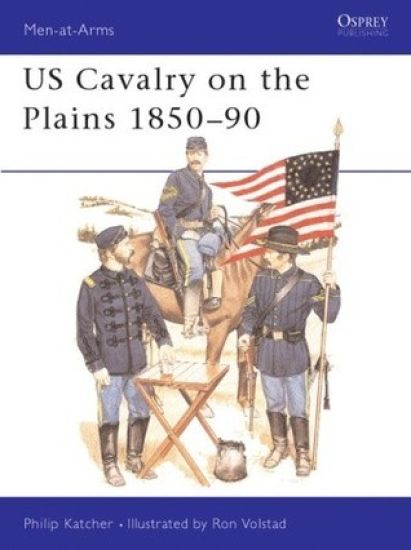
A concise, illustrated study of the US cavalrymen of the American West in the late nineteenth century.Two events in the 19th century turned the minds of Americans westwards towards eventual and inevitable conflict with the Plains Indians. The first was victory in the Mexican-American War, which brought millions of acres of new land in the West. The second was the discovery of gold in California. One of the results of this migration was conflict with the Indians who inhabited the Plains. So it was natural that the Army, the nation's armed peace-keepers, should be sent to garrison the West.This book by Philip Katcher tells the absorbing story of the US cavalrymen who patrolled the Plains from 1850 to 1890, supported by photographs and detailed original colour artwork.
American Civil War Armies (1)

American Civil War Armies (1)

Philip Katcher

Osprey Publishing
1986
nidottu
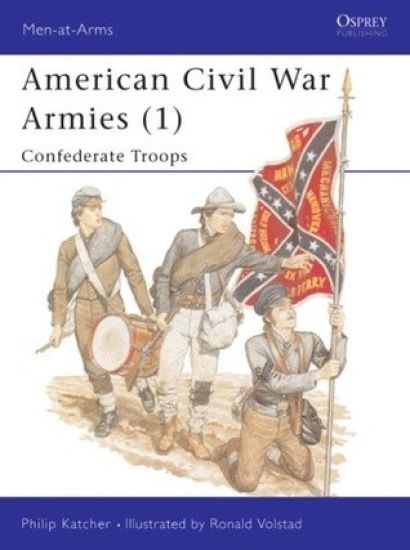
A concise illustrated study of the uniforms, arms and personal equipment issued by the national Confederate government to its artillery, cavalry, and infantry. When the Southern states seceded to form their own government in 1861, one of their first moves was to organise an army. The South's fighting men served from the time of their enlistment until the end of the war, receiving poor rations, and even worse clothing – and this despite the fact that one of the first steps taken by the new army was to design a uniform and establish standards for accoutrements and weapons. In this first of five volumes examining American Civil War armies, Philip Katcher profiles the uniforms issued by the national Confederate government to its artillery, cavalry and infantry in detailed text accompanied by black-and-white images and 8 superb colour plates by artist Ron Volstad.
American Civil War Armies (2)

American Civil War Armies (2)

Philip Katcher

Osprey Publishing
1986
nidottu
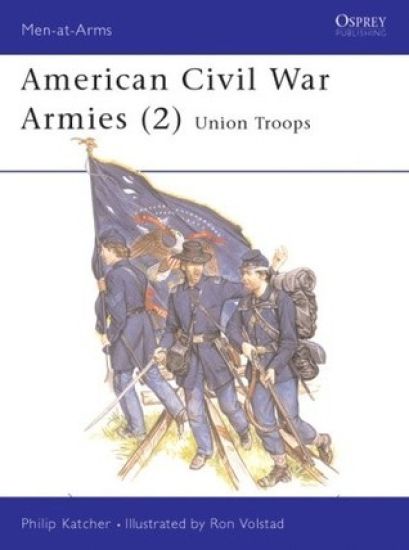
A concise illustrated study of the uniforms, accoutrements, insignia and weapons of the Union artillery, infantry and cavalry between 1861 and 1865. The US Army during the Civil War was the largest the country had raised in its brief history, and it would remain the largest ever raised until World War I. In all, 2,772,408 men served in some branch or other of the US Army. This detailed work by Philip Katcher is a comprehensive guide to the uniforms, accoutrements, insignia and weapons of the Union troops who fought the American Civil War, with a wealth of illustrations, including contemporary photographs and eight full page colour plates by Ron Volstad.
American Civil War Armies (3)

American Civil War Armies (3)

Philip Katcher

Osprey Publishing
1987
nidottu
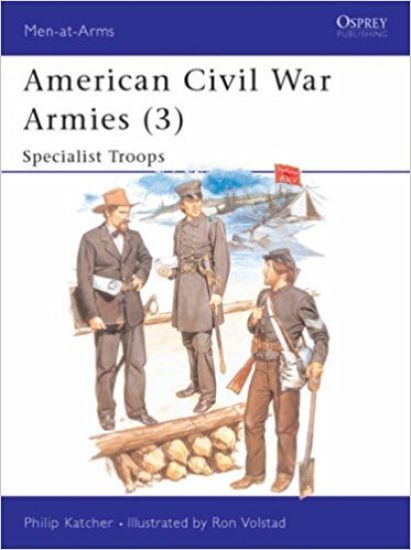
A concise illustrated study of the uniforms and organization of the specialist troops on both sides of the US Civil War. At the time of the American Civil War, with two million men under arms, a US Army that in pre-war days had depended upon a minute number of technical troops now required virtually an army of specialists alone. Special sharpshooters were recruited for skirmishing duty; men whose wounds would have led to their discharge in the past now found themselves guarding important posts in the Veteran Reserve Corps; and large numbers of civilians found themselves in uniform as members of the Telegraph or Hospital Corps. Philip Katcher examines the organization and uniforms of the specialist troops who served in the armies of both sides. The text is supported by 50 black-and-white images along with 8 superb colour artwork plates depicting the uniforms and equipment of specialist troop types.
American Civil War Armies (4)

American Civil War Armies (4)

Philip Katcher

Osprey Publishing
1987
nidottu
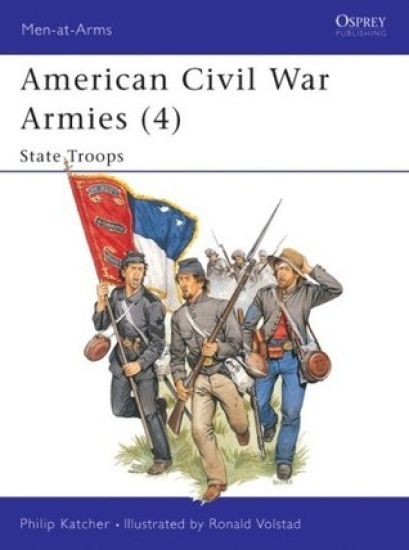
A concise illustrated study of the uniforms worn by the troops of 32 states in the US Civil War. 'The War between the States' is the term used for the American Civil War throughout much of the South even today. Many on both sides – not just the South – felt that they were serving their states as much, if not more, than their central governments. Many of the states agreed; the state governments raising their own units, commissioning their officers, and supplying their men. Indeed, many of the units that fought the Civil War were supplied in large part by their own states rather than by the central government's quartermasters. Philip Katcher's fascinating text explores the uniforms of 32 states, from Alabama to Wisconsin, supported by a selection of images throughout, and 8 superb artwork plates depicting the uniforms and equipment of the state troops.
American Civil War Armies (5)

American Civil War Armies (5)

Philip Katcher

Osprey Publishing
1989
nidottu
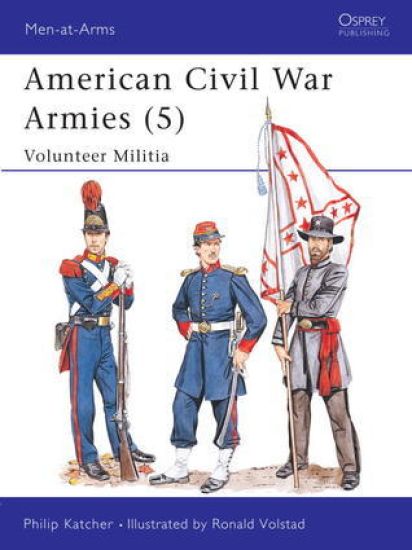
A concise illustrated study of the uniforms of the volunteer militias of the US Civil War. Uniformed volunteer units were raised by individuals, usually from an area's social élite who had enough spare money and time to spend on such enthusiasms. They voted on their unit designation, their officers and non-commissioned officers, their unit rules, and their uniform. Many future leaders learned their skills in these ranks, and volunteer militia units formed the core of many fighting units on both sides of the Mason-Dixon line. With the help of numerous photographs and illustrations, including eight full page colour plates by Ron Volstad, Philip Katcher does a fine job of detailing the uniforms of the volunteer militia of the American Civil War.
American Civil War Artillery 1861–65 (1)

American Civil War Artillery 1861–65 (1)

Philip Katcher

Osprey Publishing
2001
nidottu
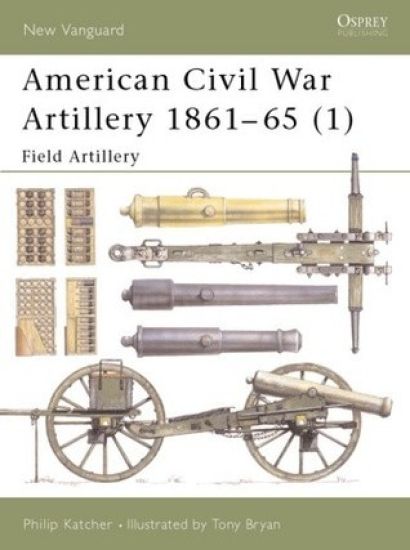
Perhaps the most influential arm of either army in the prosecution of the American Civil War, the artillery of both sides grew to be highly professional organizations, centralizing their artillery, organizing artillery battalions from individual batteries and giving their commanders higher ranks than field artillerymen had previously held. In battle, the introduction of the 12-pdr. Napoieon, followed closely by rifled cannon, provided a range and power previously unknown on American soil. This book details this vital cog in the war-machine of both sides.
American Civil War Artillery 1861–65 (2)

American Civil War Artillery 1861–65 (2)

Philip Katcher

Osprey Publishing
2001
nidottu
Because of the length of the coastline of the United States, from the beginning American ordnance and engineers placed an emphasis on heavy artillery mounted in coastal defences. The Union army organised its 'Heavy Artillery' into separate regiments, uniformed and equipped differently. While the Field Artillery was assigned across the fighting fronts Heavy Artillery units served the big guns in the forts and the defences of Washington. The Confederates did not differentiate types of artillery and those that became known as Heavy Artillery did so through informal association rather than formal designation. This book details the development and usage of the big guns.
Confederate Artilleryman 1861–65

Confederate Artilleryman 1861–65

Philip Katcher

Osprey Publishing
2001
nidottu
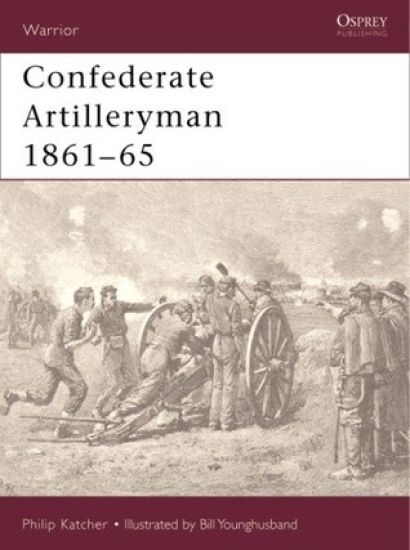
In the heady days of the rush to arms in 1861, comparatively few Southern men volunteered for service in the artillery - most preferred the easily accessible glory of the infantry or cavalry. Given that field artillery was invariably deployed in front of the troops that it was supporting, the artillerymen were exposed to a high level of enemy fire, and losses were significant - at such moments, the drill and discipline installed on the training ground were all that held fear and cowardice at bay. This title guides the reader through the life and experiences of the Confederate cannoneer - where he came from, how he trained and lived; how he was equipped, dressed and fed; and how he fought.
American Civil War Commanders (2)

American Civil War Commanders (2)

Philip Katcher

Osprey Publishing
2002
nidottu
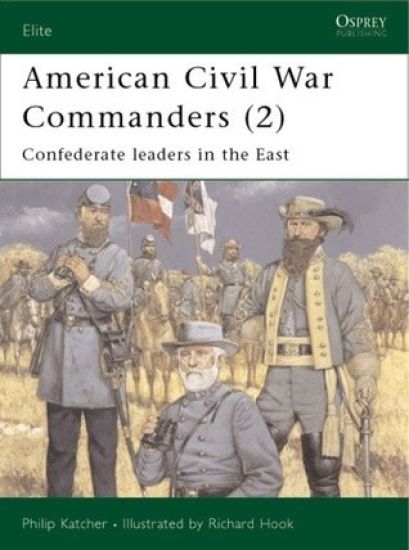
The American Civil War was one of the last wars in which generals often led from the front, risking death at the head of their men. It was a war of larger-than-life characters, generals who earned colourful reputations and strong opinions among their soldiers and colleagues. These men were not stamped out as identical products of a professional military machine; some were veterans, others men of limited experience promoted to high rank for a variety of reasons, good and bad. This title outlines the careers and characters - and illustrates the appearance, in their authentic uniforms - of famous Confederate commanders who fought in the Eastern theatre of operations, Lee, Garland, Stuart, Pendleton, Blair and nearly 20 more.
American Civil War Commanders (4)

American Civil War Commanders (4)

Philip Katcher

Osprey Publishing
2003
nidottu
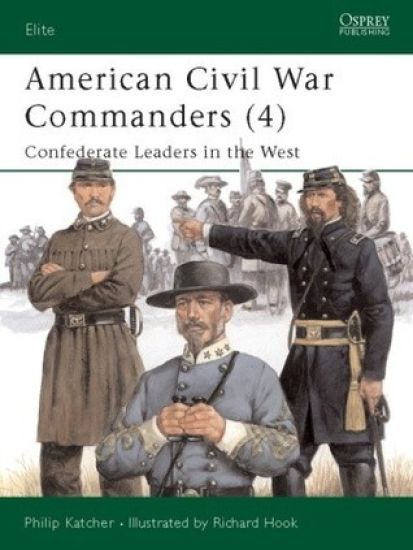
The American Civil War was one of the last wars in which generals often led from the front, risking death at the head of their men. It was a war of larger-than-life characters, generals who earned colourful reputations and strong opinions among their soldiers and colleagues. This book outlines the careers and characters - and illustrates the appearance, in their authentic uniforms - of famous Confederate commanders who fought in the Western theatre of operations, including Beauregard, Johnston, Jackson, Cheatham and nearly 20 more.
American Civil War Commanders (1)

American Civil War Commanders (1)

Philip Katcher

Osprey Publishing
2002
nidottu
The American Civil War was one of the last wars in which generals often led from the front, risking death at the head of their troops. It was a war of larger-than-life characters, generals who earned colourful reputations and strong opions among their soldiers and colleagues. This book outlines the careers and characters - and illustrates the appearance, in their authentic uniforms - of famous Union commanders who fought in the eastern theatre of operations, including Barlow, Custer, Sickles, Chamberlain, Couch and nearly 20 more.
American Civil War Commanders (3)

American Civil War Commanders (3)

Philip Katcher

Osprey Publishing
2003
nidottu
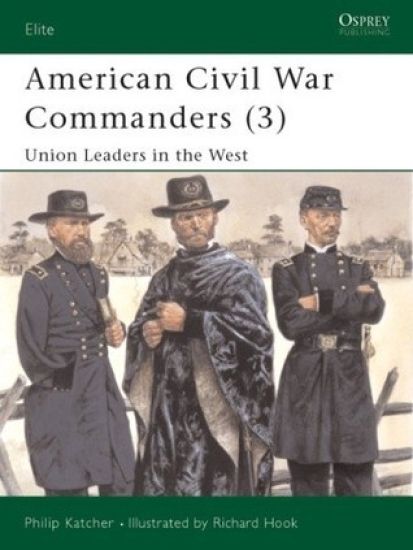
The American Civil War was one of the last wars in which generals often led from the front, risking death at the head of their men. It was a war of larger-than-life characters, generals who earned colourful reputations and strong opinions among their soldiers and colleagues. This book outlines the careers and characters - and illustrates the appearance, in their authentic uniforms - of famous Union commanders who fought in the Western theatre of operations, including Grant, Kilpatrick, Sherman, Wilson, McPherson and nearly 20 more.
Confederate Cavalryman 1861–65

Confederate Cavalryman 1861–65

Philip Katcher

Osprey Publishing
2002
nidottu
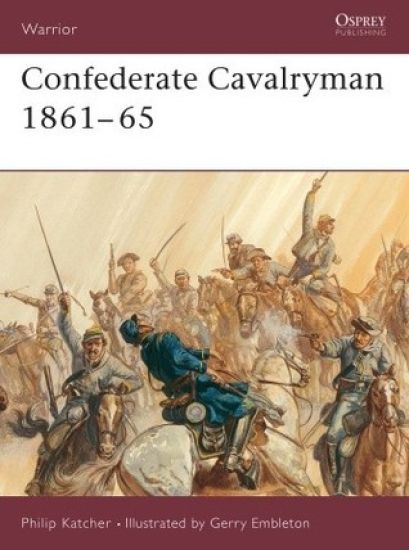
The Southerner of the mid-19th century had been bred to ride horses. Men rode horseback wherever they wanted to go. Added to this, the period Southerner had long been used to firearms, whether for hunting for pleasure or food or simply sport. Putting the two together promised that when the Southern states seceded, beginning in December 1860, the cavalry would be a major combat arm: in fact, Robert E. Lee and Albert Sidney Johnston both came from the 2nd US Cavalry just before the war. This title looks at how the men of the Confederate cavalry were recruited, trained, lived and fought. Both routine and campaign life are covered, as well as the weapons and equipment that served them in their combat roles. Key encounters such as the 1863 clash at Brandy Station are also covered.