Kirjojen hintavertailu. Mukana 11 244 527 kirjaa ja 12 kauppaa.

Kirjahaku

Etsi kirjoja tekijän nimen, kirjan nimen tai ISBN:n perusteella.

1000 tulosta hakusanalla Philip Perry

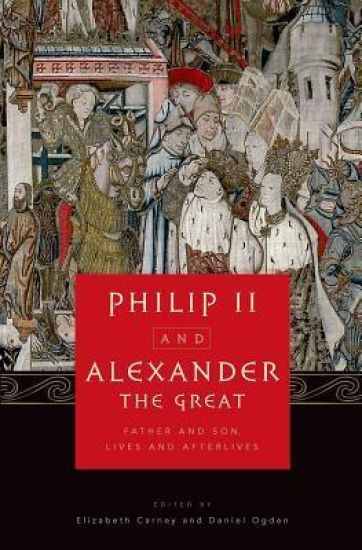
Philip II and Alexander the Great

Philip II and Alexander the Great

Oxford University Press Inc
2010
sidottu
The careers of Philip II and his son Alexander the Great (III) were interlocked in innumerable ways: Philip II centralized ancient Macedonia, created an army of unprecedented skill and flexibility, came to dominate the Greek peninsula, and planned the invasion of the Persian Empire with a combined Graeco-Macedonian force, but it was Alexander who actually led the invading forces, defeated the great Persian Empire, took his army to the borders of modern India, and created a monarchy and empire that, despite its fragmentation, shaped the political, cultural, and religious world of the Hellenistic era. Alexander drove the engine his father had built, but had he not done so, Philip's achievements might have proved as ephemeral as had those of so many earlier Macedonian rulers. On the other hand, some scholars believe that Alexander played a role, direct or indirect, in the murder of his father, so that he could lead the expedition to Asia that his father had organized. In short, it is difficult to understand or assess one without considering the other. This collection of previously unpublished articles looks at the careers and impact of father and son together. Some of the articles consider only one of the Macedonian rulers although most deal with both, and with the relationship, actual or imagined, between the two. The volume will contain articles on military and political history but also articles that look at the self-generated public images of Philip and Alexander, the counter images created by their enemies, and a number that look at how later periods understood them, concluding with the Hollywood depiction of the relationship. Despite the plethora of collected works that deal with Philip and Alexander, this volume promises to make a genuine contribution to the field by focusing specifically on their relationship to one another.
Philip Roth

Philip Roth

Ira Nadel

Oxford University Press Inc
2021
sidottu
This new biography of famed American novelist Philip Roth offers a full account of his development as a writer. Philip Roth was much more than a Jewish writer from Newark, as this new biography reveals. His life encompassed writing some of the most original novels in American literature, publishing censored writers from Eastern Europe, surviving less than satisfactory marriages, and developing friendships with a number of the most important writers of his time from Primo Levi and Milan Kundera to Isaac Bashevis Singer, Saul Bellow and Edna O'Brien. The winner of a Pulitzer Prize, National Book Award, and the Man Booker International Prize, Roth maintained a remarkable productivity throughout a career that spanned almost fifty years, creating 31 works. But beneath the success was illness, angst, and anxiety often masked from his readers. This biography, drawing on archives, interviews and his books, delves into the shaded world of Philip Roth to identify the ghosts, the character, and even identity of the man.
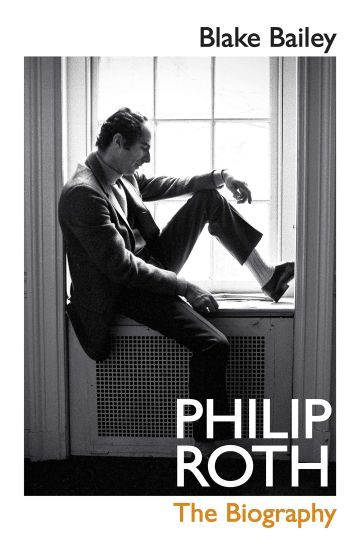
Philip Roth

Philip Roth

Blake Bailey

Jonathan Cape Ltd
2021
sidottu
'Superlative... definitive and genuinely gripping' SUNDAY TIMES'Utterly engrossing' EVENING STANDARD'Compulsively readable... Beautifully written... Definitive' OBSERVER Appointed by Philip Roth and granted complete access and independence, Blake Bailey spent years poring over Roth's personal archive, interviewing his friends, lovers, and colleagues, and engaging Roth himself in breathtakingly candid conversations. The result is an indelible portrait of an American master and of the post-war literary scene. Bailey shows how Roth emerged from a lower-middle-class Jewish milieu to achieve the heights of literary fame, how his career was nearly derailed by his catastrophic first marriage, and how he championed the work of dissident novelists behind the Iron Curtain. Bailey examines Roth's rivalrous friendships with Saul Bellow, John Updike and William Styron, and reveals the truths of his florid love life, culminating in his almost-twenty-year relationship with actress Claire Bloom, who pilloried Roth in her 1996 memoir, Leaving a Doll's House. Tracing Roth's path from realism to farce to metafiction to the tragic masterpieces of the American Trilogy, Bailey explores Roth's engagement with nearly every aspect of post-war American culture.*A 'BOOKS OF 2021' PICK IN THE OBSERVER, GUARDIAN, FINANCIAL TIMES, SUNDAY TIMES, EVENING STANDARD, SPECTATOR AND NEW STATESMAN*
Philip Sparrow Tells All

Philip Sparrow Tells All

Samuel Steward; Justin Spring

University of Chicago Press
2015
sidottu
Samuel Steward (1909-93) was an English professor, a tattoo artist for the Hells Angels, a sexual adventurer who shared his considerable range of experiences with Alfred Kinsey, and a prolific writer of everything from scholarly articles to gay erotica (under the penname Phil Andros). Given this biography, he sounds like a most unlikely contributor to a trade magazine like the Illinois Dental Journal. Yet from 1944 to 1949, writing under the name Philip Sparrow, Steward produced monthly columns for the journal that were full of wit and flourish and that constituted a kind of disguised autobiography, with their reflections on his friendships and experiences and their endless allusions to his trove of multifarious knowledge. For Philip Sparrow Tells All, Jeremy Mulderig has gathered thirty of Steward's most playful and insightful columns, which together paint a vivid portrait of 1940s America. In these essays we spend time with Steward's friends like Gertrude Stein, Andre Gide, and Thornton Wilder (who was also Steward's occasional lover). We hear of his stint as a holiday sales clerk at Marshall Field's (where he met and seduced Rock Hudson), his roles as an opera and ballet extra in hilariously shoddy costumes, his hoarding tendencies, his disappointment with the drabness of men's fashions, and his dread of turning forty. We go along with him to a bodybuilding competition and a pet cemetery, and together we wander the boulevards of Paris and the alleys of Algiers. Throughout, Mulderig's entertaining annotations identify Steward's often obscure allusions and tie the essays to the people and events of the day. Many decades later, Steward's writing feels as stylistically fresh and charming as it did in his time. With richly detailed introductions to the essays that situate them in the context of Steward's fascinating life, Philip Sparrow Tells All will bring this unusual and engaging writer to a fresh readership beyond the dental chair.
Philip Sparrow Tells All

Philip Sparrow Tells All

Samuel Steward; Justin Spring

University of Chicago Press
2015
nidottu
Samuel Steward (1909-93) was an English professor, a tattoo artist for the Hells Angels, a sexual adventurer who shared his considerable range of experiences with Alfred Kinsey, and a prolific writer of everything from scholarly articles to gay erotica (under the penname Phil Andros). Given this biography, he sounds like a most unlikely contributor to a trade magazine like the Illinois Dental Journal. Yet from 1944 to 1949, writing under the name Philip Sparrow, Steward produced monthly columns for the journal that were full of wit and flourish and that constituted a kind of disguised autobiography, with their reflections on his friendships and experiences and their endless allusions to his trove of multifarious knowledge. For Philip Sparrow Tells All, Jeremy Mulderig has gathered thirty of Steward's most playful and insightful columns, which together paint a vivid portrait of 1940s America. In these essays we spend time with Steward's friends like Gertrude Stein, Andre Gide, and Thornton Wilder (who was also Steward's occasional lover). We hear of his stint as a holiday sales clerk at Marshall Field's (where he met and seduced Rock Hudson), his roles as an opera and ballet extra in hilariously shoddy costumes, his hoarding tendencies, his disappointment with the drabness of men's fashions, and his dread of turning forty. We go along with him to a bodybuilding competition and a pet cemetery, and together we wander the boulevards of Paris and the alleys of Algiers. Throughout, Mulderig's entertaining annotations identify Steward's often obscure allusions and tie the essays to the people and events of the day. Many decades later, Steward's writing feels as stylistically fresh and charming as it did in his time. With richly detailed introductions to the essays that situate them in the context of Steward's fascinating life, Philip Sparrow Tells All will bring this unusual and engaging writer to a fresh readership beyond the dental chair.
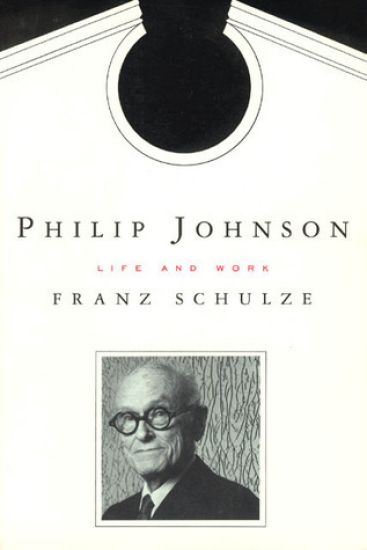
Philip Johnson

Philip Johnson

Franz Schulze

University of Chicago Press
1996
nidottu
In this biography, Franz Schulze probes the private and professional life of one of the most famous architects and architectural critics of the 20th century. The only son of a wealthy Midwestern family, Philip Johnson was a millionaire by the time he graduated from Harvard, and in 1932 he helped stage the historic International Style exhibition at the Museum of Modern Art. A patron of the arts and a political activist who flirted with the politics of Hitler, Huey Long, and Father Coughlin, Johnson created controversial and historical structures such as the Glass House, the Roofless Church, the AT & T Building, the Crustal Cathedral, and many more. Johnsons's personal charms paired with his manipulative ploys - like his "borrowing" of designs - shine through in this biography. Drawing on Johnson's correspondence, personal photographs, and speeches, and on interviews with his friends and contemporaries, Schulze fills the biography with information on the architect's family, travels, friends and lovers, and his many buildings and spaces themselves.
Philip Larkin and His Audiences

Philip Larkin and His Audiences

G. Steinberg

Palgrave Macmillan
2010
sidottu
Philip Larkin, one of England's greatest and most popular twentieth-century poets, is nonetheless widely regarded as a misanthropic, provincial recluse. This volume re-examines that critical view and argues that Larkin's poetry, far from demonstrating his misanthropy, highlights his profound awareness of and concern for readers.
Philip Larkin: Art and Self

Philip Larkin: Art and Self

M. Rowe

Palgrave Macmillan
2011
sidottu
Exploring the complex relationship between aesthetic experience and personal identity in Larkin's work, this book gives close and original readings of three major poems ('Here', 'Livings' and 'Aubade'), and two neglected but important themes (Larkin and the supernatural, Larkin and Flaubert).
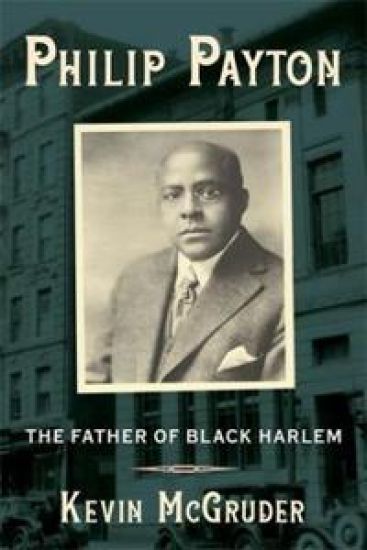
Philip Payton

Philip Payton

Kevin McGruder

Columbia University Press
2021
sidottu
At the turn of the early twentieth century, Harlem—the iconic Black neighborhood—was predominantly white. The Black real estate entrepreneur Philip Payton played a central role in Harlem’s transformation. He founded the Afro-American Realty Company in 1903, vowing to vanquish housing discrimination. Yet this ambitious mission faltered as Payton faced the constraints of white capitalist power structures.In this biography, Kevin McGruder explores Payton’s career and its implications for the history of residential segregation. Payton stood up for the right of Black people to live in Harlem in the face of vocal white resistance. Through skillful use of print media, he branded Harlem as a Black community and attracted interest from those interested in racial uplift. Yet while Payton “opened” Harlem streets, his business model depended on continued racial segregation. Like white real estate investors, he benefited from the lack of housing options available to desperate Black tenants by charging higher rents. Payton developed a specialty in renting all-Black buildings, rather than the integrated buildings he had once envisioned, and his personal successes ultimately entrenched Manhattan’s racial boundaries. McGruder highlights what Payton’s story shows about the limits of seeking advancement through enterprise in a capitalist system deeply implicated in racial inequality.At a time when understanding the roots of residential segregation has become increasingly urgent, this biography sheds new light on the man and the forces that shaped Harlem.
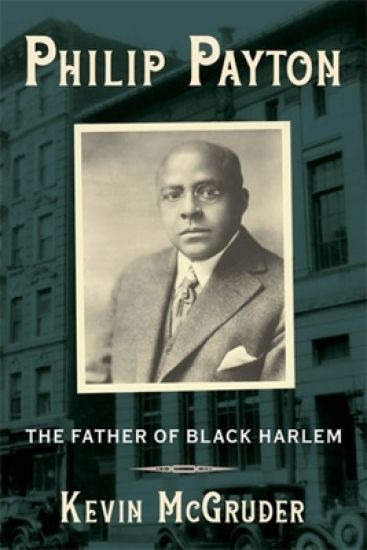
Philip Payton

Philip Payton

Kevin McGruder

Columbia University Press
2021
pokkari
At the turn of the early twentieth century, Harlem—the iconic Black neighborhood—was predominantly white. The Black real estate entrepreneur Philip Payton played a central role in Harlem’s transformation. He founded the Afro-American Realty Company in 1903, vowing to vanquish housing discrimination. Yet this ambitious mission faltered as Payton faced the constraints of white capitalist power structures.In this biography, Kevin McGruder explores Payton’s career and its implications for the history of residential segregation. Payton stood up for the right of Black people to live in Harlem in the face of vocal white resistance. Through skillful use of print media, he branded Harlem as a Black community and attracted interest from those interested in racial uplift. Yet while Payton “opened” Harlem streets, his business model depended on continued racial segregation. Like white real estate investors, he benefited from the lack of housing options available to desperate Black tenants by charging higher rents. Payton developed a specialty in renting all-Black buildings, rather than the integrated buildings he had once envisioned, and his personal successes ultimately entrenched Manhattan’s racial boundaries. McGruder highlights what Payton’s story shows about the limits of seeking advancement through enterprise in a capitalist system deeply implicated in racial inequality.At a time when understanding the roots of residential segregation has become increasingly urgent, this biography sheds new light on the man and the forces that shaped Harlem.
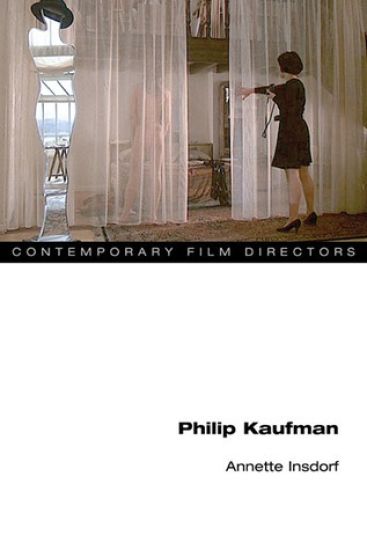
Philip Kaufman

Philip Kaufman

Annette Insdorf

University of Illinois Press
2012
sidottu
American director Philip Kaufman is hard to pin down: a visual stylist who is truly literate, a San Franciscan who often makes European films, he is an accessible storyteller with a sophisticated touch. Celebrated for his vigorous, sexy, and reflective cinema, Kaufman is best known for his masterpiece The Unbearable Lightness of Being and the astronaut saga The Right Stuff. His latest film, Hemingway & Gellhorn(premiering May 2012 on HBO), stars Nicole Kidman and Clive Owen. In this study, Annette Insdorf argues that the stylistic and philosophical richness of Kaufman's cinema makes him a versatile auteur. She demonstrates Kaufman's skill at adaptation, how he finds the precise cinematic device for a story drawn from seemingly unadaptable sources, and how his eye translates the authorial voice from books that serve as inspiration for his films. Closely analyzing his movies to date (including Invasion of the Body Snatchers, The Wanderers, and Quills), Insdorf links them by exploring the recurring and resonant themes of sensuality, artistic creation, codes of honor, and freedom from manipulation. While there is no overarching label or bold signature that can be applied to his oeuvre, she illustrates the consistency of themes, techniques, images, and concerns that permeates all of Kaufman's works.
Philip Kaufman

Philip Kaufman

Annette Insdorf

University of Illinois Press
2012
nidottu
American director Philip Kaufman is hard to pin down: a visual stylist who is truly literate, a San Franciscan who often makes European films, he is an accessible storyteller with a sophisticated touch. Celebrated for his vigorous, sexy, and reflective cinema, Kaufman is best known for his masterpiece The Unbearable Lightness of Being and the astronaut saga The Right Stuff. His latest film, Hemingway & Gellhorn(premiering May 2012 on HBO), stars Nicole Kidman and Clive Owen. In this study, Annette Insdorf argues that the stylistic and philosophical richness of Kaufman's cinema makes him a versatile auteur. She demonstrates Kaufman's skill at adaptation, how he finds the precise cinematic device for a story drawn from seemingly unadaptable sources, and how his eye translates the authorial voice from books that serve as inspiration for his films. Closely analyzing his movies to date (including Invasion of the Body Snatchers, The Wanderers, and Quills), Insdorf links them by exploring the recurring and resonant themes of sensuality, artistic creation, codes of honor, and freedom from manipulation. While there is no overarching label or bold signature that can be applied to his oeuvre, she illustrates the consistency of themes, techniques, images, and concerns that permeates all of Kaufman's works.
Philip II of Spain and the Architecture of Empire

Philip II of Spain and the Architecture of Empire

Laura Fernández-González

Pennsylvania State University Press
2021
sidottu
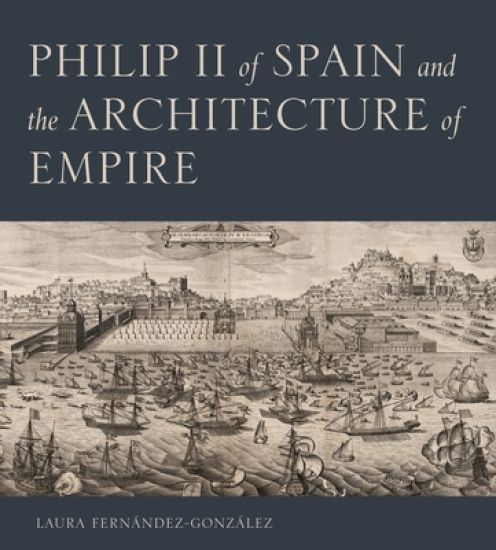
Philip II of Spain was a major patron of the arts, best known for his magnificent palace and royal mausoleum at the Monastery of San Lorenzo of El Escorial. However, neither the king’s monastery nor his collections fully convey the rich artistic landscape of early modern Iberia. In this book, Laura Fernández-González examines Philip’s architectural and artistic projects, placing them within the wider context of Europe and the transoceanic Iberian dominions.Philip II of Spain and the Architecture of Empire investigates ideas of empire and globalization in the art and architecture of the Iberian world during the sixteenth century, a time when the Spanish Empire was one of the largest in the world. Fernández-González illuminates Philip’s use of building regulations to construct an imperial city in Madrid and highlights the importance of his transformation of the Simancas fortress into an archive. She analyzes the refashioning of his imperial image upon his ascension to the Portuguese throne and uses the Hall of Battles in El Escorial as a lens through which to understand visual culture, history writing, and Philip’s kingly image as it was reflected in the funeral commemorations mourning his death across the Iberian world. Positioning Philip’s art and architectural programs within the wider cultural context of politics, legislation, religion, and theoretical trends, Fernández-González shows how design and images traveled across the Iberian world and provides a nuanced assessment of Philip’s role in influencing them. Original and important, this panoramic work will have a lasting impact on Philip II’s artistic legacy. Art historians and scholars of Iberia and sixteenth-century history will especially value Fernández-González’s research.
Philip Roth

Philip Roth

Derek Parker Royal

Praeger Publishers Inc
2005
sidottu
Of all contemporary American writers, Philip Roth is perhaps the most ambitious, yet he is one of the most underrepresented in terms of critical attention given his place in American letters. Unlike many aging novelists, whose production and creative mastery wane over time, Roth has demonstrated a unique ability not only to sustain his literary output, but also to surpass the scope and talent inherent in his previous writings. He has been awarded many literary honors, and in the 1990s alone he won every major American book award. This long-overdue collection of essays covers Roth's entire output and links themes across works, highlighting those thoughts and ideas that recur frequently. Unlike older introductions to Roth's writings, this volume will provide up-to-date coverage of all his works. Each chapter introduces the work or works under discussion, provides a brief summary of the story, and moves on to a lively analysis of its various literary elements and its significance in Roth's overall body of work. While each chapter focuses on the central issues in the specific work, several larger themes that run throughout many of his writings will be addressed, including the rise of suburbanization in post-war America, the problems and prominence of the family, American (Jewish) ethnicity, comedy and satire, the costs of literary celebrity, the promises and failures of the American dream, and others. Newcomers to and fans alike will find everything they need in this volume to build a better appreciation of Roth's work.
Philip Freneau

Philip Freneau

Jacob Axelrad

University of Texas Press
1966
pokkari
Philip Freneau was a poet, editor, and mariner. A graduate of Princeton, he was the roommate of James Madison and a classmate of Hugh Henry Brackenridge and Aaron Burr. When the colonies rebelled against England, he supported his newly born nation as a privateer, spending some time in a British prison as a result. He also served, more effectively, as “the poet of the Revolution.” Later he became the journalistic voice of the democrats. Ardently devoted to liberty, he believed himself to be a defender of the common man, for whom he fought selflessly and often vitriolicly throughout his life. In newspapers such as The Freeman’s Journal, The New York Daily Advertiser, The National Gazette, The Jersey Chronicle, and The Time-Piece, he published articles, letters, and poems, instructing the citizens of the new Republic about their rights, and attacking those who, he believed, were infringing on those rights. In the midst of the controversy in which he was so often involved, he also found time to write a small body of poetry whose sensitivity and beauty mark him as the poetic equal of his European contemporaries, and, in fact, as a precursor of the new Romantic movement In Philip Freneau: Champion of Democracy Jacob Axelrad provides a detailed biography of this pensman of the Revolution and early Republic. He gives a sympathetic, imaginative, perceptive, yet objective interpretation of Freneau and his place in history, and at the same time he presents a delightfully readable and clear picture of the period during which the poet lived. These pages not only re-create the battles between Whig and Tory, federalist and democrat, but they also are alive with the activities and philosophies of the men who made American history. James Madison, Thomas Jefferson, Alexander Hamilton, George Washington, John Adams, James Monroe go about the business of creating and shaping a new country, and as they do, they move into and out of the life of the poet of Monmouth, influencing him in a variety of ways. Above all, Axelrad brings to life for the reader the man Freneau: simple, direct, often uncritical in his devotion to the cause he believed in; courageous in sustaining his stand against strong opposition; disillusioned and pessimistic about human nature, yet boldly optimistic about the future of humanity and of his country. And always behind the furor the reader is aware of the man struggling to provide a living for himself and his family, and never quite succeeding.
Philip Vera Cruz

Philip Vera Cruz

Craig Scharlin; Lilia Villanueva

University of Washington Press
2000
pokkari
Filipino farmworkers sat down in the grape fields of Delano, California, in 1965 and began the strike that brought about a dramatic turn in the long history of farm labor struggles in California. Their efforts led to the creation of the United Farm Workers union under Cesar Chavez, with Philip Vera Cruz as its vice-president and highest-ranking Filipino officer.Philip Vera Cruz (1904–1994) embodied the experiences of the manong generation, an enormous wave of Filipino immigrants who came to the United States between 1910 and 1930. Instead of better opportunities, they found racial discrimination, deplorable living conditions, and oppressive labor practices. In his deeply reflective and thought-provoking oral memoir, Vera Cruz explores the toll these conditions took on both families and individuals.Craig Scharlin and Lilia V. Villanueva met Philip Vera Cruz in 1974 as volunteers in the construction of Agbayani Village, the United Farm Workers retirement complex in Delano, California. This oral history, first published in 1992, is the product of hundreds of hours of interviews. Elaine H. Kim teaches Asian American studies at the University of California, Berkeley, and is the author of Asian American Literature: An Introduction to the Writings and Their Social Context.
Philip III and the Pax Hispanica, 1598-1621

Philip III and the Pax Hispanica, 1598-1621

Paul Allen

Yale University Press
2000
sidottu
Impoverished and exhausted after fifty years of incessant warfare, the great Spanish Empire at the turn of the sixteenth century negotiated treaties with its three most powerful enemies: England, France, and the Netherlands. This intriguing book examines the strategies that led King Philip III to extend the laurel branch to his foes. Paul Allen argues that, contrary to widespread belief, the king’s gestures of peace were in fact part of a grand strategy to enable Spain to regain military and economic strength while its opponents were falsely lulled away from their military pursuits. From the outset, Allen contends, Philip and his advisers intended the Pax Hispanica to continue only until Spain was able to resume its battles—and defeat its enemies.Drawing on primary sources from the four countries involved, the book begins with a discussion of how Spanish foreign policy was formulated and implemented to achieve political and religious aims. The author investigates the development of Philip’s “peace” strategy, the Twelve Years’ Truce, and the decision to end the truce and engage in war with the Dutch, and then with the English and French. Renewed warfare was no failure of peace policy, Allen shows, but a conscious decision to pursue a consistent strategy. Nevertheless the negotiation for peace did represent a new diplomatic method with significant implications for both the future of the Spanish Empire and the practices of European diplomacy.