Kirjojen hintavertailu. Mukana 11 458 552 kirjaa ja 12 kauppaa.

Kirjahaku

Etsi kirjoja tekijän nimen, kirjan nimen tai ISBN:n perusteella.

1000 tulosta hakusanalla Phillip Good

Introduction to Statistics Through Resampling Methods and R
A highly accessible alternative approach to basic statistics Praise for the First Edition: "Certainly one of the most impressive little paperback 200-page introductory statistics books that I will ever see . . . it would make a good nightstand book for every statistician."—Technometrics Written in a highly accessible style, Introduction to Statistics through Resampling Methods and R, Second Edition guides students in the understanding of descriptive statistics, estimation, hypothesis testing, and model building. The book emphasizes the discovery method, enabling readers to ascertain solutions on their own rather than simply copy answers or apply a formula by rote. The Second Edition utilizes the R programming language to simplify tedious computations, illustrate new concepts, and assist readers in completing exercises. The text facilitates quick learning through the use of: More than 250 exercises—with selected "hints"—scattered throughout to stimulate readers' thinking and to actively engage them in applying their newfound skills An increased focus on why a method is introduced Multiple explanations of basic concepts Real-life applications in a variety of disciplines Dozens of thought-provoking, problem-solving questions in the final chapter to assist readers in applying statistics to real-life applications Introduction to Statistics through Resampling Methods and R, Second Edition is an excellent resource for students and practitioners in the fields of agriculture, astrophysics, bacteriology, biology, botany, business, climatology, clinical trials, economics, education, epidemiology, genetics, geology, growth processes, hospital administration, law, manufacturing, marketing, medicine, mycology, physics, political science, psychology, social welfare, sports, and toxicology who want to master and learn to apply statistical methods.
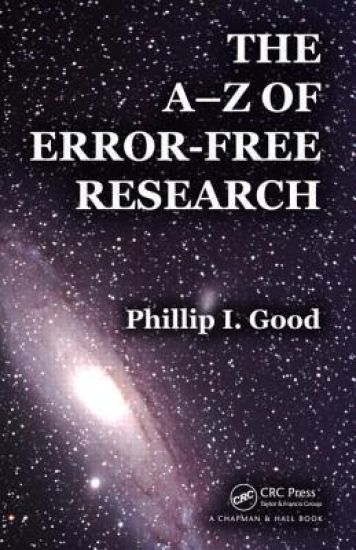
The A-Z of Error-Free Research

The A-Z of Error-Free Research

Phillip I. Good

CRC Press
2018
sidottu
A Practical Guide with Step-by-Step Explanations, Numerous Worked Examples, and R CodeThe A–Z of Error-Free Research describes the design, analysis, modeling, and reporting of experiments, clinical trials, and surveys. The book shows you when to use statistics, the best ways to cope with variation, and how to design an experiment, determine optimal sample size, and collect useable data. It also helps you choose the best statistical procedures for your application and takes you step by step through model development and reporting results for publication.Transition from Student to ResearcherHelping you become a confident researcher, the book begins with an overview of when—and when not—to use statistics. It guides you through the planning and data collection phases and presents various data analysis techniques, including methods for sample size determination. The author then covers techniques for developing models that provide a basis for future research. He also discusses reporting techniques to ensure your research efforts get the proper credit. The book concludes with case-control and cohort studies.
The A-Z of Error-Free Research

The A-Z of Error-Free Research

Phillip I. Good

Taylor Francis Inc
2012
nidottu
A Practical Guide with Step-by-Step Explanations, Numerous Worked Examples, and R CodeThe A–Z of Error-Free Research describes the design, analysis, modeling, and reporting of experiments, clinical trials, and surveys. The book shows you when to use statistics, the best ways to cope with variation, and how to design an experiment, determine optimal sample size, and collect useable data. It also helps you choose the best statistical procedures for your application and takes you step by step through model development and reporting results for publication.Transition from Student to ResearcherHelping you become a confident researcher, the book begins with an overview of when—and when not—to use statistics. It guides you through the planning and data collection phases and presents various data analysis techniques, including methods for sample size determination. The author then covers techniques for developing models that provide a basis for future research. He also discusses reporting techniques to ensure your research efforts get the proper credit. The book concludes with case-control and cohort studies.
Permutation, Parametric, and Bootstrap Tests of Hypotheses

Permutation, Parametric, and Bootstrap Tests of Hypotheses

Phillip I. Good

Springer-Verlag New York Inc.
2010
nidottu
This text is intended to provide a strong theoretical background in testing hypotheses and decision theory for those who will be practicing in the real worldorwhowillbeparticipatinginthetrainingofreal-worldstatisticiansand biostatisticians. In previous editions of this text, my rhetoric was somewhat tentative. I was saying, in e?ect, “Gee guys, permutation methods provide a practical real-world alternative to asymptotic parametric approximations. Why not give them a try?” But today, the theory, the software, and the hardware have come together. Distribution-free permutation procedures are the primary method for testing hypotheses. Parametric procedures and the bootstrap are to be reserved for the few situations in which they may be applicable. Four factors have forced this change: 1. Desire by workers in applied ?elds to use the most powerful statistic for their applications. Such workers may not be aware of the fundamental lemma of Neyman and Pearson, but they know that the statistic they wanttouse—acomplexscoreoraratioofscores,doesnothaveanalready well-tabulated distribution. 2. Pressure from regulatory agencies for the use of methods that yield exact signi?cance levels, not approximations. 3. A growing recognition that most real-world data are drawn from mixtures of populations. 4. A growing recognition that missing data is inevitable, balanced designs the exception. Thus, it seems natural that the theory of testing hypothesis and the more general decision theory in which it is embedded should be introduced via the permutation tests. On the other hand, certain relatively robust param- ric tests such as Student’s t continue to play an essential role in statistical practice.
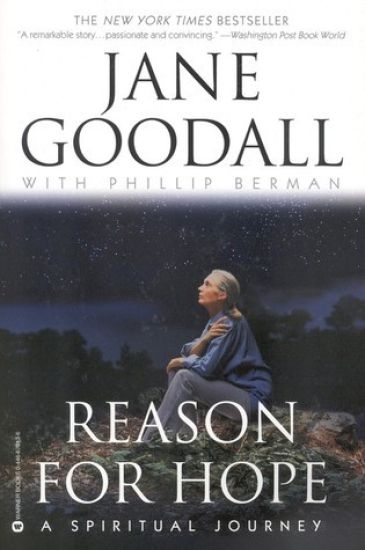
Reasons for Hope: a Spiritual Journey

Reasons for Hope: a Spiritual Journey

Jane Goodall; Berman Phillip

LITTLE, BROWN COMPANY
1999
sidottu
From world-renowned scientist Jane Goodall, as seen in the new National Geographic documentary Jane, comes a poignant memoir about her spiritual epiphany and an appeal for why everyone can find a reason for hope. Dr. Jane Goodall's revolutionary study of chimpanzees in Tanzania's Gombe preserve forever altered the very, definition of humanity. Now, in a poignant and insightful memoir, Jane Goodall explores her extraordinary life and personal spiritual odyssey, with observations as profound as the knowledge she has brought back from the forest.
Reason For Hope

Reason For Hope

Jane Goodall; Phillip Berman

Grand Central Publishing
2004
pokkari
From world-renowned scientist Jane Goodall, as seen in the new National Geographic documentary Jane, comes a poignant memoir about her spiritual epiphany and an appeal for why everyone can find a reason for hope. Dr. Jane Goodall's revolutionary study of chimpanzees in Tanzania's Gombe preserve forever altered the very, definition of humanity. Now, in a poignant and insightful memoir, Jane Goodall explores her extraordinary life and personal spiritual odyssey, with observations as profound as the knowledge she has brought back from the forest.
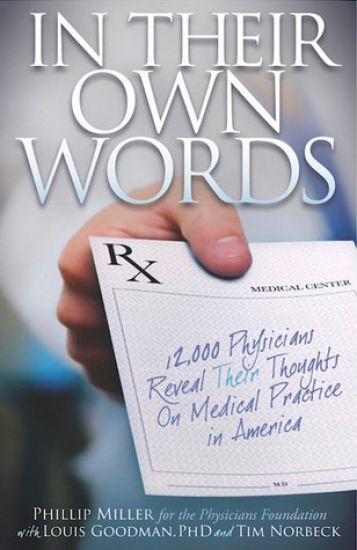
In Their Own Words

In Their Own Words

Phillip Miller; Louis Goodman; Tim Norbeck

Morgan James Publishing llc
2010
pokkari
In Their Own Words invites you to become “doctor for a day” and see medical practice from the physicians’ perspective. Drawing on one of the largest physician surveys ever undertaken, “In Their Own Words” offers insights from hundreds of doctors, who reveal in candid comments exactly how they feel about being physicians and why it matters to patients. Read why: * Close to half of all doctors plan to opt out of medical practice in the next one to three years, or reduce the number of patients they see. * Many physicians are compelled to close their practices to Medicare and other patients * Health reform could reduce access to physicians * Most physicians would not recommend medicine as a career * Many physicians say they are strained to the breaking point A wake up call for policy makers and the public, “In Their Own Words” reveals why what doctors think about the practice of medicine matters to anyone who cares about the quality and availability of healthcare in America today. If you have ever been a patient or are ever likely to be one, read In Their Own Words.
Always Due, Never Done: Celebrating 20 Years of TBAWP

Always Due, Never Done: Celebrating 20 Years of TBAWP

Phillip C. Goodchild; Pat Jones

Createspace Independent Publishing Platform
2018
nidottu
Celebrating 20 years of the Tampa Bay Area Writing Project Since 1998, a collection of various educators, students, and vagabonds have gathered every summer to participate in an incredible time of learning, writing, and self-discovery. Over the course of several weeks, the participants create a wide variety of writing, some of which is collected here in this year's 2018 anthology. To mark the 20th anniversary of TBAWP, pieces from past gatherings are also included for your enjoyment
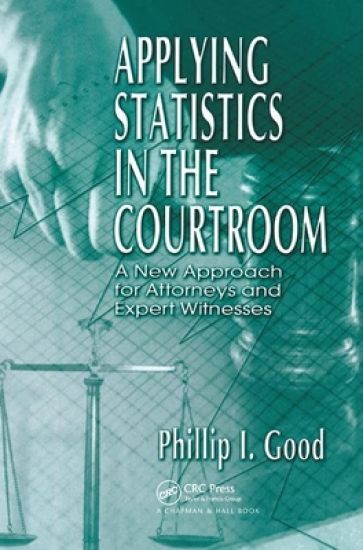
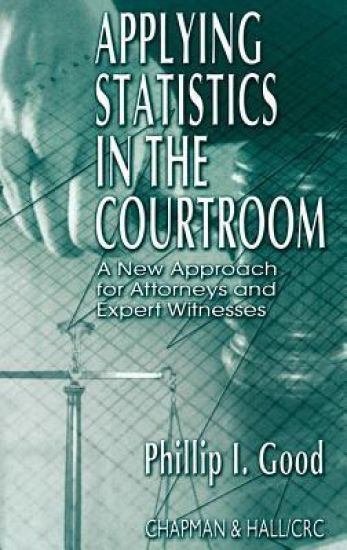
Applying Statistics in the Courtroom
This publication is directed at both attorneys and statisticians to ensure they will work together successfully on the application of statistics in the law. Attorneys will learn how best to utilize the statistician's talents, while gaining an enriched understanding of the law relevant to audits, jury selection, discrimination, environmental hazards, evidence, and torts as it relates to statistical issues. Statisticians will learn that the law is what judges say it is and to frame their arguments accordingly. This book will increase the effectiveness of both parties in presenting and attacking statistical arguments in the courtroom. Topics covered include sample and survey methods, probability, testing hypotheses, and multiple regression.
Applying Statistics in the Courtroom

Applying Statistics in the Courtroom

Philip Good

Chapman Hall/CRC
2001
sidottu
This publication is directed at both attorneys and statisticians to ensure they will work together successfully on the application of statistics in the law. Attorneys will learn how best to utilize the statistician's talents, while gaining an enriched understanding of the law relevant to audits, jury selection, discrimination, environmental hazards, evidence, and torts as it relates to statistical issues. Statisticians will learn that the law is what judges say it is and to frame their arguments accordingly. This book will increase the effectiveness of both parties in presenting and attacking statistical arguments in the courtroom. Topics covered include sample and survey methods, probability, testing hypotheses, and multiple regression.
Breaking the Pendulum

Breaking the Pendulum

Philip Goodman; Joshua Page; Michelle Phelps

Oxford University Press Inc
2017
sidottu
The history of criminal justice in the U.S. is often described as a pendulum, swinging back and forth between strict punishment and lenient rehabilitation. While this view is common wisdom, it is wrong. In Breaking the Pendulum, Philip Goodman, Joshua Page, and Michelle Phelps systematically debunk the pendulum perspective, showing that it distorts how and why criminal justice changes. The pendulum model blinds us to the blending of penal orientations, policies, and practices, as well as the struggle between actors that shapes laws, institutions, and how we think about crime, punishment, and related issues. Through a re-analysis of more than two hundred years of penal history, starting with the rise of penitentiaries in the 19th Century and ending with ongoing efforts to roll back mass incarceration, the authors offer an alternative approach to conceptualizing penal development. Their agonistic perspective posits that struggle is the motor force of criminal justice history. Punishment expands, contracts, and morphs because of contestation between real people in real contexts, not a mechanical "swing" of the pendulum. This alternative framework is far more accurate and empowering than metaphors that ignore or downplay the importance of struggle in shaping criminal justice. This clearly written, engaging book is an invaluable resource for teachers, students, and scholars seeking to understand the past, present, and future of American criminal justice. By demonstrating the central role of struggle in generating major transformations, Breaking the Pendulum encourages combatants to keep fighting to change the system.
Breaking the Pendulum

Breaking the Pendulum

Philip Goodman; Joshua Page; Michelle Phelps

Oxford University Press Inc
2017
nidottu
The history of criminal justice in the U.S. is often described as a pendulum, swinging back and forth between strict punishment and lenient rehabilitation. While this view is common wisdom, it is wrong. In Breaking the Pendulum, Philip Goodman, Joshua Page, and Michelle Phelps systematically debunk the pendulum perspective, showing that it distorts how and why criminal justice changes. The pendulum model blinds us to the blending of penal orientations, policies, and practices, as well as the struggle between actors that shapes laws, institutions, and how we think about crime, punishment, and related issues. Through a re-analysis of more than two hundred years of penal history, starting with the rise of penitentiaries in the 19th Century and ending with ongoing efforts to roll back mass incarceration, the authors offer an alternative approach to conceptualizing penal development. Their agonistic perspective posits that struggle is the motor force of criminal justice history. Punishment expands, contracts, and morphs because of contestation between real people in real contexts, not a mechanical "swing" of the pendulum. This alternative framework is far more accurate and empowering than metaphors that ignore or downplay the importance of struggle in shaping criminal justice. This clearly written, engaging book is an invaluable resource for teachers, students, and scholars seeking to understand the past, present, and future of American criminal justice. By demonstrating the central role of struggle in generating major transformations, Breaking the Pendulum encourages combatants to keep fighting to change the system.
Theology of Money

Theology of Money

Philip Goodchild

SCM Press
2007
nidottu
Goodchild examines the theory of money in a comparable manner to Adam Smith, Karl Marx and Georg Simmel. However by contrast to the conclusions of these thinkers, he proposes that money is essentially created in excess of reserves, making it a simultaneous credit and debt. Since money is a debt that must be repaid with interest in the form of money, then the creation of money imposes a social demand for an increase in profit and an increase in the creation of money in order to repay debt. This vicious circle drives the expansion of the global economy. In summary, Goodchild argues that money is a promise, a supreme value, a transcendent value and an obligation or a law. He argues that money has taken the place of God. It is the dominant global religion in practice, even if no one believes in it in principle.
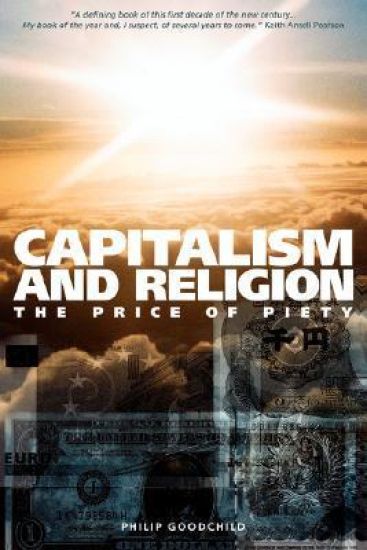
Capitalism and Religion

Capitalism and Religion

Philip Goodchild

Routledge
2002
sidottu
Our global ecological crisis demands that we question the rationality of the culture that has caused it: western modernity's free market capitalism. Philip Goodchild develops arguments from Nietzsche, Adorno, Horkheimer, and Marx, to suggest that our love of Western modernity is an expression of a piety in which capitalism becomes a global religion, in practice, if not always in belief. This book presents a philosophical alternative that demands attention from philosophers, critical theorists, philosophers of religion, theologians, and those in ecological politics.
Capitalism and Religion

Capitalism and Religion

Philip Goodchild

Routledge
2002
nidottu
Our global ecological crisis demands that we question the rationality of the culture that has caused it: western modernity's free market capitalism. Philip Goodchild develops arguments from Nietzsche, Adorno, Horkheimer, and Marx, to suggest that our love of Western modernity is an expression of a piety in which capitalism becomes a global religion, in practice, if not always in belief. This book presents a philosophical alternative that demands attention from philosophers, critical theorists, philosophers of religion, theologians, and those in ecological politics.
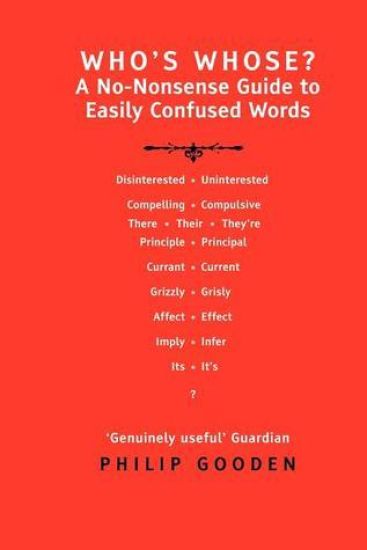
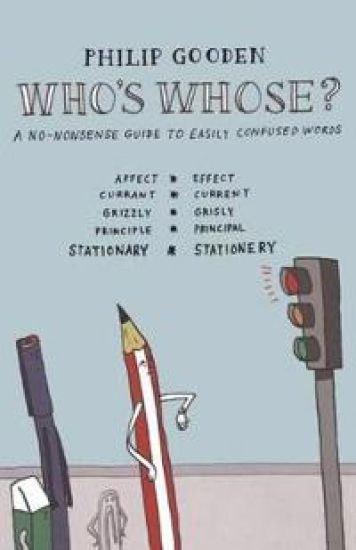
Who's Whose?

Who's Whose?

Philip Gooden

A C Black Publishers Ltd
2005
sidottu
You'll never again confuse affect and effect! Have you ever been fazed by the spelling of phased, or fretted over the difference between anxiety and angst, stationery and stationary? If so, you are not alone: the English language is a minefield, full of words that look and sound alike but mean different things in different places. "Who's Whose? is an entertaining and essential A to Z guide to the most commonly confused words in English today, with real examples of good and bad usage to make differences crystal clear. In addition to documenting these verbal confusions, it offers a sympathetic guide to the seriousness of each gaffe (the Embarassment rating), an explanation of why it happens, and some handy hints on how to avoid it in future. With "Who's Whose in your corner, you'll never again mistake a principle for a principal.
Who's Whose?

Who's Whose?

Philip Gooden

A C Black Publishers Ltd
2007
nidottu
Who's Whose? is an entertaining and straightforward guide to the most commonly confused words in English today, with real examples of good and bad usage to make differences crystal-clear. The Embarrassment Rating involved in each mistake is included, together with an explanation of why the confusion happens and how to avoid it in the future. So if you mistrust (or distrust?) your spellchecker and want to maintain or improve your written English, this is the perfect companion for you.
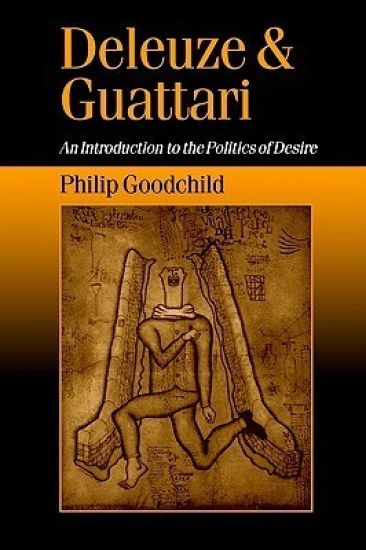
Deleuze and Guattari

Deleuze and Guattari

Philip Goodchild

SAGE Publications Ltd
1996
nidottu
This accessible book examines critically the writings of Deleuze and Guattari, clarifying the ideas of these two notoriously difficult thinkers without over-simplifying them. Divided into three sections - Knowledge, Power, and Liberation of Desire - the book provides a systematic account of the intellectual context as well as an exhaustive analysis of the key themes informing Deleuze and Guattari's work. It provides the framework for reading the important and influential study Capitalism and Schizophrenia and, with the needs of students in mind, explains the key concepts in Deleuze and Guattari's discussion of philosophy, art and politics. Definitive and incisive, the book will be invaluable in situating the philosophy of these two major figures within the perspective of the social and human sciences.
Theology of Money

Theology of Money

Philip Goodchild

Duke University Press
2009
sidottu
Theology of Money is a philosophical inquiry into the nature and role of money in the contemporary world. Philip Goodchild reveals the significance of money as a dynamic social force by arguing that under its influence, moral evaluation is subordinated to economic valuation, which is essentially abstract and anarchic. His rigorous inquiry opens into a complex analysis of political economy, encompassing markets and capital, banks and the state, class divisions, accounting practices, and the ecological crisis awaiting capitalism. Engaging with Christian theology and the thought of Carl Schmitt, Georg Simmel, Karl Marx, Adam Smith, and many others, Goodchild develops a theology of money based on four contentions, which he elaborates in depth. First, money has no intrinsic value; it is a promise of value, a crystallization of future hopes. Second, money is the supreme value in contemporary society. Third, the value of assets measured by money is always future-oriented, dependent on expectations about how much might be obtained for those assets at a later date. Since this value, when realized, will again depend on future expectations, the future is forever deferred. Financial value is essentially a degree of hope, expectation, trust, or credit. Fourth, money is created as debt, which involves a social obligation to work or make profits to repay the loan. As a system of debts, money imposes an immense and irresistible system of social control on individuals, corporations, and governments, each of whom are threatened by economic failure if they refuse their obligations to the money system. This system of debt has progressively tightened its hold on all sectors and regions of global society. With Theology of Money, Goodchild aims to make conscious our collective faith and its dire implications.