Kirjojen hintavertailu. Mukana 12 352 505 kirjaa ja 12 kauppaa.

Kirjahaku

Etsi kirjoja tekijän nimen, kirjan nimen tai ISBN:n perusteella.

1000 tulosta hakusanalla Phillis Levin

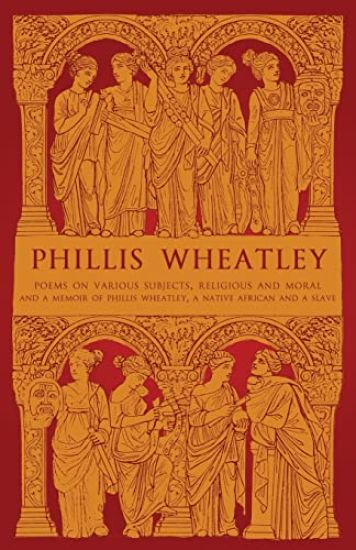
Poems on Various Subjects, Religious and Moral. By Phillis Wheatley, Negro Servant to Mr. John Wheatley, of Boston, in New-England
The 18th century was a wealth of knowledge, exploration and rapidly growing technology and expanding record-keeping made possible by advances in the printing press. In its determination to preserve the century of revolution, Gale initiated a revolution of its own: digitization of epic proportions to preserve these invaluable works in the largest archive of its kind. Now for the first time these high-quality digital copies of original 18th century manuscripts are available in print, making them highly accessible to libraries, undergraduate students, and independent scholars.The Age of Enlightenment profoundly enriched religious and philosophical understanding and continues to influence present-day thinking. Works collected here include masterpieces by David Hume, Immanuel Kant, and Jean-Jacques Rousseau, as well as religious sermons and moral debates on the issues of the day, such as the slave trade. The Age of Reason saw conflict between Protestantism and Catholicism transformed into one between faith and logic -- a debate that continues in the twenty-first century.++++The below data was compiled from various identification fields in the bibliographic record of this title. This data is provided as an additional tool in helping to insure edition identification: ++++Library of CongressW024492"The following is a copy of a letter, from the author's master."--p. 5], dated: Boston, November 14, 1772.Philadelphia: Printed by Joseph James, in Chesnut-Street, M.DCC.LXXXVII. 1787]. 55, 5]p.; 12
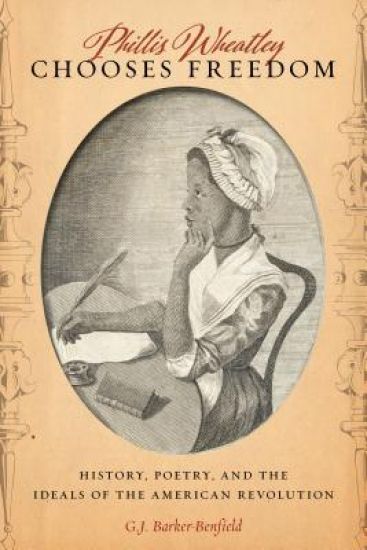
Phillis Wheatley Chooses Freedom

Phillis Wheatley Chooses Freedom

G.J. Barker-Benfield

New York University Press
2018
sidottu
The dramatic story of Phillis Wheatley, a free, black poet who resisted the pressures of arranged marriage, truly embodying the ideals of the American Revolution There is an uncomfortable paradox at the heart of the American Revolution: many of the men leading the war for independence were slave owners, contradicting the ideal of freedom that they claimed to represent. Meanwhile, abolitionist sentiments of the time contained contradictions as well. Abolitionists encouraged freed Christianized slaves to return to Africa. In this way, they hoped to send more missionaries to Africa in order to Christianize the continent and, at the same time, to send free blacks away from America. This tension is revealed through the dramatic story of Phillis Wheatley, an African-American poet who refused to marry a man she had never met and return with him to Africa as a missionary. She was enslaved in Africa as a child and transported to Boston, where she was sold to an evangelical family. Agreeing to the proposed marriage – arranged by Congregationalist minister Samuel Hopkins – would have echoed the social mores of the time, particularly those for enslaved black women. However, due to her prodigious talents as a poet, Wheatley won her freedom a year prior to Hopkins' arrangement, allowing her to take her future into her own hands. G.J. Barker-Benfield considers Wheatley's story and Hopkins's plan in the broader context of the American Revolution. The ideals of the revolution motivated Hopkins and some of his contemporaries to propose freeing African slaves and thus address the "monstrous inconsistency" fundamental to the white slave owners leading the revolution. In so doing, they presented themselves as freedom fighters who resisted the threat of slavery at the hands of British tyranny. Wheatley challenged this inconsistency and, taking the revolutionaries' rhetoric seriously, called for liberty for all human hearts: women's and men's, blacks' and whites'.
The Poems of Phillis Wheatley, as They Were Originally Published in London, 1773 (1909)
The Poems Of Phillis Wheatley, As They Were Originally Published In London, 1773 (1909) is a collection of poems by Phillis Wheatley, an African American poet who lived during the 18th century. This book features a compilation of Wheatley's original works as they were first published in London in 1773. Wheatley's poetry explores themes of religion, freedom, and the experience of being a slave in America. Her writing is known for its elegance and lyricism, and her work has been celebrated as an important contribution to American literature. This edition of her poetry includes a preface by the editor, William H. Robinson, which provides historical context and analysis of Wheatley's work. The book is a valuable resource for scholars of African American literature, as well as anyone interested in the history of American poetry.This Is A New Release Of The Original 1909 Edition.This scarce antiquarian book is a facsimile reprint of the old original and may contain some imperfections such as library marks and notations. Because we believe this work is culturally important, we have made it available as part of our commitment for protecting, preserving, and promoting the world's literature in affordable, high quality, modern editions, that are true to their original work.
The Poems of Phillis Wheatley

The Poems of Phillis Wheatley

Phillis Wheatley

Graphic Arts Books
2021
pokkari
Poems on Various Subjects, Religious and Moral (1773) is the first book of poetry published by an African American author. Written while Wheatley was a slave in Boston, the collection was published in England. Regarded for her mastery of classical poetic form, Phillis Wheatley earned praise from Voltaire and George Washington. Poems on Various Subjects, Religious and Moral has long been the subject of scholarly work on the history of African American literature, with some critics arguing that Wheatley’s poems proved detrimental to the struggle of enslaved African Americans. Whether Wheatley made excuses for slavery or, as some have argued, included subtle critiques of the institution in her writing, her talent and importance to the history of African American literature remain undisputed. Despite her status as a slave, Phillis Wheatley seems to have viewed herself as a blessed individual, a woman for whom life itself was a sign of God’s grace, and in whom talent arose in the form of a foreign language. Many of her poems—elegies, odes, and monologues—are aimed at others. Whether in mourning, in praise, or in warning, Wheatley frequently offers her own voice to university students, royalty, God, the muses, and deceased infants. When she does offer glimpses of herself, for instance, in her poem “On Being Brought from Africa to America,” she provides a complex perspective on her status as a slave: “’Twas mercy brought me from my Pagan land, / Taught my benighted soul to understand / That there’s a God, that there’s a Saviour too.” While her words may seem strange to our modern view of the American institution of slavery, they provide an important historical lens onto the adoption of Christianity by African American slaves, who developed a faith grounded in resistance, hope, and redemption. With a beautifully designed cover and professionally typeset manuscript, this edition of Phillis Wheatley’s Poems on Various Subjects, Religious and Moral is a classic of African American literature reimagined for modern readers.
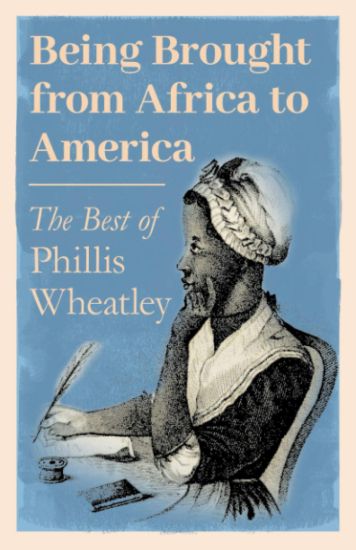
Being Brought from Africa to America - The Best of Phillis Wheatley
Phillis Wheatley (c. 1753-1784) was an American freed slave and poet who wrote the first book of poetry by an African-American. Sold into a slavery in West Africa at the age of around seven, she was taken to North America where she served the Wheatley family of Boston. Phillis was tutored in reading and writing by Mary, the Wheatleys' 18-year-old daughter, and was reading Latin and Greek classics from the age of twelve. Encouraged by the progressive Wheatleys who recognised her incredible literary talent, she wrote "To the University of Cambridge" when she was 14 and by 20 had found patronage in the form of Selina Hastings, Countess of Huntingdon. Her works garnered acclaim in both England and the colonies and she became the first African American to make a living as a poet. This volume contains a collection of Wheatley's best poetry, including the titular poem "Being Brought from Africa to America". Contents include: "Phillis Wheatley", "Phillis Wheatley by Benjamin Brawley", "To Maecenas", "On Virtue", "To the University of Cambridge", "To the King's Most Excellent Majesty", "On Being Brought from Africa to America", "On the Death of the Rev. Dr. Sewell", "On the Death of the Rev. Mr. George Whitefield", etc. Ragged Hand is proudly publishing this brand new collection of classic poetry with a specially-commissioned biography of the author.
Being Brought from Africa to America - The Best of Phillis Wheatley
Phillis Wheatley (c. 1753-1784) was an American freed slave and poet who wrote the first book of poetry by an African-American. Sold into a slavery in West Africa at the age of around seven, she was taken to North America where she served the Wheatley family of Boston. Phillis was tutored in reading and writing by Mary, the Wheatleys' 18-year-old daughter, and was reading Latin and Greek classics from the age of twelve. Encouraged by the progressive Wheatleys who recognised her incredible literary talent, she wrote "To the University of Cambridge" when she was 14 and by 20 had found patronage in the form of Selina Hastings, Countess of Huntingdon. Her works garnered acclaim in both England and the colonies and she became the first African American to make a living as a poet. This volume contains a collection of Wheatley's best poetry, including the titular poem "Being Brought from Africa to America". Contents include: "Phillis Wheatley", "Phillis Wheatley by Benjamin Brawley", "To Maecenas", "On Virtue", "To the University of Cambridge", "To the King's Most Excellent Majesty", "On Being Brought from Africa to America", "On the Death of the Rev. Dr. Sewell", "On the Death of the Rev. Mr. George Whitefield", etc. Ragged Hand is proudly publishing this brand new collection of classic poetry with a specially-commissioned biography of the author.
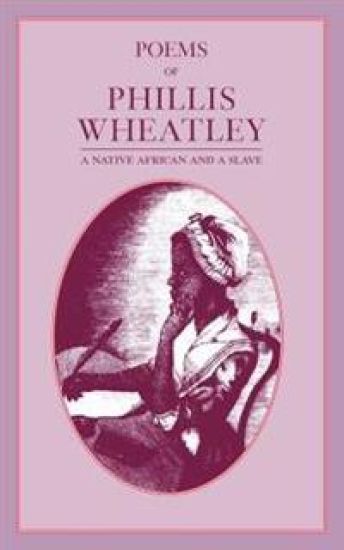
Poems of Phillis Wheatley

Poems of Phillis Wheatley

Phillis Wheatley

Applewood Books
1995
pokkari
Phillis Wheatley was America's first published Black poet. Her poems were published before the Revolutionary War and were recognized throughout the English speaking world. She was born in Africa, sold as a slave in America, and became a celebrity in Europe. In addition to the poems of Phillis Wheatley, this volume contains a short and poignant memoir of her life.
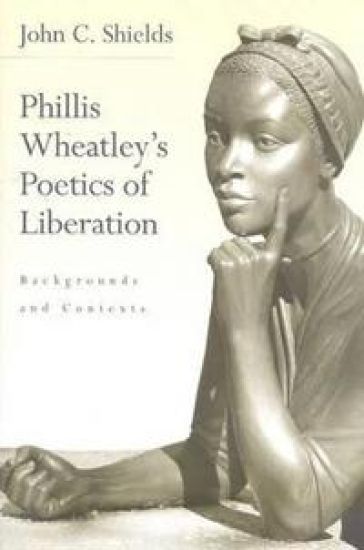
Phillis Wheatley's Poetics of Liberation

Phillis Wheatley's Poetics of Liberation

John Shields

University of Tennessee Press
2008
sidottu
Phillis Wheatley's Poetics of Liberation is a groundbreaking scholarly study of one of America_s most important and most controversial writers. Wheatley (1753-1784) was the first African American to publish a book on any subject in the new country, and America_s second woman to do so. There is probably no other American writer who has produced such critical controversy as Phillis Wheatley. In this new volume, John C. Shields-one of the foremost scholars of Wheatley- demonstrates that much of the negative response to her writings has been based on false assumptions and myths about her and her work. Much of this criticism began more than a century ago and has been passed on without dissent by generations of readers. Here, Shields sets a course for Wheatley scholars that will redefine the direction of future writing about her. Shields begins this volume with an incisive analysis of more than two hundred years of complicated and often misinformed scholarship and commentary about Wheatley. In following chapters, he explores Wheatley_s background and the cultural context in which she wrote. Shields provides new and subtle readings for a great many of her poems. He shows that Wheatley_s writing was deeply imbedded in several literary traditions, demonstrating that her work is the result of an African inheritance, a complex relationship with a Congregationalist religious heritage, and an intense involvement with classical literature. Read closely, Wheatley's works show she deserves credit for creating a liberationist aesthetic-the full implications of which are still to be worked out. This important new study is certain to become the standard in the field. Phillis Wheatley's Poetics of Liberation is essential for all students and scholars of American literature, African American literature, women_s literature, and multicultural literature. John C. Shields is the editor of The Collected Works of Phillis Wheatley and the author of The American Aeneas: Classical Origins of the American Self, which won a Choice Outstanding Academic Book award and an honorable mention in the Harry Levin Prize competition, sponsored by the American Comparative Literature Association. He is Distinguished Professor of English and Director of the Center for Classicism in American Culture at Illinois State University.
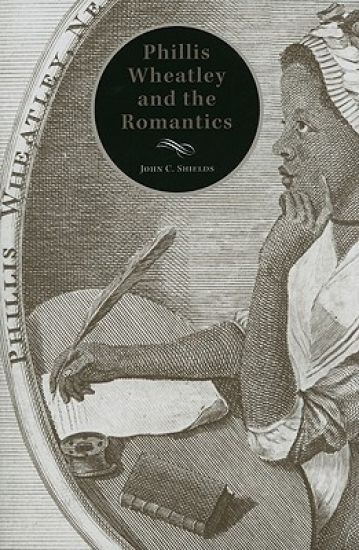
Phillis Wheatley and the Romantics

Phillis Wheatley and the Romantics

John Shields

University of Tennessee Press
2010
sidottu
Phillis Wheatley was the first African American to publish a book. Born in Gambia in 1753, she came to America aboard a slave ship, the Phillis. From an early age, Wheatley exhibited a profound gift for verse, publishing her first poem in 1767. Her tribute to a famed pastor, “On the Death of the Rev. Mr. George Whitefield,” followed in 1770, catapulting her into the international spotlight, and publication of her 1773 Poems on Various Subjects Religious and Moral in London created her an international star.Despite the attention she received at the time, history has not been kind to Wheatley. Her work has long been neglected or denigrated by literary critics and historians. John C. Shields, a scholar of early American literature, has tried to help change this perception, and Wheatley has begun to take her place among the elite of American writers.In Phillis Wheatley and the Romantic Age, Shields contends that Wheatley was not only a brilliant writer but one whose work made a significant impression on renowned Europeans of the Romantic age, such as Samuel Taylor Coleridge, who borrowed liberally from her works, particularly in his famous distinction between fancy and imagination. Shields shows how certain Wheatley texts, particularly her “Long Poem,” consisting of “On Recollection,” “Thoughts on the Works of Providence,” and “On Imagination,” helped shape the face of Romanticism in the late eighteenth and nineteenth centuries.Phillis Wheatley and the Romantic Age helps demolish the long-held notion that literary culture flowed in only one direction: from Europe to the Americas. Thanks to Wheatley’s influence, Shields argues, the New World was influencing European literary masters far sooner than has been generally understood.
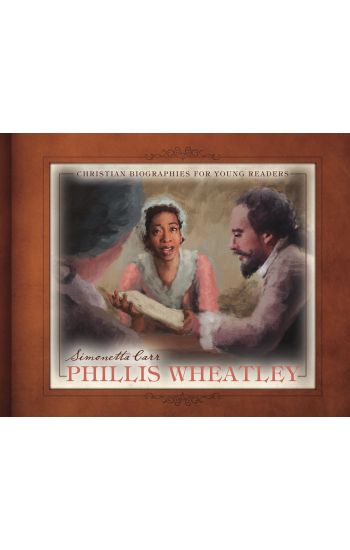
Phillis Wheatley

Phillis Wheatley

Simonetta Carr

Reformation Heritage Books
2021
sidottu
No one could have imagined that the frail, enslaved, seven-year-old girl who arrived in Boston, Massachusetts, in 1761 would become the first published African American, achieving fame for her poetry in both America and England. After arriving, Phillis quickly learned to read the Bible and other classic literature, publishing her first poem in 1767 when she was thirteen and a book of poetry in 1773. Her poetry encouraged freedom for all people, and she proved to a doubting generation that intelligence and creativity are not limited to a particular ethnicity. Through Phillis's story, young readers will learn the importance of trusting God's plan while standing up for justice and the good of other human beings. Table of Contents: Introduction Chapter 1 - Kidnapped Chapter 2 - A Gifted Girl Chapter 3 - International Fame Chapter 4 - The Cost of Freedom Chapter 5 - Through the War Chapter 6 - Making Ends Meet Chapter 7 - Legacy
Phillis Wheatley

Phillis Wheatley

Letitia Degraft Okyere

Lion
2021
sidottu
Phillis Wheatley was about seven years old when kidnapped and sold to slave traders. She endured the horrifying journey to Boston, Massachusetts, in 1761. In her owners' home, she learned to read and write English and began to compose poetry. Due to racism in the North American colonies at the time, an English agent published her book in Great Britain. Wheatley became the first Black poet in America. She proved that Africans or Black people have creative abilities and opened the door for the acceptance of literary works by people of African descent. Today, buildings, societies, and clubs are named in Wheatley's honor.
Phillis Wheatley as Prophetic Poet

Phillis Wheatley as Prophetic Poet

Wallis C. Baxter III

BLOOMSBURY PUBLISHING PLC
2022
sidottu
In You Must Be Born Again: Phillis Wheatley as Prophetic Poet, the author argues that Phillis Wheatley is the mother of liberation theology. The author uses Wheatley’s poetry and life experiences to create a portrait of Wheatley beyond that of a poet. Wheatley is described as both poet and visionary who wrestles with God during the creative process. The lyrical expressions of Wheatley’s poetry unlock the spiritual impressions on her heart. The author sets up the racial dynamics of Wheatley’s time and her engagement with those politics. As a preacher, Wheatley combats the immoral undercurrent that erodes the community’s social, economic, and spiritual foundation as well as its political systems. The author positions Wheatley as one uniquely qualified to address the hypocrisy within her world and, by implication, present-day society by calling for immersion into a radical understanding of love and justice, resulting in a renewed hope for equality and a pathway toward equity.
Phillis Wheatley as Prophetic Poet

Phillis Wheatley as Prophetic Poet

Wallis C. Baxter III

BLOOMSBURY PUBLISHING PLC
2024
nidottu
In You Must Be Born Again: Phillis Wheatley as Prophetic Poet, the author argues that Phillis Wheatley is the mother of liberation theology. The author uses Wheatley’s poetry and life experiences to create a portrait of Wheatley beyond that of a poet. Wheatley is described as both poet and visionary who wrestles with God during the creative process. The lyrical expressions of Wheatley’s poetry unlock the spiritual impressions on her heart. The author sets up the racial dynamics of Wheatley’s time and her engagement with those politics. As a preacher, Wheatley combats the immoral undercurrent that erodes the community’s social, economic, and spiritual foundation as well as its political systems. The author positions Wheatley as one uniquely qualified to address the hypocrisy within her world and, by implication, present-day society by calling for immersion into a radical understanding of love and justice, resulting in a renewed hope for equality and a pathway toward equity.
Phillis Wheatley

Phillis Wheatley

Phillis Wheatley

Renard Press Ltd
2020
pokkari
These poems are from the first book of poetry published by an African-American author. Phillis was brought to Massachusetts as a slave and sold to the Wheatley family, where she threw herself into education; soon she was writing verse of such a high calibre that she enchanted societal figures as lofty as George Washington.
Phillis Wheatley

Phillis Wheatley

Bunmi Oyinsan

Nurturing Minds Academy
2021
pokkari
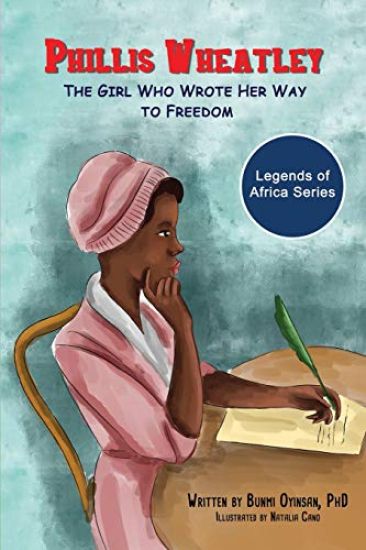
Every new generation of children should be enthralled by stories of famous people from their history. The Legends of Africa Series are fictionalized stories about real legends of Africa from the continent and the African diaspora. The stories are written in easy to read texts which can be read to young children. Older children will also enjoy them because they are easy to read and understand. This beautifully illustrated story is a fictionalized version of the life history of Phillis Wheatley who was captured from the Senegambia area of West Africa. Although sold into slavery, she very quickly learnt to read and write. She became the first African-American to publish a book of poetry. This story about her life introduces her to young readers by highlighting some of her struggles as well as major accomplishments.