Kirjojen hintavertailu. Mukana 12 390 323 kirjaa ja 12 kauppaa.

Kirjahaku

Etsi kirjoja tekijän nimen, kirjan nimen tai ISBN:n perusteella.

1000 tulosta hakusanalla R D Wingfield

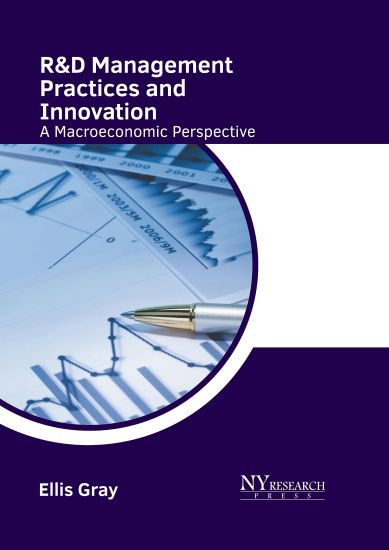
R&d Management Practices and Innovation: A Macroeconomic Perspective
Research and development (R&D) refers to the process undertaken by businesses in order to learn more about their industry. The new technological or scientific knowledge gained through R&D is then applied to produce new or improved products and services that can be used or sold by the business. It is often classified into three categories, including development research, basic research and applied research. It encompasses tasks such as advanced development, process development, technological development, prototyping, technology transfer, fundamental research, concept development and new product development. R&D and innovation is the act of creating and commercializing novel concepts, introducing novel procedures, or altering the way a business generates revenue. It can also be seen as the necessary activity to keep a company viable and competitive in the long run. This book contains a detailed explanation of the management practices and innovation associated with R&D. It is appropriate for students seeking detailed information in this area as well as for experts.
R.D. Laing and Psychodynamic Psychiatry in 1950s Glasgow

R.D. Laing and Psychodynamic Psychiatry in 1950s Glasgow

Isobel Hunter-Brown; R. D. Hinshelwood

Free Association Books
2008
nidottu
The author, who worked alongside R.D. Laing in Glasgow, seeks to put the record straight. From the contemporary perspective, Laing is admired as a pioneer of ideas and a charismatic and prominent anti-psychiatrist. Isobel Hunter-Brown reveals, however, that Laing's view of sanity and insanity as a continuum and his opposition to high-dosage anti-psychotic medication already formed part of the Scottish psychiatric tradition. Hunter-Brown argues that the culture of the Glasgow units in which Laing worked early in his career had already been strongly influenced by the Scottish psychoanalyst, Fairbairn. Furthermore, for decades prior to this, their inspiration had traditionally been drawn from Adolph Meyer, who promoted a holistic view of his patients - exploring biological, psychological and social dimensions as part of their diagnosis - an approach that is widely believed to have originated with Laing. Psychiatrists seldom write about their profession, but this author describes the inner workings of psychiatric practice in Glasgow during the 1950s and the way in which some practitioners in that allegedly barbarous era were already using psychodynamic methods to help their patients.
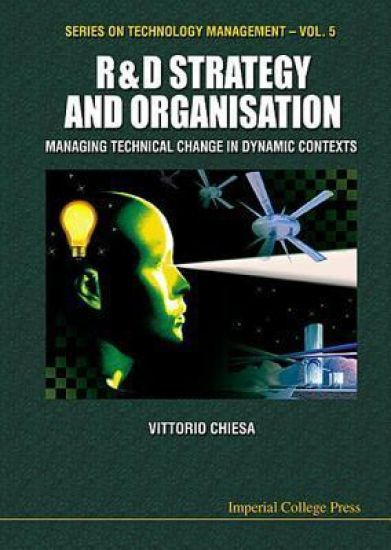
R&d Strategy & Organisation: Managing Technical Change In Dynamic Contexts
This book deals with key issues and trade-offs in R&D strategy and organisation, paying attention especially to dynamic competitive contexts where technology plays a key role. These topics are treated from the perspective of the decision taker, i.e. the manager who makes decisions in terms of R&D strategy and organisation. The book addresses typical problems of large firms having structured R&D and operating businesses where R&D is a source of competitive advantages. Although it focuses strongly on R&D, it sees R&D as a part (a key part) of the process of technological innovation, and therefore as an activity to be strongly and appropriately integrated with other functions to make innovation successful.This book is primarily conceived as an academic review of research topics. Therefore the main audience is composed of scholars, researchers and PhD students. However, the book can be useful for postgraduate students taking MBA electives, or students attending courses on technology management. It is also relevant to R&D managers and, more generally, people responsible for units concerned with technological innovation.
R&D Management in the Knowledge Era

R&D Management in the Knowledge Era

Springer Nature Switzerland AG
2019
sidottu
This volume explores emerging models, methods and tools in the management of research and development (R&D) in the knowledge era, with a particular focus on the challenges of the emerging technologies. The contributions are organized in five parts. Part I, Managing Emerging Technologies, provides methods and tools to understand the challenges created by the emergence of new technologies. Part II, Technology and Engineering Management Tools and Policies, explores different technology and engineering tools, including topics such as product concept development, design, selection and adoption, using technology roadmaps and bibliometrics. Part III, Technological Innovation and Entrepreneurship, explores R&D, knowledge transfer and entrepreneurial education. Part IV, Commercialization of Technological Innovations, explores the development and application of the technology transfer process which allows managers to succeed in commercializing the outcomes of R&D projects. Part V,Managing the Engineering Enterprise, explores the effect economic decision-making, leadership styles, change management and quality management have on an organization’s ability to plan and execute initiatives and projects. Research and Development has always played a critical role in the engineering and technology focused industries. In an era of big data and smart applications, knowledge has become a key enabler for R&D. Managing R&D in the knowledge era requires use of key tools and methods. However, emerging technologies pose many challenges and cause uncertainties or discontinuities, which make the task of managing R&D even more difficult. This book will examine these challenges and provide tools and methods to overcome them. Exploring such industries as automotive, healthcare, business intelligence, energy and home appliances, this book is a valuable resource for academics, scholars, professionals and leaders in innovation, R&D, technology, and engineering management.
R&D Management in the Knowledge Era

R&D Management in the Knowledge Era

Springer Nature Switzerland AG
2020
nidottu
This volume explores emerging models, methods and tools in the management of research and development (R&D) in the knowledge era, with a particular focus on the challenges of the emerging technologies. The contributions are organized in five parts. Part I, Managing Emerging Technologies, provides methods and tools to understand the challenges created by the emergence of new technologies. Part II, Technology and Engineering Management Tools and Policies, explores different technology and engineering tools, including topics such as product concept development, design, selection and adoption, using technology roadmaps and bibliometrics. Part III, Technological Innovation and Entrepreneurship, explores R&D, knowledge transfer and entrepreneurial education. Part IV, Commercialization of Technological Innovations, explores the development and application of the technology transfer process which allows managers to succeed in commercializing the outcomes of R&D projects. Part V,Managing the Engineering Enterprise, explores the effect economic decision-making, leadership styles, change management and quality management have on an organization’s ability to plan and execute initiatives and projects. Research and Development has always played a critical role in the engineering and technology focused industries. In an era of big data and smart applications, knowledge has become a key enabler for R&D. Managing R&D in the knowledge era requires use of key tools and methods. However, emerging technologies pose many challenges and cause uncertainties or discontinuities, which make the task of managing R&D even more difficult. This book will examine these challenges and provide tools and methods to overcome them. Exploring such industries as automotive, healthcare, business intelligence, energy and home appliances, this book is a valuable resource for academics, scholars, professionals and leaders in innovation, R&D, technology, and engineering management.
R&D Management and Technology Commercialization

R&D Management and Technology Commercialization

Orestis Georgiou; Mykola Maksymenko; Stephen Russo

Springer International Publishing AG
2025
sidottu
Industrial spending for research and development (R&D) initiatives is growing globally year on year, from both public and private investments. As this spending grows, so does the complexity of R&D organizations and processes. Hence, high-quality R&D management becomes increasingly important to streamline R&D processes. Intended for R&D managers and technology leaders in small, medium, and large enterprises, this book addresses questions such as how to align R&D with broader organizational needs, best practices for R&D hiring and team-building, how to select which metrics to be measured, and the process of moving a technology from the laboratory to the market.
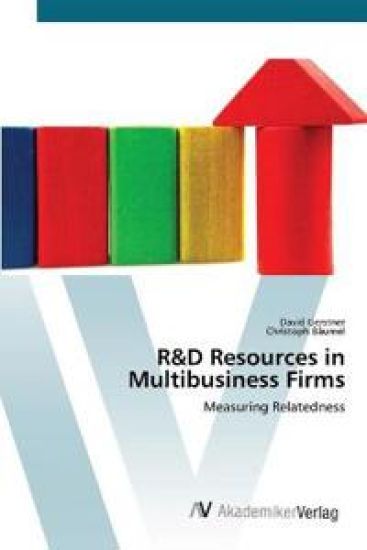
R&D Resources in Multibusiness Firms

R&D Resources in Multibusiness Firms

David Gerstner; Christoph Bäumel

AV Akademikerverlag
2012
pokkari
Revision with unchanged content. Almost half a century of diversification research supports the suggestion that related resources lead to a superior performance of multibusiness firms. Nonetheless no direct measurement concept on a complete resource base of a single business function exists up to now. This book is focusing on this gap and the understanding of R&D. Besides the core question of relatedness there are two main hypotheses developed: Is relatedness similar to the potential synergies of a resource which is tested to be significantly true while know-ledge based resources are tested not to be more important for the success of R&D than others. The results suggest that three resources are most important in terms of relatedness. These are analysed and categorised on a more de-tailed sub-level to identify the related resources of R&D units but also to high-light the degree of relatedness within these resources. The measure is able to offer one overall relatedness value that shows to what degree R&D depart-ments within a multibusiness firm are related. Hence this book offers in-teresting implications for oncoming studies on measuring relatedness, as it does for practitioners who want to measure the relatedness of R&D.
R & D, Innovation and Industrial Structure

R & D, Innovation and Industrial Structure

Boris Maurer

Physica-Verlag GmbH Co
1995
nidottu
The common topic of this collection of studies is the interaction between innova­ tive activity of firms and industrial structure. I call this interaction technological competition. Firms invest into R&D in order to open up new or enlarge existing profit opportuni­ ties for the future. A successful R&D-project leads to an innovation. An innovation introduced into the market changes the competitive structure of the industry. At the same time the structure of the industry shapes the incentives to invest into R&D. What matters for these incentives is not so much the existing structure but the expected dynamic evolution of that industry which is again dependent on the innovative choice of firms. Amongst other things, the dynamic of industry evolution is therefore rooted in the dynamics of ongoing innovative activity. Of course, this is not always the whole sto­ ry. There are (more or less) exogenous factors, like knowledge spillovers from other sectors of the economy, technological breakthroughs in basic research that directly influence the state of competition in an industry by providing additional profit op­ portunities, etc. The same is true for exogenous changes in upstream markets or demand conditions. My main interest here is not primarily to understand these exogenous forces, but to develop a theory of how the process of firms' innovative activity is shaped by competition and in turn shapes future competition between firms in an industry.
R&D Portfolio Selection Considering Risk and Project Interrelations

R&D Portfolio Selection Considering Risk and Project Interrelations

Bettina Schauer

Südwestdeutscher Verlag für Hochschulschriften AG
2015
nidottu
Evaluation of technologies from a portfolio's perspective means evaluation of a set or subset of R&D projects together and in relation to one another. Decisions have to be taken which projects should be continued, prioritised, de-prioritised or stopped. Characteristics of this process are uncertainty, changing information, multiple objectives and interrelations among projects. Thus the flexibility to react to changing situations should be incorporated into the valuation. Besides monetary issues an important aspect of R&D projects is to gain knowledge in a field that can be used for follow-up projects, product development, patents, the creation of networks, publications etc. Consequently the evaluation should not just focus on financial aspects, but also take the multi-dimensional character of R&D projects into account. In this work a model and a prototypical reference implementation of a framework for the evaluation of R&D projects is proposed, that accounts for multi-dimensional aspects and the risk of these projects. The framework allows for the selection of a portfolio of R&D projects considering limited resources, risk limits and various interrelations between the projects.