
Kirjahaku
Etsi kirjoja tekijän nimen, kirjan nimen tai ISBN:n perusteella.
1000 tulosta hakusanalla R. Edwards
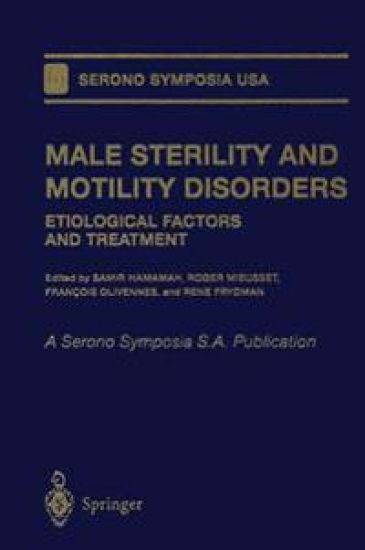
This conference, dedicated to the etiology and treatment of motility disor ders in spermatozoa and male sterility, attracted some of the finest investiga tors in the field. Standards were immensely high throughout, and discussions were meaningful and detailed. Analyses on disorders in sperm motility de mand a broad-based approach, involving cytologists, geneticists, andrologists, and embryologists, because the topic has many clinical and scientific over tones. Human spermatozoa are at the mercy of so many factors as they form and mature in the testis and epididymis. Their survival and fundamental char acteristics are essential for fertilization, and the male genome imposes its influence on the embryo as it becomes active in male pronuclei very soon after sperm entry into the oocyte. All of these fundamental aspects of sperm biology demanded a broad breadth of topics in the symposium. The opening session quickly got down to fundamentals with contributions from J.-L. Gatti, J.G. Alvarez, C. Gagnon, and H. Breitbart. They discussed the mechanism and regulation of motility, the metabolic strategy of human spermatozoa, the effects of exogenous fac tors such as antibodies, infections, and toxins, and finally the role of intracel lular calcium on sperm motility. To these topics, the postcoffee session on the first morning described the genetics of motility disorders and the etiology and management of necrozoospermia. The excellent presentation provided the background detail of the symposium and opened the way for the discus sion of various clinical aspects of the topic.
Tyzmon: The Last BladeHunter: This is Book One
R. Wesley Edwards
Createspace Independent Publishing Platform
2013
nidottu

Tyzmon: The Last BladeHunter: 6"x9"
R. Wesley Edwards
Createspace Independent Publishing Platform
2013
nidottu
The valley of the River Wye has long been famed for its natural beauty and the salmon stocks which the river supports. As one of the largest substantially unpol luted rivers in Southern Britain, the Wye, which rises in Wales and flows into England, is now of considerable significance in the strategy for conservation of freshwater habitats in the United Kingdom and is designated as a Site of Special Scientific 1 nterest by the Nature Conservancy Council (N. C. C. ). However, des pi te this scientific importance, published studies of the aquatic ecology of the river during the earlier decades of this century were principally restricted to the excellent series of articles and books on the salmon written by J. A. Hutton during the period 1912-47 and scattered records of the plants of the river banks. During this period the Fishery Board and successive organisations responsible for fisheries, also published reports describing general water quality and salmon catch statistics. In 1970 a survey was undertaken by the N. C. C. which provided the basis for the decision to give it special protected status. The Wye has been exploited as a major water source for Birmingham, through the development of reservoirs in the Elan Valley, since 1904. Further development of the capacity of the Elan catchment occurred in 1952 with the completion of the Claerwen Reservoir.

This book brings together research into the process of stream acidification and its impact on Welsh surface waters, carried out over the past decade or so. It is perhaps surprising that not until the 1980's was clear evidence of stream acidification assembled. In Wales, concerns over pollution had focused water quality sampling principally on the areas of traditional heavy industry and large urban popula tions served by inadequate sewerage systems and sewage disposal arrange ments. Mistakenly, it had been assumed that, with its prevailing westerly winds, Wales would receive precipitation substantially unpolluted by the industrial and urban emissions from Britain and mainland Europe. Assurance of the high quality of Welsh upland streams, the traditional nursery ground of salmonids, was eroded particularly by studies in the vicinity of Llyn Brianne reservoir in the catchment of the River Tywi of Central Wales. These demonstrated a clear correspondence between the biological quality and fisheries of streams in the catchment and aspects of stream chemistry, par ticularly pH, aluminium and calcium on the one hand, and catchment land use on the other. It is salutary to record that the first signals were of an inexplicable failure of the runs of migratory salmonids into the upper catchment, occupied by the Llyn Brianne reservoir and its influent streams, and the failure to restore the fishery by re-stocking with eggs and fry. Only then did the significance of the recent decline in some other upland lake and reservoir fisheries in Wales become apparent.
This book contributes to the small but growing literature on the interaction between religion and power in antiquity. Edwards focuses on the eastern 'Greek' provinces in the first and second centuries A.D. - the period during which Christianity, Judaism, and numerous other religions and cults exploded across the Roman Empire. His purpose is to show how the local elite classes appropriated and manipulated mythic and religious images and practices to establish and consolidate their social, political, and economic power. Edwards considers both archaeological and literary evidence. He examines coins, epigraphs, statuary, building complexes, mosaics, and paintings from across Asia Minor and Syria-Palestine looking for evidence of sponsorship by local elites and the meaning of such sponsorship. On the literary side, Edwards selects one representative figure from each of the three major religio-cultural traditions: the Greek writer, Chariton of Aphrodisias; the Jewish historian, Josephus; and the Christian evangelist, the author of Luke Acts. He illustrates how each writer's use of religion reflects the interaction of local elite groups with the 'web of power' that existed in political, cultural, and social spheres of the Roman Empire.
A new commentary for today's world, The Story of God Bible Commentary explains and illuminates each passage of Scripture in light of the Bible's grand story.The first commentary series to do so, SGBC offers a clear and compelling exposition of biblical texts, guiding everyday readers in how to creatively and faithfully live out the Bible in their own contexts. Its story-centric approach is ideal for pastors, students, Sunday school teachers, and laypeople alike.Each volume employs three main, easy-to-use sections designed to help readers live out God's story:LISTEN to the Story: Includes complete NIV text with references to other texts at work in each passage, encouraging the reader to hear it within the Bible's grand story.EXPLAIN the Story: Explores and illuminates each text as embedded in its canonical and historical setting.LIVE the Story: Reflects on how each text can be lived today and includes contemporary stories and illustrations to aid preachers, teachers, and students. —1 Peter—Peter shows a strong dependance upon the Old Testament to connect his readers to the story of God in which God draws people into a community. Peter demonstrates that the Christian community is to be a united people of God, not merely a group of individuals who happen to possess similar beliefs.Edited by Scot McKnight and Tremper Longman III, and written by a number of top-notch theologians, The Story of God Bible Commentary series will bring relevant, balanced, and clear-minded theological insight to any biblical education or ministry.

When You Pray: Jesus Direct Instructions On Prayer
Daimian R. Edwards
Daimian R. Edwards
2019
nidottu
We all want God to answer our prayers RIGHT? Christian author explain in detail how Jesus directly instructed us to pray to His Father, so that our prayers will be answered.
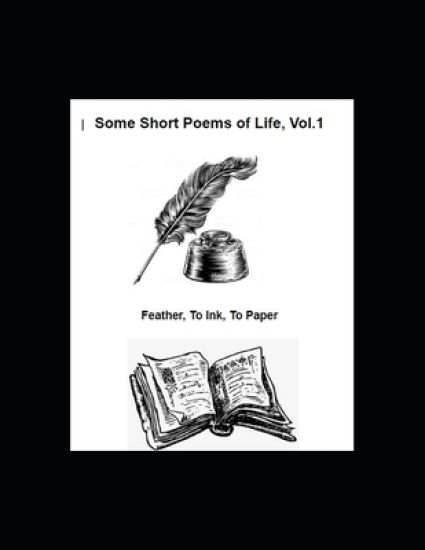
My poetry book is a collection of short poems concerning life and the changes we experience. The advantages as we travel though this thing call life. The good and sometime the uncomfortable memories and the strength we develop though change and growth. Understanding that all have changed in many different way and hopefully for the better. My poetry is intended to stimulate and relax the mind, sparking good memories of the past and the future. Hope everyone enjoy the feeling. One suggestion to you all. Take a walk smell the flowers and touch a tree all these things will set you free.

Martin Luther called Romans the clearest gospel of all. But centuries of interpretive tradition and dogma have muddied the waters. Edwards's careful exposition pays attention to literary detail and historical context to clarify the Epistle's significance for its original readers and for the church today. The NIBC format (section-by-section exposition of the NIV, all Greek transliterated, and separate textual and technical notes) make this commentary ideal for laypeople and pastors.
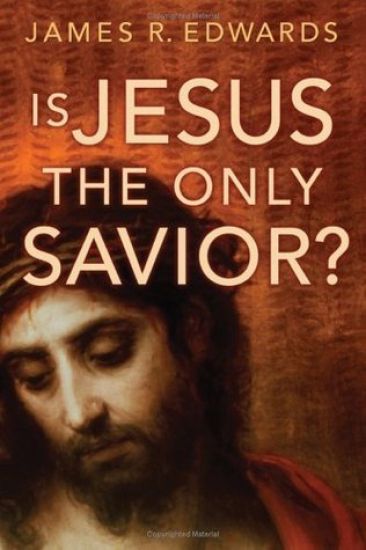
In this timely book for believers, inquirers, and skeptics alike, James R. Edwards faces head-on the question of whether or not Jesus is indeed the sole savior of the world. After tracing the currents of modernity from the Enlightenment to the Jesus Seminar, Edwards contends that the assumptions of the most skeptical historical-Jesus scholars are no more intellectually defensible than the claims of faith. He then assembles extensive support to show that Jesus considered himself the unique and saving mission of God to the world. Edwards devotes the second half of the book to discussing Jesus as savior in light of contemporary cultural currents, specifically addressing the thorny issues of religious pluralism, moral relativism, postmodernism, and the quest for world peace. Illustrated with real-life stories, "Is Jesus the Only Savior?" gives a fair hearing to twenty-first-century concerns while upholding historic Christian faith.
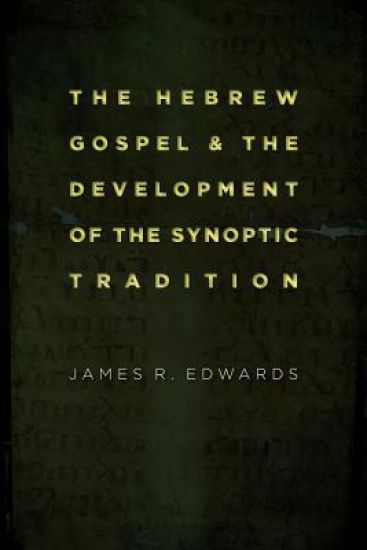
Hebrew Gospel and the Development of the Synoptic Tradition
James R. Edwards
William B Eerdmans Publishing Co
2009
nidottu
This book offers a new explanation of the development of the first three Gospels based on a careful examination of both patristic testimony to the -Hebrew Gospel- and internal evidence in the canonical Gospels themselves. James Edwards breaks new ground and challenges assumptions that have long been held in the New Testament guild but actually lack solid evidence.
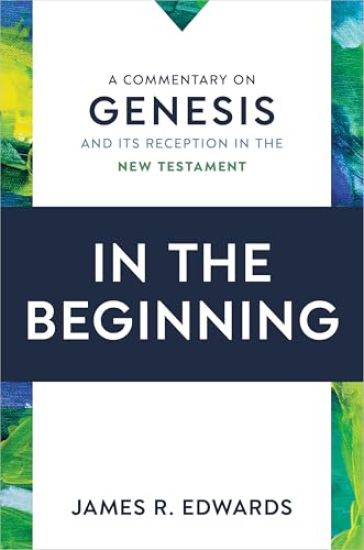
In the Beginning: A Commentary on Genesis and Its Reception in the New Testament
James R. Edwards
William B. Eerdmans Publishing Company
2026
sidottu
An innovative commentary on Genesis that illuminates the book's relationship to the rest of the biblical canon In the Beginning provides historical and critical exposition of the Hebrew text of Genesis while also explaining the book's theological significance within the biblical canon as a whole. The result is a beautifully nuanced perspective--not only of the memorable events and colorful characters within the first book of the Bible, but also of the book's place in the larger story of Scripture. For each chapter of Genesis, author James R. Edwards offers a faithful reading that includes three elements: synopsis, exegesis, and kerygma.The synopsis briefly outlines and introduces the contents of the chapter; the exegesis develops a full discussion of the history, meaning, and purpose of the chapter; and the kerygma explores the influence of the various elements of the chapter on later Jewish tradition in the Old Testament and especially on Christian tradition in the New Testament. The commentary thus attends to "the whole counsel of God" by expounding Genesis in the context of salvation history as fulfilled in the subsequent history of Israel and proclamation of the gospel of Jesus Christ in the New Testament. Distinctive for its combination of depth and breadth, In the Beginning will be a valuable resource for students, pastors, and general readers interested in the relationship between the Old and New Testaments.
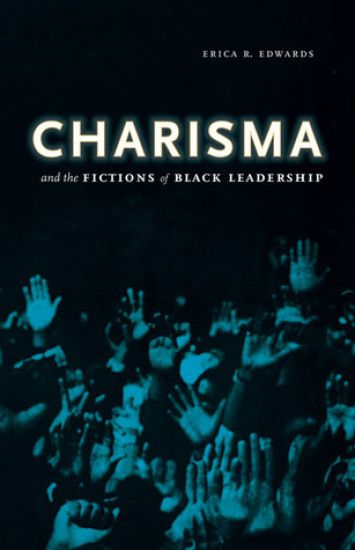
Charisma and the Fictions of Black Leadership
Erica R. Edwards
University of Minnesota Press
2012
nidottu
Social and political change is impossible in the absence of gifted male charismatic leadership-this is the fiction that shaped African American culture throughout the twentieth century. If we understand this, Erica R. Edwards tells us, we will better appreciate the dramatic variations within both the modern black freedom struggle and the black literary tradition.By considering leaders such as Marcus Garvey, Martin Luther King Jr., Malcolm X, and Barack Obama as both historical personages and narrative inventions of contemporary American culture, Edwards brings to the study of black politics the tools of intertextual narrative analysis as well as deconstruction and close reading. Examining a number of literary restagings of black leadership in African American fiction by W. E. B. Du Bois, George Schuyler, Zora Neale Hurston, William Melvin Kelley, Paul Beatty, and Toni Morrison, Edwards demonstrates how African American literature has contested charisma as a structuring fiction of modern black politics. Though recent scholarship has challenged top-down accounts of historical change, the presumption that history is made by gifted men continues to hold sway in American letters and life. This may be, Edwards shows us, because while charisma is a transformative historical phenomenon, it carries an even stronger seductive narrative power that obscures the people and methods that have created social and political shifts.
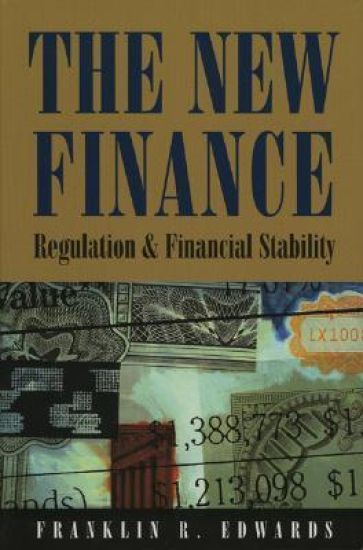
Revolutionary changes, including the shrinking of traditional banking and the expansion of trading in foreign securities, have recently rocked financial markets.