Kirjojen hintavertailu. Mukana 12 459 402 kirjaa ja 12 kauppaa.

Kirjahaku

Etsi kirjoja tekijän nimen, kirjan nimen tai ISBN:n perusteella.

1000 tulosta hakusanalla R. G. Collins

A treatise on the law of collisions at sea
This book has been considered by academicians and scholars of great significance and value to literature. This forms a part of the knowledge base for future generations. So that the book is never forgotten we have represented this book in a print format as the same form as it was originally first published. Hence any marks or annotations seen are left intentionally to preserve its true nature.
The Idea of History

The Idea of History

R. G. Collingwood

Oxford University Press
1994
nidottu
The Idea of History is the best-known work of the great Oxford philosopher, historian, and archaeologist R. G. Collingwood. Published posthumously in 1946, it examines how the idea of history has evolved from the time of Herodotus to the twentieth century, and offers Collingwood's own view of what history is. This revised edition has a substantial new introduction which discusses how scholars have responded to Collingwood's classic over the last fifty years. It also makes available for the first time some of Collingwood's lectures on the philosophy of history - essential for a fuller understanding of his thought, and in particular for the interpretation of The Idea of History itself.
The Principles of Art

The Principles of Art

R. G. Collingwood

Oxford University Press Inc
1968
nidottu
This treatise on aesthetics begins by showing that the word "art" is used as a name not only for "art proper" but also for certain things which are "art falsely so called." These are craft or skill, magic, and amusement, each of which, by confusion with art proper, generates a false aesthetic theory. In the course of attacking these theories the author criticizes various psychological theories of art, offers a new theory of magic, and reinterprets Plato's so-called "attack on art," showing that it has been entirely misunderstood. Finally, he draws important inferences concerning the position of art in human society.
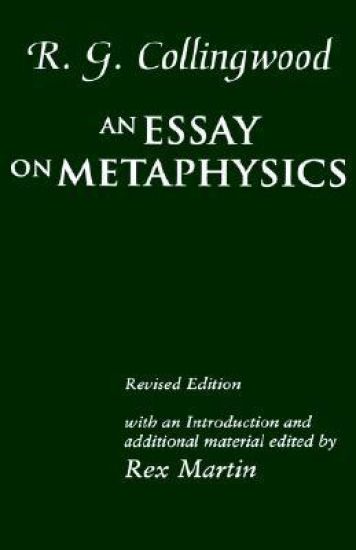
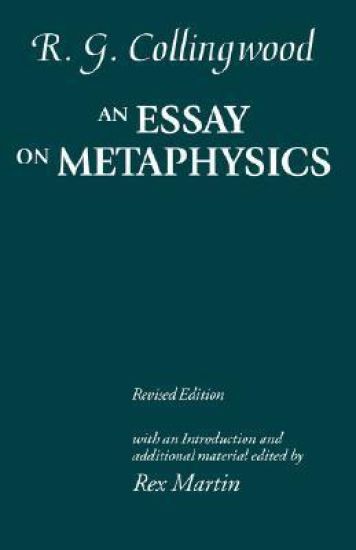
An Essay on Metaphysics

An Essay on Metaphysics

R. G. Collingwood

Clarendon Press
1998
sidottu
An Essay on Metaphysics is one of the finest works of the great Oxford philosopher, historian, and archaeologist R. G. Collingwood (1889-1943). First published in 1940, it is a broad-ranging work in which Collingwood considers the nature of philosophy, especially of metaphysics. He puts forward his well-known doctrine of absolute presuppositions, expounds a logic of question and answer, and gives an original and influential account of causation. The book has been widely read and much discussed ever since. In this revised edition the complete original text is accompanied by three previously unpublished essays by Collingwood which will be essential reading for any serious student of his thought: `The Nature of Metaphysical Study' (1934), `The Function of Metaphysics in Civilization' (1938), and `Notes for a Essay on Logic' (1939). These fascinating writings illuminate and amplify the ideas of the Essay, to which they are closely related. The distinguished philosopher and Collingwood scholar Rex Martin has established authoritative versions of these new texts, added a short set of notes on the Essay, and contributed a substantial introduction explaining the story of the composition of all these works, discussing their major themes, and setting them in the context of Collingwood's philosophy as a whole.
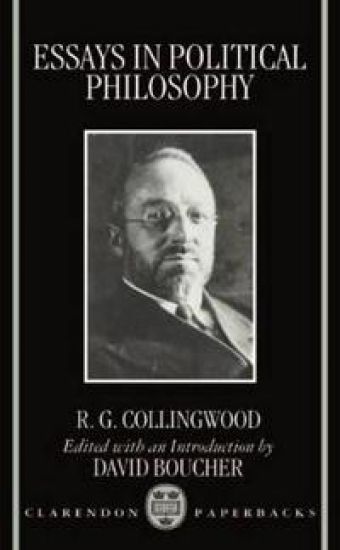
Essays in Political Philosophy

Essays in Political Philosophy

R. G. Collingwood

Clarendon Press
1995
nidottu
This book brings together for the first time R. G. Collingwood's political and related writings, in which he places political action in the context of action as a whole and addresses the substantive social and political issues - in particular Nazism and Fascism - which he perceived as a threat to European civilization. This is the first time that substantial philosophical arguments from the unpublished manuscripts have been reproduced since Malcolm Knox edited the posthumously published Idea of History.
The Principles of History

The Principles of History

R. G. Collingwood

Clarendon Press
1999
sidottu
Published here for the first time is much of a final and long-anticipated work on philosophy of history by the great Oxford philosopher and historian R. G. Collingwood (1889-1943). The original text of this uncompleted work has only recently been discovered. It is accompanied by further, shorter writings by Collingwood on historical knowledge and inquiry, selected from previously unpublished manuscripts held at the Bodleian Library, Oxford. All these writings, besides containing entirely new ideas, discuss further many of the issues which Collingwood famously raised in The Idea of History and in his Autobiography. The volume includes also two conclusions written by Collingwood for lectures which were eventually revised and published as The Idea of Nature, but which have relevance also to his philosophy of history. A lengthy editorial introduction sets these writings in their context, and discusses philosophical questions to which they give rise. The editors also consider why Collingwood left The Principles of History unfinished at his death, and what significance should be attached to the fact that it contains no reference to the idea of historical understanding as re-enactment. This volume will be a landmark publication not just in Collingwood studies but in philosophy of history generally.
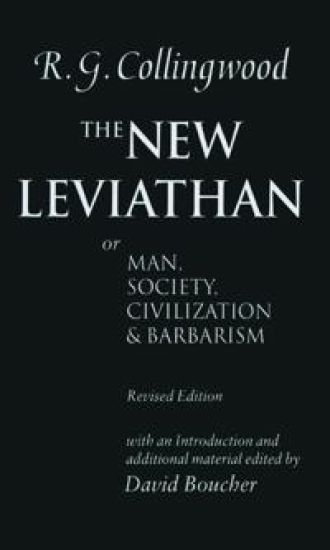
The New Leviathan

The New Leviathan

R. G. Collingwood

Clarendon Press
1999
nidottu
The New Leviathan, originally published in 1942, a few months before the author's death, is the book which R. G. Collingwood chose to write in preference to completing his life's work on the philosophy of history. It was occasioned by the Second World War and the threat which Nazism and Fascism constituted to civlization. The book draws upon many years of work in moral and political philosophy and attempts to establish the multiple and complex connections between the levels of consciousness, society, civilization, and barbarism. Collingwood argues that traditional social contract theory has failed to account for the continuing existence of the non-social community and its relation to the social community in the body politic. He is also critical of the tendency within ethics to confound right and duty. The publication of 120 pages of additional manuscript material in this revised edition demonstrates in more detail how Collingwood was determined to show that right and duty occupy different levels of rational practical consciousness. The additional writings also contain Collingwood's unequivocal rejection of relativism. David Boucher's introduction shows that The New Leviathan and The Idea of History are integrally related and that neither can be properly understood independently of the other. He is also concerned to show how many of Collingwood's ideas have a contemporary relevance, and that his ideas on barbarism are not so unusual as they might at first appear. 'A strange and fascinating book . . . The publication of this handsome new edition of The New Leviathan . . . is a welcome event.' Political Studies 'In his respectful and informative introduction David Boucher shows how The New Leviathan and the additional material appended to it fit in with Collingwood's thought as a whole.' History of Political Thought 'Throughout, the Introduction displays Boucher's usual mastery of the material, serious and probing approach, and judicious appraisal.' Collingwood Studies
The New Leviathan

The New Leviathan

R. G. Collingwood

Clarendon Press
1992
sidottu
The New Leviathan, originally published in 1942, a few months before the author's death, is the book which R. G. Collingwood chose to write in preference to completing his life's work on the philosophy of history. It was a reaction to the Second World War and the threat which Nazism and Fascism constituted to civilization. The book draws upon many years of work in moral and political philosophy and attempts to establish the multiple and complex connections between the levels of consciousness, society, civilization, and barbarism. Collingwood argues that traditional social contract theory has failed to account for the continuing existence of the non-social community and its relation to the social community in the body politic. He is also critical of the tendency within ethics to confound right and duty. The publication of additional manuscript material in this revised edition demonstrates in more detail how Collingwood was determined to show that right and duty occupy different levels of rational practical consciousness. The additional material also contains Collingwood's unequivocal rejection of relativism. David Boucher's introduction shows that The New Leviathan and The Idea of History are integrally related and that neither can be properly understood independently of the other. He is also concerned to show how many of Collingwood's ideas have a contemporary relevance, and that his ideas on barbarism are not so unusual as they might at first appear.
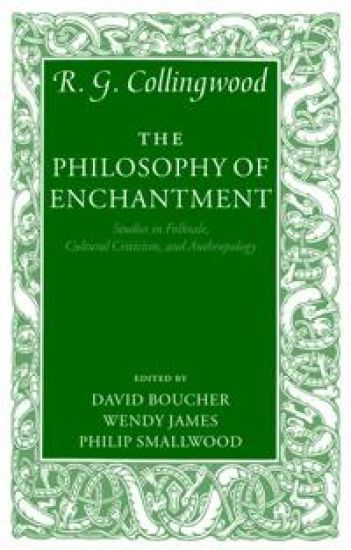
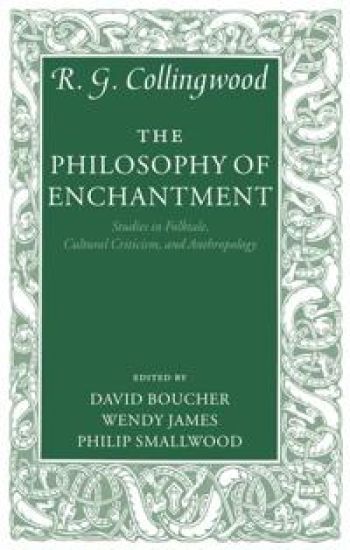
The Philosophy of Enchantment

The Philosophy of Enchantment

R. G. Collingwood

Oxford University Press
2007
nidottu
This is the long-awaited publication of a set of writings by the British philosopher, historian, and archaeologist R. G. Collingwood on critical, anthropological, and cultural themes only hinted at in his previously available work. At the centre of the book are six chapters of a study of folktale and magic, composed by Collingwood in the mid-1930s and intended for development into a book. Here Collingwood applies the principles of his philosophy of history to problems in the long-term evolution of human society and culture. This is preceded, in Part I, by a range of contextualizing material on such topics as the relations between music and poetry, the nature of language, the value of Jane Austen's novels, the philosophy of art, and the relations between aesthetic theory and artistic practice. Part III of the volume consists of two essays, one on the relationship between art and mechanized civilization, and the second, written in 1931, on the collapse of human values and civilization leading up to the catastrophe of armed conflict. These offer a devastating analysis of the consequences that attend the desertion of liberal principles, indeed of all politics as such, in the ultimate self-annihilation of military conquest. The volume opens with three substantial introductory essays by the editors, authorities in the fields of critical and literary history, social and cultural anthropology, and the philosophy of history and the history of ideas; they provide their explanatory and contextual notes to guide the reader through the texts. The Philosophy of Enchantment brings hitherto unrecognized areas of Collingwood's achievement to light, and demonstrates the broad range of Collingwood's intellectual engagements, their integration, and their relevance to current areas of debate in the fields of philosophy, cultural studies, social and literary history, and anthropology.
An Essay on Metaphysics

An Essay on Metaphysics

R. G. Collingwood

Clarendon Press
2002
nidottu
An Essay on Metaphysics is one of the finest works of the great Oxford philosopher, historian, and archaeologist R. G. Collingwood (1889-1943). First published in 1940, it is a broad-ranging work in which Collingwood considers the nature of philosophy, especially of metaphysics. He puts forward his well-known doctrine of absolute presuppositions, expounds a logic of question and answer, and gives an original and influential account of causation. The book has been widely read and much discussed ever since. In this new edition the complete original text is accompanied by three previously unpublished essays by Collingwood which will be essential reading for any serious student of his thought: 'The Nature of Metaphysical Study' (1934), 'Function of Metaphysics in Civilization' (1938), and 'Notes for an Essay on Logic' (1939). These fascinating writings illuminate and amplify the ideas of the Essay, to which they are closely related. The distinguished philosopher and Collingwood scholar Rex Martin has established authoritative versions of these new texts, added a short set of notes on the Essay, and contributed a substantial introduction explaining the story of the composition of all these works, discussing their major themes, and setting them in the context of Collingwood's philosophy as a whole.
The Principles of History

The Principles of History

R. G. Collingwood

Clarendon Press
2001
nidottu
This work on the philosophy of history, by the Oxford philosopher, historian, and archaeologist R. G. Collingwood (1889-1943) also includes two conclusions written by Collingwood for lectures which were eventually revised and published as "The Idea of Nature".
The Philosophy of Enchantment

The Philosophy of Enchantment

R. G. Collingwood

Clarendon Press
2004
sidottu
This is the long-awaited publication of a set of writings by the British philosopher, historian, and archaeologist R.G. Collingwood on critical, anthropological, and cultural themes only hinted at in his previously available work. At the centre of the book are six chapters of a study of folktale and magic, composed by Collingwood in the mid-1930s and intended for development into a book. Here Collingwood applies the principles of his philosophy of history to problems in the long-term evolution of human society and culture. This is preceded, in Part I, by a range of contextualizing material on such topics as the relations between music and poetry, the nature of language, the value of Jane Austen's novels, the philosophy of art, and the relations between aesthetic theory and artistic practice. Part III of the volume consists of two essays, one on the relationship between art and mechanized civilization, and the second, written in 1931, on the collapse of human values and civilization leading up to the catastrophe of armed conflict. These offer a devastating analysis of the consequences that attend the desertion of liberal principles, indeed of all politics as such, in the ultimate self-annihilation of military conquest. The volume opens with three substantial introductory essays by the editors, authorities in the fields of critical and literary history, social and cultural anthropology, and the philosophy of history and the history of ideas; they provide their explanatory and contextual notes to guide the reader through the texts. The Philosophy of Enchantment brings hitherto unrecognized areas of Collingwood's achievement to light, and demonstrates the broad range of Collingwood's intellectual engagements, their integration, and their relevance to current areas of debate in the fields of philosophy, cultural studies, social and literary history, and anthropology.

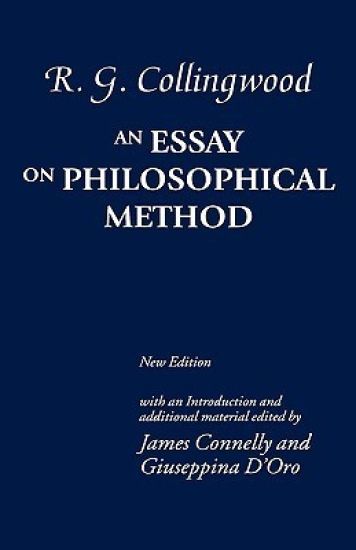
An Essay on Philosophical Method

An Essay on Philosophical Method

R. G. Collingwood

Clarendon Press
2005
sidottu
James Connelly and Giuseppina D'Oro present a new edition of R. G. Collingwood's classic work of 1933, supplementing the original text with important related writings from Collingwood's manuscripts which appear here for the first time. The editors also contribute a substantial new introduction. The volume will be welcomed by all historians of twentieth-century philosophy.
An Essay on Philosophical Method

An Essay on Philosophical Method

R. G. Collingwood

Oxford University Press
2008
nidottu
An Essay on Philosophical Method contains the most sustained discussion in the twentieth century of the subject matter and method of philosophy and an unparalleled explanation of why philosophy has a distinctive domain of enquiry that differs from that of the sciences of nature. This new edition of the Essay focuses on Collingwood's contribution to metaphilosophy and locates his argument for the autonomy of philosophy against the twentieth century trend to naturalize its subject matter. Collingwood argues that the distinctions which philosophers make, for example, between the concepts of duty and utility in moral philosophy, or between the concepts of mind and body in the philosophy of mind, are not empirical taxonomies that cut nature at the joints but semantic distinctions to which there may correspond no empirical classes. This identification of philosophical distinctions with semantic distinctions provides the basis for an argument against the naturalization of the subject matter of philosophy for it entails that not all concepts are empirical concepts and not all classifications are empirical classifications. Collingwood's explanation of why philosophy has a distinctive subject matter thus constitutes a clear challenge to the project of radical empiricism. Whilst not losing sight of its historical context, the introduction to this new edition seeks to locate Collingwood's account of philosophical method against the background of contemporary concerns about the fate of philosophy in the age of science. This volume also contains a substantial amount of previously unpublished material: 'The Metaphysics of F. H. Bradley', 'Method and Metaphysics', and Collingwood's fascinating correspondence with Gilbert Ryle. The latter will prove to be a mine of information for anyone interested in the origins of analytic philosophy.
Roman Britain and the English Settlements

Roman Britain and the English Settlements

R. G. (Robin George) 18 Collingwood

Hassell Street Press
2021
sidottu
This work has been selected by scholars as being culturally important and is part of the knowledge base of civilization as we know it.This work is in the public domain in the United States of America, and possibly other nations. Within the United States, you may freely copy and distribute this work, as no entity (individual or corporate) has a copyright on the body of the work.Scholars believe, and we concur, that this work is important enough to be preserved, reproduced, and made generally available to the public. To ensure a quality reading experience, this work has been proofread and republished using a format that seamlessly blends the original graphical elements with text in an easy-to-read typeface.We appreciate your support of the preservation process, and thank you for being an important part of keeping this knowledge alive and relevant.