Kirjojen hintavertailu. Mukana 11 244 527 kirjaa ja 12 kauppaa.

Kirjahaku

Etsi kirjoja tekijän nimen, kirjan nimen tai ISBN:n perusteella.

1000 tulosta hakusanalla RICHARD EDW DENNETT

Richard Strauss's Elektra

Richard Strauss's Elektra

Bryan Gilliam

Clarendon Press
1996
nidottu
Elektra was the fourth of fifteen operas by Strauss and opened his successful partnership with the librettist Hugo von Hofmannsthal. It is one of the most important operas of the early twentieth century and it solidified Strauss's status as the leading German opera-composer of his day.Bryan Gilliam's study of this major work examines its musical-historical context and also provides a detailed analysis of some of its musical features. He establishes a chronology of the evolution of the opera and places it in the larger framework of German opera of the time. His detailed examination of the sketch-books enables him to offer fresh insight into Strauss's use of motifs and overall tonal structure. In so doing he shows how the work's arresting dissonance and chromaticism has hiddenits similarities to his later, seemingly more tonally conservative opera, Der Rosenkavalier - not only does Strauss in both operas exploit a variety of musical styles to express irony, parody, and other emotions, but both are in fact thoroughly tonal.
The Poems and Translations of Sir Richard Fanshawe: The Poems and Translations of Sir Richard Fanshawe Volume II
This volume completes the first edition of the collected works of the early modern poet and translator Sir Richard Fanshawe, and contains Fanshawe's translation of The Lusiad of Camoes, the single work which affirms his importance in the history of translation. The translation of the Baroque play Querer por solo Querer from the court of Philip IV of Spain is also given, as is Fanshawe's Latin rendering of parts of The Lusiad, discovered by the present editor and here printed for the first time. As in Volume I, copy texts for The Lusiads and Querer por solo Querer are manually-corrected printed texts with provenances in Fanshawe's family and immediate circle, thus representing the works in a form which is as close as possible to Fanshawe's final intentions. The Specimen rerum a Lusitanis is taken from a presentation manuscript compiled under Fanshawe's direction. This volume also features an an expert essay on the translation of Camoes, contributed by Professor Roger Walker.
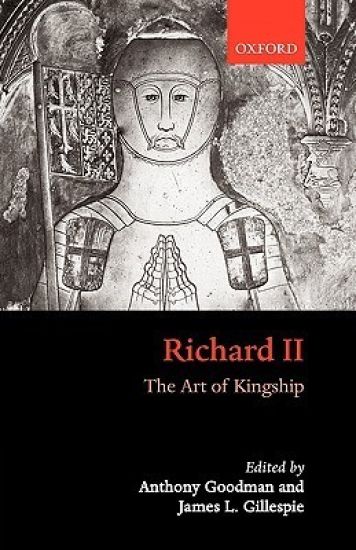
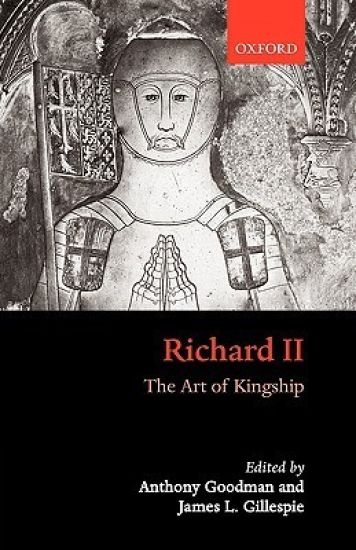
Richard II: The Art of Kingship
The re-assessment of the character and practice of medieval kingship is a lively academic subject. In the context of the later Middle Ages, interest has been focused on aspects of the subject such as discourse on the nature and purpose of rule, the conventions of co-operation between kings and communities, monarchy as spectacle, cultural expression of royal personality, and the fiscal basis of government. These are among the subject areas emphasised by the contributors to this re-assessment of Richard II. The contributors produce a rounded picture of his personality and rule by examining his contemporary reputation and key aspects of his policies. This study highlights the seriousness of the convergent problems affecting the exercise and of English kingship, and illuminates why the traditional and innovative panaceas attempted by a conventionally-minded prince resulted in his downfall. It is a study which positions the reign within the evolution of English kinship.
The Parliamentary Diary of Sir Richard Cocks 1698-1702

The Parliamentary Diary of Sir Richard Cocks 1698-1702

Richard Cocks

Oxford University Press
1996
sidottu
Sir Richard Cocks, a Gloucestershire country gentleman, was a new and enthusiastic member of the Parliament which began in 1698. His diary is the only substantial parliamentary diary yet to have been discovered between Narcissus Luttrell and Anchitell Grey's reports of debates in the early 1690s and Sir Edward Knatchbull's in the 1720s. It covers the four parliamentary sessions of 1698-1702, in which vital questions of state were decided and significant developments took place in the evolution of English party politics. Cocks showed keen appreciation of the drama and significance of the events of which he was a witness and his diary offers a unique insight into events in the Commons. Unlike other diarists, he also showed a keen interest in the details of parliamentary procedure. This important journal, previously unpublished, has now been meticulously edited by D. W. Hayton. Fully annotated, with a detailed introduction and appendices, it is a major source for the political and parliamentary history of the period.
Richard Cantillon

Richard Cantillon

Antoin E. Murphy

Clarendon Press
1987
sidottu
This is a study of Irish-born Richard Cantillon, eighteenth century banker and economist whose Essai sur la Nature du Commerce en General (1755), published twenty-one years after his death, remains a significant contribution to the development of monetary theory. Cantillon's life was an exciting story of involvement in high-level international banking, and speculation in foreign exchanges, commodities and stocks at the time of the South Sea Bubble. His death occurred in mysterious circumstances.
Richard Cantillon

Richard Cantillon

Antoin E. Murphy

Oxford University Press
2018
nidottu
This is a study of Irish-born Richard Cantillon, eighteenth century banker and economist whose Essai sur la Nature du Commerce en General (1755), published twenty-one years after his death, remains a significant contribution to the development of monetary theory. Cantillon's life was an exciting story of involvement in high-level international banking, and speculation in foreign exchanges, commodities and stocks at the time of the South Sea Bubble. His death occurred in mysterious circumstances.
Richard Baxter: Reliquiæ Baxterianæ
Richard Baxter's Reliquiæ Baxterianæ (1696) is a key text for early modern historical, ecclesiastical, cultural, literary, and bibliographical studies but in its original printed form it is textually defective in a number of ways and, lacking structural coherence or adequate indexes, the wealth of historical data and immediately observed experiences during the Civil Wars, Interregnum, and Restoration period in its 800 pages are very difficult to access. It is similarly challenging to follow the compelling case that Baxter mounts to vindicate moderate Puritanism against the misrepresentations of the prevailing royalist narratives published in the later seventeenth-century, culminating in Clarendon's History of the Rebellion. No other work from the period articulates so fully this much maligned tradition, and no other example of life writing so fully explores the relationship between public affairs and personal spiritual and emotional experience. The result is not only a unique primary source but also a fascinating combination of autobiography, historiography, and apologetic in a work crucial to our understanding of the development of modern narrative genres. This edition, prepared by an international team of early modern scholars and based on Baxter's autograph manuscript where this is extant, for the first time makes this unique work available in a reliable text with a full supporting apparatus. This apparatus includes: extensive general and textual introductions; explanatory commentary and textual notes; supporting documentation, much of it never before published; a detailed chronology; an expository linguistic and historical glossary; the fullest available bibliography of Baxter 140 or so published titles, whose occasion and publication are a recurrent topic in the text; and four indexes.
Richard II

Richard II

William Shakespeare

Oxford University Press
2025
nidottu
'For God's sake, let us sit upon the ground, And tell sad stories of the death of kings' Crowned as a child, Richard II only knows power. The King's court tire of his fickle, greedy reign, but it is only when he exiles his own cousin, Henry Bolingbroke, and attempts to steal his inheritance that they are pushed to act. What follows threatens Richard's crown and with it his sense of self. Shakespeare's most tragic history play uses the rich and messy familial web of monarchy to explore what it means to crave power, to hold it, to fight to take it, and to lose it. Richard II is Shakespeare's most human and tragic history play, a story about the ways power distorts a ruler's sense of self. The New Oxford Shakespeare offers authoritative editions of Shakespeare's works with introductory materials designed to encourage new interpretations of the plays and poems. Using the text from the landmark The New Oxford Shakespeare Complete Works: Modern Critical Edition, these volumes offer readers the latest thinking on the authentic texts (collated from all surviving original versions of Shakespeare's work) alongside innovative introductions from leading scholars. The texts are accompanied by a comprehensive set of critical apparatus to give readers the best resources to help understand and enjoy Shakespeare's work. ABOUT THE SERIES: For over 100 years Oxford World's Classics has made available the widest range of literature from around the globe. Each affordable volume reflects Oxford's commitment to scholarship, providing the most accurate text plus a wealth of other valuable features, including expert introductions by leading authorities, helpful notes to clarify the text, up-to-date bibliographies for further study, and much more.
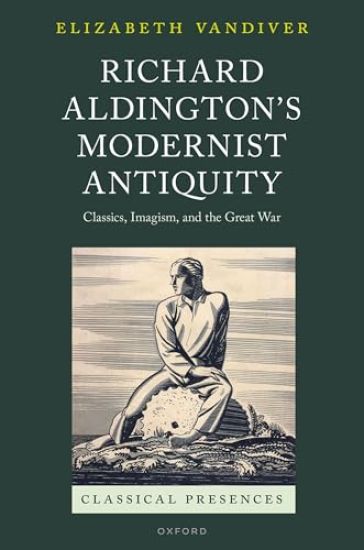
Richard Aldington's Modernist Antiquity

Richard Aldington's Modernist Antiquity

Elizabeth Vandiver

Oxford University Press
2026
sidottu
This book examines the importance of Classics and classical reception in the poetry, novels, translations, essays, and letters of Richard Aldington (1892-1962). The book has a double focus: first, to demonstrate the ubiquity of Classics in Aldington's writings from around 1910 to 1933 and explore the crucial role of classical receptions in his thought and his work, and second, to re-evaluate Aldington's importance in the history of Modernism in English literature in the 1910s and 1920s, and thus also to highlight the centrality of his classical receptions for the Modernist project. Aldington was a key figure in the English literary world of the 1910s and 1920s. He was one of the three founders of the Imagist movement (along with Ezra Pound and H.D.) in 1912; he advocated a style of translation that was a forerunner of Modernist translational practice; he was recognized as a significant war poet during and immediately after the First World War; and his Modernist war novel Death of a Hero (1929) was widely read and admired. In all these areas, Aldington was a central player in the development of Modernism. Nevertheless, despite an increase of critical interest in Aldington in the last few years, his importance has been generally under-recognized in literary histories of the 1910s and 1920s. This book counters that neglect by surveying Aldington's involvement in the literary culture of London during the 1910s and 1920s and by demonstrating the significance of his work as poet and critic for Imagist theory, Modernist approaches to translation, and Modernism in general. Throughout, the book establishes that Classics was crucially important for Aldington's writing in various genres, including the novels that formed the bulk of his creative output from 1929 onward, as well as for his poetry. The book includes detailed readings of many of Aldington's original poems and translations and contextualizes them through excerpts from his essays, reviews, and letters. In addition to discussing Aldington's published work, the book draws heavily on archival resources, including unpublished letters, translations, essays, prints, and poems, making many significant texts available to readers for the first time.
Richard Barnfield and Queer Classicism in Elizabethan England

Richard Barnfield and Queer Classicism in Elizabethan England

Massimiliano Riviera

Oxford University Press
2026
sidottu
Richard Barnfield and Queer Classicism in Elizabethan England offers a comprehensive reappraisal of the work of Richard Barnfield, the Elizabethan writer who authored homoerotic and pastoral poetry during the last decade of the sixteenth century. While Barnfield has often been dismissed as an imitative poet, this book sheds new light on Barnfield's imaginative engagement with classical and contemporary texts, presenting him as a subtly subversive poet who consistently inhabits poetical models, genres, and tropes only to disrupt them from within. Reading Barnfield's oeuvre against the backdrop of his cultural environment and his education, this work unveils the poet's deconstructive practices and his ironic--but deeply knowledgeable--engagement with the classics, often used as a tool to subvert self-serving and exemplary interpretations of texts from classical antiquity as taught by contemporary grammar schools. This monograph argues that the works of Barnfield reveal a sophisticated understanding of contemporary poetical models and practices, which he mimics while also upending their usual poetic force: the poet that emerges from this study is not just sexually non-conformist, but also ironically subversive in his approach to institutions such as the education system and the monarchy, sceptical in his use of poetic tropes, and imaginative in his engagement with the classical tradition.
Richard Dawkins

Richard Dawkins

Oxford University Press
2007
nidottu
Published to coincide with the 30th anniversary of The Selfish Gene, this sparkling collection explores the impact of Richard Dawkins as scientist, rationalist, and one of the most important thinkers alive today. Specially commissioned pieces by leading figures in science, philosophy, literature, and the media, such as Daniel C. Dennett, Matt Ridley, Steven Pinker, Philip Pullman, and the Bishop of Oxford, highlight the breadth and range of Dawkins' influence on modern science and culture, from the gene's eye view of evolution to his energetic engagement in public debates on science, rationalism, and religion. This volume, which includes personal reminiscences and critical debate, as well as accessible discussions of science, is a stimulating tribute to a remarkable intellectual, written by some of the finest writers and scientists working today.
Richard Hooker and Anglican Moral Theology

Richard Hooker and Anglican Moral Theology

A.J. Joyce

Oxford University Press
2012
sidottu
Richard Hooker (1554-1600) is often credited with being the founding father of Anglican moral theology. This book is the first major study to examine in depth the extent to which this claim is justified, and to evaluate the nature of Hooker's contribution to this aspect of Anglican tradition. The study roots Hooker firmly within his own historical context and considers his text principally on its own terms; thus it avoids many of the problems that have bedevilled modern Hooker scholarship, particularly where attempts have been made to 'claim' him for one particular theological tradition over another, or to approach his work primarily with an eye to its continued relevance to contemporary debate within Anglicanism, both of which can lead to significant distortions in the way in which Hooker is read and interpreted. What emerges amounts to a significant re-evaluation of much of the conventional wisdom about Hooker's place within Anglicanism, as well as a range of original insights into the nature, content, and style of his work and its wider significance.
Richard Rolle

Richard Rolle

Oxford University Press
2007
sidottu
This volume presents a variety of mainly unpublished texts relating to the Yorkshire hermit, Richard Rolle. It contains a number of texts primarily by Rolle, but omitted from the earlier title in this series (293), Richard Rolle: Prose and Verse (1988), including a new edition of Rolle's English lyrics, based upon a critical examination of all known manuscript witnesses. Three previously unpublished texts are included here because they were ascribedto Rolle in the Middle Ages. There are good grounds for considering one, a commentary on the lessons from the Office of the Dead, to be authentic Rolle, and the editor argues that the second, "Of thre wyrkyngs in mans saul", is probably so. The edition concludes with three unpublished Northern texts which, though anonymous, are devoted to the eremitical life. Ralph Hanna is Professor of Palaeography at the University of Oxford, and Tutorial Fellow in English at Keble College.
Richard Hooker and Reformed Theology

Richard Hooker and Reformed Theology

Nigel Voak

Oxford University Press
2003
sidottu
Richard Hooker (1554-1600) has traditionally been seen as the first systematic defender of an Anglican via media between Rome and Geneva. Revisionists have argued recently, however, that Hooker was in fact a thoroughly Reformed theologian. Dr Voak takes issue with this interpretation, arguing that Hooker over time became highly critical of numerous Reformed positions. Beginning with philosophical principles underlying Hooker's theology (e.g. free will, resistibility of grace), the book then considers issues such as original sin, justification and sanctification, merit and the religious authority of scripture, reason, and tradition. Finally, Hooker's late manuscripts are examined, in which he defends himself from the charge of heresy.
Richard II

Richard II

Oxford University Press
2003
nidottu
In this reassessment of Richard II, an outstanding group of international contributors re-evaluates the (frequently biased) evidence to create a new and rounded portrait of this fascinating and much maligned king. They investigate Richard's contemporary reputation and key aspects of his policies, covering topics which include: the conventions of co-operation between kings and communities; discourse on the nature and purpose of rule; monarchy as spectacle; the cultural expression of royal personality; and the fiscal basis of government. They highlight the seriousness of the problems affecting the exercise of kingship, and show how the traditional and innovative panaceas attempted by a conventionally-minded prince resulted in his downfall. It is a study which repositions the reign within he evolution of English kingship.