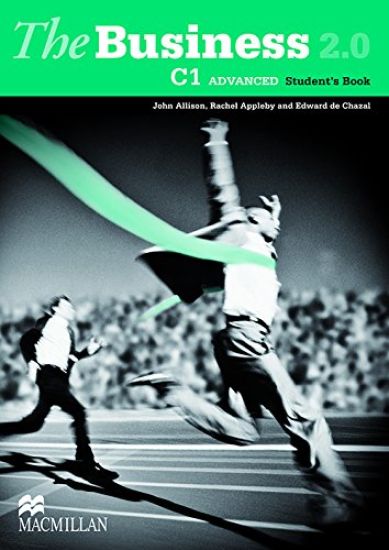
Based on the success of the original edition, The Business 2.0 continues to offer Business English students the confidence, language and fundamentals skills they need to succeed in the competitive international business environment. Based on feedback from users, research into business English studies and the ever-evolving needs of employers The Business 2.0 has been improved in a number of ways. There is a strong focus on the 'intangible' business skills - emotional intelligence and interpersonal abilities. So not only is the student prepared with the business language and knowledge but also as a well-rounded and receptive approach to dealing professionally with others. The Business eWorkbook - an integral part of the course on a personal computer or laptop. This includes extra language practice, tests and word lists, and audio and video you can download to a tablet, phone or MP3 player for on-the-go learning. This replaces the DVD-ROM from the first edition and new videos for the Advanced and Upper Intermediate level offer good/bad models for the final speaking task, including commentaries by a communications expert. This content is also available for use on a Learner Management System such as Moodle or Blackboard. This is a compact course that makes the most of new media to ensure the package is relevant for both students and teachers. Key Features / What's New - Business fundamentals - an introduction to business with language and topics including: business organization, financial control, CVs and covering letters. - Transparent business links - each module is clearly linked to either: Personal development, Service, Supply chain, Management, Sales and marketing, Enterprise, Finance, International trade - Focus on interpersonal skills - the best professionals are those with great emotional intelligence. Special speaking tasks and the case studies focus on this delicate but vital '5th skill'. - Flexible approach - the modular structure allows you to dip in and out, covering the basics or focusing on speaking or writing. This is the course you can make your own. - The Business eWorkbook - a cutting-edge self-study program to support the course with videos, extra practice and downloadables. - Builds up strength in four key areas: Language Skills: New Technologies: Business Skills: People /interpersonal skills - More communicative grammar in context
With a growing population, rising housing costs and housing providers struggling to meet demand for affordable accommodation, more and more people in the UK find themselves sharing their living spaces with people from outside of their families at some point in their lives.Focusing on sharers in a wide variety of contexts and at all stages of the life course, Shared Housing, Shared Lives demonstrates how personal relationships are the key to whether shared living arrangements falter or flourish. Indeed, this book demonstrates how issues such as finances, domestic space and daily routines are all factors which can impact upon personal relationships and wider understandings of the home and privacy. By directing attention towards people and relationships rather than bricks and mortar, Shared Housing, Shared Lives is essential reading for students and researchers in fields such as sociology, housing studies, social policy, cultural anthropology and demography, as well as for researchers and practitioners working in these areas
Praise for Transformative Conversations "In the 'superstorm' of writings about the crisis in higher education this little gem of a book stands out like a mindfulness bell. It calls us back to the only thing that truly matters?the energy and wisdom buried in the minds and hearts of dedicated educators." ?Diana Chapman Walsh, president emerita, Wellesley College; trustee emerita, Amherst College; member of the MIT Corporation "This book is revolutionary! It is about transforming the very essence of higher education through the power of authentic conversation, knowing that as the people within the institution evolve, the institution will transform." ?Patricia and Craig Neal, The Art of Convening: Authentic Engagement in Meetings, Gatherings, and Conversations; founders, Heartland Inc. "This is a radical story about how to create a more intimate and relational culture inside the halls of higher education.... for those who long for higher education to return from the abyss of siloed isolation to its original charter as a cooperative learning institution committed to developing the whole person in service of the common good." ?Peter Block, Flawless Consulting and Abundant Community Transformative Conversations offers guidance to help readers create and sustain Formation Mentoring Communities, where faculty, staff, and administrators can speak openly and honestly to the heart of their work as educators and human beings.
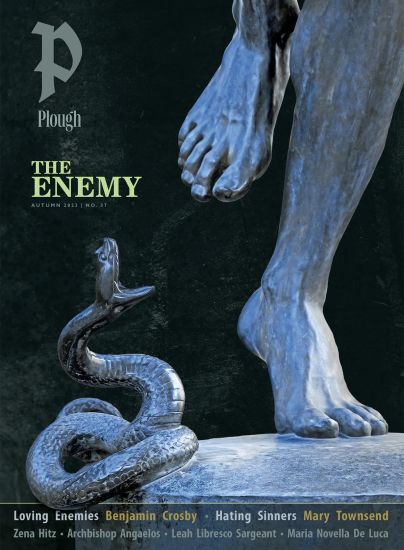
Benjamin Crosby; Archbishop Angaelos; Zena Hitz; Leah Libresco Sargeant; Nathan Beacom; Susannah Black Roberts; Mary Townsend; Sarah Clarkson; Antoine E. Davis; Aaron Edward Olson; Maria Novella De Luca; Rachel Cañon Naffziger; Stephen Edgar; Oddny Gumaer; Kathleen A. Mulhern
What should we do with enemies?Jesus challenges us to love our enemies. In today’s swirl of hatemongering, political polarization, and online nastiness, even Christians have skirted this command or given it up as impossible or foolish. What does it really mean to love our enemies? And how might our lives and our world change if we did? In this issue we apply these tough questions to real situations, and hear from people who have put this command into practice in some of the toughest circumstances.On this theme: - Can we afford to love our enemies in a cancel culture?- What sort of enemies did Jesus expect us to love? - The problem with "love the sinner, hate the sin"- Channeling outrage while working with children displaced by war- What Coptic Christians know about praying for their persecutors- Two incarcerated friends defy a racist prison culture.- What about mental illness, when your mind becomes your enemy? - Students find ways to debate tough issues constructively.- A Russian Christian speaks out against the war in Ukraine.Also in the issue:- Maria Novella De Luca photographs Algerian women demining the Sahara.- Dana Wiser remembers civil rights activist Staughton Lynd.- Zena Hitz asks what we’d do with our time if we weren’t so busy.- Kathleen A. Mulhern gives advice for keeping the faith afterhours.- Susannah Black Roberts celebrates the life and example of Tim Keller.- Nathan Beacom call for reestablishing Lyceums in working-class towns.- Maureen swinger recounts the exploits of Monsignor Hugh O’Flaherty.Plough Quarterly features stories, ideas, and culture for people eager to apply their faith to the challenges we face. Each issue includes in-depth articles, interviews, poetry, book reviews, and art.
Torn from her mother soon after she was born, lost to a world of deprivation and poverty, she grew up hard and fast, using any means necessary to escape from her broken childhood. Rachel became a product of her environment: a tenacious, spirited, forthright young woman with a sharp mind and a mission to accomplish. Armed only with a faded photograph, she embarks on a quest to reunite herself with her mother and leave the world of prostitution behind her once and for all. When she discovers there is more to her family than expected, Rachel is dragged back into a world of drugs, crime and murder. Although not unfamiliar with the criminal underworld, it's a place to which she would rather not return. Unfortunately for Rachel, she's in it up to her neck. Contains Adult content
Rachel's journey from Chipola Roads, the rural community in northwest Florida where she was born in the mid-ninteen-twenties, was so much further than the few miles it took to arrive in the small town where the highschool was located Her naC/ve approach to life was a result of her plain-spoken, down to earth poor farm family's upbringing, where life's rules came mostly from their understanding of the Good Book as handed down to them.