Kirjojen hintavertailu. Mukana 11 517 406 kirjaa ja 12 kauppaa.

Kirjahaku

Etsi kirjoja tekijän nimen, kirjan nimen tai ISBN:n perusteella.

1000 tulosta hakusanalla Rahul Mukherjee

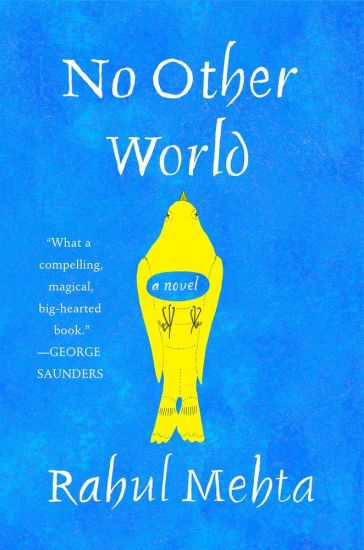
No Other World

No Other World

Rahul Mehta

Harper
2017
sidottu
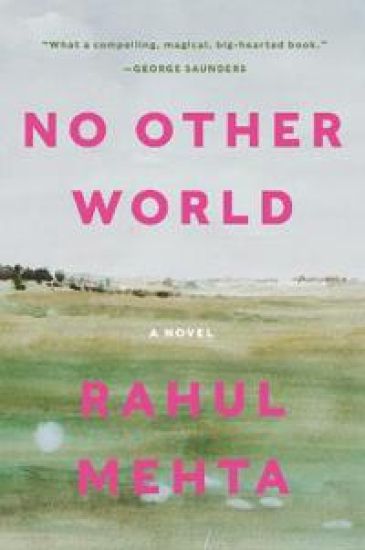
From the author of the prize-winning collection Quarantine, an insightful, compelling debut novel set in rural America and India in the 1980s and '90s, part coming-of-age story about a gay Indian American boy, part family saga about an immigrant family's struggles to find a sense of belonging, identity, and hope.In a rural community in Western New York, twelve-year-old Kiran Shah, the American-born son of Indian immigrants, longingly observes his prototypically American neighbors, the Bells. He attends school with Kelly Bell, but he's powerfully drawn--in a way he does not yet understand--to her charismatic father, Chris.Kiran's yearnings echo his parents' bewilderment as they try to adjust to a new world. His father, Nishit Shah, a successful doctor, is haunted by thoughts of the brother he left behind. His mother, Shanti, struggles to accept a life with a man she did not choose--her marriage to Nishit was arranged--and her growing attachment to an American man. Kiran is close to his older sister, Preeti--until an unexpected threat and an unfathomable betrayal drive a wedge between them that will reverberate through their lives.As he leaves childhood behind, Kiran finds himself perpetually on the outside--as an Indian American torn between two cultures and as a gay man in a homophobic society. In the wake of an emotional breakdown, he travels to India, where he forms an intense bond with a teenage hijra, a member of India's ancient transgender community. With her help, Kiran begins to pull together the pieces of his broken past.Sweeping and emotionally complex, No Other World is a haunting meditation on love, belonging, and forgiveness that explores the line between our responsibilities to our families and to ourselves, the difficult choices we make, and the painful cost of claiming our true selves.
No Other World

No Other World

Rahul Mehta

HarperPerennial
2018
nidottu
Western New York, 1985: Twelve-year-old Kiran Shah stands longingly outside the window of the Bell household, secretly observing the movements of the prototypically American family. He attends school with Kelly Bell, but he’s powerfully drawn, in a way he does not yet quite understand, to her charismatic father, Chris. Kiran is the American-born son of Indian immigrants struggling to adjust to life in a new world. His father, Dr. Nishit Shah, is a successful doctor haunted by the brother he left behind in India. His mother, Shanti, tries to settle into the life that was chosen for her—Nishit and Shanti’s was an arranged marriage—even as she develops romantic feelings for handsome local Chris Bell. And Kiran is close to his beloved older sister, Preeti—until one summer afternoon, when an unexpected threat and an unfathomable betrayal drive a wedge between the two, with repercussions that stretch far into their futures. As Kiran grows and enters young adulthood, he finds himself perpetually on the outside—not just as an Indian-American torn between two cultures, but as a gay man in a time and place where homosexuality is not tolerated. In the wake of an emotional breakdown, Kiran travels to India, where he forms an intense bond with a teenage hijra, a member of India’s ancient transgender community. With her help, Kiran will attempt to pull together the pieces of his broken past. With a large cast of complex characters and a narrative that shifts between rural America and small-town India, NO OTHER WORLD is a haunting meditation on our responsibilities to our families and to ourselves, the difficult choices we make and the people we hurt in our efforts to claim the lives that belong to us.
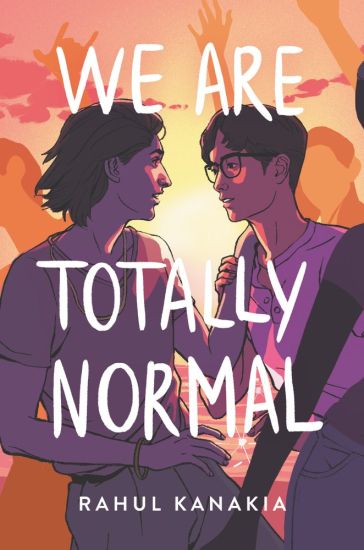
We Are Totally Normal

We Are Totally Normal

Rahul Kanakia

HarperCollins
2020
sidottu
In this queer contemporary YA, perfect for fans of Becky Albertalli and This Is Kind of an Epic Love Story, Nandan’s perfect plan for junior year goes awry after he hooks up with a guy for the first time.Nandan’s got a plan to make his junior year perfect, but hooking up with his friend Dave isn’t part of it—especially because Nandan has never been into guys.Still, Nandan’s willing to give a relationship with him a shot. But the more his anxiety grows about what his sexuality means for himself, his friends, and his social life, the more he wonders whether he can just take it all back.Is breaking up with Dave—the only person who’s ever really gotten him—worth feeling “normal” again?
We Are Totally Normal

We Are Totally Normal

Rahul Kanakia

HarperCollins
2021
nidottu
In this queer contemporary YA, perfect for fans of Becky Albertalli and This Is Kind of an Epic Love Story, Nandan’s perfect plan for junior year goes awry after he hooks up with a guy for the first time.Nandan’s got a plan to make his junior year perfect, but hooking up with his friend Dave isn’t part of it—especially because Nandan has never been into guys.Still, Nandan’s willing to give a relationship with him a shot. But the more his anxiety grows about what his sexuality means for himself, his friends, and his social life, the more he wonders whether he can just take it all back.Is breaking up with Dave—the only person who’s ever really gotten him—worth feeling “normal” again?
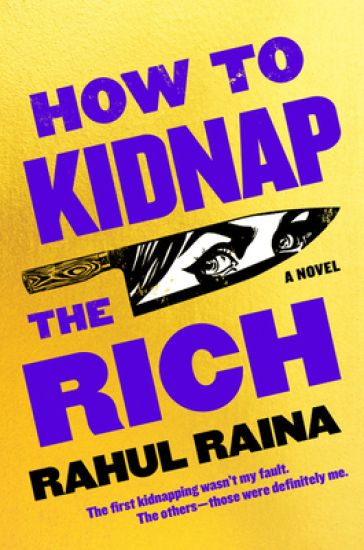
How to Kidnap the Rich

How to Kidnap the Rich

Rahul Raina

HARPER PERENNIAL
2021
nidottu
"A raucous novel, narrated in deadpan voice-over by Ramesh, a self-described 'lower lower middle class' 24-year-old scammer. . . . His perspective is a delight. . . . a tartly entertaining novel, a potential summer blockbuster." --New York Times Book ReviewA fresh look at modern-day India hailed as "a monstrously funny and unpredictable wild ride" by Kevin Kwan, New York Times bestselling author of the Crazy Rich Asians trilogy The first kidnapping wasn't my fault. The others--those were definitely me.Brilliant yet poor, Ramesh Kumar grew up working at his father's tea stall in the Old City of Delhi. Now, he makes a lucrative living taking tests for the sons of India's elite--a situation that becomes complicated when one of his clients, the sweet but hapless eighteen-year-old Rudi Saxena, places first in the All Indias, the national university entrance exams, thanks to him.Ramesh sees an opportunity--perhaps even an obligation--to cash in on Rudi's newfound celebrity, not knowing that Rudi's role on a game show will lead to unexpected love, followed by wild trouble when both young men are kidnapped. But Ramesh outwits the criminals who've abducted them, turning the tables and becoming a kidnapper himself. As he leads Rudi through a maze of crimes both large and small, their dizzying journey reveals an India in all its complexity, beauty, and squalor, moving from the bottom rungs to the circles inhabited by the ultra-rich and everywhere in between.A caper, social satire, and love story rolled into one, How to Kidnap the Rich is a wild ride told by a mesmerizing new talent with an electric voice.
On-Road Intelligent Vehicles

On-Road Intelligent Vehicles

Rahul Kala

Butterworth-Heinemann Inc
2016
nidottu
On-Road Intelligent Vehicles: Motion Planning for Intelligent Transportation Systems deals with the technology of autonomous vehicles, with a special focus on the navigation and planning aspects, presenting the information in three parts. Part One deals with the use of different sensors to perceive the environment, thereafter mapping the multi-domain senses to make a map of the operational scenario, including topics such as proximity sensors which give distances to obstacles, vision cameras, and computer vision techniques that may be used to pre-process the image, extract relevant features, and use classification techniques like neural networks and support vector machines for the identification of roads, lanes, vehicles, obstacles, traffic lights, signs, and pedestrians. With a detailed insight into the technology behind the vehicle, Part Two of the book focuses on the problem of motion planning. Numerous planning techniques are discussed and adapted to work for multi-vehicle traffic scenarios, including the use of sampling based approaches comprised of Genetic Algorithm and Rapidly-exploring Random Trees and Graph search based approaches, including a hierarchical decomposition of the algorithm and heuristic selection of nodes for limited exploration, Reactive Planning based approaches, including Fuzzy based planning, Potential Field based planning, and Elastic Strip and logic based planning. Part Three of the book covers the macroscopic concepts related to Intelligent Transportation Systems with a discussion of various topics and concepts related to transportation systems, including a description of traffic flow, the basic theory behind transportation systems, and generation of shock waves.
Out of Time

Out of Time

Rahul Rao

Oxford University Press Inc
2020
sidottu
Between 2009 and 2014, an anti-homosexuality law circulating in the Ugandan parliament came to be the focus of a global conversation about queer rights. The law attracted attention for the draconian nature of its provisions and for the involvement of US evangelical Christian activists who were said to have lobbied for its passage. Focusing on the Ugandan case, this book seeks to understand the encounters and entanglements across geopolitical divides that produce and contest contemporary queerphobias. It investigates the impact and memory of the colonial encounter on the politics of sexuality, the politics of religiosity of different Christian denominations, and the political economy of contemporary homophobic moral panics. In addition, Out of Time places the Ugandan experience in conversation with contemporaneous developments in India and Britain--three locations that are yoked together by the experience of British imperialism and its afterlives. Intervening in a queer theoretical literature on temporality, Rahul Rao argues that time and space matter differently in the queer politics of postcolonial countries. By employing an intersectional analysis and drawing on a range of sources, Rao offers an original interpretation of why queerness mutates to become a metonym for categories such as nationality, religiosity, race, class, and caste. The book argues that these mutations reveal the deep grammars forged in the violence that founds and reproduces the social institutions in which queer difference struggles to make space for itself.
Out of Time

Out of Time

Rahul Rao

Oxford University Press Inc
2020
nidottu
Between 2009 and 2014, an anti-homosexuality law circulating in the Ugandan parliament came to be the focus of a global conversation about queer rights. The law attracted attention for the draconian nature of its provisions and for the involvement of US evangelical Christian activists who were said to have lobbied for its passage. Focusing on the Ugandan case, this book seeks to understand the encounters and entanglements across geopolitical divides that produce and contest contemporary queerphobias. It investigates the impact and memory of the colonial encounter on the politics of sexuality, the politics of religiosity of different Christian denominations, and the political economy of contemporary homophobic moral panics. In addition, Out of Time places the Ugandan experience in conversation with contemporaneous developments in India and Britain--three locations that are yoked together by the experience of British imperialism and its afterlives. Intervening in a queer theoretical literature on temporality, Rahul Rao argues that time and space matter differently in the queer politics of postcolonial countries. By employing an intersectional analysis and drawing on a range of sources, Rao offers an original interpretation of why queerness mutates to become a metonym for categories such as nationality, religiosity, race, class, and caste. The book argues that these mutations reveal the deep grammars forged in the violence that founds and reproduces the social institutions in which queer difference struggles to make space for itself.
Community Data

Community Data

Rahul Bhargava

Oxford University Press
2024
sidottu
Community Data offers a new toolkit for data storytelling in community settings, one purpose-built for goals like inclusion, empowerment, and impact. Data science and visualization has spread into new domains it was designed for - community organizing, education, journalism, civic governance, and more. The dominant computational methods and processes, which have not changed in response, are causing significant discriminatory and harmful impacts, documented by leading scholars across a variety of populations. Informed by 15 years of collaborations in academic and professional settings with nonprofits and marginalized populations, the book articulates a new approach for aligning the processes and media of data work with social good outcomes, learning from the practices of newspapers, museums, community groups, artists, and libraries. This book introduces a community-driven framework as a response to the urgent need to realign data theories and methods around justice and empowerment to avoid further replicating harmful power dynamics and ensure everyone has a seat at the table in data-centered community processes. It offers a broader toolbox for working with data and presenting it, pushing beyond the limited vocabulary of surveys, spreadsheets, charts and graphs.
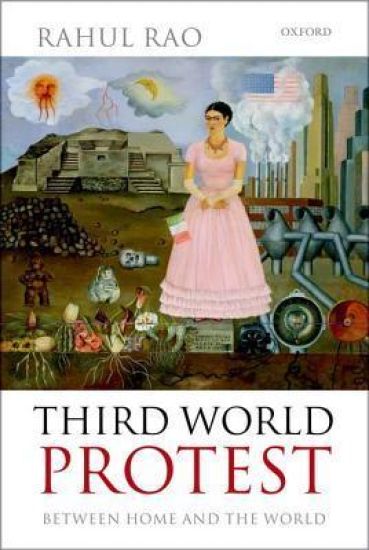
Third World Protest

Third World Protest

Rahul Rao

Oxford University Press
2010
sidottu
If boundaries protect us from threats, how should we think about the boundaries of states in a world where threats to human rights emanate from both outside the state and the state itself? Arguing that attitudes towards boundaries are premised on assumptions about the locus of threats to vital interests, Rahul Rao digs beneath two major normative orientations towards boundaries-cosmopolitanism and nationalism-which structure thinking on questions of public policy and identity. Insofar as the Third World is concerned, hegemonic versions of both orientations are underpinned by simplistic imageries of threat. In the cosmopolitan gaze, political and economic crises in the Third World are attributed mainly to factors internal to the Third World state with the international playing the role of heroic saviour. In Third World nationalist imagery, the international is portrayed as a realm of neo-imperialist predation from which the domestic has to be secured. Both images capture widely held intuitions about the sources of threats to human rights, but each by itself provides a resolutely partial inventory of these threats. By juxtaposing critical accounts of both discourses, Rao argues that protest sensibilities in the current conjuncture must be critical of hegemonic variants of both cosmopolitanism and nationalism. The second half of the book illustrates what such a critique might look like. Journeying through the writings of James Joyce, Rabindranath Tagore, Edward Said and Frantz Fanon, the activism of 'anti-globalisation' protesters, and the dilemmas of queer rights activists, Rao demonstrates that important currents of Third World protest have long battled against both the international and the domestic, in a manner that combines nationalist and cosmopolitan sensibilities.
Third World Protest

Third World Protest

Rahul Rao

Oxford University Press
2012
nidottu
If boundaries protect us from threats, how should we think about the boundaries of states in a world where threats to human rights emanate from both outside the state and the state itself? Arguing that attitudes towards boundaries are premised on assumptions about the locus of threats to vital interests, Rahul Rao digs beneath two major normative orientations towards boundaries-cosmopolitanism and nationalism-which structure thinking on questions of public policy and identity. Insofar as the Third World is concerned, hegemonic versions of both orientations are underpinned by simplistic imageries of threat. In the cosmopolitan gaze, political and economic crises in the Third World are attributed mainly to factors internal to the Third World state with the international playing the role of heroic saviour. In Third World nationalist imagery, the international is portrayed as a realm of neo-imperialist predation from which the domestic has to be secured. Both images capture widely held intuitions about the sources of threats to human rights, but each by itself provides a resolutely partial inventory of these threats. By juxtaposing critical accounts of both discourses, Rao argues that protest sensibilities in the current conjuncture must be critical of hegemonic variants of both cosmopolitanism and nationalism. The second half of the book illustrates what such a critique might look like. Journeying through the writings of James Joyce, Rabindranath Tagore, Edward Said and Frantz Fanon, the activism of 'anti-globalisation' protesters, and the dilemmas of queer rights activists, Rao demonstrates that important currents of Third World protest have long battled against both the international and the domestic, in a manner that combines nationalist and cosmopolitan sensibilities.
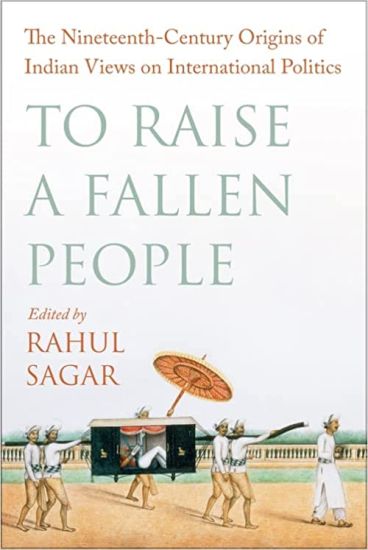
To Raise a Fallen People

To Raise a Fallen People

Rahul Sagar

Columbia University Press
2022
sidottu
To Raise a Fallen People brings to light pioneering writing on international politics from nineteenth-century India. Drawing on extensive archival research, it unearths essays, speeches, and pamphlets that address fundamental questions about India’s place in the world. In these texts, prominent public figures urge their compatriots to learn English and travel abroad to study, debate whether to boycott foreign goods, differ over British imperialism in Afghanistan and China, demand that foreign policy toward the Middle East and South Africa account for religious and ethnic bonds, and query whether to adopt Western values or champion their own civilizational ethos.Rahul Sagar’s detailed introduction contextualizes these documents and shows how they fostered competing visions of the role that India ought to play on the world stage. This landmark book is essential reading for anyone interested in understanding the sources of Indian conduct in international politics.
To Raise a Fallen People

To Raise a Fallen People

Rahul Sagar

Columbia University Press
2022
pokkari
To Raise a Fallen People brings to light pioneering writing on international politics from nineteenth-century India. Drawing on extensive archival research, it unearths essays, speeches, and pamphlets that address fundamental questions about India’s place in the world. In these texts, prominent public figures urge their compatriots to learn English and travel abroad to study, debate whether to boycott foreign goods, differ over British imperialism in Afghanistan and China, demand that foreign policy toward the Middle East and South Africa account for religious and ethnic bonds, and query whether to adopt Western values or champion their own civilizational ethos.Rahul Sagar’s detailed introduction contextualizes these documents and shows how they fostered competing visions of the role that India ought to play on the world stage. This landmark book is essential reading for anyone interested in understanding the sources of Indian conduct in international politics.
Life Lessons from a Brain Surgeon

Life Lessons from a Brain Surgeon

Rahul Jandial

Penguin Life
2020
pokkari
THE SUNDAY TIMES BESTSELLER'You're amazing I could talk to you (Rahul) all day' Chris Evans'This is a gripping new book' The TimesWorld-leading neuroscientist and neurosurgeon Dr Rahul Jandial draws on his years of work with patients suffering from the most extreme cases of brain damage, disorders and illnesses to reveal what they can tell us about the science of the mind.From a languages teacher who has to choose whether to lose her ability to speak Spanish or English after brain surgery, to a former TV exec, now homeless, who discovers that his life-altering despondency is the result of a tumour, to a fainting teen who learns that deep breathing can mean the difference between life or death, these stories uncover the secret workings of the brain.Blending cutting-edge research and beautiful storytelling, Life Lessons from a Brain Surgeon is a vital resource on the best ways to boost your memory, control stress and emotions, minimize pain, unleash your creativity, raise smart kids and reduce the risk of Alzheimer's. This is a deeply practical and readable book, which will take you on an expedition through the anatomy of the most fascinating - and mysterious - of organs.Rahul's new book Life on a Knife's Edge is out now.
Life on a Knife’s Edge

Life on a Knife’s Edge

Rahul Jandial

PENGUIN BOOKS LTD
2021
sidottu
'It's a brilliant book... There are lessons in every paragraph... Get it now.' Chris Evans'Wonderous and wild. I loved this book' James Nestor, bestselling author of Breath 'Moving, raw and unflinching' Julia Samuel, bestselling author of This Too Shall Pass'Incredible storytelling' Dr Rangan Chatterjee, bestselling author of Feel Better in 5____________________________________________________________________________How do you carry on when things go deadly wrong?When Dr Rahul Jandial operated on Karina, an eleven-year-old girl whose spinal cord was splitting in two, he had to make an impossible decision. He followed his head over his gut and Karina was left permanently paralysed, altering both patient and surgeon's lives for ever. This decision would haunt Rahul for decades, a constant reminder of the fine line between saving and damaging a life.As one of the world's leading brain surgeons, Rahul is the last hope for patients with extreme forms of cancer. In treating them, he has observed humanity at its most raw and most robust. He has journeyed to unimaginable extremes with them, guiding them through the darkest moments of their lives.Life on a Knife's Edge is Rahul's poetic and beautifully written account of the resilience, courage and belief he has witnessed in his patients, and the lessons about human nature he has learned from them. It is about the impossible choices he has to make, and the fateful consequences he is forced to live with.From challenging the ethics of surgical practices, to helping a patient with locked-in syndrome communicate her dying wish to her family, Rahul shares his extraordinary experiences, revealing the depths of a surgeon's psyche that is continuously pushed to its limits.
100 Case Reviews in Neurosurgery

100 Case Reviews in Neurosurgery

Rahul Jandial; Michele R Aizenberg; Mike Y. Chen

Elsevier - Health Sciences Division
2016
nidottu
Jandial's 100 Case Reviews in Neurosurgery is the only reference offering a comprehensive approach to effective preparation for oral examinations, MOC, or grand rounds. Ideal for residents and graduates alike, it covers 100 of the most commonly encountered neurosurgical cases and presents them in a layout mirroring that of the oral exams. This singular resource eliminates the need to consult several texts, providing readers with all of the complete, concise knowledge needed to go in with confidence. Expert Consult eBook version included with purchase. This enhanced eBook experience allows you to search all of the text, figures, images, and references from the book on a variety of devices. Covers 100 of the most commonly encountered neurosurgical cases on oral exams. Highly templated format mirrors that of the oral exams and ensures quick and easy navigation. Over 500 illustrations ensure an enhanced visual understanding. Provides a chapter on endovascular neurosurgery, a topic newly included on oral exams. Features robust sections and art on the challenging areas of peripheral nerve surgery and vascular surgery. Includes common questions on complication management. Appendices with key neurosurgery tables and figures (e.g. positioning, spinal fracture grading, and neuropathology) facilitate quick review. Information is backed by evidence when available.
Neurosurgery Self-Assessment

Neurosurgery Self-Assessment

Rahul S. Shah; Thomas A.D. Cadoux-Hudson; Jamie J. Van Gompel; Erlick Pereira

Elsevier - Health Sciences Division
2016
nidottu
Ideal for both neurosurgical residents and recertifying neurosurgeons, Neurosurgery Self-Assessment: Questions and Answers offers the most comprehensive, up to date coverage available. Over 1,000 clinically relevant multiple-choice questions across 46 topic areas test the candidate's knowledge of basic neuroscience and neurosurgical subspecialties to an unparalleled degree and provide detailed answer explanations to facilitate learning and assessment. Over 700 histology, pathology, radiology, clinical and anatomical images serve as an index of routinely tested-on images in neurosurgical examinations with high-yield summaries of each pathology to reinforce and simplify key concepts. Includes only multiple choice questions in both single-best-answer and extended matching item (10-20 options) format increasingly adopted by neurosurgery certification boards worldwide. Questions are organized by topic and classified by degree of difficulty through a highly visual "traffic light system" which codes each question in green, amber, or red. Includes coverage of the landmark studies in areas such as vascular, stroke, spine and neurooncology. Practical tips facilitate study with test-taking strategies and things to consider before sitting for an exam. Utilizes Imperial and SI units throughout. Expert Consult eBook version included with purchase. This enhanced eBook experience acts an interactive question bank which automatically scores and provides immediate answer feedback, as well as allowing you to search all of the text, figures, and references from the book.
Gastrointestinal Issues in Critical Care, An Issue of Critical Care Clinics

Gastrointestinal Issues in Critical Care, An Issue of Critical Care Clinics

Rahul S. Nanchal; Ram M. Subramanian

Elsevier - Health Sciences Division
2016
sidottu
This issue of Critical Care Clinics focuses on Gastrointestinal Critical Care. Articles include: Non variceal Upper Gastrointestinal bleeds; Lower Gastrointestinal bleeds; Mesenteric Ischemia; Peritonitis; The open abdomen and intra abdominal infections; Gut motility issues in critical illness; Gut as the motor of multiple organ dysfunction; Intra abdominal hypertension and abdominal compartment syndrome; Abdominal circulatory interactions in critical illness; Severe acute pancreatitis and necrotizing pancreatitis; and Nutrition in the critically ill.