
Kirjahaku
Etsi kirjoja tekijän nimen, kirjan nimen tai ISBN:n perusteella.
1000 tulosta hakusanalla Rajani Larocca; Chris Baron
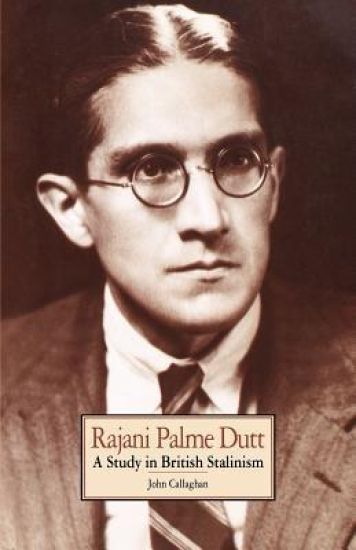
Rajani Palme Dutt (1896-1974) was a leading figure in the Communist Party of Great Britain from the 1920s to the 1960s. His strong links with the Comintern made him, throughout this period, a devoted - and stern - supporter of orthodoxy within the CPGB. Through an intertwining of personal and political history, this well-documented book not only tells the fascinating story of Palme Dutt's life, but also provides a key to understanding the rise and fall of communism in the 20th century. '...a remarkable political biography.' John Torode, The Independent 'Excellent, scholarly and thoughtful.' Ben Pimlott, Independent on Sunday John Callaghan is Professor of Politics at the University of Wolverhampton. He is author of The Far Left in British Politics (1987) and Socialism in Britain since 1884 (1990).
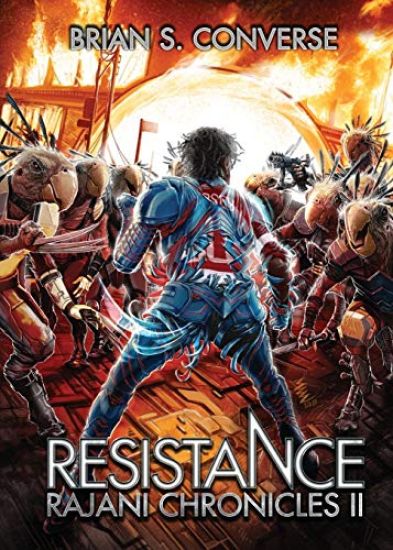
Separated James Dempsey and his team of powered humans are stranded on Rajan with no way to find each other. They must search for any resistance fighters among the peaceable Rajani inhabitants.Meanwhile, there is a political cover-up beginning in the Galactic Alliance. Disgraced Alliance Society for Peace Commander Ries an na Van stumbles upon a terrible secret, one that could mean a greater war within the Alliance should it ever come to light.While each human struggles to understand and survive on their new, alien planet, they discover that the Rajani are in desperate need of help. The Krahn Hoard has decimated the city of Melaanse, and the Rajani are quickly running out of resources.James, Yvette, Gianni, David, and Kieren are about to face the fight of their lives, and the powers granted by their implanted stones may be the difference between life and death

Separated James Dempsey and his team of powered humans are stranded on Rajan with no way to find each other. They must search for any resistance fighters among the peaceable Rajani inhabitants.Meanwhile, there is a political cover-up beginning in the Galactic Alliance. Disgraced Alliance Society for Peace Commander Ries an na Van stumbles upon a terrible secret, one that could mean a greater war within the Alliance should it ever come to light.While each human struggles to understand and survive on their new, alien planet, they discover that the Rajani are in desperate need of help. The Krahn Hoard has decimated the city of Melaanse, and the Rajani are quickly running out of resources.James, Yvette, Gianni, David, and Kieren are about to face the fight of their lives, and the powers granted by their implanted stones may be the difference between life and death

War James Dempsey's team of powered humans are finally reunited, but the war with the Krahn Horde goes on. The Resistance fighters, made up of the Rajani, Sekani, and Jirina inhabitants of Rajan are slowly turning the tide against the invaders, but diplomatic rifts are still apparent between the species.Galactic Intelligence officer Ries an na Van returns to his old command station to find answers to the many questions that remain of the Rajani mystery he's discovered. His persistence is about to pay off, but will the answers he's sought bring him peace?Ronak now stands alone against the unified might of the Rajani. His quest for the Johar Stones has so far proven fruitless. He now knows the only Stones dwell in the bodies of the alien Humans. James and his team are in more danger than ever as the final push for liberation comes for the Rajani. The time has come for the final battle to free them all

James Dempsey's team of powered humans are finally reunited, but the war with the Krahn Horde goes on. The Resistance fighters, made up of the Rajani, Sekani, and Jirina inhabitants of Rajan are slowly turning the tide against the invaders, but diplomatic rifts are still apparent between the species.Galactic Intelligence officer Ries an na Van returns to his old command station to find answers to the many questions that remain of the Rajani mystery he's discovered. His persistence is about to pay off, but will the answers he's sought bring him peace?Ronak now stands alone against the unified might of the Rajani. His quest for the Johar Stones has so far proven fruitless. He now knows the only Stones dwell in the bodies of the alien Humans. James and his team are in more danger than ever as the final push for liberation comes for the Rajani. The time has come for the final battle to free them all
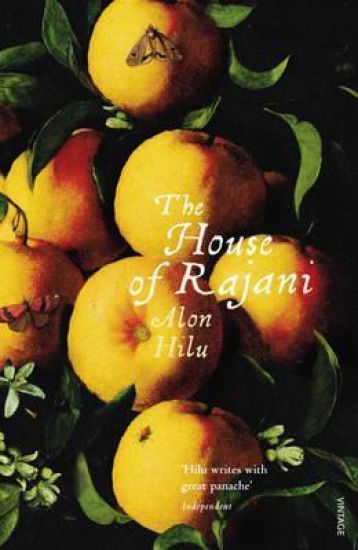
The year is 1895, Jaffa. Salah Rajani, a troubled Muslim boy living in a dilapidated mansion surrounded by orange groves, suffers from peculiar visions about a disaster which is set to befall his people. His life is changed by the arrival of a handsome young man, a dynamic Jewish settler, new to the city, by the name of Isaac Luminsky. Luminsky covets both the fertile lands of the Rajani estate and Salah's beautiful mother Afifa, and his friendship with the boy is destined to lead to violence and tragedy.This rich and colourful novel is made up of the two opposing journals of Hilu's intriguing and extraordinary protagonists as they negotiate love, honour and betrayal in the changing world of nineteenth-century Palestine.

In the mid-1990s, the international community pronounced prenatal sex selection via abortion an "act of violence against women" and "unethical." At the same time, new developments in reproductive technology in the United States led to a method of sex selection before conception; its US inventor marketed the practice as "family balancing" and defended it with the rhetoric of freedom of choice. In Gender before Birth, Rajani Bhatia takes on the double standard of how similar practices in the West and non-West are divergently named and framed.Bhatia's extensive fieldwork includes interviews with clinicians, scientists, biomedical service providers, and feminist activists, and her resulting analysis extends both feminist theory on reproduction and feminist science and technology studies. She argues that we are at the beginning of a changing transnational terrain that presents new challenges to theorized inequality in reproduction, demonstrating how the technosciences often get embroiled in colonial gender and racial politics.

In the mid-1990s, the international community pronounced prenatal sex selection via abortion an "act of violence against women" and "unethical." At the same time, new developments in reproductive technology in the United States led to a method of sex selection before conception; its US inventor marketed the practice as "family balancing" and defended it with the rhetoric of freedom of choice. In Gender before Birth, Rajani Bhatia takes on the double standard of how similar practices in the West and non-West are divergently named and framed.Bhatia's extensive fieldwork includes interviews with clinicians, scientists, biomedical service providers, and feminist activists, and her resulting analysis extends both feminist theory on reproduction and feminist science and technology studies. She argues that we are at the beginning of a changing transnational terrain that presents new challenges to theorized inequality in reproduction, demonstrating how the technosciences often get embroiled in colonial gender and racial politics.

Arguing that the major hallmarks of Romantic literature-inwardness, emphasis on subjectivity, the individual authorship of selves and texts-were forged during the Enlightenment, Rajani Sudan traces the connections between literary sensibility and British encounters with those persons, ideas, and territories that lay uneasily beyond the national border. The urge to colonize and discover embraced both an interest in foreign "fair exotics" and a deeply rooted sense of their otherness. Fair Exotics develops a revisionist reading of the period of the British Enlightenment and Romanticism, an age during which England was most aggressively building its empire. By looking at canonical texts, including Defoe's Robinson Crusoe, Johnson's Dictionary, De Quincey's Confessions of an English Opium Eater, and Bronte's Villette, Sudan shows how the imaginative subject is based on a sense of exoticism created by a pervasive fear of what is foreign. Indeed, as Sudan clarifies, xenophobia is the underpinning not only of nationalism and imperialism but of Romantic subjectivity as well.

Named 'Top 6' South Asia studies publications of 2016 by the British Association for South Asian Studies The Alchemy of Empire unravels the non-European origins of Enlightenment science. Focusing on the abject materials of empire-building, this study traces the genealogies of substances like mud, mortar, ice, and paper, as well as forms of knowledge like inoculation. Showing how East India Company employees deployed the paradigm of alchemy in order to make sense of the new worlds they confronted, Rajani Sudan argues that the Enlightenment was born largely out of Europe's (and Britain's) sense of insecurity and inferiority in the early modern world. Plumbing the depths of the imperial archive, Sudan uncovers the history of the British Enlightenment in the literary artifacts of the long eighteenth century, from the correspondence of the East India Company and the papers of the Royal Society to the poetry of Alexander Pope and the novels of Jane Austen.

Named 'Top 6' South Asia studies publications of 2016 by the British Association for South Asian Studies The Alchemy of Empire unravels the non-European origins of Enlightenment science. Focusing on the abject materials of empire-building, this study traces the genealogies of substances like mud, mortar, ice, and paper, as well as forms of knowledge like inoculation. Showing how East India Company employees deployed the paradigm of alchemy in order to make sense of the new worlds they confronted, Rajani Sudan argues that the Enlightenment was born largely out of Europe's (and Britain's) sense of insecurity and inferiority in the early modern world. Plumbing the depths of the imperial archive, Sudan uncovers the history of the British Enlightenment in the literary artifacts of the long eighteenth century, from the correspondence of the East India Company and the papers of the Royal Society to the poetry of Alexander Pope and the novels of Jane Austen.

To find more information about Rowman and Littlefield titles, please visit www.rowmanlittlefield.com.

The agrarian crisis in India before independence: toward its solution
Rajani Palme Dutt
Gambol Books
2009
nidottu

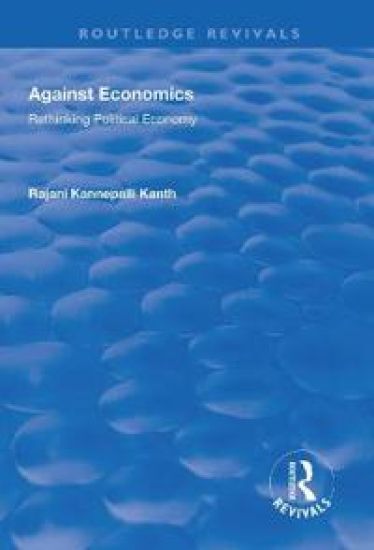
Published in 1997, this postmodern critique provides a discourse on internal dynamics of the economics world view, suggesting for future societal wellbeing that we simply do not criticize economics but dispense it altogether. It argues that in the modern era economics have become obsolete as we live in a society riddled with corruption.
Published in 1997, this postmodern critique provides a discourse on internal dynamics of the economics world view, suggesting for future societal wellbeing that we simply do not criticize economics but dispense it altogether. It argues that in the modern era economics have become obsolete as we live in a society riddled with corruption.