Kirjojen hintavertailu. Mukana 11 373 209 kirjaa ja 12 kauppaa.

Kirjahaku

Etsi kirjoja tekijän nimen, kirjan nimen tai ISBN:n perusteella.

1000 tulosta hakusanalla Raymond Bellock

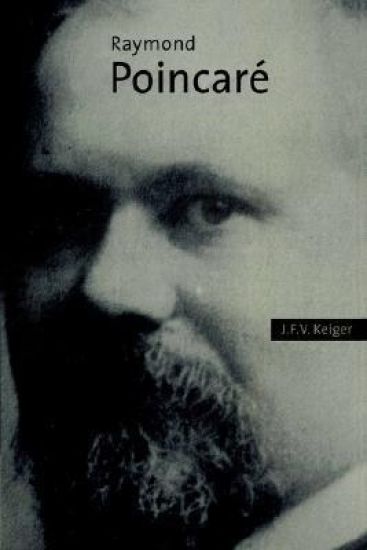
Raymond Poincaré

Raymond Poincaré

J. F. V. Keiger

Cambridge University Press
2002
pokkari
This study is a pioneering scholarly biography of one of France’s foremost political leaders. In a career which ran from the 1880s to the 1930s, one of the most formative periods of modern French history, Poincaré held the principal offices of state. He played crucial roles in France’s entry into the Great War, the organisation of the war effort, the peace settlement, the reparations question, the occupation of the Ruhr and the reorganisation of French finances in the 1920s. His life and work is surrounded by controversy and myth, from ‘Poincaré-la-guerre’ to ‘Poincaré-le-franc’, which this book dissects. Using a host of new archival material, Professor Keiger explores the historiography of the man and his times and reveals, somewhat surprisingly, how animal rights and feminism could be as important to him as party politics and public finance.
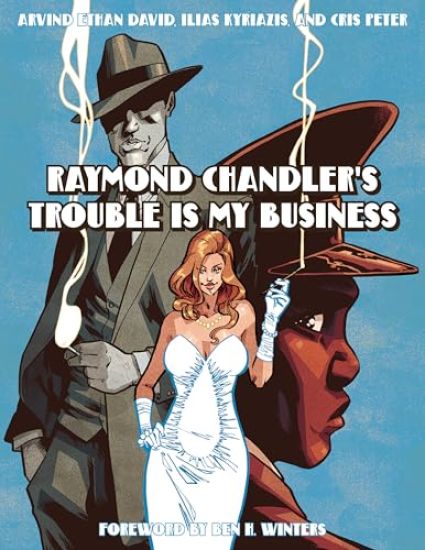
Raymond Chandler's Trouble Is My Business

Raymond Chandler's Trouble Is My Business

Raymond Chandler; Arvind Ethan David

Pantheon Books
2025
sidottu
A brilliant graphic novel adaptation of Raymond Chandler's classic noir tale featuring iconic private eye Philip Marlowe "Inspired. . . . This trio brings Chandler's] words to vivid life. . . . A triumph of teamwork."--Air Mail In 1940s Los Angeles, a sour-faced millionaire hires Philip Marlowe, a hard-boiled, harder-drinking detective, to scare off a suspected gold digger who has gotten her claws into his even wealthier stepson. Marlowe takes the case but quickly discovers that the woman, Harriett Huntress, isn't just after gold: she's playing a long, cold game of revenge... Marlowe forms an alliance with George, the client's chauffeur-cum-bodyguard-cum-fixer. George is a Black, Dartmouth-educated veteran with a sniper's skills and his own agenda, and the two uneasy allies find themselves on the wrong end of a brace of hired killers and an enigmatic casino boss. . . . It quickly becomes clear that Marlowe, sticking his nose where it doesn't belong, is just asking for trouble. But that's the thing. Trouble is his business.
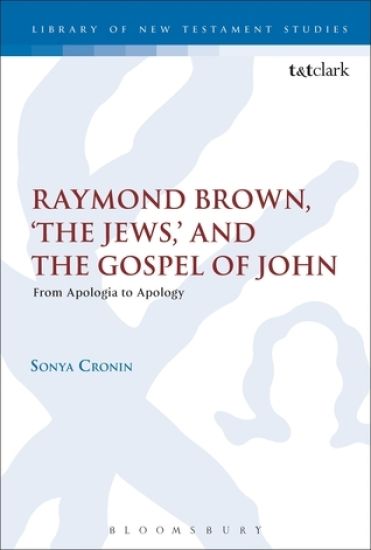
Raymond Brown, 'The Jews,' and the Gospel of John

Raymond Brown, 'The Jews,' and the Gospel of John

Sonya Shetty Cronin

T. T.Clark Ltd
2014
sidottu
Until the mid-1960s, most commentators of the Gospel of John were aware of a polemic against 'the Jews,' yet they did not consider it with reference to contemporary ethical discussion. A shift in focus in Johannine scholarship is noticeable from the mid-1960s and 1970s to the present, where commentators began to connect the Gospel's polemic against 'the Jews' with potential anti-Judaism in the text. As yet, very little work has been done to answer the question of how this change in sensitivity came about. This book is a historiography of one scholar's growing awareness of potential anti-Judaism in the Gospel of John with the intention of using this individual history to explain the larger trend in biblical studies. Sonya Cronin examines the published work of Raymond Brown, a prominent Catholic New Testament scholar, between the years 1960-1998. The book contextualizes Brown's work by evaluating the impact of ecclesiastical statements and the influence of earlier and contemporary Johannine scholarship on Brown's biblical interpretation, and then posits theories as to why change occurs at specific times.
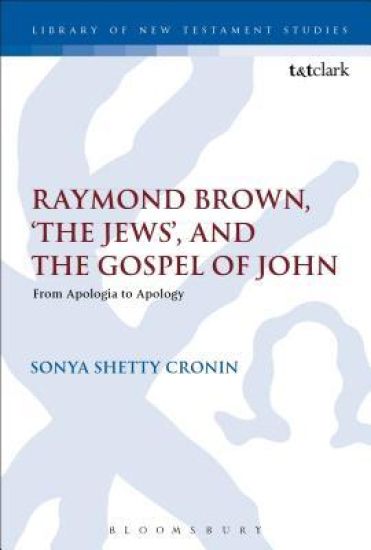
Raymond Brown, 'The Jews,' and the Gospel of John

Raymond Brown, 'The Jews,' and the Gospel of John

Sonya Shetty Cronin

T. T.Clark Ltd
2016
nidottu
Until the mid-1960s, most commentators of the Gospel of John were aware of a polemic against 'the Jews,' yet they did not consider it with reference to contemporary ethical discussion. A shift in focus in Johannine scholarship is noticeable from the mid-1960s and 1970s to the present, where commentators began to connect the Gospel's polemic against 'the Jews' with potential anti-Judaism in the text. As yet, very little work has been done to answer the question of how this change in sensitivity came about. This book is a historiography of one scholar's growing awareness of potential anti-Judaism in the Gospel of John with the intention of using this individual history to explain the larger trend in biblical studies. Sonya Cronin examines the published work of Raymond Brown, a prominent Catholic New Testament scholar, between the years 1960-1998. The book contextualizes Brown's work by evaluating the impact of ecclesiastical statements and the influence of earlier and contemporary Johannine scholarship on Brown's biblical interpretation, and then posits theories as to why change occurs at specific times.
Raymond's Party

Raymond's Party

Vladimir Merisca

Thunder Axe Publishing
2022
pokkari
Have you ever tasted soup joumou on a mild winter day in Oklahoma? Charlie has-at Raymond's party It's not just any New Year's Day for Charlie. He and his family get to spend a day at his best friend Raymond's house for a New Year's Day and birthday celebration, rich in Haitian culture and multi-cultural experiences.
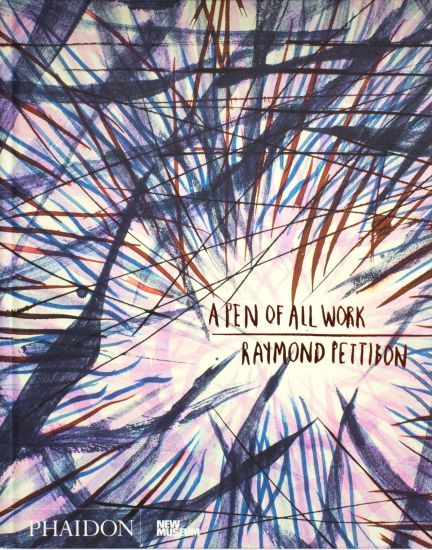
Raymond Pettibon

Raymond Pettibon

Massimiliano Gioni; Gary Carrion-Murayari

Phaidon Press Ltd
2017
sidottu
The most comprehensive monograph in print on this provocative artist, who has helped to redefine contemporary art This thorough, multifaceted assessment of Raymond Pettibon's entire career to date includes nearly 700 images, contributions from important figures in the art-historical and cultural fields, and a recent interview with the artist. Beginning with childhood drawings, the book moves through to his mature work, which embraces both high and low culture.
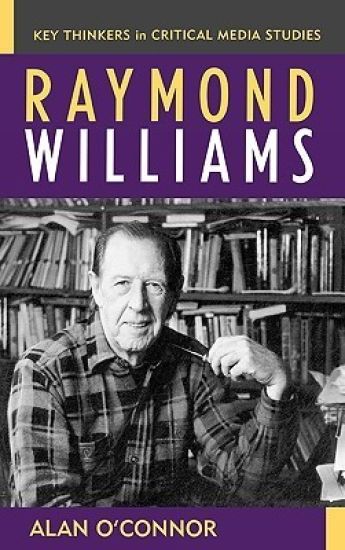
Raymond Williams

Raymond Williams

Alan O'Connor

Rowman Littlefield Publishers
2005
sidottu
Raymond Williams_a Welsh media critic and one of the founding thinkers behind the popular field of cultural studies_believed that the traditional focus of biographies on individuals isolated these people from their communities. For this reason, Alan O'Connor looks at Williams and his time period, one of social change and crisis in Wales and England. Williams, the son of a railway worker, would have pursued university studies, an atypical act for a working-class boy, had the Second World War not disrupted his plans. So the unorthodox intellectual executed his work outside the university until 1960, decades after he originally intended to begin his studies. O'Connor then turns to Williams's studies of media, revealing his subject's life-long emphasis on the interchange between culture and democracy. He shows the ways in which these ideas were revolutionary, upsetting conservative thinkers of the time, and concludes with the same message of hope that Williams carried with him daily: In a period dominated by conservative forces, Raymond Williams still thought it worthwhile to struggle for small changes.
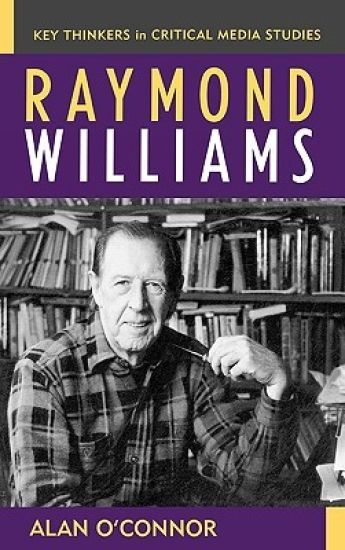
Raymond Williams

Raymond Williams

Alan O'Connor

Rowman Littlefield Publishers
2005
nidottu
Raymond Williams—a Welsh media critic and one of the founding thinkers behind the popular field of cultural studies—believed that the traditional focus of biographies on individuals isolated these people from their communities. For this reason, Alan O'Connor looks at Williams and his time period, one of social change and crisis in Wales and England. Williams, the son of a railway worker, would have pursued university studies, an atypical act for a working-class boy, had the Second World War not disrupted his plans. So the unorthodox intellectual executed his work outside the university until 1960, decades after he originally intended to begin his studies. O'Connor then turns to Williams's studies of media, revealing his subject's life-long emphasis on the interchange between culture and democracy. He shows the ways in which these ideas were revolutionary, upsetting conservative thinkers of the time, and concludes with the same message of hope that Williams carried with him daily: In a period dominated by conservative forces, Raymond Williams still thought it worthwhile to struggle for small changes.
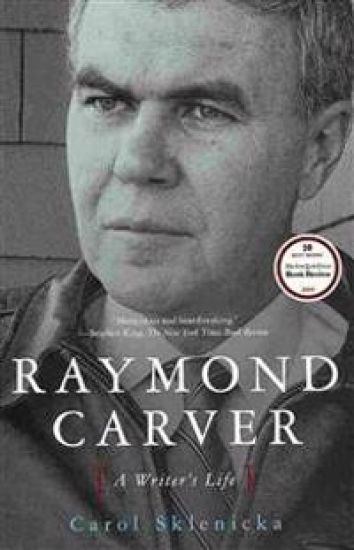
Raymond Carver: A Writer's Life

Raymond Carver: A Writer's Life

Carol Sklenicka

Scribner Book Company
2010
nidottu
When Raymond Carver died at age fifty, readers lost a distinctive voice in its prime. Carver was, the Times of London said, "the Chekhov of middle America." His influence on a generation of writers and on the short story itself has been widely noted. Not so generally known are how Carver became a writer, how he suffered to achieve his art, and how his troubled and remarkable personality affected those around him. Carol Sklenicka's meticulous and absorbing biography re-creates Carver's early years in Yakima, Washington, where he was the nervous, overweight son of a kindly, alcohol-dependent lumbermill worker. By the time he was nineteen, Ray had married his high school sweetheart, Maryann Burk. From a basement apartment where they were raising their first child and expecting their second, they determined that Ray would become a writer. Despite the handicaps of an erratic education and utter lack of financial resources, he succeeded. Sklenicka describes Carver's entry into the literary world via "little magazines" and the Iowa Writers' Workshop; his publication by Esquire editor Gordon Lish and their ensuing relationship; his near-fatal alcoholism, which worsened even as he produced many of the unforgettable stories collected in Will You Please Be Quiet, Please? and What We Talk About When We Talk About Love. She examines the dissolution of his first marriage and his partnership with poet Tess Gallagher, who helped him enjoy the full measure of his success. Carol Sklenicka draws on hundreds of interviews with people who knew Carver, prodigious research in libraries and private collections, and all of Carver's poems and stories for Raymond Carver. Her portrait is generous and wise without swerving from discordant issues in Carver's private affairs. Above all Sklenicka shows how Carver's quintessentially American life fostered the stories that knowing readers have cherished from their first publication until the present day.
Raymond Williams

Raymond Williams

Polity Press
1989
nidottu
Raymond Williams is widely acknowledged to be one of the most original and influential thinkers of the post-war era. He wrote extensively across a wide range of subjects: from drama and the novel to politics, popular culture and mass communications. He was also a major novelist, well-known for books such as Border Country and Second Generation. This volume of new and original essays, edited and introduced by Terry Eagleton, provides a critical appreciation of Raymond Williams' writings by those best acquainted with his work. Among the contributions are essays on Williams's work as a literary critic, as a student of popular culture, as a novelist and as an analyst of contemporary politics and society.
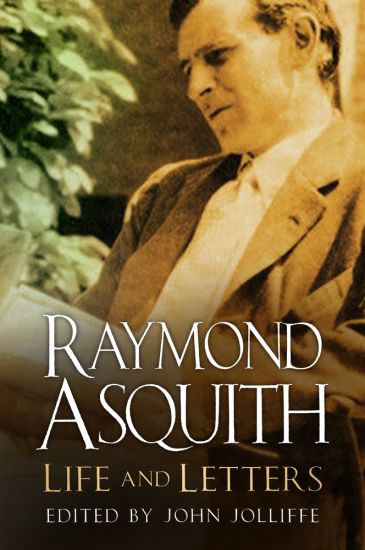
Raymond Asquith

Raymond Asquith

The History Press Ltd
2018
nidottu
The eldest son of the Prime Minister, with an outstanding academic record at Oxford, Raymond Asquith devoted his great talents to friendship, preferring conversation and literature to the struggle for worldly success. In this collection, edited by his grandson, there are touching and revealing letters to friends as diverse as Winston Churchill and Lady Diana Cooper, love letters to his wife, Katharine, as well as frank and witty anecdotes about many of the major social figures and politicians of the day. His letters from the Western Front, before his death on the Somme in 1916, are as memorable as anything in the painfully emotive literature of the period.
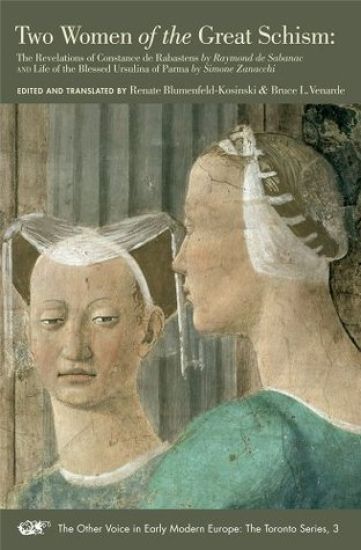
Two Women of the Great Schism – The Revelations of Constance de Rabastens by Raymond de Sabanac and Life of the Blessed Ursulina of Parma by Simone Za

Two Women of the Great Schism – The Revelations of Constance de Rabastens by Raymond de Sabanac and Life of the Blessed Ursulina of Parma by Simone Za

Raymond de Sabanac; Simone Zanacchi; Renate Blumenfeld–kosi; Bruce L. Venarde

University of Toronto Press
2010
nidottu
The Great Schism (1378–1417) divided Western Christendom into two groups: those who recognized a pope in Rome and those who recognized one in Avignon. It was a crisis of authority that brought with it spiritual anxiety and political uproar. This book presents the responses of two fascinating women whose experiences demonstrate the impact of the Schism on ordinary Christians. Constance de Rabastens (active 1384–1386), who lived in a village in rural Languedoc, had dramatic visions indicting the Avignon pope Clement VII, despite his being recognized in her region. Ursulina of Parma (1375–1408), a diminutive young woman from an urban milieu in Italy, believed that she was commanded by Christ to engage in shuttle diplomacy between the Roman and Avignon papacies in order to end the Schism. Two Women of the Great Schism translates an account of Constance’s visionary experiences as recorded by her confessor Raymond de Sabanac and a posthumous biography of Ursulina by Simone Zanacchi, a pious abbot who wrote some sixty years after his subject’s death. These texts bring to life the extraordinary spiritual and political engagement of two late medieval women who refused to be passive bystanders as rival papal factions tore Christendom apart.
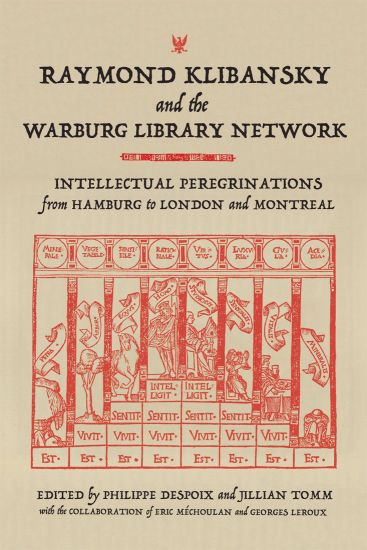
Raymond Klibansky and the Warburg Library Network
The Warburg Institute, founded in the 1920s in Hamburg by art and cultural historian Aby Warburg, is a pioneering institution that has greatly shaped the fields of art, myth, religion, medicine, philosophy, and intellectual history. When, in 1933, the institute was moved to London to escape the Nazis, its research and legacy were protected and further developed by a network of researchers dispersed throughout the UK, the US, and Canada. The first interdisciplinary study of the Warburg network as an arena of intellectual transmission, transformation, and exchange, this volume reveals the dynamics, agencies, and actors at play in the development of the Warburg Institute's program and output, with a specific focus on the role of Raymond Klibansky (1905–2005) in the institute's major ventures. Among these collective projects of the institute are the famous Saturn and Melancholy, which blends art history with philosophical and cultural history, and the Latin and Arabic Corpus Platonicum Medii Aevi series, which contributed to research on the continuity of Platonic thought. Consulting published and unpublished sources including correspondences, memories, and diaries of affiliated scholars, the essays explore the history of the Warburg Library as a vital cultural institution and the personal and intellectual relationships of the researchers devoted to it. From Hamburg to London to Montreal, Raymond Klibansky and the Warburg Library Network takes readers on a journey into more than forty years of intellectual life at one of the most prestigious cultural research institutes. Contributors include Philippe Despoix (Université de Montréal), Georges Leroux (UQAM), Eric Méchoulan (Université de Montréal), Elisabeth Otto (Université de Montréal), Elizabeth Sears (University of Michigan), Davide Stimilli (University of Colorado at Boulder), Jillian Tomm (Université de Montréal), Martin Treml (Zentrum für Literatur- und Kulturforschung Berlin), Jean-Philippe Uzel (UQAM), Regina Weber (DLA Marbach), Claudia Wedepohl (The Warburg Institute London), and Graham Whitaker (Glasgow University)
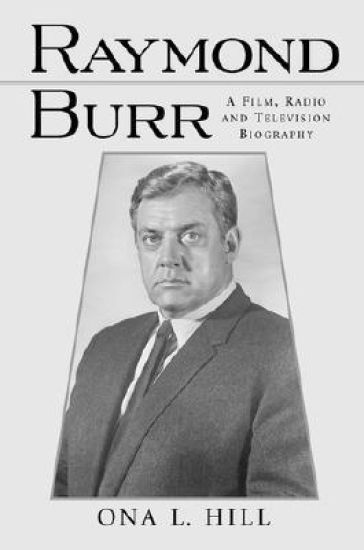
Raymond Burr

Raymond Burr

Ona L. Hill

McFarland Co Inc
1999
pokkari
Best known for his television Perry Mason, Raymond Burr had a career spanning over 50 years. His life is meticulously documented here, including movie roles in such Hollywood productions as Rear Window and Key to the City.
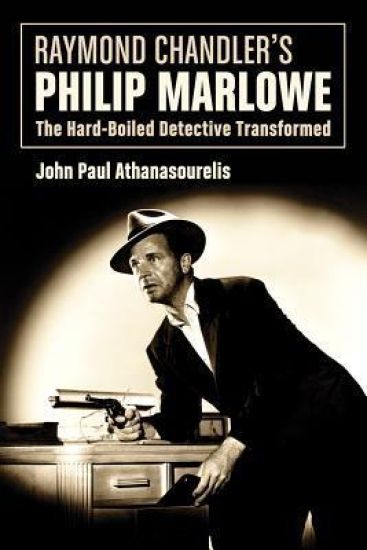
Raymond Chandler's Philip Marlowe

Raymond Chandler's Philip Marlowe

John Paul Athanasourelis

McFarland Co Inc
2011
pokkari
Since their inception, detective novels have been a wildly successful genre of American fiction, featuring a uniquely American belief in rugged individualism. This book focuses on Raymond Chandler's creation of Philip Marlowe, a detective whose feeling for community and willingness to compromise radically changed the genre's vigilantism and violence. It compares Chandler's work to early and mid-20th century American detective novels, particularly those by John Carroll Daly, Mickey Spillane, Dashiell Hammett and Ross Macdonald, as well as contemporary British detective fiction, highlighting Chandler's contribution to the American genre.