Kirjojen hintavertailu. Mukana 11 627 220 kirjaa ja 12 kauppaa.

Kirjahaku

Etsi kirjoja tekijän nimen, kirjan nimen tai ISBN:n perusteella.

1000 tulosta hakusanalla Raymond Burt

Raymond Williams

Raymond Williams

Elizabeth Eldridge; John Eldridge

Routledge
1994
nidottu
This book provides a critical introduction to the full range of Williams' work - fiction and non-fiction. It assesses the significance of his contribution in understanding culture, politics and society. Fair-minded, accurate and sensitive, the book makes crucial connections between the different aspects of Williams' work and the underlying concern for a democratic polity which informed it.
Raymond Williams

Raymond Williams

Fred Inglis

Routledge
1995
sidottu
In his life, Raymond Williams played many parts: child of the Black Mountains, inspirational adult lecturer, Cambridge professor, folk hero and guru of the left. After his death, he has remained a symbolic figure and his classic works, Culture and Society, The Long Revolution, The Country and the City continue to inspire new generations all over the world. In this first major biography, Fred Inglis has spoken to those who knew this complex and charismatic man at every stage of his life, from his boyhood in the Welsh border country to his brief years of retirement. Through their voices and his own passionate stories and at times combative engagement with his subject, he tells of a story of a life not just for its time but for our own. After Thatcher and Reagan and the Cold War, Williams still has much to teach us about the nature of a good and just society and about the constant struggle to attain it.
Raymond Williams

Raymond Williams

Fred Inglis

Routledge
1998
nidottu
In his life, Raymond Williams played many parts: child of the Black Mountains, inspirational adult lecturer, Cambridge professor, folk hero and guru of the left. After his death, he has remained a symbolic figure and his classic works, Culture and Society, The Long Revolution, The Country and the City continue to inspire new generations all over the world. In this first major biography, Fred Inglis has spoken to those who knew this complex and charismatic man at every stage of his life, from his boyhood in the Welsh border country to his brief years of retirement. Through their voices and his own passionate stories and at times combative engagement with his subject, he tells of a story of a life not just for its time but for our own. After Thatcher and Reagan and the Cold War, Williams still has much to teach us about the nature of a good and just society and about the constant struggle to attain it.
Raymond Williams on Television (Routledge Revivals)
First Published in 1989, this work is based around a monthly TV column which Raymond Williams wrote for The Listener between 1968 and 1972. Those were the years of the Prague Spring, of anti-Vietnam war demonstrations, of fighting in Cambodia and Northern Ireland, of hope for McGovern in the United States and attacks on the Wilson Labour Government in Britain. In The Listener articles Williams comments on all of these events, providing a rare glimpse not only into the events of his daily life but also into the continuing development of a personal sociology of culture. The articles also discuss such television forms as detective series, science programmes and sports, travelogue, education, gardening, and children’s programming. The book also includes Williams’ key lecture "Drama in a Dramatised Society", which sets a framework for his analysis; a London Review of Books piece on the Falklands/Malvinas adventure as a "tele-war"; and an interview with Williams on television and teaching. Cited by The Guardian as "The foremost political thinker of his generation", Williams’ writing amounts to a primer on ways of watching television and of critiquing its profound social and political impact.
Raymond Williams on Television (Routledge Revivals)
First Published in 1989, this work is based around a monthly TV column which Raymond Williams wrote for The Listener between 1968 and 1972. Those were the years of the Prague Spring, of anti-Vietnam war demonstrations, of fighting in Cambodia and Northern Ireland, of hope for McGovern in the United States and attacks on the Wilson Labour Government in Britain. In The Listener articles Williams comments on all of these events, providing a rare glimpse not only into the events of his daily life but also into the continuing development of a personal sociology of culture. The articles also discuss such television forms as detective series, science programmes and sports, travelogue, education, gardening, and children’s programming. The book also includes Williams’ key lecture "Drama in a Dramatised Society", which sets a framework for his analysis; a London Review of Books piece on the Falklands/Malvinas adventure as a "tele-war"; and an interview with Williams on television and teaching. Cited by The Guardian as "The foremost political thinker of his generation", Williams’ writing amounts to a primer on ways of watching television and of critiquing its profound social and political impact.
Raymond Briggs

Raymond Briggs

Nicolette Jones

Thames Hudson Ltd
2020
sidottu
Raymond Briggs has changed the face of children’s picture books, with his innovations of both form and subject. Stylistically versatile, he has illustrated some sixty books, twenty of them with his own text, and first became a household name in the late 1970s and early 1980s with a handful of books – Father Christmas, Fungus the Bogeyman, The Snowman, When the Wind Blows – that were entertaining and subversive and appealed to both children and adults. The refrains of his work are class, family, love and loss. Nevertheless, his default mode of expression is humour. Briggs is always funny, and the balance between this and melancholy is his defining characteristic, though his style ranges from the romantic to the grotesque, from the fanciful to the direct. Encompassing sixty years of Raymond Briggs’s work, from political picturebooks to children’s classics, this study explores his themes of class, family and loss, and how he demonstrates both emotional power and great technical skill.
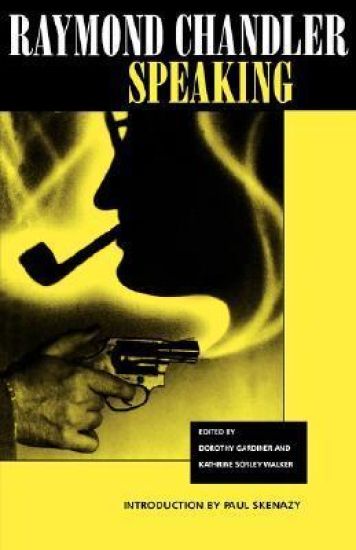
Raymond Chandler Speaking

Raymond Chandler Speaking

Raymond Chandler

University of California Press
1997
pokkari
Tough-minded and typically idiosyncratic, here is Chandler on Chandler, the mystery novel, writing, Hollywood, TV, publishing, cats, and famous crimes. This skillfully edited selection of letters, articles, and notes also includes the short story "A Couple of Writers" and the first chapters of Chandler's last Philip Marlowe novel, "The Poodle Springs Story", left unfinished at his death. Paul Skenazy has provided a new introduction for this edition as well as a new selected bibliography.
Raymond Poincaré

Raymond Poincaré

J. F. V. Keiger

Cambridge University Press
1997
sidottu
This study is a scholarly biography of one of France's foremost political leaders. In a career which ran from the 1880s to the 1930s, one of the most formative periods of modern French history, Poincaré held the principal offices of state. He played crucial roles in France's entry into the Great War, the organisation of the war effort, the peace settlement, the reparations question, the occupation of the Ruhr and the reorganisation of French finances in the 1920s. His life and work is surrounded by controversy and myth, from 'Poincaré-la-guerre' to 'Poincaré-le-franc', which this book dissects. Using a host of new archival material, Professor Keiger explores the historiography of the man and his times and reveals, somewhat surprisingly, how animal rights and feminism could be as important to him as party politics and public finance.
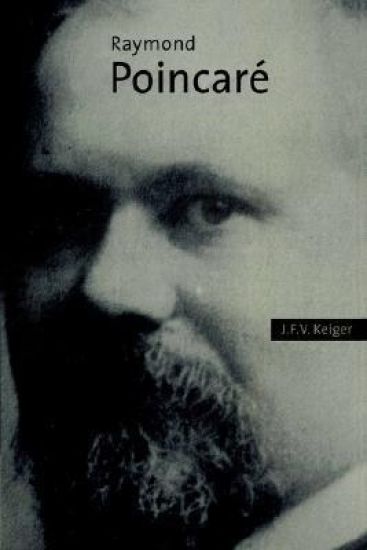
Raymond Poincaré

Raymond Poincaré

J. F. V. Keiger

Cambridge University Press
2002
pokkari
This study is a pioneering scholarly biography of one of France’s foremost political leaders. In a career which ran from the 1880s to the 1930s, one of the most formative periods of modern French history, Poincaré held the principal offices of state. He played crucial roles in France’s entry into the Great War, the organisation of the war effort, the peace settlement, the reparations question, the occupation of the Ruhr and the reorganisation of French finances in the 1920s. His life and work is surrounded by controversy and myth, from ‘Poincaré-la-guerre’ to ‘Poincaré-le-franc’, which this book dissects. Using a host of new archival material, Professor Keiger explores the historiography of the man and his times and reveals, somewhat surprisingly, how animal rights and feminism could be as important to him as party politics and public finance.
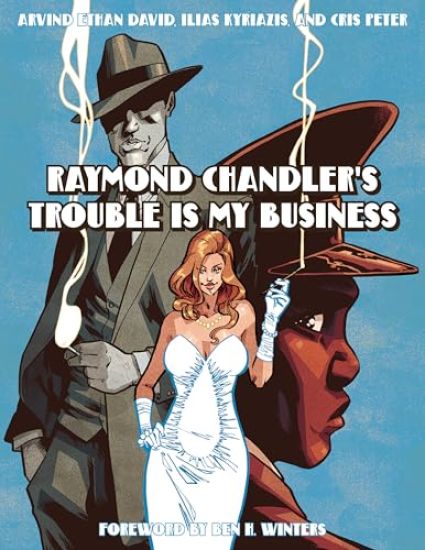
Raymond Chandler's Trouble Is My Business

Raymond Chandler's Trouble Is My Business

Raymond Chandler; Arvind Ethan David

Pantheon Books
2025
sidottu
A brilliant graphic novel adaptation of Raymond Chandler's classic noir tale featuring iconic private eye Philip Marlowe "Inspired. . . . This trio brings Chandler's] words to vivid life. . . . A triumph of teamwork."--Air Mail In 1940s Los Angeles, a sour-faced millionaire hires Philip Marlowe, a hard-boiled, harder-drinking detective, to scare off a suspected gold digger who has gotten her claws into his even wealthier stepson. Marlowe takes the case but quickly discovers that the woman, Harriett Huntress, isn't just after gold: she's playing a long, cold game of revenge... Marlowe forms an alliance with George, the client's chauffeur-cum-bodyguard-cum-fixer. George is a Black, Dartmouth-educated veteran with a sniper's skills and his own agenda, and the two uneasy allies find themselves on the wrong end of a brace of hired killers and an enigmatic casino boss. . . . It quickly becomes clear that Marlowe, sticking his nose where it doesn't belong, is just asking for trouble. But that's the thing. Trouble is his business.
Raymond Brown, 'The Jews,' and the Gospel of John

Raymond Brown, 'The Jews,' and the Gospel of John

Sonya Shetty Cronin

T. T.Clark Ltd
2014
sidottu
Until the mid-1960s, most commentators of the Gospel of John were aware of a polemic against 'the Jews,' yet they did not consider it with reference to contemporary ethical discussion. A shift in focus in Johannine scholarship is noticeable from the mid-1960s and 1970s to the present, where commentators began to connect the Gospel's polemic against 'the Jews' with potential anti-Judaism in the text. As yet, very little work has been done to answer the question of how this change in sensitivity came about. This book is a historiography of one scholar's growing awareness of potential anti-Judaism in the Gospel of John with the intention of using this individual history to explain the larger trend in biblical studies. Sonya Cronin examines the published work of Raymond Brown, a prominent Catholic New Testament scholar, between the years 1960-1998. The book contextualizes Brown's work by evaluating the impact of ecclesiastical statements and the influence of earlier and contemporary Johannine scholarship on Brown's biblical interpretation, and then posits theories as to why change occurs at specific times.
Raymond Brown, 'The Jews,' and the Gospel of John

Raymond Brown, 'The Jews,' and the Gospel of John

Sonya Shetty Cronin

T. T.Clark Ltd
2016
nidottu
Until the mid-1960s, most commentators of the Gospel of John were aware of a polemic against 'the Jews,' yet they did not consider it with reference to contemporary ethical discussion. A shift in focus in Johannine scholarship is noticeable from the mid-1960s and 1970s to the present, where commentators began to connect the Gospel's polemic against 'the Jews' with potential anti-Judaism in the text. As yet, very little work has been done to answer the question of how this change in sensitivity came about. This book is a historiography of one scholar's growing awareness of potential anti-Judaism in the Gospel of John with the intention of using this individual history to explain the larger trend in biblical studies. Sonya Cronin examines the published work of Raymond Brown, a prominent Catholic New Testament scholar, between the years 1960-1998. The book contextualizes Brown's work by evaluating the impact of ecclesiastical statements and the influence of earlier and contemporary Johannine scholarship on Brown's biblical interpretation, and then posits theories as to why change occurs at specific times.
Raymond's Party

Raymond's Party

Vladimir Merisca

Thunder Axe Publishing
2022
pokkari
Have you ever tasted soup joumou on a mild winter day in Oklahoma? Charlie has-at Raymond's party It's not just any New Year's Day for Charlie. He and his family get to spend a day at his best friend Raymond's house for a New Year's Day and birthday celebration, rich in Haitian culture and multi-cultural experiences.
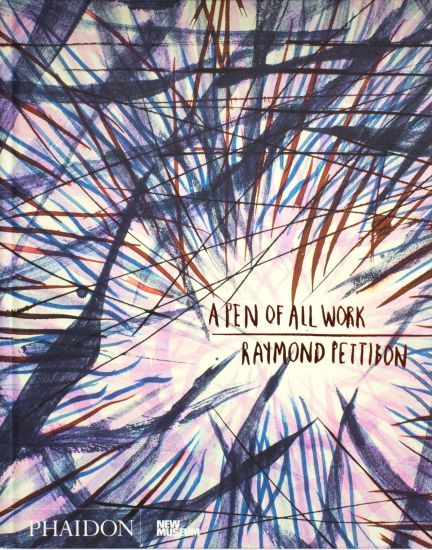
Raymond Pettibon

Raymond Pettibon

Massimiliano Gioni; Gary Carrion-Murayari

Phaidon Press Ltd
2017
sidottu
The most comprehensive monograph in print on this provocative artist, who has helped to redefine contemporary art This thorough, multifaceted assessment of Raymond Pettibon's entire career to date includes nearly 700 images, contributions from important figures in the art-historical and cultural fields, and a recent interview with the artist. Beginning with childhood drawings, the book moves through to his mature work, which embraces both high and low culture.
Raymond Williams

Raymond Williams

Alan O'Connor

Rowman Littlefield Publishers
2005
sidottu
Raymond Williams_a Welsh media critic and one of the founding thinkers behind the popular field of cultural studies_believed that the traditional focus of biographies on individuals isolated these people from their communities. For this reason, Alan O'Connor looks at Williams and his time period, one of social change and crisis in Wales and England. Williams, the son of a railway worker, would have pursued university studies, an atypical act for a working-class boy, had the Second World War not disrupted his plans. So the unorthodox intellectual executed his work outside the university until 1960, decades after he originally intended to begin his studies. O'Connor then turns to Williams's studies of media, revealing his subject's life-long emphasis on the interchange between culture and democracy. He shows the ways in which these ideas were revolutionary, upsetting conservative thinkers of the time, and concludes with the same message of hope that Williams carried with him daily: In a period dominated by conservative forces, Raymond Williams still thought it worthwhile to struggle for small changes.