Kirjojen hintavertailu. Mukana 11 627 670 kirjaa ja 12 kauppaa.

Kirjahaku

Etsi kirjoja tekijän nimen, kirjan nimen tai ISBN:n perusteella.

1000 tulosta hakusanalla Reena Kumarasingham

Hindu Women's Property Rights in Rural India

Hindu Women's Property Rights in Rural India

Reena Patel

TAYLOR FRANCIS LTD
2022
nidottu
Hindu women in India have independent right of ownership to property under the Law of Succession (The Hindu Succession Act, 1956). However, during the last five decades of its operation not many women have exercised their rights under the enactment. This volume addresses the issue of Hindu peasant women's ability to effectuate the statutory rights to succession and assert ownership of their share in family land. The work combines a critical evaluation of law with economic analyses into allocation of resources within the family as a means of addressing gender relations and explaining resulting gender inequalities.
James Merrill

James Merrill

Reena Sastri

Routledge
2016
nidottu
James Merrill: Knowing Innocence reevaluates the achievement of this important poet by showing how he takes up an old paradigm – innocence – and reinvents it in response to new historical, scientific, and cultural developments including the bomb, contemporary cosmology, and the question of agency. The book covers Merrill’s full career, emphasizing the late poetry, on which there remains little commentary. Illuminating both Merrill’s relation to a tradition of literary innocence from Milton to Blake and Wordsworth to Emerson and Stevens, and his relevance to contemporary cultural debates, the rubric of "knowing innocence" helps us to understand his achievement. Merrill undertakes a career-long effort to know innocence, and develops a thematic and stylistic attitude that is both innocent and knowing, combining attitudes of wonder and hope with reflexive wit, intellectual breadth, and an unflinching gaze at mortality. He ultimately imagines innocence as creative agency, a capacity for imagination, invention, and ethical responsibility. The book demonstrates how, addressing questions of sexual identity, childhood and memory; atomic science, the big bang, and black holes; environmental degradation; AIDS; and the notion of the death of history – while honoring poetry’s essential qualities of freedom and play – his poems perform cultural work crucial to his time and ours.
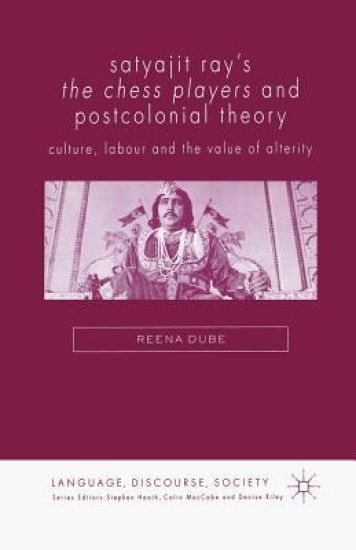
Satyajit Ray's The Chess Players and Postcolonial Film Theory
Indispensable for students of film studies, in this book Reena Dube explores Satyajit Ray's films, and The Chess Players in particular, in the context of discourses of labour in colonial and postcolonial conditions. Starting from Daniel Defoe and moving through history, short story and film to the present, Dube widens her analysis with comparisons in which Indian films are situated alongside Hollywood and other films, and interweaves historical and cultural debates within film theory. Her book treats film as part of the larger cultural production of India and provides a historical sense of the cross genre borrowings, traditions and debates that have deeply influenced Indian cinema and its viewers.
Satyajit Ray's The Chess Players and Postcolonial Film Theory
Indispensable for students of film studies, in this book Reena Dube explores Satyajit Ray's films, and The Chess Players in particular, in the context of discourses of labour in colonial and postcolonial conditions. Starting from Daniel Defoe and moving through history, short story and film to the present, Dube widens her analysis with comparisons in which Indian films are situated alongside Hollywood and other films, and interweaves historical and cultural debates within film theory. Her book treats film as part of the larger cultural production of India and provides a historical sense of the cross genre borrowings, traditions and debates that have deeply influenced Indian cinema and its viewers.
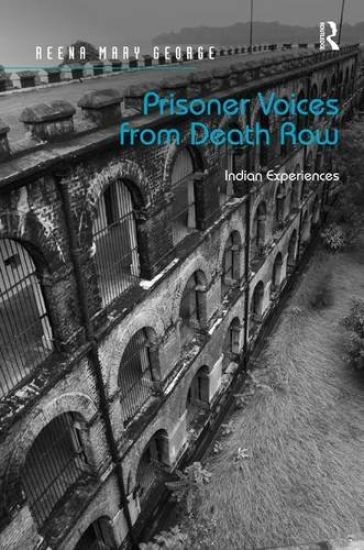
Prisoner Voices from Death Row

Prisoner Voices from Death Row

Reena Mary George

Routledge
2015
sidottu
Death penalty has produced endless discourses not only in the context of prisons, prisoners and punishment but also in various legal aspects concerning the validity of death penalty, the right to life, and torture. Death penalty is embedded in Indian law, however very little is known about the people who are on death row barring a few media reports on them. The main objective of this book is to enquire whether the dignity of prisoners is upheld while they confront the criminal justice system and whilst surviving on death row. Additionally, it explores the lived-experiences and perceptions of prisoners on death row as they create meaning out of their world. With this rationale, 111 prisoners on death row in India and some of their family members were interviewed. The theoretical underpinnings of phenomenology and symbolic interactionism coupled with data analysis lead to an understanding of the prisoners on death row with special reference to their demographic profile and the impact of death sentence on their families. George’s research highlights three salient features, namely: poverty, social exclusion and marginalisation are antecedent to death penalty; death penalty is a constructed account by the state machinery; and prisoners on death row situate dignity higher in the juxtaposition of death and dignity.
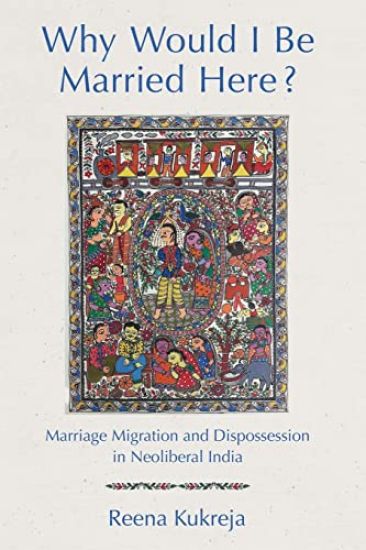
Why Would I Be Married Here?

Why Would I Be Married Here?

Reena Kukreja

CORNELL UNIVERSITY PRESS
2022
sidottu
Why Would I Be Married Here? examines marriage migration undertaken by rural bachelors in North India, unable to marry locally, who travel across the breadth of India seeking brides who do not share the same caste, ethnicity, language, or customs as themselves. Combining rich ethnographic evidence with Dalit feminist and political economy frameworks, Reena Kukreja connects the macro-political violent process of neoliberalism to the micro-personal level of marriage and intimate gender relations to analyze the lived reality of this set of migrant brides in cross-region marriages among dominant-peasant caste Hindus and Meo Muslims in rural North India. Why Would I Be Married Here? reveals how predatory capitalism links with patriarchy to dispossess many poor women from India's marginalized Dalit and Muslim communities of marriage choices in their local communities. It reveals how, within the context of the increasing spread of capitalist relations, these women's pragmatic cross-region migration for marriage needs to be reframed as an exercise of their agency that simultaneously exposes them to new forms of gender subordination and internal othering of caste discrimination and ethnocentrism in conjugal communities. Why Would I Be Married Here? offers powerful examples of how contemporary forces of neoliberalism reshape the structural oppressions compelling poor women from marginalized communities worldwide into making compromised choices about their bodies, their labor, and their lives.
Why Would I Be Married Here?

Why Would I Be Married Here?

Reena Kukreja

CORNELL UNIVERSITY PRESS
2022
pokkari
Why Would I Be Married Here? examines marriage migration undertaken by rural bachelors in North India, unable to marry locally, who travel across the breadth of India seeking brides who do not share the same caste, ethnicity, language, or customs as themselves. Combining rich ethnographic evidence with Dalit feminist and political economy frameworks, Reena Kukreja connects the macro-political violent process of neoliberalism to the micro-personal level of marriage and intimate gender relations to analyze the lived reality of this set of migrant brides in cross-region marriages among dominant-peasant caste Hindus and Meo Muslims in rural North India. Why Would I Be Married Here? reveals how predatory capitalism links with patriarchy to dispossess many poor women from India's marginalized Dalit and Muslim communities of marriage choices in their local communities. It reveals how, within the context of the increasing spread of capitalist relations, these women's pragmatic cross-region migration for marriage needs to be reframed as an exercise of their agency that simultaneously exposes them to new forms of gender subordination and internal othering of caste discrimination and ethnocentrism in conjugal communities. Why Would I Be Married Here? offers powerful examples of how contemporary forces of neoliberalism reshape the structural oppressions compelling poor women from marginalized communities worldwide into making compromised choices about their bodies, their labor, and their lives.