James Merrill: Knowing Innocence reevaluates the achievement of this important poet by showing how he takes up an old paradigm – innocence – and reinvents it in response to new historical, scientific, and cultural developments including the bomb, contemporary cosmology, and the question of agency. The book covers Merrill’s full career, emphasizing the late poetry, on which there remains little commentary. Illuminating both Merrill’s relation to a tradition of literary innocence from Milton to Blake and Wordsworth to Emerson and Stevens, and his relevance to contemporary cultural debates, the rubric of "knowing innocence" helps us to understand his achievement. Merrill undertakes a career-long effort to know innocence, and develops a thematic and stylistic attitude that is both innocent and knowing, combining attitudes of wonder and hope with reflexive wit, intellectual breadth, and an unflinching gaze at mortality. He ultimately imagines innocence as creative agency, a capacity for imagination, invention, and ethical responsibility. The book demonstrates how, addressing questions of sexual identity, childhood and memory; atomic science, the big bang, and black holes; environmental degradation; AIDS; and the notion of the death of history – while honoring poetry’s essential qualities of freedom and play – his poems perform cultural work crucial to his time and ours.
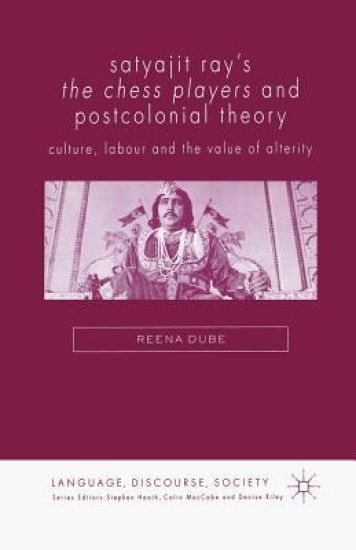
Indispensable for students of film studies, in this book Reena Dube explores Satyajit Ray's films, and The Chess Players in particular, in the context of discourses of labour in colonial and postcolonial conditions. Starting from Daniel Defoe and moving through history, short story and film to the present, Dube widens her analysis with comparisons in which Indian films are situated alongside Hollywood and other films, and interweaves historical and cultural debates within film theory. Her book treats film as part of the larger cultural production of India and provides a historical sense of the cross genre borrowings, traditions and debates that have deeply influenced Indian cinema and its viewers.
Indispensable for students of film studies, in this book Reena Dube explores Satyajit Ray's films, and The Chess Players in particular, in the context of discourses of labour in colonial and postcolonial conditions. Starting from Daniel Defoe and moving through history, short story and film to the present, Dube widens her analysis with comparisons in which Indian films are situated alongside Hollywood and other films, and interweaves historical and cultural debates within film theory. Her book treats film as part of the larger cultural production of India and provides a historical sense of the cross genre borrowings, traditions and debates that have deeply influenced Indian cinema and its viewers.
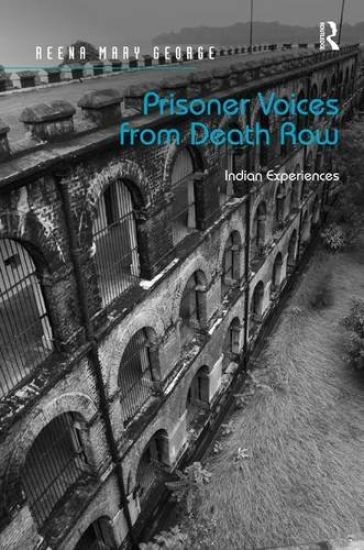
Death penalty has produced endless discourses not only in the context of prisons, prisoners and punishment but also in various legal aspects concerning the validity of death penalty, the right to life, and torture. Death penalty is embedded in Indian law, however very little is known about the people who are on death row barring a few media reports on them. The main objective of this book is to enquire whether the dignity of prisoners is upheld while they confront the criminal justice system and whilst surviving on death row. Additionally, it explores the lived-experiences and perceptions of prisoners on death row as they create meaning out of their world. With this rationale, 111 prisoners on death row in India and some of their family members were interviewed. The theoretical underpinnings of phenomenology and symbolic interactionism coupled with data analysis lead to an understanding of the prisoners on death row with special reference to their demographic profile and the impact of death sentence on their families. George’s research highlights three salient features, namely: poverty, social exclusion and marginalisation are antecedent to death penalty; death penalty is a constructed account by the state machinery; and prisoners on death row situate dignity higher in the juxtaposition of death and dignity.
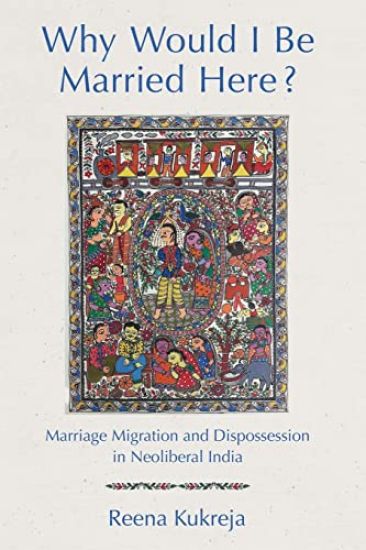
Why Would I Be Married Here? examines marriage migration undertaken by rural bachelors in North India, unable to marry locally, who travel across the breadth of India seeking brides who do not share the same caste, ethnicity, language, or customs as themselves. Combining rich ethnographic evidence with Dalit feminist and political economy frameworks, Reena Kukreja connects the macro-political violent process of neoliberalism to the micro-personal level of marriage and intimate gender relations to analyze the lived reality of this set of migrant brides in cross-region marriages among dominant-peasant caste Hindus and Meo Muslims in rural North India. Why Would I Be Married Here? reveals how predatory capitalism links with patriarchy to dispossess many poor women from India's marginalized Dalit and Muslim communities of marriage choices in their local communities. It reveals how, within the context of the increasing spread of capitalist relations, these women's pragmatic cross-region migration for marriage needs to be reframed as an exercise of their agency that simultaneously exposes them to new forms of gender subordination and internal othering of caste discrimination and ethnocentrism in conjugal communities. Why Would I Be Married Here? offers powerful examples of how contemporary forces of neoliberalism reshape the structural oppressions compelling poor women from marginalized communities worldwide into making compromised choices about their bodies, their labor, and their lives.
Why Would I Be Married Here? examines marriage migration undertaken by rural bachelors in North India, unable to marry locally, who travel across the breadth of India seeking brides who do not share the same caste, ethnicity, language, or customs as themselves. Combining rich ethnographic evidence with Dalit feminist and political economy frameworks, Reena Kukreja connects the macro-political violent process of neoliberalism to the micro-personal level of marriage and intimate gender relations to analyze the lived reality of this set of migrant brides in cross-region marriages among dominant-peasant caste Hindus and Meo Muslims in rural North India. Why Would I Be Married Here? reveals how predatory capitalism links with patriarchy to dispossess many poor women from India's marginalized Dalit and Muslim communities of marriage choices in their local communities. It reveals how, within the context of the increasing spread of capitalist relations, these women's pragmatic cross-region migration for marriage needs to be reframed as an exercise of their agency that simultaneously exposes them to new forms of gender subordination and internal othering of caste discrimination and ethnocentrism in conjugal communities. Why Would I Be Married Here? offers powerful examples of how contemporary forces of neoliberalism reshape the structural oppressions compelling poor women from marginalized communities worldwide into making compromised choices about their bodies, their labor, and their lives.
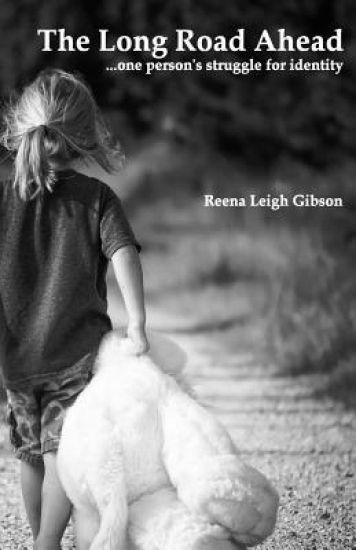
On February 11th 1994, Reena took a step that she'd put off for what seemed like eternity. After a works party, and having being very drunk, she came out to her two best friends as transsexual. It wasn't planned at all; it's just the way it happened.The Long Road Ahead follows her own story and the way in which she remembers things from her tender years as a child and how it was for her back then. Growing up in an environment that for what she remembers wasn't so typically "Gender Specific", where if you did something that wasn't stereotypical of what boys and girls were expected to do then you wasn't mocked or belittled for it.This is the story about her personal life; some of what she writes about is drawn directly from memory whilst other parts are collected from diary entries. Some of it is quite personal and detailed, yet other parts might go off on a tangent and somehow at times might seem quite irrelevant, but in its entirety is still a true account of the life she lived. She admits at the time of "coming out" that she never fully understood what "transsexual" was; for her the only reference point was two articles she'd seen in a tabloid newspaper and a women's magazine of two transsexuals who had told their story how it was for them. Reena soon came to realise how very similar their own stories were to how she knew she'd felt since her early childhood. At that time there was no internet and no real way of finding these things out, reading other people's stories in the newspapers, magazines and the very rare TV documentary was all there really was. "...the chance to look back through my life as I remember it, or even recoup memories of my past I thought I'd forgotten about, also to see how much of my life was actually trans related, although at that particular time in my life I judged it as being quite normal""...from the first time when for some strange reason you're tempted to wear that skirt and blouse and it feels right, but you know that doing such things will cause you to be hurt with ridicule by others, so you don't. It's the period of time in which you live in fear, the time between you living how think others wish you to live and the time you start to admit to yourself that you're not actually the person you think others would want you to be and the need to do something about it. You stay locked there in this state, in constant denial with yourself and that it's all just a phase, or a period in your life when you're lost, it's just some stupid fetish you have and that it'll pass. That eventually you can put aside all of these feelings and the thoughts you had and it'll all go away and no one will ever need to know. But you later come to realise that it doesn't pass, it never does go away, that it is in fact something that's very real, that it isn't something that can hide from for the rest of your life, as much as you may want to believe that you can."