Kirjojen hintavertailu. Mukana 11 627 363 kirjaa ja 12 kauppaa.

Kirjahaku

Etsi kirjoja tekijän nimen, kirjan nimen tai ISBN:n perusteella.

1000 tulosta hakusanalla Reena Raj

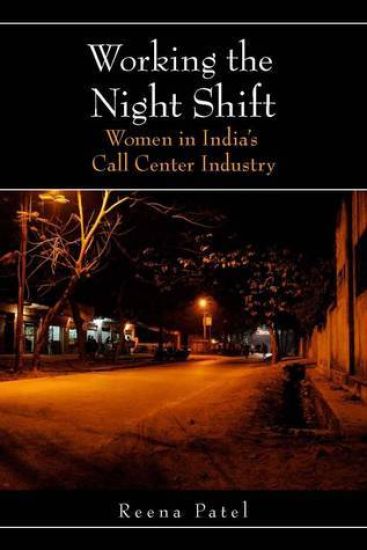
Working the Night Shift

Working the Night Shift

Reena Patel

Stanford University Press
2010
pokkari
Relatively high wages and the opportunity to be part of an upscale, globalized work environment draw many in India to the call center industry. At the same time, night shift employment presents women, in particular, with new challenges alongside the opportunities. This book explores how beliefs about what constitutes "women's work" are evolving in response to globalization. Working the Night Shift is the first in-depth study of the transnational call center industry that is written from the point of view of women workers. It uncovers how call center employment affects their lives, mainly as it relates to the anxiety that Indian families and Indian society have towards women going out at night, earning a good salary, and being exposed to western culture. This timely account illustrates the ironic and, at times, unsettling experiences of women who enter the spaces and places made accessible through call center work. Visit the author's website at http://www.working-the-nightshift.com and Facebook group at www.facebook.com/WorkingtheNightShift.
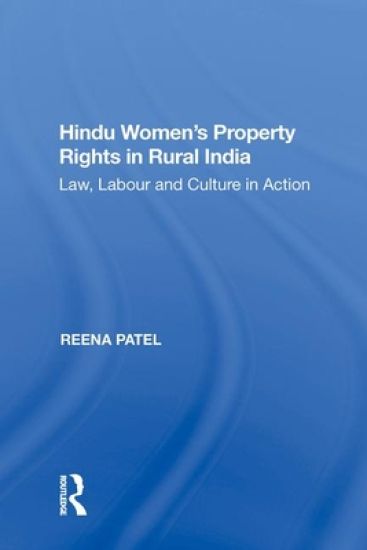
Hindu Women's Property Rights in Rural India
Hindu women in India have independent right of ownership to property under the Law of Succession (The Hindu Succession Act, 1956). However, during the last five decades of its operation not many women have exercised their rights under the enactment. This volume addresses the issue of Hindu peasant women's ability to effectuate the statutory rights to succession and assert ownership of their share in family land. The work combines a critical evaluation of law with economic analyses into allocation of resources within the family as a means of addressing gender relations and explaining resulting gender inequalities.
Winnie & Her Worries

Winnie & Her Worries

Reena B. Patel

Kind Eye Publishing
2018
nidottu
In this easy to understand story and guide, Reena B. Patel, MA, LEP, BCBA, expertly provides parents, teachers and children with concrete and proper tools necessary to help kids understand and control the worries they possess.
India-Philippines Relations

India-Philippines Relations

Reena Marwah

TAYLOR FRANCIS LTD
2025
sidottu
This book outlines 75 years of robust and multi-dimensional diplomatic relations between two democracies – India and the Philippines. Through nine chapters, penned by relying mainly on primary documents, published works, and consultations with experts and practitioners, this book takes the reader beyond historical, civilisational, political and economic synergies to locate the partnership and its potential in both bilateral and multilateral areas.This volume responds to questions such as: What explains the need to strengthen India-Philippines partnership undergirded by their historical, diasporic and cultural affinities? How have both New Delhi and Manila reassessed their economic and strategic visions in the context of the transforming Indo-Pacific discourses? Given that defence cooperation has been the hallmark of trust building, how has this been reflected in their shared visions for regional security, peace and prosperity? Finally, what are the key sectors and catalysts for forging closer cooperation for the next 25 years of India-Philippines diplomatic relations?Print edition not for sale in South Asia (India, Sri Lanka, Nepal, Bangladesh, Pakistan and Bhutan)
Transforming Lives Behind Bars

Transforming Lives Behind Bars

Reena Sharma

TAYLOR FRANCIS LTD
2025
sidottu
This volume emerges from the author’s extensive professional journey spanning over two decades, drawing from her work in behavioral sciences, training, and applied psychology. Rooted in research and fieldwork within Indian correctional institutions, it brings together internationally validated psychological assessments adapted for forensic populations, biopsychosocial evaluations, and qualitative and quantitative methodologies. It offers a compelling fusion of narrative case studies and evidence-based forensic psychology, bridging scientific inquiry with real-world complexity, moving beyond traditional academic boundaries.Drawing on global frameworks such as Forensic Cognitive Behavioural Therapy (CBT) and therapeutic jurisprudence, the book highlights the Samarth: Breaking Barriers initiative launched at Ahmedabad Central Jail and then extended in other central prisons of Gujarat, as an applied model tailored to the Indian correctional context. The initiative ethically adapts international best practices to align with institutional realities and cultural dynamics, making it a potential reference point for similarly under-resourced or high-need environments.Aimed at policymakers, forensic psychologists, criminologists, penologists, mental health professionals, and those working in correctional administration and criminal justice reform, the volume illustrates the potential of structured, ethical, and culturally responsive rehabilitation. It will also be a valuable resource for students, researchers, and practitioners across psychology, psychiatry, penology, correctional administration, social welfare, and correctional mental health.
Connecting Places, Connecting People
What is a better community? How can we reconfigure places and transport networks to create environmentally friendly, economically sound, and socially just communities? How can we meet the challenges of growing pollution, depleting fossil fuels, rising gasoline prices, traffic congestion, traffic fatalities, increased prevalence of obesity, and lack of social inclusion? The era of car-based planning has led to the disconnection of people and place in developed countries, and is rapidly doing so in the developing countries of the Global South. The unfolding mega-trend in technological innovation, while adding new patterns of future living and mobility in the cities, will question the relevance of face-to-face connections. What will be the ‘glue’ that holds communities together in the future? To build better communities and to build better cities, we need to reconnect people and places. Connecting Places, Connecting People offers a new paradigm for place making by reordering urban planning principles from prioritizing movement of vehicles to focusing on places and the people who live in them. Numerous case studies, including many from developing countries in the Global South, illustrate how this can be realized or fallen short of in practical terms. Importantly, citizens need to be engaged in policy development, to connect with each other and with government agencies. To measure the connectivity attributes of places and the success of strategies to meet the needs, an Audit Tool is offered for a continual quantitative and qualitative evaluation.
Connecting Places, Connecting People
What is a better community? How can we reconfigure places and transport networks to create environmentally friendly, economically sound, and socially just communities? How can we meet the challenges of growing pollution, depleting fossil fuels, rising gasoline prices, traffic congestion, traffic fatalities, increased prevalence of obesity, and lack of social inclusion? The era of car-based planning has led to the disconnection of people and place in developed countries, and is rapidly doing so in the developing countries of the Global South. The unfolding mega-trend in technological innovation, while adding new patterns of future living and mobility in the cities, will question the relevance of face-to-face connections. What will be the ‘glue’ that holds communities together in the future? To build better communities and to build better cities, we need to reconnect people and places. Connecting Places, Connecting People offers a new paradigm for place making by reordering urban planning principles from prioritizing movement of vehicles to focusing on places and the people who live in them. Numerous case studies, including many from developing countries in the Global South, illustrate how this can be realized or fallen short of in practical terms. Importantly, citizens need to be engaged in policy development, to connect with each other and with government agencies. To measure the connectivity attributes of places and the success of strategies to meet the needs, an Audit Tool is offered for a continual quantitative and qualitative evaluation.
Hindu Women's Property Rights in Rural India

Hindu Women's Property Rights in Rural India

Reena Patel

TAYLOR FRANCIS LTD
2022
nidottu
Hindu women in India have independent right of ownership to property under the Law of Succession (The Hindu Succession Act, 1956). However, during the last five decades of its operation not many women have exercised their rights under the enactment. This volume addresses the issue of Hindu peasant women's ability to effectuate the statutory rights to succession and assert ownership of their share in family land. The work combines a critical evaluation of law with economic analyses into allocation of resources within the family as a means of addressing gender relations and explaining resulting gender inequalities.
James Merrill

James Merrill

Reena Sastri

Routledge
2016
nidottu
James Merrill: Knowing Innocence reevaluates the achievement of this important poet by showing how he takes up an old paradigm – innocence – and reinvents it in response to new historical, scientific, and cultural developments including the bomb, contemporary cosmology, and the question of agency. The book covers Merrill’s full career, emphasizing the late poetry, on which there remains little commentary. Illuminating both Merrill’s relation to a tradition of literary innocence from Milton to Blake and Wordsworth to Emerson and Stevens, and his relevance to contemporary cultural debates, the rubric of "knowing innocence" helps us to understand his achievement. Merrill undertakes a career-long effort to know innocence, and develops a thematic and stylistic attitude that is both innocent and knowing, combining attitudes of wonder and hope with reflexive wit, intellectual breadth, and an unflinching gaze at mortality. He ultimately imagines innocence as creative agency, a capacity for imagination, invention, and ethical responsibility. The book demonstrates how, addressing questions of sexual identity, childhood and memory; atomic science, the big bang, and black holes; environmental degradation; AIDS; and the notion of the death of history – while honoring poetry’s essential qualities of freedom and play – his poems perform cultural work crucial to his time and ours.
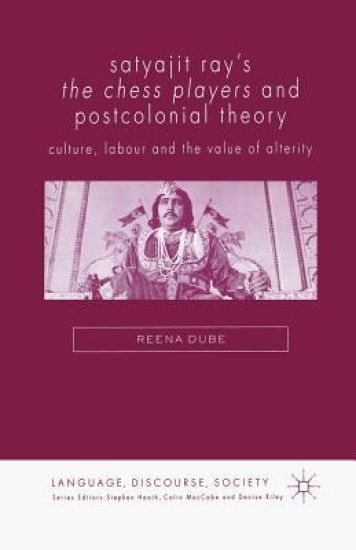
Satyajit Ray's The Chess Players and Postcolonial Film Theory
Indispensable for students of film studies, in this book Reena Dube explores Satyajit Ray's films, and The Chess Players in particular, in the context of discourses of labour in colonial and postcolonial conditions. Starting from Daniel Defoe and moving through history, short story and film to the present, Dube widens her analysis with comparisons in which Indian films are situated alongside Hollywood and other films, and interweaves historical and cultural debates within film theory. Her book treats film as part of the larger cultural production of India and provides a historical sense of the cross genre borrowings, traditions and debates that have deeply influenced Indian cinema and its viewers.
Satyajit Ray's The Chess Players and Postcolonial Film Theory
Indispensable for students of film studies, in this book Reena Dube explores Satyajit Ray's films, and The Chess Players in particular, in the context of discourses of labour in colonial and postcolonial conditions. Starting from Daniel Defoe and moving through history, short story and film to the present, Dube widens her analysis with comparisons in which Indian films are situated alongside Hollywood and other films, and interweaves historical and cultural debates within film theory. Her book treats film as part of the larger cultural production of India and provides a historical sense of the cross genre borrowings, traditions and debates that have deeply influenced Indian cinema and its viewers.