Kirjojen hintavertailu. Mukana 11 699 587 kirjaa ja 12 kauppaa.

Kirjahaku

Etsi kirjoja tekijän nimen, kirjan nimen tai ISBN:n perusteella.

1000 tulosta hakusanalla Ricco Dios

Formen Der Gewalt in Pflegeeinrichtungen

Formen Der Gewalt in Pflegeeinrichtungen

Ricco Freyberg

Grin Verlag Gmbh
2007
nidottu
Hausarbeit aus dem Jahr 2001 im Fachbereich Ethik, einseitig bedruckt, Note: 2,3, Evangelische Fachhochschule Berlin - Fachhochschule für Sozialarbeit und Sozialpädagogik, Veranstaltung: Ethik im Pflegemanagement, 15 Eintragungen im Literaturverzeichnis, Sprache: Deutsch, Abstract: Ist die Würde des Menschen wirklich unantastbar? Meine eigenen Erfahrungen als Krankenpfleger und die gehäuften Pressemitteilungen zeigen uns, dass das besonders in ambulanten und stationären Pflegeeinrichtungen und im Rahmen der familiären Betreuung nicht immer der Fall ist. Zur Zeit leben ca. 660.000 Menschen in Heimen. Sie sind dorthin gezogen, weil sie nicht mehr in ihrer eigenen Wohnung leben können oder wollen. Die Gründe für einen Umzug in ein Heim sind vielfältig. Zum einen benötigen die Heimbewohner ständige Hilfe, Pflege und Betreuung in Folge schwerwiegender Erkrankungen oder sie wollen nicht mehr allein sein, sondern die Gesellschaft anderer Heimbewohner genießen. Es kommt aber auch vor, dass den Hilfebedürftigen von den eigenen Angehörigen suggeriert wird, nicht mehr in der Lage zu sein, sich selbst zu versorgen und aus falscher Scham und ihrer Hilflosigkeit heraus Niemanden zur Last fallen zu wollen und aus Unwissenheit über die Möglichkeiten der ambulanten Betreuung, sei es der fahrbare Mittagstisch oder hauswirtschaftlichen Hilfen bis hin zur umfassenden ambulanten medizinischen und pflegerischen Betreuung, entscheiden sich viele vor allem ältere Bürger für einen Umzug in ein Heim. So viele Gründe wie es für einen Umzug in ein Heim gibt, gibt es Gesichter für physische und psychische Gewalt. Dabei steht körperliche Gewalt gar nicht so sehr im Vordergrund. Häufiger werden die kranken und alten Menschen seelisch gequält, eingesperrt, vernachlässigt, finanziell ausgebeutet oder mit Medikamenten ruhig gestellt und so in ihrem freien Willen eingeschränkt. Oft wird dadurch das im Grundgesetz verankerte Recht auf Selbstbestimmung und körperliche Unversehrtheit verletzt. Sind nicht auch Wörter wie Rentnerschwemme, Alterslawine, Überalterung versteckte Gewaltwörter, die alte Menschen diskriminieren und Symbole, die Denken und Handeln destruktiv beeinflussen und kollektive Vorurteile schaffen und dadurch Gewalt gegen Alte fördern? "In den meisten Fällen geschieht die Gewalt jedoch nicht aus Willkür oder Bösartigkeit, sondern ist das Endprodukt einer langen Kette von Störungen in der Beziehung zwischen Helfendem und Hilfebedürftigem." Betroffen sind in der Regel alle Beteiligten.
From Man to Marine and Back Again: The True Story of a Man who faced War and PTSD
"It doesn't take long for me to realize that my worst day at home is nothing compared to my best day here. I keep telling myself that I made a big mistake by joining the USMC, but it's too damn late I'm here now, and so I'm just going to have to make the most of it."Richard Oliver is a single father at the end of his rope. Financially strapped, stressed out, and emotionally broken, he seeks a way out of his situation. With few options available, he enlists in the Marines to give his son a better life, believing that he will never get the call for deployment. Then 9/11 happens. Suddenly, he finds himself heading for Marine training, leaving behind his family, friends, and all that he holds dear. After witnessing the atrocities of war firsthand, he returns home, eager to pick up where he left off. It is only then he realizes that recovering from what he experienced is only the beginning of the battle. This is a true account, in the words of the man who lived through it all. " Mr. Oliver] was wounded during a skirmish with insurgent forces. Not wanting to leave his comrades, Mr. Oliver] ignored his gunshot wound and refused medical attention in order to stay at the side of his fellow Marines. This could appear to the casual observer as reckless behavior, but quite the contrary is true. He] is a man who does not give lip service to words such as devotion, duty, responsibility, and courage; he truly exudes these characteristics and traits. By his shear presence and demeanor, he gives strength to those who need it, as well as being a caring and compassionate human." - LtCol. Lawrence J. Catalano II USMC (Ret.)
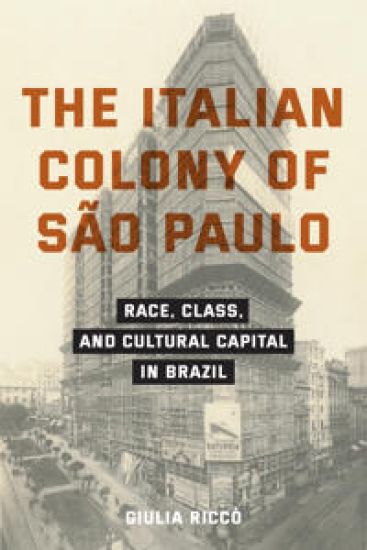
The Italian Colony of São Paulo

The Italian Colony of São Paulo

Giulia Riccò

FORDHAM UNIVERSITY PRESS
2025
sidottu
Winner, 2024 Aldo and Jeanne Scaglione Publication Award for a Manuscript in Italian Literary Studies, Modern Languages Association Introduces a way to study migration that privileges literary analysis over and against sociological data and insists on the importance of culture in the production of political identities This book argues that Italians first became racialized as white in São Paulo, Brazil, at the turn of the twentieth century. Whereas Italians in the United States struggled with xenophobia and were often not fully acknowledged as white, in São Paulo, due to a series of social, economic, and cultural factors, Italians became closely associated with ideas of whiteness, modernization, and civilization. This book brings to light how the overlooked experiences of Italians in Brazil complicate conventional narratives about the racial ambiguity and oppression of Italians in the Americas, on the one hand, and the conflation of Italians with cultural and economic backwardness in Europe, on the other. In the book, close readings of a wide array of texts—the travel writings of Gina Lombroso Ferrero, the short stories of Antônio de Alcântara Machado, the columns of José Correia Leite, the political essays of Miguel Reale, and the memoirs of Zélia Gattai—trace a "New World Italian discourse," or the overlapping narratives about Italian racial, economic, and cultural superiority which constructed and maintained Italians' status as a model minority in São Paulo. These discursive practices represent essential antecedents to the racial nationalism that reared its ugly head in Italy throughout the twentieth century and remain central to contemporary debates about national identity in the Italian public sphere. The Italian Colony of São Paulo: Race, Class, and Cultural Capital in Brazil is available from the publisher on an open-access basis.