Kirjojen hintavertailu. Mukana 11 627 363 kirjaa ja 12 kauppaa.

Kirjahaku

Etsi kirjoja tekijän nimen, kirjan nimen tai ISBN:n perusteella.

1000 tulosta hakusanalla Richard Stone

Story Intelligence

Story Intelligence

Richard Stone; Scott Livengood

BookLogix Inc
2021
sidottu
Story Intelligence-SQ-helps you become a master of your story, a pursuit indispensable to personal and professional success. By developing your SQ, you'll amplify and unleash every aspect of your intelligence, including your IQ and EQ. In this book, you'll also learn how you're wired for story and the ways it can set a positive trajectory for every facet of your life journey. Developing this level of mastery is imperative today because four in ten Americans have not discovered a satisfying life purpose. Nearly a quarter of us-about one hundred million people-do not have a strong sense of what makes our lives meaningful. We need more than ever ritual fires where we can gather to create new stories that transcend the old metanarratives that no longer enrich and satisfy the yearnings of our hearts and souls. Story is a potent medicine that can re-enchant our lives. By re-storying ourselves, consciously building it into everyday living, we can make space to hear ourselves better, listen more deeply to each other, and discern the tales the earth is quietly whispering in our ears. Hopefully, Story Intelligence will help you stoke a new kind of fire, assisting you in illuminating what the Japanese call "ikigai"-translated loosely as "that which most makes one's life seem worth living." Through mastering story, we believe you can build a more durable source of meaning and personal fulfillment, as well as have a broader impact for good in your community and the world. In this book, you'll also learn how to: harness the power of story to live with greater efficacy; become a more influential communicator; solve complex challenges using story-based solutions; transform your workplace and community; heal old wounds, change dysfunctional beliefs, and bridge differences by resolving deeply seated conflicts; and, acquire the narrative tools to craft a more desirable future.
The Greek Alexander Romance

The Greek Alexander Romance

Richard Stoneman

Penguin Classics
1991
pokkari
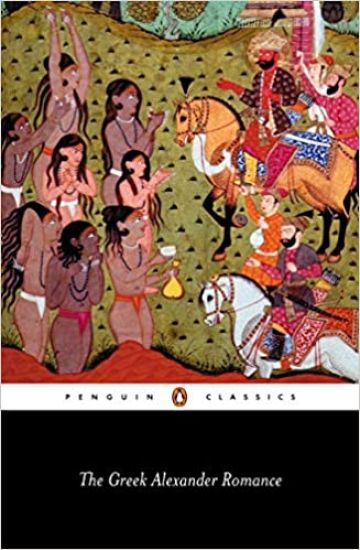
Mystery surrounds the parentage of Alexander, the prince born to Queen Olympias. Is his father Philip, King of Macedonia, or Nectanebo, the mysterious sorcerer who seduced the queen by trickery? One thing is certain: the boy is destined to conquer the known world. He grows up to fulfil this prophecy, building a mighty empire that spans from Greece and Italy to Africa and Asia. Begun soon after the real Alexander's death and expanded in the centuries that followed, The Greek Alexander Myth depicts the life and adventures of one of history's greatest heroes - taming the horse Bucephalus, meeting the Amazons and his quest to defeat the King of Persia. Including such elements of fantasy as Alexander's ascent to heaven borne by eagles, this literary masterpiece brilliantly evokes a lost age of heroism.
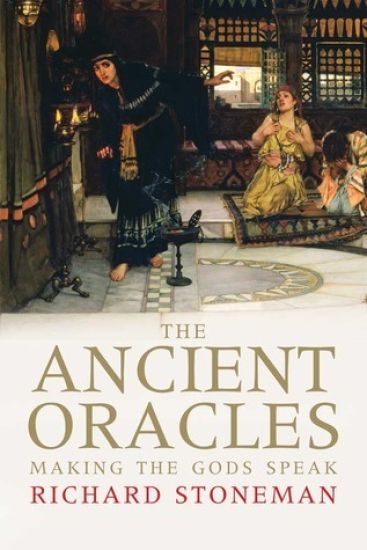
The Ancient Oracles

The Ancient Oracles

Richard Stoneman

Yale University Press
2011
sidottu
For more than a thousand years, Greeks from all walks of life consulted oracles for guidance received directly from the gods. This colorful and wide-ranging survey encompasses the entire history of Greek oracles and focuses fresh attention on philosophical, psychological, and anthropological aspects of oracular consultation. It also examines how Greek oracles' practices were distinctive compared to those of their neighbors, especially in Egypt, Babylon, and Israel. Richard Stoneman weaves a fascinating historical tapestry, taking into account the different kinds of oracles (healers, advisors, prophets, and others), their most important sanctuaries, debates about them among ancient thinkers, and Christian attacks on them. Delving into the reasons behind the oracles' enduring position at the heart of Greek culture, Stoneman offers fresh insights into pagan religious practice and the history of Greek intellectual and spiritual life.
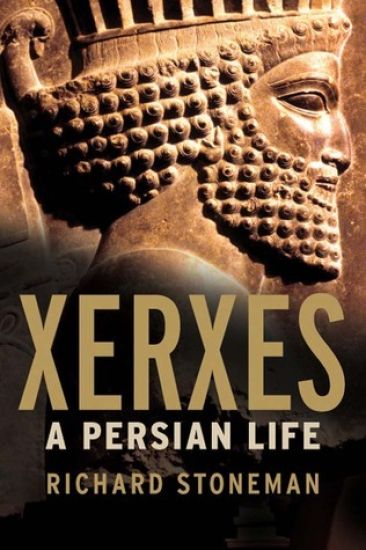
Xerxes

Xerxes

Richard Stoneman

Yale University Press
2015
sidottu
The first full-scale account of a Persian king vilified by history Xerxes, Great King of the Persian Empire from 486–465 B.C., has gone down in history as an angry tyrant full of insane ambition. The stand of Leonidas and the 300 against his army at Thermopylae is a byword for courage, while the failure of Xerxes’ expedition has overshadowed all the other achievements of his twenty-two-year reign. In this lively and comprehensive new biography, Richard Stoneman shows how Xerxes, despite sympathetic treatment by the contemporary Greek writers Aeschylus and Herodotus, had his reputation destroyed by later Greek writers and by the propaganda of Alexander the Great. Stoneman draws on the latest research in Achaemenid studies and archaeology to present the ruler from the Persian perspective. This illuminating volume does not whitewash Xerxes’ failings but sets against them such triumphs as the architectural splendor of Persepolis and a consideration of Xerxes’ religious commitments. What emerges is a nuanced portrait of a man who ruled a vast and multicultural empire which the Greek communities of the West saw as the antithesis of their own values.
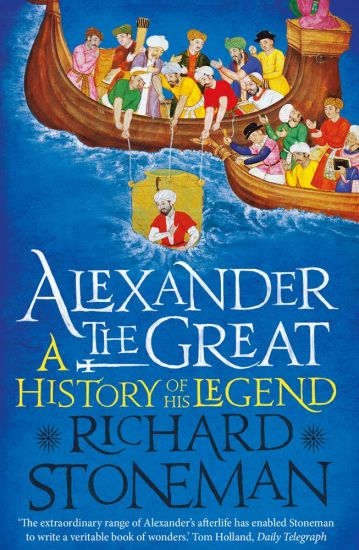
Alexander the Great

Alexander the Great

Richard Stoneman

YALE UNIVERSITY PRESS
2022
pokkari
In his brief life, Alexander the Great gained fame as the military genius who conquered the known world. After death, his legend only increased. Alexander the Great (356-323 B.C.) precipitated immense historical change in the Mediterranean and Near Eastern worlds. But the resonance his legend achieved over the next two millennia stretched even farther—across foreign cultures, religious traditions, and distant nations. This engaging and handsomely illustrated book for the first time gathers together hundreds of the colorful Alexander legends that have been told and retold around the globe. Richard Stoneman, a foremost expert on the Alexander myths, introduces us first to the historical Alexander and then to the Alexander of legend, an unparalleled mythic icon who came to represent the heroic ideal in cultures from Egypt to Iceland, from Britain to Malaya. Alexander came to embody the concerns of Hellenistic man; he fueled Roman ideas on tyranny and kingship; he was a talisman for fourth-century pagans and a hero of chivalry in the early Middle Ages. He appears in Jewish, Christian, and Islamic writings, frequently as a prophet of God. Whether battling winged foxes or meeting with the Amazons, descending to the underworld or inventing the world’s first diving bell, Alexander inspired as a hero, even a god. Stoneman traces Alexander’s influence in ancient literature and folklore and in later literatures of east and west. His book provides the definitive account of the legends of Alexander the Great—a powerful leader in life and an even more powerful figure in the history of literature and ideas.
Megasthenes' Indica

Megasthenes' Indica

Richard Stoneman

Routledge
2021
sidottu
This book provides a new translation of all the surviving portions of the description of India written by Megasthenes in about 310 BCE, the fullest account of Indian geography, history and customs available to the classical world. The Indica was a pioneering work of ethnography that exemplified a new direction in Hellenistic writing; India was little-known to the Greeks before the expedition of Alexander the Great in 326–325 BCE, and Megasthenes, who resided as an ambassador in the Maurya capital Pataliputra for some time, provided the classical world with most of what it knew about India. Megasthenes’ book, which became a classic in antiquity, now survives only in fragments preserved in other Greek and Latin authors. Stoneman’s work offers a reliable and accessible version of all the writings that can plausibly be ascribed to Megasthenes. His subject ranges from detailed accounts of social structure and the royal household, to descriptions of elephant hunting and Indian philosophical ideas. His book is the only written source contemporary with the Maurya kingdom of Candragupta, since writing was not in use in India at this date. This translation provides a path to clearer understanding of Greek ethnography and a valuable resource on Indian history.The book will be of value not only to classical scholars with an interest in Hellenistic history and cultural attitudes, and to their students, but also to scholars working on the early history of India, who have had to rely (unless they are also Greek scholars) on scattered and dated collections of evidence.
Alexander the Great

Alexander the Great

Richard Stoneman

Routledge
2004
sidottu
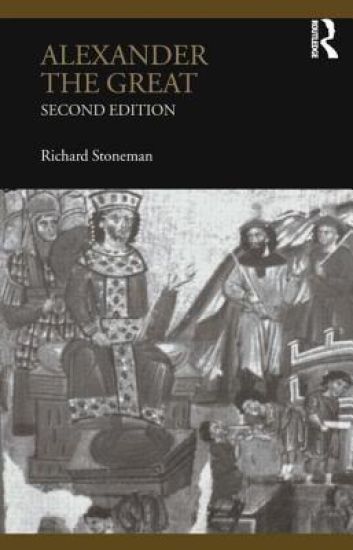
Alexander the Great by Richard Stoneman is an introduction to the career and impact of the great Macedonian conqueror and the main themes of his reign. As well as tackling problems of interpretation, the author includes:an examination of the written and other sources and the problems of working with themdiscussion of archaeological and numismatic evidencean outline of the Macedonian backgroundinsight into Alexander's education and ideasexploration of Alexander's claim to divinityassessment of Alexander's short and long-term achievementsa study of his influence in antiquity.
Alexander the Great

Alexander the Great

Richard Stoneman

Routledge
2004
nidottu
Alexander the Great by Richard Stoneman is an introduction to the career and impact of the great Macedonian conqueror and the main themes of his reign. As well as tackling problems of interpretation, the author includes:an examination of the written and other sources and the problems of working with themdiscussion of archaeological and numismatic evidencean outline of the Macedonian backgroundinsight into Alexander's education and ideasexploration of Alexander's claim to divinityassessment of Alexander's short and long-term achievementsa study of his influence in antiquity.
Palmyra and Its Empire

Palmyra and Its Empire

Richard Stoneman

The University of Michigan Press
1995
nidottu
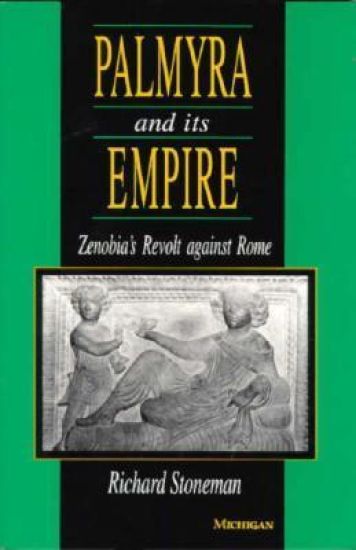
In the twilight of the third century C.E., the unity of the Western world was threatened by financial crisis, invasion, and plague. The Syrian city Palmyra had long protected Rome against Persian invasion, but under its queen Zenobia, Palmyra broke away from Roman hegemony. The Roman Empire had never been closer to disintegration, nor had it suffered so much before at the hands of a woman. This volume is the first comprehensive historical treatment in any language of Roman Syria, the revolt of Zenobia, and the city of Palmyra. Drawing on discoveries in archaeology, the history of the Silk Road, numismatics, and Roman and Persian history, Richard Stoneman has assembled a rich collage of knowledge about this intriguing period. As he tells the story of this major revolt and its leader, the author surveys the history of the spice trade in antiquity, the religious ferment of third- century Syria, early modern travelers to Palmyra, and in particular Zenobia's changing image through the ages. The lucid text and numerous illustrations will attract all who are intrigued by the third- century Roman Empire and its frontiers, by pre-Islamic Arab culture, by Roman Syria and Palmyra itself, and by the fascinating Queen Zenobia. ". . . an excellent synthesis of current knowledge and a sound introduction to the third cen-tury, especially in the East. . . ."--Journal of Military History ". . . Stoneman provides an excellent and readable introduction to what is known about Palmyra, and particularly the astonishing period in the mid-third century A.D. . . . [He] marshalls recent reinterpretations of the politics of the eastern frontier by both historians and archaeologists, as well as the inspiration of his own visits to Syria, to underline Palmyra's unique commercial position and the ability over the centuries of Roman rule of its ethnically and religiously highly heterogeneous ruling class to exploit the caravan trade from East and South Asia to their economic and political advantage."--Greece & Rome Richard Stoneman has published numerous books on the ancient world and on travel in the Eastern Mediterranean. He is Senior Editor at Routledge.
The Greek Experience of India

The Greek Experience of India

Richard Stoneman

Princeton University Press
2019
sidottu
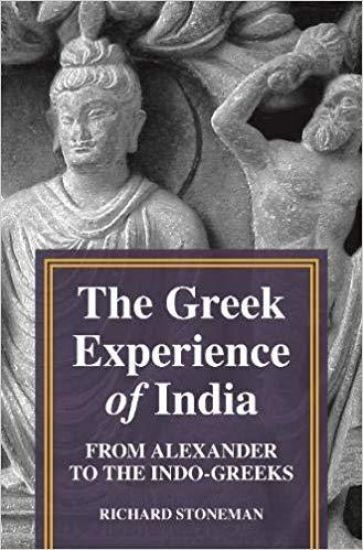
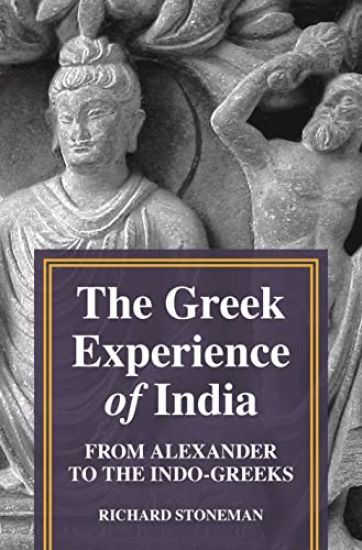
An exploration of how the Greeks reacted to and interacted with India from the third to first centuries BCEWhen the Greeks and Macedonians in Alexander’s army reached India in 326 BCE, they entered a new and strange world. They knew a few legends and travelers’ tales, but their categories of thought were inadequate to encompass what they witnessed. The plants were unrecognizable, their properties unknown. The customs of the people were various and puzzling. While Alexander’s conquest was brief, ending with his death in 323 BCE, the Greeks would settle in the Indian region for the next two centuries, forging an era of productive interactions between the two cultures. The Greek Experience of India explores the various ways that the Greeks reacted to and constructed life in India during this fruitful period.From observations about botany and mythology to social customs, Richard Stoneman examines the surviving evidence of those who traveled to India. Most particularly, he offers a full and valuable look at Megasthenes, ambassador of the King Seleucus to Chandragupta Maurya, and provides a detailed discussion of Megasthenes’ now-fragmentary book Indica. Stoneman considers the art, literature, and philosophy of the Indo-Greek kingdom and how cultural influences crossed in both directions, with the Greeks introducing their writing, coinage, and sculptural and architectural forms, while Greek craftsmen learned to work with new materials such as ivory and stucco and to probe the ideas of Buddhists and other ascetics.Relying on an impressively wide variety of sources from the Indian subcontinent, The Greek Experience of India is a masterful account of the encounters between two remarkable civilizations.
The Greek Experience of India

The Greek Experience of India

Richard Stoneman

Princeton University Press
2021
pokkari
An exploration of how the Greeks reacted to and interacted with India from the third to first centuries BCEWhen the Greeks and Macedonians in Alexander’s army reached India in 326 BCE, they entered a new world. The plants were unrecognizable, the customs of the people various and puzzling. Alexander’s conquest ended with his death in 323 BCE, but the Greeks would settle in the Indian region for the next two centuries. From observations about botany and mythology to social customs, The Greek Experience of India explores how the Greeks reacted to and constructed life in India during this period. Richard Stoneman offers a valuable look at Megasthenes, ambassador of the King Seleucus to Chandragupta Maurya, and provides a discussion of Megasthenes’ now-fragmentary book Indica. Stoneman considers the art, literature, and philosophy of the Indo-Greek kingdom and how cultural influences crossed in both directions. The Greek Experience of India is a masterful account of the encounters between two remarkable civilizations.
Megasthenes' Indica

Megasthenes' Indica

Richard Stoneman

TAYLOR FRANCIS LTD
2023
nidottu
This book provides a new translation of all the surviving portions of the description of India written by Megasthenes in about 310 BCE, the fullest account of Indian geography, history and customs available to the classical world. The Indica was a pioneering work of ethnography that exemplified a new direction in Hellenistic writing; India was little-known to the Greeks before the expedition of Alexander the Great in 326–325 BCE, and Megasthenes, who resided as an ambassador in the Maurya capital Pataliputra for some time, provided the classical world with most of what it knew about India. Megasthenes’ book, which became a classic in antiquity, now survives only in fragments preserved in other Greek and Latin authors. Stoneman’s work offers a reliable and accessible version of all the writings that can plausibly be ascribed to Megasthenes. His subject ranges from detailed accounts of social structure and the royal household, to descriptions of elephant hunting and Indian philosophical ideas. His book is the only written source contemporary with the Maurya kingdom of Candragupta, since writing was not in use in India at this date. This translation provides a path to clearer understanding of Greek ethnography and a valuable resource on Indian history.The book will be of value not only to classical scholars with an interest in Hellenistic history and cultural attitudes, and to their students, but also to scholars working on the early history of India, who have had to rely (unless they are also Greek scholars) on scattered and dated collections of evidence.
Beginning Databases with PostgreSQL

Beginning Databases with PostgreSQL

Richard Stones; Neil Matthew

APress
2005
nidottu
PostgreSQL is one of the world's most popular open source relational database systems. It is renowned for its wide range of capabilities and its ability to perform functions not available in other databases. This book will provide you with the tools to transition into PostgreSQL for the first time, and it will introduce you to the product's most prominent features. You will learn simultaneously about key relational database design and management principles—all to help you effectively manage your data-driven application. Also included is extensive coverage of the most popular PostgreSQL APIs, including PHP, Perl, Java, and C. You will benefit from the generous reference material covering PostgreSQL data types, syntax, the psql client, and large object support.
Pindar

Pindar

Richard Stoneman

I.B. Tauris
2013
nidottu
The 6th/5th century BCE Greek melic (or songwriting) poet Pindar was one of the most celebrated lyricists of antiquity. His famous victory odes offer a paean to the heroic athlete, and collectively are an attempt to encapsulate, through choral songs of exaltation, the glory of the sportsman's moment of victory - whether in athletics or horse-racing - at a variety of Panhellenic festivals and Olympian games. Yet Pindar, though still respected, is now considered a difficult poet, and is sometimes dismissed as a reactionary, celebrating an aristocratic world that was passing and that deserved to pass. In this first work on the subject for many years, Richard Stoneman shows that Pindar's works, while at first seeming obscure and fragmentary, reward further study. An unmatched craftsman with words, and witness to a profoundly religious sensibility, he is a poet who takes modern readers to the heart of Greek ideas about the gods, fleeting human achievement and fallibility. The author examines questions of performance and genre; patronage; imagery; and reception, beginning with Horace.
Prophecies & Oracles Myths & Tales

Prophecies & Oracles Myths & Tales

Richard Stoneman

FLAME TREE PUBLISHING
2025
sidottu
Whether it stems from a fundamental human need for certainty – to know what will happen to us, and to know that at some level fate is at play and we can rest easy at night since we may as well submit to our 'lot' – or whether grand predictions provide an irresistibly compelling narrative arc, dramatic prophecies and utterings of wise oracles are a prominent feature of world mythology and folklore. This gripping collection gathers together a wide range of tales of prediction: of disaster, of fulfilment, of origin; spoken by oracles, seers and spirits or beheld in visions and dreams; from the Norse Norns weaving the future in 'The Story of Nornagesta' to the flood prophecy of the Chinese tale 'The Spirits of the Yellow River'. The Flame Tree Gothic Fantasy, Classic Stories and Epic Tales collections bring together the entire range of myth, folklore and modern short fiction. Highlighting the roots of suspense, supernatural, science fiction and mystery stories the books in Flame Tree Collections series are beautifully presented, perfect as a gift and offer a lifetime of reading pleasure.
Legends of Alexander the Great

Legends of Alexander the Great

Richard Stoneman

I.B. Tauris
2011
nidottu
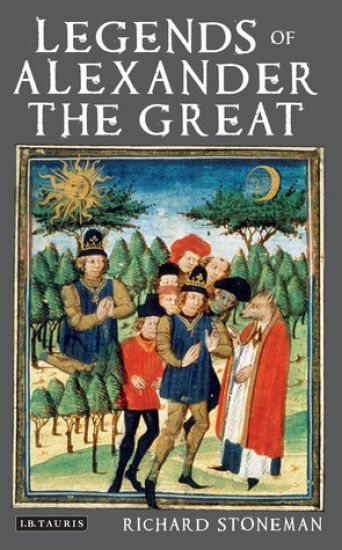
'How can a man become a god?' So enquired Alexander the Great of the Brahmin sages of India. And how did they reply? 'By doing what it is impossible for a man to do.' And that answer set a keynote for the Conqueror's entire career, which was characterized throughout by Alexander's attempts to achieve the unachievable: to scale the fresh heights and make the incredible real and tangible on earth. He wrestled an Indian monster larger than an elephant, fought ants the size of foxes and contested bats with human teeth. He became a Jewish convert, sailed up the Ganges and visited the Earthly Paradise. Already a legend in his own lifetime, the glittering figure of Alexander preoccupied European, Jewish and Arabic folklore until the 15th century. Richard Stoneman, who is one of his leading modern interpreters, here presents a range of Greek and Latin texts which recount the Conqueror's adventures in the east. Essential reading for students of late antique and medieval literature, these stories are still unsurpassed for sheer entertainment, opening a window onto a rumbustious world of legend as rich as that of the Arabian Nights. This revised edition offers a substantial new introduction by the editor.
Civil Liberties & Human Rights

Civil Liberties & Human Rights

Ruth Costigan; Richard Stone

Oxford University Press
2017
nidottu
Civil Liberties and Human Rights provides a straightforward and stimulating account of this fascinating area of law. This essential textbook covers all the key topics on undergraduate human rights modules including crucial areas such as police powers, privacy, freedom of expression, terrorism and public order. Detailed analysis of key cases throughout puts the law into context and encourages students to engage with contemporary issues and debates.
Automotive Engineering Fundamentals

Automotive Engineering Fundamentals

Jeffrey K Ball; Richard Stone

SAE International
2004
sidottu
In the introduction of Automotive Engineering Fundamentals, Richard Stone and Jeffrey K. Ball provide a fascinating and often amusing history of the passenger vehicle, showcasing the various highs and lows of this now-indispensable component of civilized societies. The authors then provide an overview of the publication, which is designed to give the student of automotive engineering a basic understanding of the principles involved with designing a vehicle.From engines and transmissions to vehicle aerodynamics and computer modeling, the intelligent, interesting presentation of core concepts in Automotive Engineering Fundamentals is sure to make this an indispensable resource for engineering students and professionals alike.