Kirjojen hintavertailu. Mukana 12 377 658 kirjaa ja 12 kauppaa.

Kirjahaku

Etsi kirjoja tekijän nimen, kirjan nimen tai ISBN:n perusteella.

1000 tulosta hakusanalla Richard Wright Procter

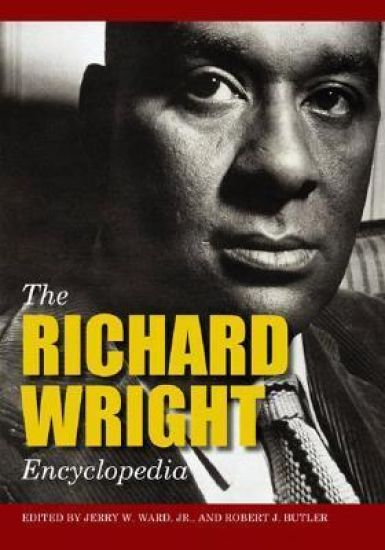
The Richard Wright Encyclopedia
Richard Wright is one of the most important African American writers. He is also one of the most prolific. Best known as the author of Native Son, he wrote 7 novels; 2 collections of short fiction; an autobiography; more than 250 newspaper articles, book reviews, and occasional essays; some 4,000 verses; a photo-documentary; and 3 travel books. By attacking the taboos and hypocrisy that other writers had failed to address, he revolutionized American literature and created a disturbing and realistic portrait of the African American experience. This encyclopedia is a guide to his vast and influential body of works.Entries cite works for further reading, and the encyclopedia closes with an extensive bibliography. Literature students will value this work for its thorough overview of Wright's canon, while students in history and social studies classes will welcome it as a means of understanding the African American struggle for civil rights through literature.
From Richard Wright to Toni Morrison

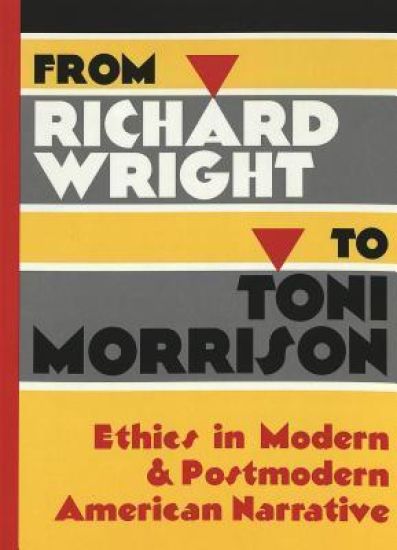
From Richard Wright to Toni Morrison

Jeffrey J. Folks

Peter Lang Publishing Inc
2001
nidottu
"From Richard Wright to Toni Morrison: Ethics in Modern and Postmodern American Narrative" studies the relationship of literature to contemporary ethical problems. Focusing on southern and African American writers, this book employs theoretical approaches from ethnicity studies, regional criticism, and postcolonial theory. It intends to insert a reading of ethics into the critical study of fictional and nonfictional narratives by Richard Wright, James Agee, Flannery O'Connor, Ernest J. Gaines, Walker Percy, Richard Ford, Toni Morrison, and other modern and postmodern American writers.
The Unfinished Quest of Richard Wright

The Unfinished Quest of Richard Wright

Fabre Michel

University of Illinois Press
1993
nidottu
Widely acclaimed for its comprehensive and sensitive picture of one of America's most renowned writers, The Unfinished Quest of Richard Wright received the Anisfield-Wolf Award on Race Relations when it was first published. This first paperback edition contains a new preface and bibliographic essay, updating changes in the author's approach to his subject and discussing works published on Wright since 1973.
The Critical Response to Richard Wright

The Critical Response to Richard Wright

Robert J. Butler

Greenwood Press
1995
sidottu
Richard Wright is widely recognized as one of the most important African-American writers and as a significant 20th-century author. With the publication of Native Son in 1940, Wright established his enduring reputation as a man of letters. With the immense critical success of Native Son, Wright went on to author Black Boy, The Outsider, and Eight Men. His writings reflect his experiences growing up in the poverty and racial strife of the South, and his thoughts on major social issues.This volume traces the critical reception of Wright's major works, from the publication of Native Son to the present day. An introductory chapter overviews the critical response to his writings, while two biographical chapters discuss his writings in relation to his life. Sections are then devoted to Native Son, Black Boy, and The Outsider. Each of these sections presents reviews and articles reflecting the best criticism of Wright's works. A final section, Richard Wright Today, offers contemporary assessments of Wright's reputation, as well as fascinating discussions of the recent Library of America editions of his works.
Philosophical Meditations on Richard Wright
Philosophical Meditations on Richard Wright is an edited collection that brings together philosophers, literary theorists, and theologians on the intersection of Richard Wright’s corpus—novels, critical essays, travel writings, and poetry—and philosophical method. This collection is a unique contribution to the academic discipline of philosophy as the first sustained philosophical engagement of an African American literary figure. Utilizing various philosophical methods—existentialism, phenomenology, and hermeneutics—this collection provides new perspectives on Wright’s work as well as on the discipline of philosophy, engaging emergent theories of black existentialism, rethinking ontology and facticity and the meaning of race and the phenomena blackness in the United States, in the West, and the world at large. Moreover, this collection allows us to realign Wright’s work and challenges us to rethink our contemporary situation and issues, by tracing in his work the historical trajectory and many significant moments in the modernization of the world: the legacies of segregation in South and the anonymity and alienation of the urban North in the United States, the politicization of nationality and race in Europe, and the paradoxical relationship between the West in general, and in particular, black Americans to the continent of Africa and the African Diaspora.
Philosophical Meditations on Richard Wright
Philosophical Meditations on Richard Wright is an edited collection that brings together philosophers, literary theorists, and theologians on the intersection of Richard Wright’s corpus—novels, critical essays, travel writings, and poetry—and philosophical method. This collection is a unique contribution to the academic discipline of philosophy as the first sustained philosophical engagement of an African American literary figure. Utilizing various philosophical methods—existentialism, phenomenology, and hermeneutics—this collection provides new perspectives on Wright’s work as well as on the discipline of philosophy, engaging emergent theories of black existentialism, rethinking ontology and facticity and the meaning of race and the phenomena blackness in the United States, in the West, and the world at large. Moreover, this collection allows us to realign Wright’s work and challenges us to rethink our contemporary situation and issues, by tracing in his work the historical trajectory and many significant moments in the modernization of the world: the legacies of segregation in South and the anonymity and alienation of the urban North in the United States, the politicization of nationality and race in Europe, and the paradoxical relationship between the West in general, and in particular, black Americans to the continent of Africa and the African Diaspora.
Native Son - Richard Wright

Native Son - Richard Wright

Harold Bloom

Chelsea House Publishers
2009
sidottu
Richard Wright's works are universally acknowledged as a starting point for black literature in contemporary America. Critics speak of the author as a pioneer, a man of rare courage. This volume of essays anzlyses Wright's ""Native Son"".
Conversations with Richard Wright

Conversations with Richard Wright

University Press of Mississippi
1993
nidottu
For more than two decades Richard Wright was interviewed by the American and foreign press, first as the author of Uncle Tom's Children (1938), Native Son (1940), and Black Boy (1945), next as a famous expatriate recently arrived and lionized in postwar Paris, and finally as the seasoned writer of a dozen books. At the end of his life the young man from Mississippi had become a well-traveled intellectual deeply interested in the social and political as well as literary and racial issues of the Old, the New, and the Third World.Conversations with Richard Wright collects some fifty interviews, many of which are little known in the United States because they appeared in non-English European periodicals and newspapers. This collection reveals a serious, often didactic Wright, giving voice to his inarticulate brothers and sisters as he reveals his racially representative colonialism. Most of his interviewers were white men, and he was always trying to make them listen. European issues also claimed his attention as he struggled to reconcile Marxism, Freudianism, and existentialism to the political realities from 1945 to his death in 1960.
The Cambridge Companion to Richard Wright
Hailed as 'the father of black literature in the twentieth century', Richard Wright was an iconoclast, an intellectual of towering stature, whose multidisciplinary erudition rivals only that of W. E. B. Du Bois. This collection captures Wright's immense power, which has made him a beacon for writers across decades, from the civil rights era to today. Individual essays examine Wright's art as central to his intellectual life and shed new light on his classic texts - Native Son and Black Boy. Other essays turn to his short fiction, and non-fiction as well as his lesser-known work in journalism and poetry, paying particular attention to manuscripts in Wright's archive - unpublished letters and novels, plans for multivolume works - that allow us to see the depth and expansiveness of his aesthetic and political vision. Exploring how Wright's expatriation to France facilitated a broadening of this vision, contributors challenge the idea that expatriation led to Wright's artistic decline.
The Cambridge Companion to Richard Wright
Hailed as 'the father of black literature in the twentieth century', Richard Wright was an iconoclast, an intellectual of towering stature, whose multidisciplinary erudition rivals only that of W. E. B. Du Bois. This collection captures Wright's immense power, which has made him a beacon for writers across decades, from the civil rights era to today. Individual essays examine Wright's art as central to his intellectual life and shed new light on his classic texts - Native Son and Black Boy. Other essays turn to his short fiction, and non-fiction as well as his lesser-known work in journalism and poetry, paying particular attention to manuscripts in Wright's archive - unpublished letters and novels, plans for multivolume works - that allow us to see the depth and expansiveness of his aesthetic and political vision. Exploring how Wright's expatriation to France facilitated a broadening of this vision, contributors challenge the idea that expatriation led to Wright's artistic decline.
The World of Richard Wright

The World of Richard Wright

Michel Fabre

University Press of Mississippi
2007
nidottu
Richard Wright, the Mississippi-born black writer, saw himself as ""an outsider between two cultures,"" a man searching. In these twelve essays written over the last two decades Michel Fabre, Wright's biographer, follows Wright's search in an investigation of the novelist's life and career. Although the essays were not originally intended as a collection, their organization her underscores Wright's literary and intellectual development.The essays range in time from a bibliographical study of Wright's first scanty personal library to his interest at the end of his life in Negritude and African writing. Other essays probe his first use of the Gothic and his subsequent first efforts at ""naturalistic"" fiction, in which he moved away from the ideology of the American Communist Party, to which he belonged for some ten years after 1933, to more personal modes of self-expression. Also explored within these pieces are Wright's use of the psychological approach, his interest in the link between sex and racism, and his obsessive exploration of the unconscious determinants in so-called criminal behavior. One essay examines Wright's poetry from the days when he wrote ideological poems published in New Masses and other radical magazines, to his later composition of blues, to his final mastery of the Japanese poetic form of haiku.Included is an interview with Simone De Beauvoir, who discusses her friendship with Wright, and in an essay never before published, Fabre explores the relationship of Wright--""as much as soon of Mississippi as is William Faulkner""--not only to the South but to his illiterate sharecropper father and Wright's use of both as negative metaphors in his work. Fabre also delves into Wright's view of his past and his use of it in an ideological construction that asserts, in the best Afro-American literary tradition, the development of a Promethean will towards education and literacy.The final essays address Wright's career and intellectual development during the last sixteen years of his life, spent as an American expatriate in Paris. A final essay focuses on Wright's turn at the end of his life to nofiction and his introduction of African readers to the complexities of the racial situation in the United States and the aims of the Civil Rights Movement then taking place in the U.S.
Gertrude Stein and Richard Wright

Gertrude Stein and Richard Wright

M. Lynn Weiss

University Press of Mississippi
2008
nidottu
After the Second World War Gertrude Stein asked a friend's support in securing a visa for Richard Wright to visit Paris. ""I've got to help him, she said. You see, we are both members of a minority group."" The brief, little-noted friendship of Stein and Wright began in 1945 with a letter. Over the next fifteen months, the two kept up a lively correspondence which culminated in Wright's visit to Paris in May 1946 and ended with Stein's death a few months later. Gertrude Stein and Richard Wright began their careers as marginals within marginalized groups, and their desire to live peacefully in unorthodox marriages led them away from America and into permanent exile in France. Still the obvious differences between them-in class, ethnic and racial origins, and in artistic expression-beg the question: What was there to talk about? This question opens a window onto each writer's meditations on the influence of racial, ethnic, national origins on the formation of identity in a modern and post-modern world. The intuitive and intellectual affinities between Stein and Wright are illuminated in several works of non-fiction. Stein's Paris France and Wright's Pagan Spain are meditations on expatriation and creativity. Their so-called homecoming narratives-Stein's Everybody's Autobiography and Wright's Black Power --examine concepts of racial and national identity in a post-modernist world. Respectively in Lectures in America and White Man, Listen! Stein and Wright outline the ways in which the poetics and politics of modernism are inextricably bound. At the close of the twentieth century the meditations of Stein and Wright on the protean quality of individual identity and its artistic, social, and political expression explore the most prescient and pressing issues of our time and beyond. M. Lynn Weiss is an assistant professor of English and African-American literature at Washington University.
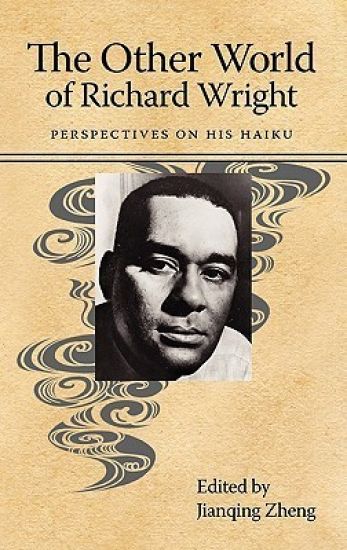
The Other World of Richard Wright

The Other World of Richard Wright

University Press of Mississippi
2011
sidottu
The Other World of Richard Wright: Perspectives on His Haiku reveals Richard Wright's poetic vision toward the human world. Through the minimal form of haiku, Wright (1908-1960) found his poetic connection to nature. This sensibility displays not only the change in him as a writer but also the tenderness in him as a human being.These essays open up a new territory in Wright studies by tracing the development of Wright's aesthetic and its relationship to African and Japanese cultures. The book tells how haiku offered a therapeutic outlet for Wright in his final two years of life in Paris, explores the influence of Zen Buddhism on Wright's haiku, and delivers a thematic analysis of Wright's haiku. The collection also gives us a focused examination of how Wright's haiku reveal a conflict between nature and culture, how women are exploited for labor and sex by the culture at-large, and how the South in Wright's haiku symbolizes a place full of dreams, memories, hardships, and loneliness with his images of cotton, freight trains, croaking frogs, magnolia trees, and hog-killing.