Kirjojen hintavertailu. Mukana 11 244 527 kirjaa ja 12 kauppaa.

Kirjahaku

Etsi kirjoja tekijän nimen, kirjan nimen tai ISBN:n perusteella.

1000 tulosta hakusanalla Robert A. Mayer

The Papers of Robert a.Taft V. 3; 1945-1948
This third volume in the series documents Robert A. Taft's experiences through World War II and his early postwar years. After winning a tough reelection battle as senator from Ohio in 1944, Taft moved steadily upward in the leadership ranks of his party and assumed a preeminent position among the bipartisan group of conservatives that increasingly dominated Congress. Taft was most widely known for his leadership of the postwar effort to revise federal labor law. In 1947 he cosponsored the Taft-Hartley Act, the single most important piece of labor legislation passed in the aftermath of World War II. These amendments to the 1935 National Labor Relations Act defined ""unfair"" union practices, banned closed shops, and authorized court injunctions that would delay strikes that harmed national security by imposing an eighty-day cooling-off period. In the immediate postwar years Taft recognized the need for federal aid to education, social welfare legislation that assisted the poor, and federal support for public housing. The senator campaigned vigorously for education-assistance legislation (which failed to pass the House of Representatives) and cosponsored the Taft-Wagner-Ellender Housing Act to subsidize residential construction. This volume continues the contribution that The Papers of Robert A. Taft provides to the study of United States political and diplomatic history, Ohio history, and conservative political theory.
The Papers of Robert A. Taft v. 4; 1949-1953
This is the final volume of the 'Taft Papers'. This fourth and final volume of a selected edition of the papers of Robert A Taft, documents Taft's post - World War II and congressional experiences until his death in 1953. Regardless of his conservative commitments, Taft saw the need for responsible reform. In the immediate postwar years, he recognized the need for federal aid to education, for social welfare legislation that assisted the poor, and for federal support for public housing. Out of political necessity, Taft became more partisan as the 1950 senatorial campaign approached, convinced he had to win reelection in Ohio by a large margin if he was to establish himself as a front runner in the primary campaign for the 1952 presidential election. Moderate Republicans spurned Taft and doubted that the serious, partisan senator could successfully head a national ticket. His support, nevertheless, was essential to the 1952 Eisenhower presidential campaign. Taft's service as Senate majority leader proved indispensable to President Eisenhower during the early months of his first term, helping the president navigate the byways of the nation's capital. Even after his diagnosis of cancer in April 1953, he continued to work at his senatorial duties until he died in July 1953. This volume completes the contribution that ""The Papers of Robert A Taft"" provides to the study of United States political and diplomatic history, Ohio history, and conservative political theory.
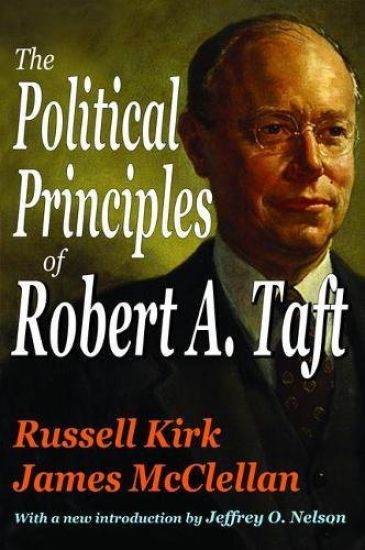
The Political Principles of Robert A. Taft
Robert A. Taft has been neglected by some historians and political theorists and vilified by others. Vigorously and impartially written, this book analyzes the ideas and influence of a great U.S. senator of the twentieth century. Here readers will find a close and lively examination of Taft's convictions on freedom, justice, labor policy, social reform, foreign affairs, and the responsibilities of political parties.Respected for his intelligence and integrity, Robert Taft was considered the most remarkable public man of a turbulent political era. He was strong and candid, yet was repeatedly denied executive power. Despite this, he will undoubtedly be long remembered.Drawing on many contemporary sources, including the Taft Papers in the Library of Congress, Kirk and Mc- Clellan set Taft in historical perspective. Taft's enduring significance to a normative theory of politics is made clear in this careful study, which includes extensive quotations from his outstanding speeches and writings. Available in paperback for the first time, this edition includes a new introduction by Jeffrey Nelson, who has been closely associated with Russell Kirk.
The Political Principles of Robert A. Taft

The Political Principles of Robert A. Taft

Russell Kirk

AldineTransaction
2010
nidottu
Robert A. Taft has been neglected by some historians and political theorists and vilified by others. Vigorously and impartially written, this book analyzes the ideas and influence of a great U.S. senator of the twentieth century. Here readers will find a close and lively examination of Taft's convictions on freedom, justice, labor policy, social reform, foreign affairs, and the responsibilities of political parties.Respected for his intelligence and integrity, Robert Taft was considered the most remarkable public man of a turbulent political era. He was strong and candid, yet was repeatedly denied executive power. Despite this, he will undoubtedly be long remembered.Drawing on many contemporary sources, including the Taft Papers in the Library of Congress, Kirk and Mc- Clellan set Taft in historical perspective. Taft's enduring significance to a normative theory of politics is made clear in this careful study, which includes extensive quotations from his outstanding speeches and writings. Available in paperback for the first time, this edition includes a new introduction by Jeffrey Nelson, who has been closely associated with Russell Kirk.
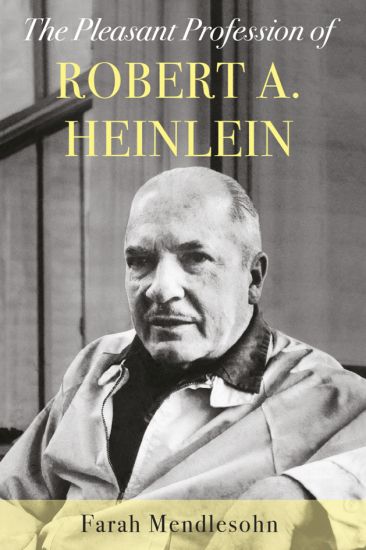
The Pleasant Profession of Robert A. Heinlein
Robert A. Heinlein began publishing in the 1940s at the dawn of the Golden Age of science fiction, and today he is considered one of the genre's 'big three' alongside Arthur C. Clarke and Isaac Asimov. His short stories were instrumental in developing its structure and rhetoric, while novels such as Stranger in a Strange Land and Starship Troopers demonstrated that such writing could be a vehicle for political argument.Heinlein’s influence remains strong, but his legacy is fiercely contested. His vision of the future was sometimes radical, sometimes deeply conservative, and arguments have flared up recently about which faction has the most significant claim on his ideas.In this major critical study, Hugo Award-winner Farah Mendlesohn carries out a close reading of Heinlein’s work, including unpublished stories, essays, and speeches. It sets out not to interpret a single book, but to think through the arguments Heinlein made over a lifetime about the nature of science fiction, about American politics, and about himself.
The Reanimation of Robert: A Paranormal Urban Fantasy Novella
Robert Castle should not be alive. When his wife Claire was murdered almost a year ago, Robert has no memory of his whereabouts on the night of her death or how he escaped the same fate himself. Narrowly cleared of suspicion for Claire's murder and still reeling from her loss, Robert finds refuge in his floating house on the docks and the companionship of Piper, a spirited barista who sees another side to his sad tale. But Robert is no ordinary grieving widower; he has made a risky deal with Death itself to bring his wife back to life - he just doesn't know it.As a string of murders plague Seattle, Robert finds himself again under the watchful eye of Alex Shaw, the detective who investigated Claire's murder and believes Robert escaped justice. Caught between a budding relationship with Piper and his obsession with Claire's cold case, Alex is willing to risk it all to connect Robert with the killings.Life and death collide as Robert navigates his new powers and the consequences they bring. The deceased seem drawn to him like moths to a flame, but Robert's end goal remains the same - to bring back his dead wife and clear his name. But if you make a deal with Death, prepare to pay the price.
An Analysis of Robert A. Dahl's Democracy and its Critics

An Analysis of Robert A. Dahl's Democracy and its Critics

Astrid Noren Nilsson; Elizabeth Morrow; Riley Quinn

Macat International Limited
2017
nidottu
There are few better examples of analysis – the critical thinking skill of understanding how an argument is built – than Robert Dahl’s Democracy and its Critics. In this work, the American political theorist closely analyzes the democratic political system and then evaluates whether the arguments that are in favor of it are, in fact, rigorous. ¶Dahl sets out to describe democracy’s merits and problems, asking if it really is the worthwhile political system we believe it to be. Knowing that the idea of democracy is now almost universally popular, his detailed analysis leads him to look at a number of regimes that claim to be democratic but do not, in truth, practice democracy. But Dahl is not only interested in uncovering uncomfortable truths. He goes further and creates a set of standards by which we can all decide whether a country really is democratic. Dahl’s analysis of the evidence leads him to conclude that the following criteria must be met for a regime to be considered truly democratic: elected officials control policy-making; there are free and fair elections of officials; everyone must have a right to vote; everyone has the right to run for office; there is freedom of speech; alternative information is available; and people can form free, independent political groups.
An Analysis of Robert A. Dahl's Who Governs? Democracy and Power in an American City

An Analysis of Robert A. Dahl's Who Governs? Democracy and Power in an American City

Astrid Noren Nilsson; Jason Xidias

Macat International Limited
2017
nidottu
American political theorist Robert Dahl’s 1961 work of political theory exhibits deep levels of creative thinking. When Dahl wrote, the American system of liberal democracy was generally considered to be shaped by a small group of powerful individuals who dominate because they are wealthy and influential. But by connecting the evidence in a new way in Who Governs? Dahl argued convincingly against this view.Dahl suggested that power is actually distributed among a number of competing groups, and that each of those groups seeks to influence decisions. He puts forward a definition of political power as the ability to make others do what you want them to, concluding that – while most people do not actively participate in politics and so do not exert a direct influence – power is still fragmented, and citizens do indirectly shape decision-making.Dahl’s novel explanation of the existing evidence emerged from a study of three areas of policy-making in the city of New Haven: political nominations, urban redevelopment, and public education. His research revealed that different people wielded power in each area, and that only the mayor, whose power is checked by those who vote for him, was powerful in all three. These new connections allowed Dahl to arrive at fresh conclusions and convincingly demonstrated that the US operates a pluralist system in which power is divided between different interest groups.
An Analysis of Robert A. Dahl's Who Governs? Democracy and Power in an American City

An Analysis of Robert A. Dahl's Who Governs? Democracy and Power in an American City

Astrid Noren Nilsson; Jason Xidias

Macat International Limited
2017
sidottu
American political theorist Robert Dahl’s 1961 work of political theory exhibits deep levels of creative thinking. When Dahl wrote, the American system of liberal democracy was generally considered to be shaped by a small group of powerful individuals who dominate because they are wealthy and influential. But by connecting the evidence in a new way in Who Governs? Dahl argued convincingly against this view.Dahl suggested that power is actually distributed among a number of competing groups, and that each of those groups seeks to influence decisions. He puts forward a definition of political power as the ability to make others do what you want them to, concluding that – while most people do not actively participate in politics and so do not exert a direct influence – power is still fragmented, and citizens do indirectly shape decision-making.Dahl’s novel explanation of the existing evidence emerged from a study of three areas of policy-making in the city of New Haven: political nominations, urban redevelopment, and public education. His research revealed that different people wielded power in each area, and that only the mayor, whose power is checked by those who vote for him, was powerful in all three. These new connections allowed Dahl to arrive at fresh conclusions and convincingly demonstrated that the US operates a pluralist system in which power is divided between different interest groups.
Die Bundesrepublik als Polyarchie im Sinne Robert A. Dahls
Studienarbeit aus dem Jahr 2009 im Fachbereich Politik - Politische Systeme - Politisches System Deutschlands, Note: 1,0, Katholische Universit t Eichst tt-Ingolstadt, Veranstaltung: Einf hrung in die Politische Systemlehre und Vergleichende Politikwissenschaft, Sprache: Deutsch, Abstract: Im Laufe der Geschichte gab es viele gro e Denker, die sich mit einem ganz speziellen Ph nomen auseinandergesetzt haben: der Demokratie. Zu nennen sind hier u. a. Aristoteles, Joseph A. Schumpeter, Sir Karl Popper und Fritz W. Scharpf. Sie alle versuchten, die Voraussetzungen, Wesensz ge, Wirkungsweisen und/oder Probleme dieser Staatsform herauszuarbeiten und zu erkl ren. Dabei setzten sie in ihren berlegungen unterschiedliche Schwerpunkte, wodurch heute eine recht heterogene Vielfalt solcher Demokratietheorien existiert. Jedoch ist die Thematik noch l ngst nicht vollst ndig ausgereizt (sofern dies berhaupt m glich ist), weshalb sich auch heute noch zahlreiche Forscher mit der Demokratie besch ftigen. Hierbei sei insbesondere auf den amerikanischen Politikwissenschaftler Robert Alan Dahl verwiesen, der mit seinem Konzept der Polyarchie, welches er im Jahre 1971 entwickelte, wohl eine der interessantesten und am meisten beachteten Demokratietheorien berhaupt geschaffen hat. Die nachfolgenden Ausf hrungen besch ftigen sich mit eben dieser Theorie. Ziel ist es, dem Leser einen ersten berblick ber das relativ komplexe Konzept der Polyarchie zu erm glichen. Dazu sollen einleitend einige Informationen zu dessen Sch pfer, Robert Alan Dahl, gegeben werden. Der zweite und der dritte Punkt widmen sich den Fragen, was unter dem Begriff der Polyarchie berhaupt zu verstehen ist und durch welche Merkmale sie konstituiert wird. Abschlie end soll der Versuch unternommen werden, Dahls Modell an einem praktischen Beispiel zu veranschaulichen. Hierzu wird gepr ft, ob die Bundesrepublik Deutschland die zuvor erw hnten Merkmale aufweist und somit eine Polyarchie im Sinne Dahls ist.