Days We Remember is a collection of poems for those times when we reflect on those that we have lost. One of the things that I have found in 35 years of writing poems for people is that Christmas is often the hardest time of year to lose someone. It's also the time we tend to remember most those people we have lost. Mother's day is a close second. The loses in our life are often revisited with the changing calendar. Collectively, there are also many dates that we all recognize a collective loss - September 11 for instance. Some of the poems deal with the specific day directly, others simply deal with a loss or the feelings of loss around that particular time of year. Since different days and events have special meaning for different people, I've organized this based on some of the more common holidays and life events such as weddings and graduations. If you are wondering why I didn't include some of the major Jewish holidays it's simply because I only have one that makes a reference to Passover. I hope you find some to match the events of your life.
Dieses Buch ist eine Fallstudie ber vier College-Studenten der ersten Generation, die aus der Arbeiterklasse stammen. Die Studie schildert die Erfahrungen dieser Studenten w hrend ihres ersten Semesters am College. Die Forschungsfrage f r die Studie war: Wie schaffen Studenten der ersten Generation aus der Arbeiterklasse die notwendigen akademischen, sozialen und kulturellen Anpassungen an das College? Die Studie konzentrierte sich auf die Vorbereitung dieser Studenten auf das College, die Unterst tzung, die sie f r den Besuch des Colleges wahrnahmen, ihre Gef hle der Zugeh rigkeit zum College-Campus und wie ihre soziale Schicht ihre College-Erfahrung beeinflusste. Die Studie ergab, dass die soziale Schicht der Studenten einen negativen Einfluss auf ihre F higkeit hatte, im College erfolgreich zu sein. Dieses Buch wurde f r Hochschuladministratoren, akademische Berater und Fakult tsmitglieder geschrieben und ist n tzlich f r Fachleute, die mehr ber die College-Erfahrung von Studenten der ersten Generation und der Arbeiterklasse erfahren m chten. Es ist auch n tzlich f r Hochschuladministratoren, die daran arbeiten, die Verbleibsquoten eben dieser Studenten zu erh hen.
Ce livre est une tude de cas portant sur quatre tudiants universitaires de premi re g n ration issus de la classe ouvri re. L' tude relate les exp riences de ces tudiants au cours de leur premier semestre l'universit . La question de recherche de l' tude tait la suivante: Comment les tudiants de premi re g n ration issus de la classe ouvri re s'adaptent-ils l'universit sur le plan scolaire, social et culturel ? L' tude s'est concentr e sur la pr paration de ces tudiants l'universit , sur le soutien qu'ils pensaient recevoir pour aller l'universit , sur leur sentiment d'appartenance au campus universitaire et sur la fa on dont leur classe sociale a affect leur exp rience universitaire. L' tude a r v l que la classe sociale des tudiants avait un effet n gatif sur leur capacit r ussir l'universit . Ce livre a t crit pour les administrateurs de l'enseignement sup rieur, les conseillers acad miques et les membres du corps enseignant. Il est utile pour les professionnels qui souhaitent en savoir plus sur l'exp rience universitaire des tudiants de premi re g n ration issus de la classe ouvri re. Il est galement utile pour les administrateurs de coll ges qui s'efforcent d'augmenter les taux de r tention de ces m mes tudiants.
Questo libro un caso di studio che coinvolge quattro studenti universitari di prima generazione della classe operaia. Lo studio racconta le esperienze di questi studenti durante il loro primo semestre al college. La domanda di ricerca per lo studio era: Come fanno gli studenti universitari di prima generazione della classe operaia a fare i necessari adattamenti accademici, sociali e culturali al college? Lo studio si concentrato sulla preparazione di questi studenti per il college, il supporto che hanno percepito di ricevere per frequentare il college, i loro sentimenti di appartenenza al campus del college, e come la loro classe sociale ha influenzato la loro esperienza al college. Lo studio ha scoperto che la classe sociale degli studenti aveva un effetto negativo sulla loro capacit di avere successo al college. Questo libro stato scritto per amministratori dell'istruzione superiore, consulenti accademici e membri di facolt ed utile per i professionisti che desiderano saperne di pi sull'esperienza universitaria degli studenti di prima generazione e della classe operaia. anche utile per gli amministratori dei college che lavorano per aumentare i tassi di ritenzione di questi stessi studenti.
Książka ta jest studium przypadku czterech student w college'u z klasy robotniczej, należących do pierwszego pokolenia. Studium kronikuje doświadczenia tych student w podczas ich pierwszego semestru w college'u. Pytanie badawcze dla tego studium brzmialo: W jaki spos b studenci college'u z klasy pracującej, należący do pierwszego pokolenia, dokonują niezbędnych akademickich, spolecznych i kulturowych dostosowań do college'u? Badanie skupilo się na przygotowaniu tych student w do studi w, wsparciu, jakie postrzegali jako otrzymane w związku z uczęszczaniem do college'u, ich poczuciu przynależności do kampusu uniwersyteckiego oraz na tym, jak ich klasa spoleczna wplynęla na ich doświadczenie w college'u. Badanie wykazalo, że klasa spoleczna student w miala negatywny wplyw na ich zdolnośc do osiągnięcia sukcesu w college'u. Książka ta zostala napisana dla administrator w szkolnictwa wyższego, doradc w akademickich i czlonk w wydzialu i jest przydatna dla profesjonalist w, kt rzy chcą dowiedziec się więcej o doświadczeniach pierwszego pokolenia student w z klasy robotniczej. Jest ona r wnież przydatna dla administrator w szk l wyższych, kt rzy pracują nad zwiększeniem wskaźnik w retencji tych samych student w.
Este livro um estudo de caso envolvendo quatro estudantes universit rios, de primeira gera o, da classe trabalhadora. O estudo conta as experi ncias destes estudantes durante o seu primeiro semestre na faculdade. A quest o de pesquisa para o estudo foi: Como que a primeira gera o, estudantes universit rios da classe trabalhadora, fazem os ajustamentos acad micos, sociais e culturais necess rios faculdade? O estudo centrou-se na prepara o destes estudantes para a faculdade, no apoio que percebiam receber para frequentar a faculdade, nos seus sentimentos de perten a ao campus universit rio, e em como a sua classe social afectava a sua experi ncia universit ria. O estudo constatou que a classe social dos estudantes teve um efeito negativo na sua capacidade de sucesso na faculdade. Este livro foi escrito para administradores do ensino superior, conselheiros acad micos e membros do corpo docente e til para profissionais que desejam aprender mais sobre a experi ncia universit ria da primeira gera o de estudantes universit rios da classe trabalhadora. tamb m til para administradores universit rios que trabalham para aumentar as taxas de reten o destes mesmos estudantes.
Harpoon picks up where Leaving Frost Upon the Walls left off, stylistically-speaking. Life through the lens of a dream, as told by a man who has a way with stories. The poems within this book will not disappoint fans of his work, as all major elements his writing has become known for are front-and-center.
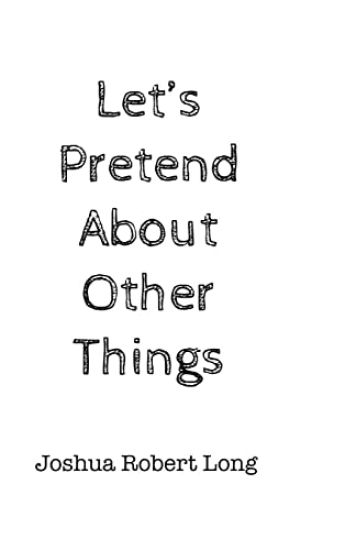
Let's Pretend About Other Things is a collection of poetry dealing with the author's changing life post-divorce in the pandemic world. The subject matter deals in the cyclical nature of love, lose, loneliness, and optimism.
A comprehensive guide for planning, designing, and constructing outdoor theatres including amphitheatres, roofed and open air facilities, site specific considerations, and one-of-a-kind designs. Includes numerous photographic examples from around the world. This third edition includes a new author's note on the basic business models of outdoor theatres.
Frightening tales of alien abductions and humanity being controlled by forces unknown.Foreword by Kathleen Marden, UFO investigator and niece of Betty and Barney Hill, the first recorded abducteesImagine getting into your car and driving to a place you know. But for some reason, you end up at an unintended location. You see something unusual. Then you forget all about it. An hour or so passes. And now you don’t remember any of it. There’s a control factor in abduction cases that allows aliens to abduct any human, or control any nonhuman object, from any location in the world without human permission or knowledge—for purposes unknown. Then victims are returned to Earth without memory of the experience. Discover what science is learning about the alien presence and the way they manipulate space and time. Learn the facts about implants, mind control, memory, and why aliens are here. Find out why some can see UFOs and some can’t, what a typical abduction scenario is like, and what you can do to prevent being taken. Foreword by Kathleen Marden, UFO investigator and niece of Betty and Barney Hill, the first recorded abductees.
This book, presented in full color for easy reading, is highly recommended for students and healthcare professionals who want to integrate neurofeedback (EEG Biofeedback) and quantitative EEG (QEEG) into their treatment options for patients and clients. The authors have over 30 years of combined experience and offer an easily read, comprehensive historical and clinical perspective. Topics include brain anatomy and physiology, models of disorders, basic electronics necessary to understand the recording process, learning/behavior theory, how to create treatment protocols, and how to evaluate clinical progress. The book also devotes a chapter to the history and clinical understanding of audio-visual entrainment. About The Authors: Richard Soutar, PhD has been involved in neurofeedback for 20 years, is the director of New Mind Neurofeedback Center in Atlanta, Georgia, and is actively conducting workshops and mentoring new practitioners interested in BCIA certification. He is author of the New Mind Webcourse, the Creator of the New Mind Maps Database Analysis System, and author of several books in the field of neurofeedback. Robert Longo, MRC, LPC, NCC, BCN is Board Certified in neurofeedback and practices in North Carolina. Rob works with youth and adults and specializes in working with youth who have emotional and behavioral problems.
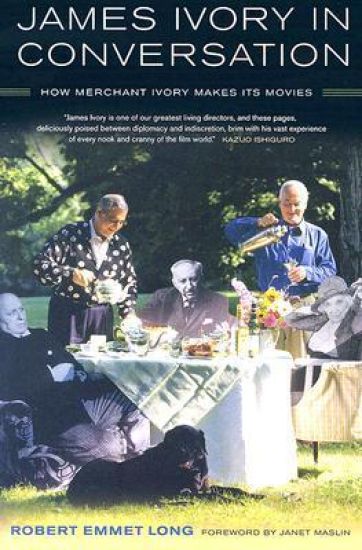
James Ivory in Conversation is an exclusive series of interviews with a director known for the international scope of his filmmaking on several continents. Three-time Academy Award nominee for best director, responsible for such film classics as A Room with a View and The Remains of the Day, Ivory speaks with remarkable candor and wit about his more than forty years as an independent filmmaker. In this deeply engaging book, he comments on the many aspects of his world-traveling career: his growing up in Oregon (he is not an Englishman, as most Europeans and many Americans think), his early involvement with documentary films that first brought attention to him, his discovery of India, his friendships with celebrated figures here and abroad, his skirmishes with the Picasso family and Thomas Jefferson scholars, his usually candid yet at times explosive relations with actors. Supported by seventy illuminating photographs selected by Ivory himself, the book offers a wealth of previously unavailable information about the director's life and the art of making movies. James Ivory on: On the Merchant Ivory Jhabvala partnership: "I've always said that Merchant Ivory is a bit like the U. S. Govenment; I'm the President, Ismail is the Congress, and Ruth is the Supreme Court. Though Ismail and I disagree sometimes, Ruth acts as a referee, or she and I may gang up on him, or vice versa. The main thing is, no one ever truly interferes in the area of work of the other." On Shooting Mr. and Mrs. Bridge: "Who told you we had long 18 hour days? We had a regular schedule, not at all rushed, worked regular hours and had regular two-day weekends, during which the crew shopped in the excellent malls of Kansas City, Paul Newman raced cars somewhere, unknown to us and the insurance company, and I lay on a couch reading The Remains of the Day." On Jessica Tandy as Miss Birdseye in The Bostonians: "Jessica Tandy was seventy-two or something, and she felt she had to 'play' being an old woman, to 'act' an old woman. Unfortunately, I'couldn't say to her, 'You don't have to 'act' this, just 'be,' that will be sufficient.' You can't tell the former Blanche Du Bois that she's an old woman now." On Adapting E. M. Forster's novels "His was a very pleasing voice, and it was easy to follow. Why turn his books into films unless you want to do that? But I suppose my voice was there, too; it was a kind of duet, you could say, and he provided the melody." On India: "If you see my Indian movies then you get some idea of what it was that attracted me about India and Indians...any explanation would sound lamer than the thing warrants. The mood was so great and overwhelming that any explanation of it would seem physically thin...I put all my feeling about India into several Indian films, and if you know those films and like them, you see from these films what it was that attracted me to India." On whether he was influenced by Renoir in filming A Room with a View "I was certainly not influenced by Renoir in that film. But if you put some good looking women in long white dresses in a field dotted with red poppies, andthey're holding parasols, then people will say, 'Renoir.'" On the Critics: "I came to believe that to have a powerful enemy like Pauline Kael only made me stronger. You know, like a kind of voodoo. I wonder if it worked that way in those days for any of her other victims--Woody Allen, for instance, or Stanley Kubrick." On Andy Warhol as a dinner guest: "I met him many times over the last twenty years of his life, but I can't say I knew him, which is what most people say, even those who were his intimates. Once he came to dinner with a group of his Factory friends at my apartment. I remember that he or someone else left a dirty plate, with chicken bones and knife and fork, in my bathroom wash basin. It seemed to be a symbolic gesture, to be a matter of style, and not just bad manners."