Kirjojen hintavertailu. Mukana 12 390 323 kirjaa ja 12 kauppaa.

Kirjahaku

Etsi kirjoja tekijän nimen, kirjan nimen tai ISBN:n perusteella.

1000 tulosta hakusanalla Robin L. Smith

Film and Everyday Eco-disasters

Film and Everyday Eco-disasters

Robin L. Murray; Joseph K. Heumann

University of Nebraska Press
2014
sidottu
Eco-disasters such as coal-mining accidents, oil spills, and food-borne diseases appear regularly in the news, making them seem nearly commonplace. These ecological crises highlight the continual tensions between human needs and the environmental impact these needs produce. Contemporary documentaries and feature films explore environmental-human conflicts by depicting the consequences of our overconsumption and dependence on nonrenewable energy.Film and Everyday Eco-disasters examines changing perspectives toward everyday eco-disasters as reflected in the work of filmmakers from the silent era forward, with an emphasis on recent films such as Dead Ahead, an HBO dramatization of the Exxon Valdez disaster; Total Recall, a science fiction action film highlighting oxygen as a commodity; The Devil Wears Prada, a comment on the fashion industry; and Food, Inc., a documentary interrogation of the food industry. The authors evaluate not only the success of these films as rhetorical arguments but also their rhetorical strategies. This interdisciplinary approach to film studies fuses cultural, economic, and literary critiques in articulating an approach to ecology that points to sustainable development as an alternative to resource exploitations and their associated everyday eco-disasters.
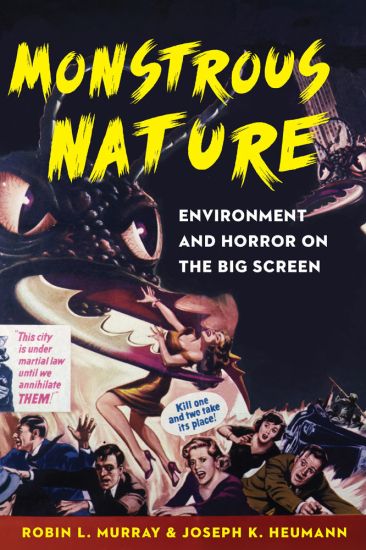
Monstrous Nature

Monstrous Nature

Robin L. Murray; Joseph K. Heumann

University of Nebraska Press
2016
sidottu
Godzilla, a traditional natural monster and representation of cinema’s subgenre of natural attack, also provides a cautionary symbol of the dangerous consequences of mistreating the natural world-monstrous nature on the attack. Horror films such as Godzilla invite an exploration of the complexities of a monstrous nature that humanity both creates and embodies. Robin L. Murray and Joseph K. Heumann demonstrate how the horror film and its offshoots can often be understood in relation to a monstrous nature that has evolved either deliberately or by accident and that generates fear in humanity as both character and audience. This connection between fear and the natural world opens up possibilities for ecocritical readings often missing from research on monstrous nature, the environment, and the horror film. Organized in relation to four recurring environmental themes in films that construct nature as a monster-anthropomorphism, human ecology, evolution, and gendered landscapes-the authors apply ecocritical perspectives to reveal the multiple ways nature is constructed as monstrous or in which the natural world itself constructs monsters. This interdisciplinary approach to film studies fuses cultural, theological, and scientific critiques to explore when and why nature becomes monstrous.
Karate for Kids

Karate for Kids

Robin L. Rielly

Tuttle Publishing
2004
sidottu
A fun and accessible introduction to studying karate—designed specifically with the interests and capabilities of young martial artists in mind.First-time martial arts students are not just starting a program of physical and mental practice. They are entering a new world—one that not only has new rules, new goals, and even new clothing—but that also offers them lots of new opportunities for fun and accomplishment.Karate for Kids will help prepare kids to start learning about karate and help them practice at home. It includes thorough introductions to the history and philosophy of the techniques, what to expect in the first few classes, how to warm up and practice, and advice on setting goals.With over 75 full-color illustrations, including 40 clearly diagrammed karate exercises, along with lots of fun facts and informative sidebars written in kid-friendly, jargon-free language, this is the perfect introduction for the younger martial artist.
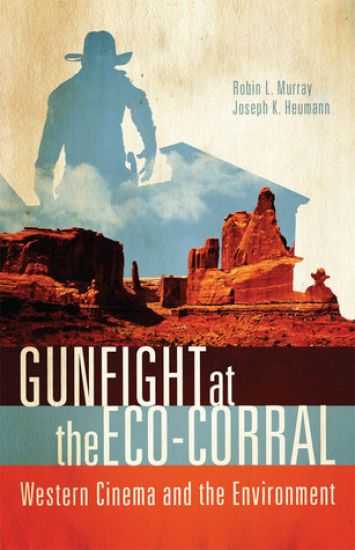
Gunfight at the Eco-Corral

Gunfight at the Eco-Corral

Robin L. Murray; Joseph K. Heumann

University of Oklahoma Press
2012
nidottu
Most film critics point to classic conflicts - good versus evil, right versus wrong, civilization versus savagery - as defining themes of the American Western. In this provocative examination of Westerns from Tumbleweeds (1925) to Rango (2011), Robin L. Murray and Joseph K. Heumann argue for a more expansive view that moves beyond traditional conflicts to encompass environmental themes and struggles. The environment, after all, is the fundamental stage for most western stories, from land rush dramas that pit ""sod busters"" against ranchers to conflicts between mining-town communities and corporations. Because environmental issues lie at the forefront of so many conflicts today, Murray and Heumann believe that the Western is ripe for such new examination.Drawing on perspectives from both film studies and environmental history, the authors show how western films frequently deal with issues related to land use and different ways of looking at the natural world. In films as diverse as Gene Autry musicals, early John Wayne B-Westerns, and revisionist critiques such as the 2010 remake of True Grit, resources are exploited in the name of progress. Beginning with an analysis of two iconic Westerns, Shane and The Searchers, Murray and Heumann identify the environmental dichotomies - previously overlooked by critics - that are broached in both films, and they clarify the history that lies behind the environmental debates in these films and many others.How do Westerns respond to the historical contexts they present? And what do those responses suggest about American views of nature and its exploitation? The conflicts these movies address grow out of differing views of progress, frequently in relation to technology. The authors show that such binary oppositions tend to blur when examined closely, demonstrating that environmental issues are often more complex than we realize.
Fieldnotes from a Depth Psychological Exploration of Evil
In Fieldnotes from a Depth Psychological Exploration of Evil, Robin L. Gordon presents an accessible account of an attempt to define and understand the nature of evil. Gordon takes on the role of guide to this confusing land, tying together threads of Jungian theory, philosophy, etymology, neuroscience and history, as we are led on a personal journey of discovery.Gordon begins by analysing what a twelfth-century meeting between Chinggis Khan and Taoist priest Ch’ang-Ch’un can tell us about the presence of opposing traits and the nature of evil in human beings. We learn what depth psychology has said about evil and the shadow part of our psyches, and examine examples of human behaviour throughout history to understand the etymological, philosophical and historical understandings and definitions of evil. Gordon’s own relationship with her work, and the feelings that arise when researching the psychological framework of Nazi doctors, genocide in Rwanda, Bosnia and Syria, and the functionality of serial killers, are interrogated. We then return to Chinggis Khan’s and Ch’ang-Ch’un’s relationship, attempting to build a real and practical definition of "evil", and assessing their dialogues as a metaphor for Jung’s views of the transcendent function.Fieldnotes from a Depth Psychological Exploration of Evil will be essential reading for academics and students of Jungian and post-Jungian studies, sociology, criminology and philosophy. It will also be a key resource for Jungian analysts and psychotherapists interested in the study of evil and its impact on society and the psyche, as well as anyone investigating and redefining their own meanings of evil, past and present.
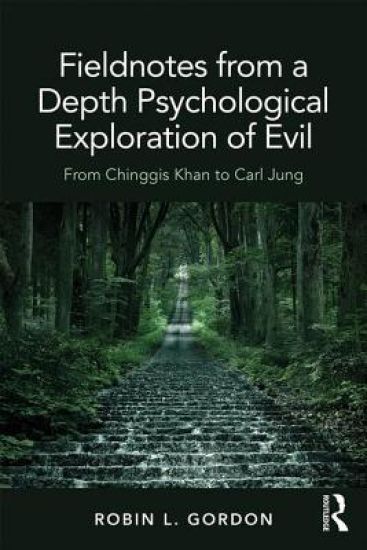
Fieldnotes from a Depth Psychological Exploration of Evil
In Fieldnotes from a Depth Psychological Exploration of Evil, Robin L. Gordon presents an accessible account of an attempt to define and understand the nature of evil. Gordon takes on the role of guide to this confusing land, tying together threads of Jungian theory, philosophy, etymology, neuroscience and history, as we are led on a personal journey of discovery.Gordon begins by analysing what a twelfth-century meeting between Chinggis Khan and Taoist priest Ch’ang-Ch’un can tell us about the presence of opposing traits and the nature of evil in human beings. We learn what depth psychology has said about evil and the shadow part of our psyches, and examine examples of human behaviour throughout history to understand the etymological, philosophical and historical understandings and definitions of evil. Gordon’s own relationship with her work, and the feelings that arise when researching the psychological framework of Nazi doctors, genocide in Rwanda, Bosnia and Syria, and the functionality of serial killers, are interrogated. We then return to Chinggis Khan’s and Ch’ang-Ch’un’s relationship, attempting to build a real and practical definition of "evil", and assessing their dialogues as a metaphor for Jung’s views of the transcendent function.Fieldnotes from a Depth Psychological Exploration of Evil will be essential reading for academics and students of Jungian and post-Jungian studies, sociology, criminology and philosophy. It will also be a key resource for Jungian analysts and psychotherapists interested in the study of evil and its impact on society and the psyche, as well as anyone investigating and redefining their own meanings of evil, past and present.
Progressive Constitutionalism

Progressive Constitutionalism

Robin L. West

Duke University Press
1994
sidottu
The Fourteenth Amendment guarantees all citizens equal protection under the law as well as immunity from laws that deprive them of life, liberty, or property without due process of law. In Progressive Constitutionalism, Robin West develops an interpretation of this amendment that contrasts with the views, conservative and liberal, of the Rehnquist, Burger, and Warren Courts, and with the radical "antisubordinationist" account provided by the critical legal studies movement and many prominent feminist and critical race theorists. Her interpretation consists of a "substantive" argument regarding the Amendment’s core meaning, and a jurisprudential argument regarding the role of the courts and Congress in fulfilling the Amendment’s progressive promise.West shows how the "equal protection" clause, far from insulating the private spheres of culture, market, and home life, as is commonly held, directly targets abuses of power within those spheres. She develops a number of arguments for the modern relevance of this understanding, from the failure of the state to provide equal protection against private domestic violence, permitting a "private sovereignty" of patriarchal power within the home, to the the state’s failure to provide equal protection against material deprivation, allowing "private sovereignty" between economically privileged and desperate people in private markets.West’s argument extends to the "liberty" prong of the due process clause, seen here as a protection of the positive, not negative, liberty of citizens, covering rights in such typically controversial areas as welfare, education, and domestic safety. This interpretation recasts a number of contemporary constitutional issues, such as affirmative action and hate speech, and points to very different problems-notably private, unchecked criminal violence and extreme economic deprivation-as the central constitutional dilemmas of our day. Progressive Constitutionalism urges a substantive, institutional, and jurisprudential reorientation of our understanding of the Fourteenth Amendment, one that would necessarily be pursued through Congressional rather than judicial channels. In doing so, with attention to history and both feminist and critical race scholarship, it should reinvigorate our politics and our constitutional conversations-and, perhaps, point us toward a more just society.
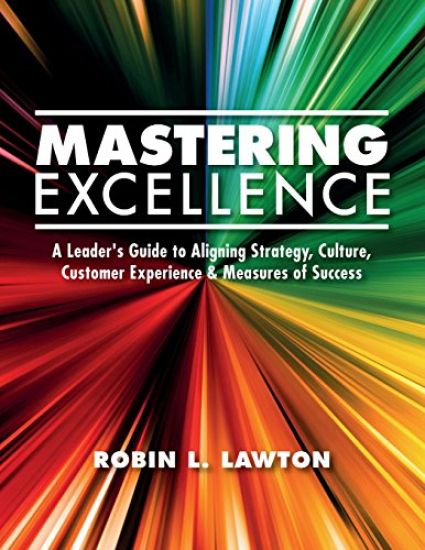
Mastering Excellence: A Leader's Guide to Aligning Strategy, Culture, Customer Experience & Measures of Success
This book is for leaders with high expectations, a vision of the possible, urgency to engage employees and impatience for results that improve the lives of many others. If you are looking for the road map to dramatic success, this is it. Mastering Excellence provides you with a new way to think about work and customers, an elegantly simple framework and tools you can immediately apply to transform your organization and your role in it. Based on the author's 30 years of work with organizations of all kinds and sizes, including multi-nationals, small start-ups, government agencies, healthcare, education and defense, you get an engaging and practical speedway to dramatic change you would not think possible. There are many approaches to change. Most emphasize process improvement. They use tools that are mathematical, analytical and operational in nature and assume that the absence of things gone wrong is equivalent to achieving excellence. That focuses on minimums, not optimums. Virtually none provides an integrated strategic system that begins with articulating purpose from the customer's perspective, uses linguistics to reveal and destroy the ambiguities we allow to persist, and redefines knowledge and service work in tangible, countable ways we can design for excellence. This book does that and far more.As the CEO, executive change leader or consultant to leadership, you want customers that are enthused, employees that are engaged and fast, highly visible results. Eye-popping savings, customer wait times cut by 90%, strong revenue growth and an avalanche of customer kudos are the kinds of sustainable and continuing results many Masters of Excellence have achieved. This provides the means and rewires your brain to understand how.Ambiguity, Vital Lies, complexity and the fragmented pursuit of excellence are hidden barriers this book systematically destroys. The reader's mind gets rewired in surprising ways, enabling clarity of thought and purpose that is easily tied to deployment. Practical application reinforces and makes memorable every key idea. Many examples are paired with how-to's the reader can immediately apply.Robin Lawton follows his first book, 5-star ranked on Amazon, with MASTERING EXCELLENCE. This engaging, practical and thought-leading read is for leaders seeking a strategic systems approach to customer-centered organizational transformation.
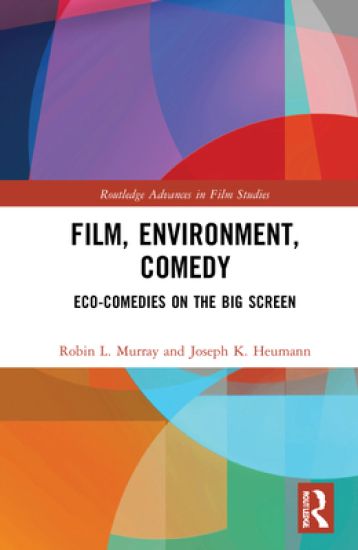
Film, Environment, Comedy

Film, Environment, Comedy

Robin L. Murray; Joseph K. Heumann

TAYLOR FRANCIS LTD
2022
sidottu
This book explores the transformative power of comedy to help connect a wider audience to films that explore environmental concerns and issues. This book offers a space in which to explore the complex ways environmental comedies present their eco-arguments. With an organizational structure that reveals the evolution of both eco-comedy films and theoretical approaches, this book project aims to fill a gap in ecocinema scholarship. It does so by exploring three sections arranged to highlight the breadth of eco-comedy: I. Comic Genres and the Green World: Pastoral, Anti-Pastoral, and Post-Pastoral Visions; II. Laughter, Eco-Heroes, and Evolutionary Narratives of Consumption; and III. Environmental Nostalgia, Fuel, and the Carnivalesque. Examining everything from Hollywood classics, Oscar winners, and animation to independent and international films, Murray and Heumann exemplify how the use of comedy can expose and amplify environmental issues to a wider audience than more traditional ecocinema genres and can help provide a path towards positive action and change.Ideal for students and scholars of film studies, ecocriticism, and environmental studies, especially those with a particular interest in ecocinema and/or ecocritical readings of popular films.
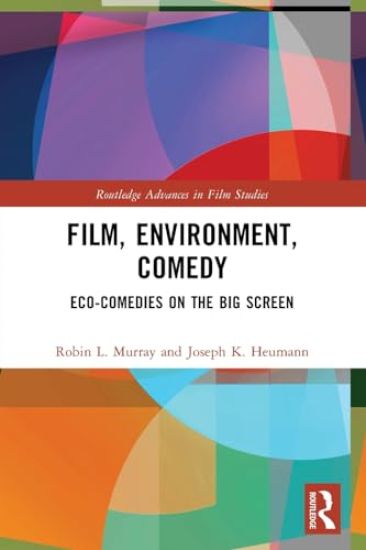
Film, Environment, Comedy

Film, Environment, Comedy

Robin L. Murray; Joseph K. Heumann

TAYLOR FRANCIS LTD
2024
nidottu
This book explores the transformative power of comedy to help connect a wider audience to films that explore environmental concerns and issues. This book offers a space in which to explore the complex ways environmental comedies present their eco-arguments. With an organizational structure that reveals the evolution of both eco-comedy films and theoretical approaches, this book project aims to fill a gap in ecocinema scholarship. It does so by exploring three sections arranged to highlight the breadth of eco-comedy: I. Comic Genres and the Green World: Pastoral, Anti-Pastoral, and Post-Pastoral Visions; II. Laughter, Eco-Heroes, and Evolutionary Narratives of Consumption; and III. Environmental Nostalgia, Fuel, and the Carnivalesque. Examining everything from Hollywood classics, Oscar winners, and animation to independent and international films, Murray and Heumann exemplify how the use of comedy can expose and amplify environmental issues to a wider audience than more traditional ecocinema genres and can help provide a path towards positive action and change.Ideal for students and scholars of film studies, ecocriticism, and environmental studies, especially those with a particular interest in ecocinema and/or ecocritical readings of popular films.
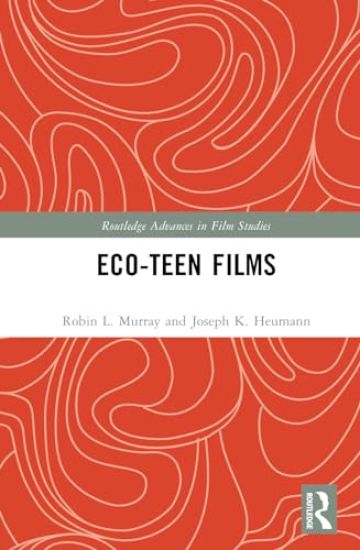
Eco-Teen Films

Eco-Teen Films

Robin L. Murray; Joseph K. Heumann

TAYLOR FRANCIS LTD
2024
sidottu
Illuminating the impacts of environmental disasters and climate crises globally, this book examines the experiences of teens grappling with eco-disasters and issues in films of the twenty-first century.With an emphasis on teen activism, international settings and filmmakers, and marginalized perspectives, this book showcases teens on film that are struggling with present and future everyday eco-disasters amplified by climate change. By highlighting and interrogating diverse genres of teen films in which young adults encounter, address, and battle environmental issues and calamities while also struggling with adolescent development, this book acknowledges the young adult point of view missing from most critical ecocinema research and underlines connections between the more complex ‘coming-of-age’ themes found in teen films with ecocinema themes and approaches. The films examined navigate increasingly realistic conditions, even in fantastical settings, as they showcase teens’ relationships with and responses to environmental issues and eco-disasters. Emphasizing teen activism and under-represented intersectional perspectives outside Hollywood, it establishes the eco-teen film as a notable subgenre.This book will be of interest to students and scholars of film studies, ecocriticism, and environmental studies, especially those with a particular interest in ecocinema and/or ecocritical readings of films.
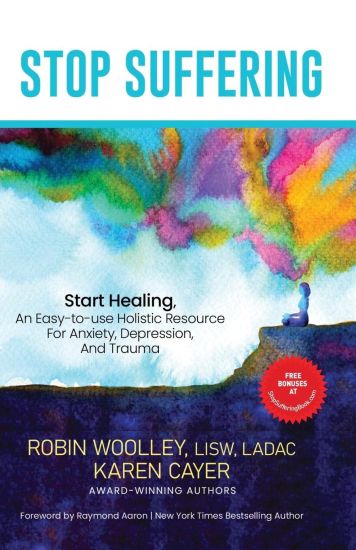
Stop Suffering, Start Healing

Stop Suffering, Start Healing

Robin L Woolley; Karen Cayer

IngramSpark
2023
pokkari
Did you know that your autonomic nervous system carries messages through your body several times faster than you can flip a light switch? Are you wondering why you haven't been able to shift your symptoms using just your mind? Did you know that when your autonomic nervous system is hijacked, it's hard to regulate your thoughts, emotions, and body responses? Stop Suffering Start Healing is an easy-to-use holistic resource for anxiety, depression, and trauma that gives you the cognitive and somatic tools to help reduce symptoms and take control of your healing process. You will find valuable information about the dysregulation of the autonomic nervous system (Polyvagal Theory). Learning how a stress response hijacks your body, you become empowered to make changes to regulate your emotions and autonomic nervous system responses. You will appreciate the tried-and-true tools that the authors have used to help thousands of people go from being stuck in suffering to finding freedom in healing.
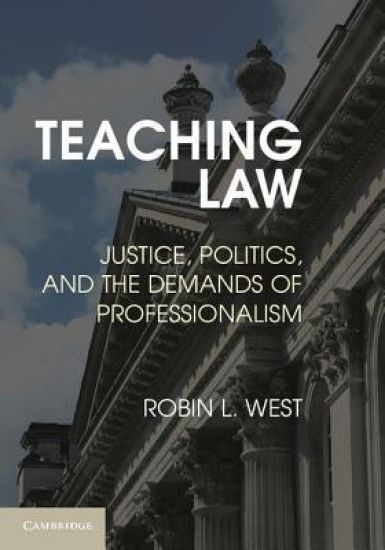
Teaching Law

Teaching Law

Robin L. West

Cambridge University Press
2013
sidottu
Teaching Law re-imagines law school teaching and scholarship by going beyond crises now besetting the legal academy and examining deeper and longer-lasting challenges. The book argues that the legal academy has long neglected the need to focus teaching and scholarship on the ideals of justice that law fitfully serves, the political origins of law, and the development of a respectful but critical relationship with the legal profession. It suggests reforms to improve the quality of legal education and responds to concerns that law schools eschew the study of justice, rendering students amoralist; that law schools slight the political sources of law, particularly in legislative action; and that law schools have ignored the profession entirely. These areas of neglect have impoverished legal teaching and scholarship as the academy is refashioned in response to current financial exigencies, and addressing them is long overdue.
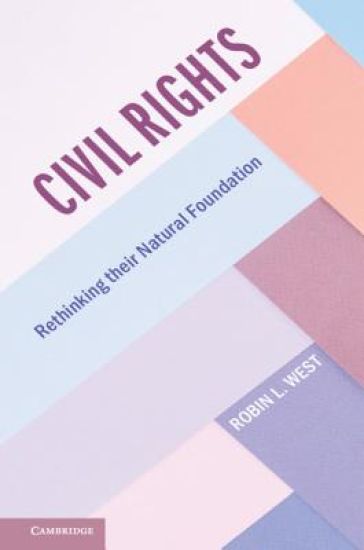
Civil Rights

Civil Rights

Robin L. West

Cambridge University Press
2019
sidottu
All of us are entitled to the protections of law against violence, to a high quality education, to decent employment that respects our dignity, and to necessary assistance with our caregiving. Our civil rights are our rights to the protections of ordinary law - not constitutional law, and not only antidiscrimination law - that will ensure that we can participate in civil society, and hence lead flourishing lives. In this innovative work, Robin L. West looks back to nineteenth-century Civil Rights Acts to argue that the point of civil rights law is not only non-discrimination, but also to assure that all of us receive the protection of legal rights that promote human flourishing. Since the 1960s, Supreme Court decisions on civil rights issues have focused on non-discrimination and thus have 'hollowed out' this broader meaning of civil rights law. This book reconceives civil rights as a set of legal guarantees that all will be included in the legal, political, economic and social projects central to civil society.
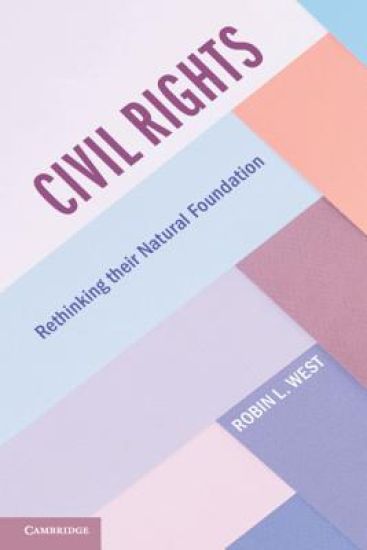
Civil Rights

Civil Rights

Robin L. West

Cambridge University Press
2019
pokkari
All of us are entitled to the protections of law against violence, to a high quality education, to decent employment that respects our dignity, and to necessary assistance with our caregiving. Our civil rights are our rights to the protections of ordinary law - not constitutional law, and not only antidiscrimination law - that will ensure that we can participate in civil society, and hence lead flourishing lives. In this innovative work, Robin L. West looks back to nineteenth-century Civil Rights Acts to argue that the point of civil rights law is not only non-discrimination, but also to assure that all of us receive the protection of legal rights that promote human flourishing. Since the 1960s, Supreme Court decisions on civil rights issues have focused on non-discrimination and thus have 'hollowed out' this broader meaning of civil rights law. This book reconceives civil rights as a set of legal guarantees that all will be included in the legal, political, economic and social projects central to civil society.
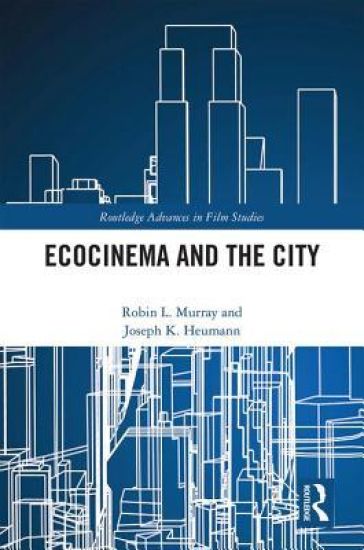
Ecocinema in the City

Ecocinema in the City

Robin L. Murray; Joseph K. Heumann

Routledge
2017
sidottu
In Ecocinema in the City, Murray and Heumann argue that urban ecocinema both reveals and critiques visions of urban environmentalism. The book emphasizes the increasingly transformative power of nature in urban settings, explored in both documentaries and fictional films such as Children Underground, White Dog, Hatari! and Lives Worth Living. The first two sections—"Evolutionary Myths Under the City" and "Urban Eco-trauma"—take more traditional ecocinema approaches and emphasize the city as a dangerous constructed space. The last two sections—"Urban Nature and Interdependence" and "The Sustainable City"—however, bring to life the vibrant relationships between human and nonhuman nature. Ecocinema in the City provides a space to explore these relationships, revealing how ecocinema shows that both human and nonhuman nature can interact sustainably and thrive.