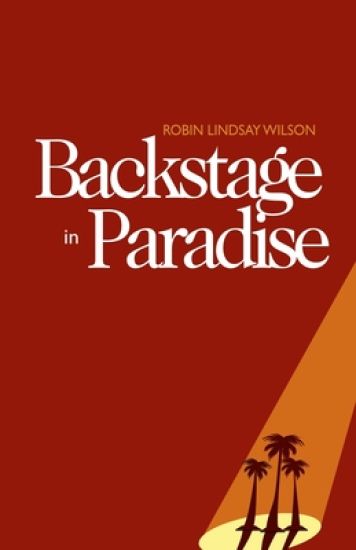
Robin Lindsay Wilson's is a distinctive style — the hallmark short lines that turn with dexterity into a single, often unpunctuated, sentence running through a whole poem. He pushes this style hard in this third collection, finding an assured and beguiling voice. Shrewd and sharp-sighted, this intelligent writing offers alternative perspectives throughout these wry, layered poems. Always inventive, Backstage in Paradise is another highly accomplished collection.
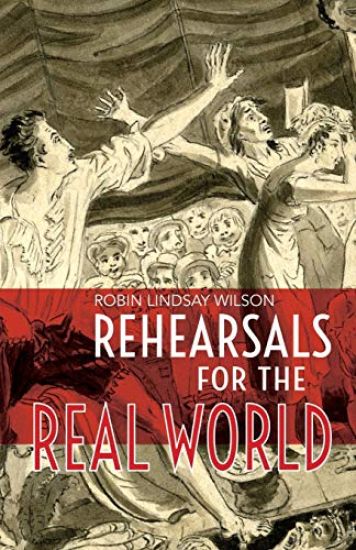
Each of the compelling microfictions in this extraordinary collection is a monologue spoken by someone with a distinctive point-of-view. Weaving together, the human condition is expressed by characters addressing their positive, negative, humorous, tragic and contradictory thoughts, so that the overall effect is immersive and full of revelation and insight. For drama students, each monologue presents specific textual challenges to a performer in training. For all those fascinated by what makes us human, these tightly honed and layered pieces throw a spotlight on the attitudes, difficulties and relationships which make up the world at large. A compendium of five hundred and fifty-eight first person micro-fiction monologues, Rehearsals for the Real World builds bridges between and interrogates the nature of drama’s relationship to life, peeling away the masks we wear and providing a rich repository that will inspire, educate and delight alike drama students and all readers fascinated by the human condition.
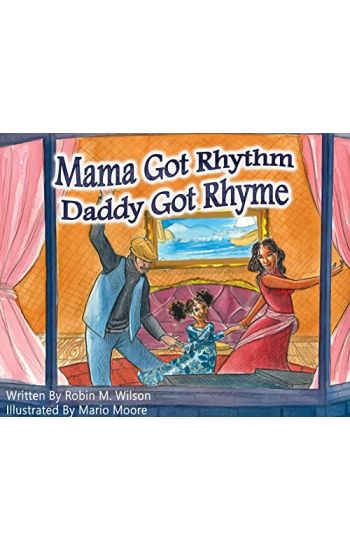
★ It don't mean a thing... If you ain't got that swing. ★Like many six-year olds, Jasmine doesn't like the music her parents listen to, so her parents decided it was time she learn her musical roots. Join Jasmine on her journey to the Jazz Museum and learn all about the great jazz musicians of the past and how their sounds influenced the music that Jasmine loves listening to today.
★ It don't mean a thing... If you ain't got that swing. ★Like many six-year olds, Jasmine doesn't like the music her parents listen to, so her parents decided it was time she learn her musical roots. Join Jasmine on her journey to the Jazz Museum and learn all about the great jazz musicians of the past and how their sounds influenced the music that Jasmine loves listening to today.
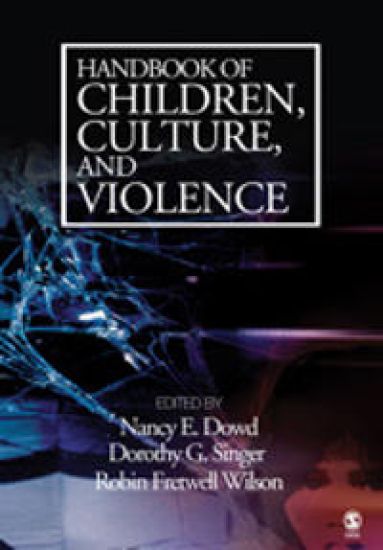
"Each chapter contains recommendations for legislators, policy makers, researchers, and families. This book should be on the desk, and minds, of legislators, attorneys, social workers and other mental health professionals who encounter and wish to ameliorate the effects of violence in the lives of their young constituents, clients, and patients." —JOURNAL OF CHILD AND FAMILY STUDIESQuestions relating to violence and children surround us in the media: should V-chips be placed in every television set? How can we prevent another Columbine school shooting from occurring? How should pornography on the internet be regulated? The Handbook of Children, Culture and Violence addresses these questions and more, providing a comprehensive, interdisciplinary examination of childhood violence that considers children as both consumers and perpetrators of violence, as well as victims of it. The Handbook offers much-needed empirical evidence that will help inform debate about these important policy decisions. Moreover, it is the first single volume to consider situations when children are responsible for violence, rather than focusing exclusively on occasions when they are victimized. Providing the first comprehensive overview of current research in the field, the editors have brought together the work of a group of prominent scholars whose work is united by a common concern for the impact of violence on the lives of children. The Handbook of Children, Culture and Violence is poised to become the ultimate resource and reference work on children and violence for researchers, teachers, and students of psychology, human development and family studies, law, communications, education, sociology, and political science/ public policy. It will also appeal to policymakers, media professionals, and special interest groups concerned with reducing violence in children's lives. Law firms specializing in family law, as well as think tanks, will also be interested in the Handbook.
This is work of creative art and satire (17 U.S. Code 107) Ann Wilson is best known as the lead singer and songwriter of the hard rock band Heart. Wilson was listed as one of the "Top Heavy Metal Vocalists of All Time" by Hit Parader magazine in 2006. Wilson has a dramatic soprano vocal range.
The fascinating origin story of Wilson Duff, the pioneering BC anthropologist and museologist remembered for his contributions to research on First Nations cultures of the Northwest Coast. Wilson Duff was born in 1925 in the city of Vancouver and his turbulent early years were shaped by the Great Depression and the Second World War. An intelligent child, he quickly progressed in school. After one year at the University of British Columbia, he signed up for the Air Force. An analytic thinker, Duff excelled as a navigator on a Liberator bomber based in India. However, these years carried their own traumas--the omnipresent terror of war and the spectre of death. On his return from India, Duff recommenced his studies at UBC. There he began a love affair with anthropology and museum studies. As provincial anthropologist at the BC Provincial Museum from 1950 to 1965 and then at the University of British Columbia, he helped to shape Canadian and British Columbian understanding of First Nations' cultures. Forging relationships with Indigenous Peoples during field work, Duff was particularly interested in the Northwest Coast cultures and art, and authored important books including Arts of the Raven: Masterworks by the Northwest Coast Indian and Images Stone B.C.: Thirty Centuries of Northwest Coast Indian Sculpture. Hundreds of students left his classes with a greater understanding of Indigenous cultures and the consequences of settler colonialism in British Columbia. He devoted his life to understanding Indigenous people and cultures and communicating that understanding to newcomers, a subject of continued relevance today. Duff struggled with depression for much of his life and died by suicide at age 51. In the end, he claimed he did not fear death because "the end is the beginning." He believed in reincarnation: that he would be coming back. In tracing the story of Wilson Duff, biographer Robin Fisher reveals the evolution of anthropological studies, the history of a time and place--Vancouver during the Great Depression and war years--and the more recent changes taking place in museum and anthropology studies. Told with insight, and attention to the controversies and complexities of Duff's life, this story will fascinate anyone engaged in BC history.
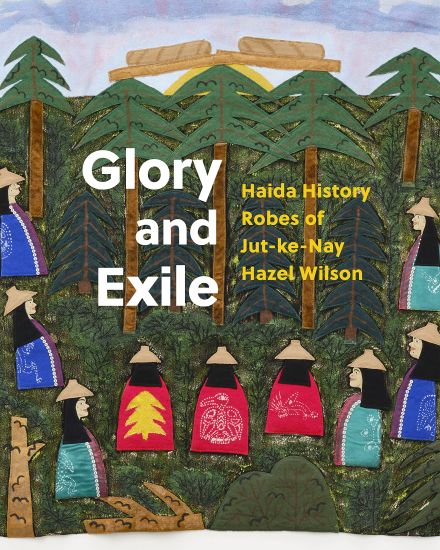
Glory and Exile: Haida History Robes of Jut-ke-Nay Hazel Wilson marks the first time this monumental cycle of ceremonial robes by the Haida artist Jut-Ke-Nay (The One People Speak Of)—also known as Hazel Anna Wilson—is viewable in its entirety. On 51 large blankets, Wilson uses painted and appliquéd imagery to combine traditional stories, autobiography, and commentary on events such as smallpox epidemics and environmental destruction into a grand narrative that celebrates the resistance and survival of the Haida people, while challenging the colonial histories of the Northwest Coast.Of the countless robes Wilson created over fifty-plus years, she is perhaps best known for The Story of K’iid K’iyaas, a series about the revered tree made famous by John Vaillant’s 2005 book The Golden Spruce. But her largest and most important work is the untitled series of blankets featured here. Wilson always saw these works as public art, to be widely seen and, importantly, understood. In addition to essays by Robert Kardosh and Robin Laurence, the volume features texts about each robe by Wilson herself; her words amplify the power of her striking imagery by offering historical and personal context for the people, characters, and places that live within her colossal work. Glory and Exile, which also features personal recollections by Wilson’s daughter Kun Jaad Dana Simeon, her brother Allan Wilson, and Haida curator and artist Nika Collison, is a fitting tribute to the breathtaking achievements of an artist whose vision will help Haida knowledge persist for many generations to come.
The robin is a small bird with a distinctive ruddy breast, at once a national treasure and a bird with a global reputation. In this superbly illustrated account, Helen F. Wilson looks at many aspects of the cherished robin, from its status as a harbinger of seasonal change and icon of Christmas, to its place in fairy tales, environmental campaigns and scientific discovery.In moving between cultural and natural histories, Robin asks wide-ranging questions: how did the robin’s name travel the world? Why is the robin so melancholy? Who was Cock Robin? And how has the history of the colour red shaped the robin’s ambivalent associations and unusual origin stories?
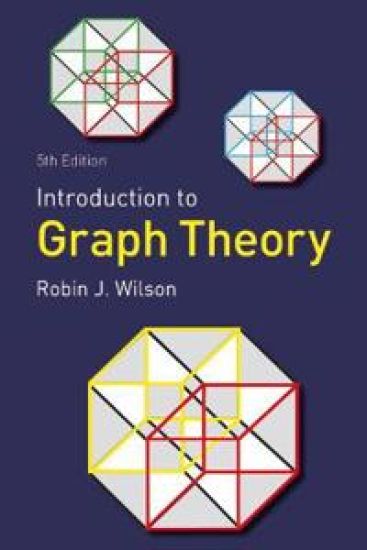
In recent years graph theory has emerged as a subject in its own right, as well as being an important mathematical tool in such diverse subjects as operational research, chemistry, sociology and genetics. Robin Wilson’s book has been widely used as a text for undergraduate courses in mathematics, computer science and economics, and as a readable introduction to the subject for non-mathematicians.The opening chapters provide a basic foundation course, containing definitions and examples, connectedness, Eulerian and Hamiltonian paths and cycles, and trees, with a range of applications. This is followed by two chapters on planar graphs and colouring, with special reference to the four-colour theorem. The next chapter deals with transversal theory and connectivity, with applications to network flows. A final chapter on matroid theory ties together material from earlier chapters, and an appendix discusses algorithms and their efficiency.
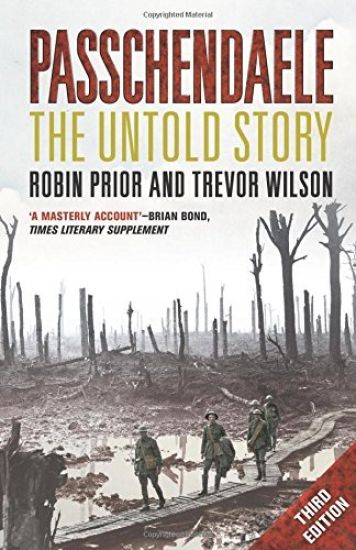
No conflict of the Great War excites stronger emotions than the war in Flanders in the autumn of 1917, and no name better encapsulates the horror and apparent futility of the Western Front than Passchendaele. By its end there had been 275,000 Allied and 200,000 German casualties. Yet the territorial gains made by the Allies in four desperate months were won back by Germany in only three days the following March. The devastation at Passchendaele, the authors argue, was neither inevitable nor inescapable; perhaps it was not necessary at all. Using a substantial archive of official and private records, much of which has never been previously consulted, Trevor Wilson and Robin Prior provide the fullest account of the campaign ever published. The book examines the political dimension at a level which has hitherto been absent from accounts of "Third Ypres." It establishes what did occur, the options for alternative action, and the fundamental responsibility for the carnage. Prior and Wilson consider the shifting ambitions and stratagems of the high command, examine the logistics of war, and assess what the available manpower, weaponry, technology, and intelligence could realistically have hoped to achieve. And, most powerfully of all, they explore the experience of the soldiers in the light—whether they knew it or not—of what would never be accomplished.
The astonishing variety and beauty of mathematical elements in stamp design is brought to life in this collection of more than 350 stamps, each reproduced in enlarged format, in full color. With simple explantory text to accompany each stamp, the book makes the perfect gift for students, teachers, and anyone interested in the fascinating world of stamps, and mathematics.