Kirjojen hintavertailu. Mukana 11 244 527 kirjaa ja 12 kauppaa.

Kirjahaku

Etsi kirjoja tekijän nimen, kirjan nimen tai ISBN:n perusteella.

1000 tulosta hakusanalla Roderic O'Flaherty

Roderic, Dernier Roi Des Goths, Poème

Roderic, Dernier Roi Des Goths, Poème

Robert Southey

Hachette Livre - BNF
2013
pokkari
Roderic, dernier roi des Goths, poeme, traduit de l'anglais de Robert Southey, ... par M. le chevalier ***Date de l'edition originale: 1821Ce livre est la reproduction fidele d une uvre publiee avant 1920 et fait partie d une collection de livres reimprimes a la demande editee par Hachette Livre, dans le cadre d un partenariat avec la Bibliotheque nationale de France, offrant l opportunite d acceder a des ouvrages anciens et souvent rares issus des fonds patrimoniaux de la BnF.Les uvres faisant partie de cette collection ont ete numerisees par la BnF et sont presentes sur Gallica, sa bibliotheque numerique.En entreprenant de redonner vie a ces ouvrages au travers d une collection de livres reimprimes a la demande, nous leur donnons la possibilite de rencontrer un public elargi et participons a la transmission de connaissances et de savoirs parfois difficilement accessibles.Nous avons cherche a concilier la reproduction fidele d un livre ancien a partir de sa version numerisee avec le souci d un confort de lecture optimal. Nous esperons que les ouvrages de cette nouvelle collection vous apporteront entiere satisfaction.Pour plus d informations, rendez-vous sur www.hachettebnf.fr
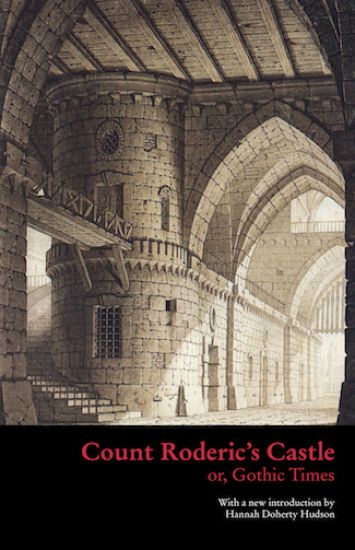
Count Roderic's Castle

Count Roderic's Castle

Gale Ecco, Print Editions
2018
sidottu
The 18th century was a wealth of knowledge, exploration and rapidly growing technology and expanding record-keeping made possible by advances in the printing press. In its determination to preserve the century of revolution, Gale initiated a revolution of its own: digitization of epic proportions to preserve these invaluable works in the largest archive of its kind. Now for the first time these high-quality digital copies of original 18th century manuscripts are available in print, making them highly accessible to libraries, undergraduate students, and independent scholars.Western literary study flows out of eighteenth-century works by Alexander Pope, Daniel Defoe, Henry Fielding, Frances Burney, Denis Diderot, Johann Gottfried Herder, Johann Wolfgang von Goethe, and others. Experience the birth of the modern novel, or compare the development of language using dictionaries and grammar discourses. ++++The below data was compiled from various identification fields in the bibliographic record of this title. This data is provided as an additional tool in helping to insure edition identification: ++++Library of CongressW037627Bookseller's advertisement, p. 102].Baltimore: Printed by Samuel Sower. For Keating's book-store, MDCCXCV. 1795]. 99, 3],101, 3]p.; 12
Politics in Mexico: The Path of a New Democracy

Politics in Mexico: The Path of a New Democracy

Roderic Ai Camp; Shannan L. Mattiace

Oxford University Press
2019
nidottu
Thoroughly grounded in Mexican history and based on extensive field research, this introduction examines the roots of Mexico's contemporary political culture and its democratic transformation. Now in its seventh edition, Politics in Mexico: The Path of a New Democracy has been revised and updated in order to address several major changes that have occurred since 2013, including the broad effort of Mexico to achieve a functional democracy; Pe a Nieto's continued reliance on the armed forces to combat organized crime; an analysis of the 2018 presidential election and what L pez Obrador's victory means for Mexico; and the country's slow economic growth and the importance of emphasizing poverty as a central policy issue. Authors Roderic Ai Camp and Shannan L. Mattiace provide an analysis of numerous aspects of Mexican political and economic development, highlighting controversial issues related to electoral democracy, drug-related violence, poverty, human rights, and the country's economic and political relationship with the U.S. Engagingly written by top scholars in the field, Politics in Mexico, Seventh Edition, is essential reading for students of Mexican or Latin American politics, comparative politics, and Mexican history.
Mexico

Mexico

Roderic Ai Camp

Oxford University Press Inc
2017
sidottu
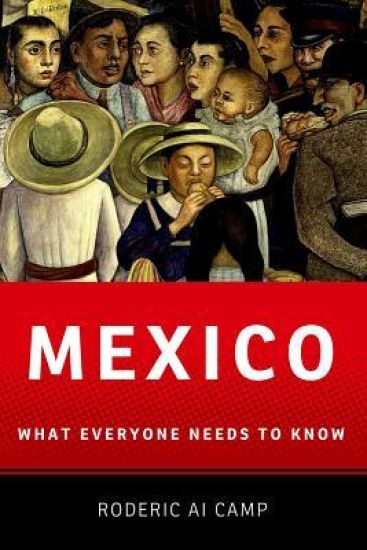
Today all would agree that Mexico and the United States have never been closer--that the fates of the two republics are inextricably intertwined. It has become an intimate part of life in almost every community in the United States, through immigration, imported produce, business ties, or illegal drugs. It is less a neighbor than a sibling; no matter what our differences, it is intricately a part of our existence. In the fully updated second edition of Mexico: What Everyone Needs to Know®, Roderic Ai Camp gives readers the most essential information about our sister republic to the south. Camp organizes chapters around major themes--security and violence, economic development, foreign relations, the colonial heritage, and more. He asks questions that take us beyond the headlines: Why does Mexico have so much drug violence? What was the impact of the North American Free Trade Agreement? How democratic is Mexico? Who were Benito Juárez and Pancho Villa? What is the PRI (the Institutional Revolutionary Party)? The answers are sometimes surprising. Despite ratification of NAFTA, for example, Mexico has fallen behind Brazil and Chile in economic growth and rates of poverty. Camp explains that lack of labor flexibility, along with low levels of transparency and high levels of corruption, make Mexico less competitive than some other Latin American countries. The drug trade, of course, enhances corruption and feeds on poverty; approximately 450,000 Mexicans now work in this sector. Brisk, clear, and informed, Mexico: What Everyone Needs To Know® offers a valuable primer for anyone interested in the past, present, and future of our neighbor to the South.
Mexico

Mexico

Roderic Ai Camp

Oxford University Press Inc
2017
nidottu
Today all would agree that Mexico and the United States have never been closer--that the fates of the two republics are inextricably intertwined. It has become an intimate part of life in almost every community in the United States, through immigration, imported produce, business ties, or illegal drugs. It is less a neighbor than a sibling; no matter what our differences, it is intricately a part of our existence. In the fully updated second edition of Mexico: What Everyone Needs to Know®, Roderic Ai Camp gives readers the most essential information about our sister republic to the south. Camp organizes chapters around major themes--security and violence, economic development, foreign relations, the colonial heritage, and more. He asks questions that take us beyond the headlines: Why does Mexico have so much drug violence? What was the impact of the North American Free Trade Agreement? How democratic is Mexico? Who were Benito Juárez and Pancho Villa? What is the PRI (the Institutional Revolutionary Party)? The answers are sometimes surprising. Despite ratification of NAFTA, for example, Mexico has fallen behind Brazil and Chile in economic growth and rates of poverty. Camp explains that lack of labor flexibility, along with low levels of transparency and high levels of corruption, make Mexico less competitive than some other Latin American countries. The drug trade, of course, enhances corruption and feeds on poverty; approximately 450,000 Mexicans now work in this sector. Brisk, clear, and informed, Mexico: What Everyone Needs To Know® offers a valuable primer for anyone interested in the past, present, and future of our neighbor to the South.
Entrepreneurs and Politics in Twentieth-Century Mexico

Entrepreneurs and Politics in Twentieth-Century Mexico

Roderic A. Camp

Oxford University Press Inc
1989
sidottu
In this innovative study, Roderic Camp turns his attention to the relationship between the private sector and the state in twentieth century Mexico. Based on extensive original research,including interviews undertaken during the past five years with 75 leading Mexican entrepreneurs and political figures, Camp's work provides a comprehensive analysis of the two groups' symbiotic relationship.
Crossing Swords

Crossing Swords

Roderic Ai Camp

Oxford University Press Inc
1997
sidottu
Based on a decade of field research, this work is the first book-length, scholarly examination in English of the role of Catholicism in Mexican society since the 1970s through 1995, and the increasing political activism of the Catholic church and clergy. It is also the first analysis of church-state relations in Latin America that incorporates detailed interviews of numerous bishops and clergy and leading politicians about how they see each other and how religion influences their values. It is also the first analysis of the Mexican Catholic Church which uses national survey research to examine Mexican attitudes toward religion, Christianity, and Catholicism, and provides the first inside look at the decision-making process of bishops at the diocesan level.
The Oxford Handbook of Mexican Politics

The Oxford Handbook of Mexican Politics

Roderic Ai Camp

Oxford University Press Inc
2012
sidottu
Since achieving independence from Spain and establishing its first constitution in 1824, Mexico has experienced numerous political upheavals. The country's long and turbulent journey toward democratic, representative government has been marked by a tension between centralized, autocratic governments (historically depicted as a legacy of colonial institutions) and federalist structures. The years since Mexico's independence have seen a major violent social revolution, years of authoritarian rule, and, finally, in the past two decades, the introduction of a fair and democratic electoral process. Over the course of the thirty-one essays in The Oxford Handbook of Mexican Politics some of the world's leading scholars of Mexico will provide a comprehensive view of the remarkable transformation of the nation's political system to a democratic model. In turn they will assess the most influential institutions, actors, policies and issues in its current evolution toward democratic consolidation. Following an introduction by Roderic Ai Camp, sections will explore the current state of Mexico's political development; transformative political institutions; the changing roles of the military, big business, organized labor, and the national political elite; new political actors including the news media, indigenous movements, women, and drug traffickers; electoral politics; demographics and political attitudes; and policy issues.
Policing in Context

Policing in Context

Roderic Broadhurst; Sara Davies

OUP Australia and New Zealand
2008
nidottu
Policing in Context introduces students to the diverse roles, duties, powers and problems of policing in Australia. The book approaches policing in Australia in three key sections. The first section comprises four chapters that cover the basic knowledge needed for understanding the history, context and structure of policing in Australia. the second section provides description of the core skills, tasks and operations of police work. In the final section, chapters cover and reflect on contemporary and emerging issues faced by police.
The Metamorphosis of Leadership in a Democratic Mexico

The Metamorphosis of Leadership in a Democratic Mexico

Roderic Ai Camp

Oxford University Press Inc
2010
sidottu
The Metamorphosis of Leadership in a Democratic Mexico is a broad analysis of Mexico's changing leadership over the past eight decades, stretching from its pre-democratic era (1935-1988), to its democratic transition (1988-2000) to its democratic period (2000-the present). In it, Roderic Camp, one of the most distinguished scholars of Mexican politics, seeks to answer two questions: 1) how has Mexican political leadership evolved since the 1930s and in what ways, beyond ideology, has the shift from a semi-authoritarian, one-party system to a democratic, electoral system altered the country's leadership? and 2) which aspects of Mexican leadership have been most affected by this shift in political models and when and why did the changes in leadership occur? Rather than viewing Mexico's current government as a true democracy, Camp sees it as undergoing a process of consolidation, under which the competitive electoral process has resulted in a system of governing institutions supported by the majority of citizens and significant strides toward plurality. Accordingly, he looks at the relationship between the decentralization of political power and the changing characteristics, experiences and paths to power of national leaders. The book, which represents four decades of Camp's work, is based upon a detailed study of 3000 politicians from the 1930s through the present, incorporating regional media accounts and Camp's own interviews with Mexican presidents, cabinet members, assistant secretaries, senators, governors and party presidents.
Mexico

Mexico

Roderic Ai Camp

Oxford University Press Inc
2011
nidottu
Today most would agree that Mexico and the United States have never been closer—that the fates of the two republics are inextricably intertwined. It has become an intimate part of life in almost every community in the United States, through immigration, imported produce, business ties, or illegal drugs. They are less neighbors than siblings; no matter the differences, they are intricately a part of each others' existence. In this outstanding contribution to Oxford's acclaimed series, What Everyone Needs to Know®, Roderic Ai Camp gives readers the most essential information about America's sister republic to the south. Camp organizes chapters around major themes—security and violence, economic development, foreign relations, the colonial heritage, and more. He asks questions that take us beyond the headlines: Why does Mexico have so much drug violence? What was the impact of the North American Free Trade Agreement? How democratic is Mexico? Who were Benito Juárez and Pancho Villa? What is the PRI (the Institutional Revolutionary Party)? The answers are sometimes surprising. Despite ratification of NAFTA, for example, Mexico has fallen behind Brazil and Chile in economic growth and rates of poverty. Camp explains that lack of labor flexibility, along with low levels of transparency and high levels of corruption, make Mexico less competitive than some other Latin American countries. The drug trade, of course, enhances corruption and feeds on poverty; approximately 450,000 Mexicans now work in this sector. But Camp reveals that President Calderón's recent assault on narcotics smugglers—and the violence resulting from it—may have actually lessened the government's control of parts of the country and national institutions. Brisk, clear, and informed, Mexico: What Everyone Needs To Know® offers a valuable primer for anyone interested in the past, present, and future of America's neighbor to the South.
Mexico

Mexico

Roderic Ai Camp

Oxford University Press Inc
2011
sidottu
Today all would agree that Mexico and the United States have never been closer--that the fates of the two republics are inextricably intertwined. It has become an intimate part of life in almost every community in the United States, through immigration, imported produce, business ties, or illegal drugs. It is less a neighbor than a sibling; no matter what our differences, it is intricately a part of our existence. In this outstanding contribution to Oxford's acclaimed series, What Everyone Needs to Know, Roderic Ai Camp gives readers the most essential information about our sister republic to the south. Camp organizes chapters around major themes--security and violence, economic development, foreign relations, the colonial heritage, and more. He asks questions that take us beyond the headlines: Why does Mexico have so much drug violence? What was the impact of the North American Free Trade Agreement? How democratic is Mexico? Who were Benito Juárez and Pancho Villa? What is the PRI (the Institutional Revolutionary Party)? The answers are sometimes surprising. Despite ratification of NAFTA, for example, Mexico has fallen behind Brazil and Chile in economic growth and rates of poverty. Camp explains that lack of labor flexibility, along with low levels of transparency and high levels of corruption, make Mexico less competitive than some other Latin American countries. The drug trade, of course, enhances corruption and feeds on poverty; approximately 450,000 Mexicans now work in this sector. But Camp reveals that President Calderón's recent assault on narcotics smugglers--and the violence resulting from it--may have actually lessened the government's control of parts of the country and national institutions. Brisk, clear, and informed, Mexico: What Everyone Needs To Know offers a valuable primer for anyone interested in the past, present, and future of our neighbor to the South.
The Developmental Organization of Robot Behavior
A comprehensive introduction to the mathematical foundations of movement and actuation that apply equally to animals and machines. This textbook offers a computational framework for the sensorimotor stage of development as applied to robotics. Much work in developmental robotics is based on ad hoc examples, without a full computational basis. This book's comprehensive and complete treatment fills the gap, drawing on the principal mechanisms of development in the first year of life to introduce what is essentially an operating system for developing robots. The goal is to apply principles of development to robot systems that not only achieve new levels of performance but also provide evidence for scientific theories of human development.
How People Work

How People Work

Roderic Gray

PEARSON EDUCATION LIMITED
2004
pokkari
A field-guide to understanding "what makes people tick", How People Work offers a unique insight into the drivers of workplace behaviour and performance. Managers will find people-management easier after reading it, and people will find excellence easier to achieve after implementing it.
Mexico's Military on the Democratic Stage

Mexico's Military on the Democratic Stage

Roderic A. Camp

Praeger Publishers Inc
2005
sidottu
Based on information not available previously, this comprehensive study details the history, evolution, and changing relationship between the armed forces and civilian leadership in Mexico in the second half of the 20th century. Camp focuses on the past two decades during which democratic transformation produced important changes within the armed forces, in particular the navy. Despite institutional autonomy, a lack of reform, and an increase in civilian missions, the Mexican armed forces remain subordinate to civilian political authorities, and Camp finds little evidence to support the common notion that they are a significant threat to civilian supremacy in general or to the democratic process in particular.This work draws from published and unpublished sources, military websites, and material obtained through numerous freedom of information requests made directly through the secretariat of national defense. It includes correspondence and interviews with Mexican officers, specialists and journalists who have covered the military and American officers who have trained or worked with the Mexican armed forces. Based upon thirty-five years of research, Camp incorporates detailed data on 670 army, air force, and naval officers at the two or three star rank, into the only comprehensive biographical data bank ever compiled on the Mexican military. This allows for insightful comparisons between the navy and army, on such topics as leadership, training, international education, and promotion. It reveals new organizational developments within the armed forces, especially the navy, and the new roles civil political institutions are playing vis-a-vis the armed forces.
Political Recruitment across Two Centuries

Political Recruitment across Two Centuries

Roderic Ai Camp

University of Texas Press
1995
pokkari
During more than twenty years of field research, Roderic Ai Camp built a monumental database of biographical information on more than 3,000 leading national figures in Mexico. In this major contribution to Mexican political history, he draws on that database to present a definitive account of the paths to power Mexican political leaders pursued during the period 1884 to 1992.Camp’s research clarifies the patterns of political recruitment in Mexico, showing the consequences of choosing one group over another. It calls into question numerous traditional assumptions, including that upward political mobility was a cause of the Mexican Revolution of 1910.Comparing Mexican practices with those in several East Asian countries also allows Camp to question many of the tenets of political recruitment theory. His book will be of interest to students not only of Mexican politics but also of history, comparative politics, political leadership, and Third World development.
Mexican Political Biographies, 1935-2009

Mexican Political Biographies, 1935-2009

Roderic Ai Camp

University of Texas Press
2011
sidottu
This fourth edition of Roderic Camp's highly respected Mexican Political Biographies is an updated comprehensive biographical directory of leading state and national politicians in Mexico, covering the years 1935–2009. The original edition, published in 1976, was the first and only comprehensive biographical work on contemporary political figures in any language and served as the prototype for the Mexican government's brief foray into its own official biographical directory. The Mexican Supreme Court has cited every biography of justices in the third edition as the basis of its biographies in the late 1980s.With updates of the existing biographies and appendices, plus almost 1,000 additional biographies, this fourth edition now features close to 3,000 entries and serves as a unique resource list of the chronological occupants of all leading national political posts. The need for such information has become even more pronounced since Mexico's political transformation from a semi-authoritarian to a democratic model.This latest edition allows readers access to information about Mexican politicians into the new century, and like its earlier versions, will be a valuable tool for government officials, journalists, historians, social scientists, the business community, and students.Finally, it includes a detailed bibliographic essay that identifies and explains the significance of biographical sources and has been enhanced by numerous up-to-date Internet sources. An added convenience is an accompanying CD that allows readers to search the biographies and appendices, enhancing the longevity, usefulness, and uniqueness of this edition.