Kirjojen hintavertailu. Mukana 11 627 463 kirjaa ja 12 kauppaa.

Kirjahaku

Etsi kirjoja tekijän nimen, kirjan nimen tai ISBN:n perusteella.

1000 tulosta hakusanalla Roger G. Newton

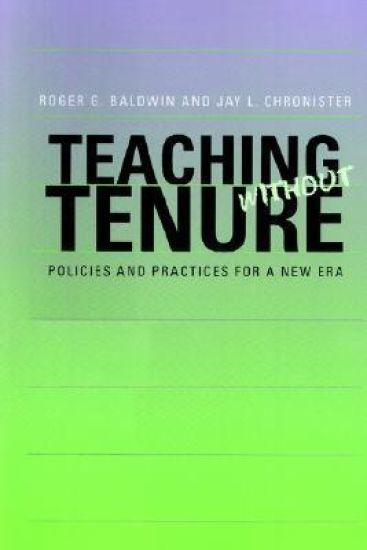
Teaching without Tenure

Teaching without Tenure

Roger G. Baldwin; Jay L. Chronister

Johns Hopkins University Press
2002
pokkari
The growing use of full-time non-tenure-track faculty represents a controversial change in the pattern of staffing colleges and universities. Teaching without Tenure provides the first comprehensive examination of this important phenomenon. Examining the issue from the perspectives of both institutions and faculty members, Roger G. Baldwin and Jay L. Chronister offer a systematic look at who non-tenure-track faculty are, the roles they play in higher education, and the policies that control the terms and conditions of their employment. Teaching without Tenure utilizes findings from a national study of full-time non-tenure-track faculty, including survey data, policy analysis findings, and information gathered from site visits with faculty and administrators at a cross-section of four-year colleges and universities across the United States. This timely study emerges in an environment in which many constituents of higher education have begun to question the feasibility of retaining the academic tenure system in its present form. Baldwin and Chronister discuss the internal and external factors influencing an institution's decision to hire non-tenure-track faculty and make recommendations for policies and practices that can support the work and career development of faculty in these positions. Designed to assist faculty, academic leaders, and institutions, Teaching without Tenure examines developments challenging the status quo in the American academic profession and offers guidance as higher education moves into an uncertain future.
Cotton and Conquest

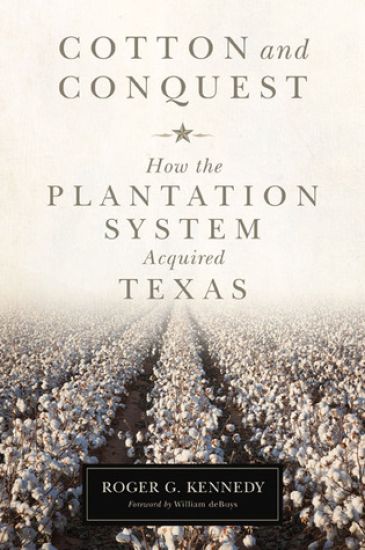
Cotton and Conquest

Roger G. Kennedy; William DeBuys

University of Oklahoma Press
2013
sidottu
This sweeping work of history explains the westward spread of cotton agriculture and slave labor across the South and into Texas during the decades before the Civil War. In arguing that the U.S. acquisition of Texas originated with planters' need for new lands to devote to cotton cultivation, celebrated author Roger G. Kennedy takes a long view. Locating the genesis of Southern expansionism in the Jeffersonian era, Cotton and Conquest stretches from 1790 through the end of the Civil War, weaving international commerce, American party politics, technological innovation, Indian-white relations, frontier surveying practices, and various social, economic, and political events into the tapestry of Texas history.The innumerable dots the author deftly connects take the story far beyond Texas. Kennedy begins with a detailed chronicle of the commerce linking British and French textile mills and merchants with Southern cotton plantations. When the cotton states seceded from the Union, they overestimated British and French dependence on Southern cotton. As a result, the Southern plantocracy believed that the British would continue supporting the use of slaves in order to sustain the supply of cotton - a miscalculation with dire consequences for the Confederacy.As cartographers and surveyors located boundaries specified in new international treaties and alliances, they violated earlier agreements with Indian tribes. The Indians were to be displaced yet again, now from Texas cotton lands. The plantation system was thus a prime mover behind Indian removal, Kennedy shows, and it yielded power and riches for planters, bankers, merchants, millers, land speculators, Indian-fighting generals and politicians, and slave traders.In Texas, at the plantation system's farthest geographic reach, cotton scored its last triumphs. No one who seeks to understand the complex history of Texas can overlook this book.
Public Benefits of Archaeology

Public Benefits of Archaeology

Roger G. Kennedy

University Press of Florida
2002
sidottu
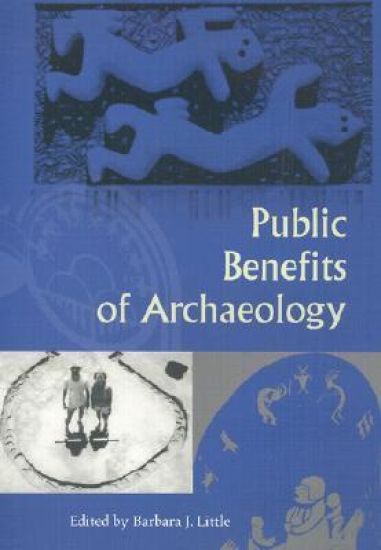
Little brings together an unprecedented mix of authors from all aspects of the profession, as well as several non-archaeologists, who address the broad range of contributions that archaeology makes beyond research. Their discussion confronts the issue of exactly who the public is and why it should care about archaeology at all. These authors prove, in exploring diverse cross-sections of the public, that archaeology plays a crucial role in providing an authentic past, opportunities for critical thinking, and multicultural education. The electic nature of the collection allows for a thorough exploration of major issues central to the conduct of archaeological scholarship: museum and site interpretation, site preservation, education, media relations, descendant communities, and politics and public policy.
Reforming Regulation

Reforming Regulation

Roger G. Noll

Brookings Institution
1971
nidottu
"Many observers agree that federal regulation of business often fails to prevent monopoly profits, promote technological change, or protect consumers against market abuses. Why? President Nixon assigned the task of proposing reforms to his Advisory Council on Executive Organization, called the Ash Council after its chairman, Roy L. Ash. The object of both the Council's report and this paper is to advance the public search for reform.The council suggested that a leading cause of regulatory failure lies in the organization of regulatory agencies. This analysis leads to an alternative view—that the regulatory process is inherently flawed regardless of agency organization, and the real sources of weakness may be laws establishing regulatory mandates and the political environment in which regulation operates. Drawing on the insights of economists, political scientists, and lawyers, the author examines a number of federal regulatory agencies and views their performance in the light of regulatory theory. He prescribes no remedies but suggests the route to be followed if regulation is to approach its economic and social goals."
Agricultural Field Experiments

Agricultural Field Experiments

Roger G. Petersen

CRC Press Inc
1994
sidottu
This text provides statistical and biometrical procedures for designing, conducting, analyzing and interpreting field experiments. It addresses the most important research topics in agriculture, including agronomy, breeding and pasture trials; farming systems research; and intercropping research.
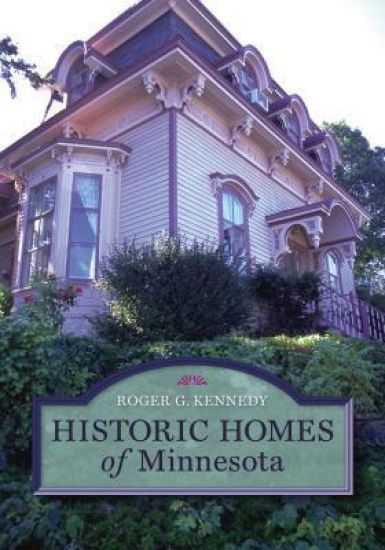
Historic Homes of Minnesota

Historic Homes of Minnesota

Roger G. Kennedy

Minnesota Historical Society Press,U.S.
2006
nidottu
Historic Homes of Minnesota is the engaging story of the evolution of architectural styles in Minnesota from 1830 to 1914 -- from the influence of the early French traders along the Mississippi and St Croix to the emergence of the school of Frank Lloyd Wright. Through photographs and colourfully informative text, internationally known historian Roger Kennedy helps readers understand the unique styles of Minnesota's first homes, including the Mower House in Arcola, the first large house on the St. Croix; Alexander Ramsey's 'Mansion House' in St Paul, influenced by Pennsylvania Dutch virtues; the whimsical Charles C. Clement house in Fergus Falls, clearly Norse in spirit; and the Purcell House in Minneapolis, a fine example of the Prairie School design. On a broad plane these architectural eras reflected social customs, politics, commerce, religion, and literature. On a personal level they often revealed the national origin and character of the families that made the house a home. In short, this is in large measure a history of the people.Kennedy has considered their heritage and traditions as carefully as he has examined the architecture they created, and he offers a fresh, holistic approach to the study of our state's great houses.
Corinthian Hellenistic Pottery

Corinthian Hellenistic Pottery

Roger G. Edwards

American School of Classical Studies at Athens
2012
sidottu
This report focuses on the pottery produced in Corinth in the Hellenistic period down to the time of that city's destruction by Mummius in 146 B.C. Imported pottery of the period, as well as Corinthian Hellenistic ware found elsewhere, has been deliberately excluded except as comparanda. However, in order to present the full history of the Hellenistic shapes the author traces their development from the earliest available Corinthian evidence, in some cases from the 6th century B.C. The shape series are further subdivided according to size categories. The catalogue is fully illustrated with profile drawings and photographs and two plans aid in identifying the deposits. The material is arranged under Wheelmade Fine Ware, Coarse Ware, Blister Ware and Moulded Relief Ware, and is followed by a discussion of the deposits and their chronology. A special section is devoted to the fine ware decorated in West Slope style.
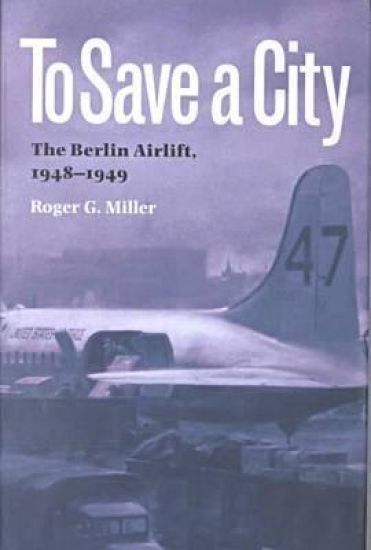
To Save a City

To Save a City

Roger G. Miller

Texas A M University Press
2000
sidottu
Drawing on rare US Air Force files, recently declassified documents from the National Archives, records released since the collapse of the Soviet Union, and the memories of airlift veterans themselves, Roger G. Miller provides an original study of the Berlin Airlift.
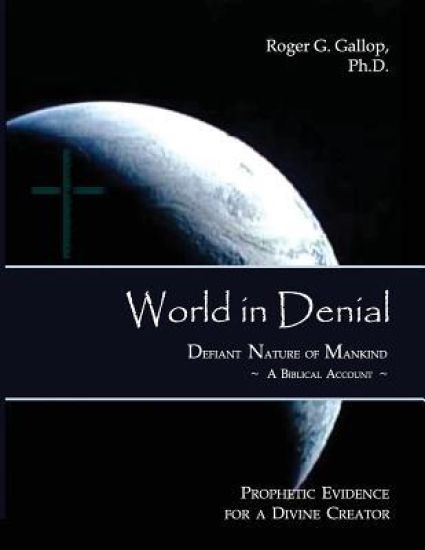
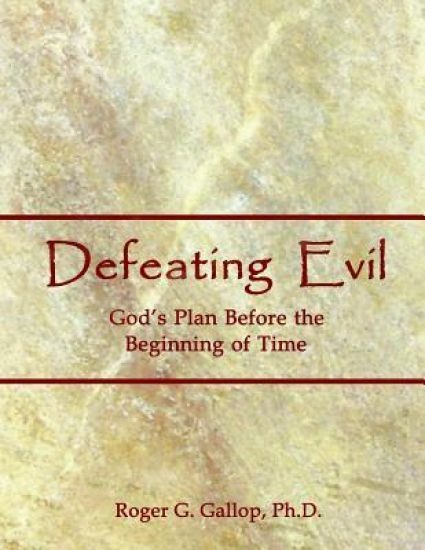
Defeating Evil - God's Plan Before the Beginning of Time: Planet Earth - God's Testing Ground
This book describes the nature of God; creation and purpose of angels; creation of our physical world (including the original supercontinent); the creation and purpose of mankind; the origin of good and evil, and the fall of mankind; the effects of evil on humanity; the continuing problem of evil throughout history and in our world today; and God's solution in defeating evil.The primary focus of the book is the nature and necessity of "free will" (freedom of choice); the conflict with "free will," love, and evil; the defiant nature of mankind; and life on earth as God's testing ground for mankind. The book answers most of the challenging questions concerning good and evil, and concludes by emphasizing the absolute necessity of making the right choice during life on earth.This book answers these questions: what is the purpose of mankind? did God have a plan for mankind before creation? where did evil come from? did God create evil and why is it still here? and if not, did God's plan include preserving free will and love (goodness), and defeating evil? If God is sovereign, why doesn't He do away with evil once and for all? Why is there so much arrogance, immorality, depravity, violence, lawlessness, greed, and idolatry in the world? why did God allow evil to have its way? and will there be an end to evil and wickedness? Is there a purpose for life on earth? and why doesn't God put an immediate end to pain and suffering? why doesn't God perform more miracles? and is there an eternal Hell? There are answers to these questions.
Defeating Evil - God's Plan Before the Beginning of Time: Planet Earth - God's Testing Ground
This book describes the nature of God; creation and purpose of angels; creation of our physical world (including the original supercontinent); the creation and purpose of mankind; the origin of good and evil, and the fall of mankind; the effects of evil on humanity; the continuing problem of evil throughout history and in our world today; and God's solution in defeating evil.The primary focus of the book is the nature and necessity of "free will" (freedom of choice); the conflict with "free will," love, and evil; the defiant nature of mankind; and life on earth as God's testing ground for mankind. The book answers most of the challenging questions concerning good and evil, and concludes by emphasizing the absolute necessity of making the right choice during life on earth.This book answers these questions: what is the purpose of mankind? did God have a plan for mankind before creation? where did evil come from? did God create evil and why is it still here? and if not, did God's plan include preserving free will and love (goodness), and defeating evil? If God is sovereign, why doesn't He do away with evil once and for all? Why is there so much arrogance, immorality, depravity, violence, lawlessness, greed, and idolatry in the world? why did God allow evil to have its way? and will there be an end to evil and wickedness? Is there a purpose for life on earth? and why doesn't God put an immediate end to pain and suffering? why doesn't God perform more miracles? and is there an eternal Hell? There are answers to these questions.
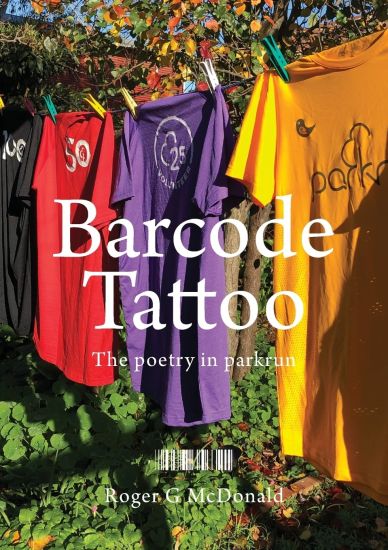
Barcode Tattoo

Barcode Tattoo

Roger G McDonald

Sarg Sole Traders
2023
pokkari
Barcode Tattoo celebrates the extraordinary phenomenon of parkrun like no other book. Founded in 2004 by Zimbabwe-born runner and visionary, Paul Sinton-Hewitt, parkrun has become a running institution. The concept is deceptively simple: a weekly, measured and timed five kilometre run, jog, or walk. Now consider this: parkruns take place in thousands of locations every Saturday around the world. They're open to anyone who cares to turn up, which they do in their millions. They're organised entirely by unpaid volunteers. And they're free. Forever.Barcode Tattoo takes its title and theme from the one element common to all parkruns: the printed barcode as the key to all participants' unique experience with a global running movement that has swept the world.With more than 6,300,000 registered members in 22 countries so far, parkrun has captured the imagination of athletes and couch potatoes alike.In Barcode Tattoo, poet, writer, and runner, Roger G McDonald, takes readers on a lilting, musical, amusing, and sometimes poignant journey of the imagination.Ten percent of sales of this book go direct to parkrun to allow it to support its central principle: free for everyone forever. Proceeds from sales also go to the children's charity, CreateCare Global www.createcareglobal.org.
A Biologist in Paradise: Musings on Nature & Science

A Biologist in Paradise: Musings on Nature & Science

Roger G. Gosden

Jamestowne Bookworks
2017
nidottu
The author celebrates a love of nature and science in this collection of 40 essays and memoirs. They reveal deep curiosity about biology, including our fellow creatures, and his concern for planetary and human health. Not a science book for scientists nor a nature book for naturalists, it is offered to everyone who shares those cares, and not only for information but also contemplation. Stories are seasoned with humor and quotations from favorite writers and poets. The straight-jacket of academia was cast off for the freedom of writing in a hopeful tone for an anxious age.
The Diazo Giving Substance in Urine in Tuberculosis

The Diazo Giving Substance in Urine in Tuberculosis

Roger G. (Roger Grierson) 1920- Young; University of Alberta Department of

Hassell Street Press
2021
nidottu
This work has been selected by scholars as being culturally important and is part of the knowledge base of civilization as we know it.This work is in the public domain in the United States of America, and possibly other nations. Within the United States, you may freely copy and distribute this work, as no entity (individual or corporate) has a copyright on the body of the work.Scholars believe, and we concur, that this work is important enough to be preserved, reproduced, and made generally available to the public. To ensure a quality reading experience, this work has been proofread and republished using a format that seamlessly blends the original graphical elements with text in an easy-to-read typeface.We appreciate your support of the preservation process, and thank you for being an important part of keeping this knowledge alive and relevant.