Kirjojen hintavertailu. Mukana 12 083 983 kirjaa ja 12 kauppaa.

Kirjahaku

Etsi kirjoja tekijän nimen, kirjan nimen tai ISBN:n perusteella.

1000 tulosta hakusanalla Roger L. Frye

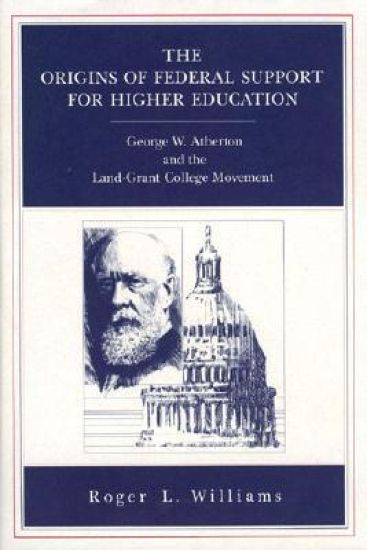
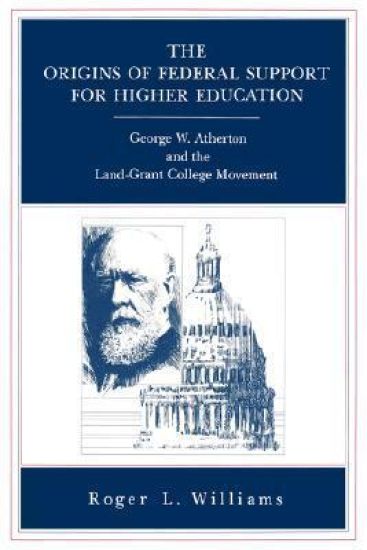
The Origins of Federal Support for Higher Education

The Origins of Federal Support for Higher Education

Roger L. Williams

Pennsylvania State University Press
1991
sidottu
The Origins of Federal Support for Higher Education revises the traditional interpretation of the land-grant college movement, whose institutions were brought into being by the 1862 Morrill Act to provide for "the liberal and practical education of the industrial classes." Rather than being the inevitable consequence of the unfolding dynamic of institutional and socioeconomic forces, Williams argues, it was the active intervention and initiative of a handful of educational leaders that secured the colleges' future—above all, the activities of George W. Atherton.For nearly three decades, Atherton, who was the seventh president of the Pennsylvania State University, worked to secure consistent federal financial support for the colleges, which in their early years received little assistance from the states they were designed to benefit. He also helped to develop the institutions as comprehensive "national" universities grounded in the liberal arts and sciences—a conception that countered the prevailing view of the colleges as mainly agricultural schools.Atherton became the prime mover in the campaign to enact the 1887 Hatch Act, which encouraged the establishment of agricultural experiment stations at land-grant colleges. The act marked the federal government's first effort to provide continuous funding to research units associated with higher education institutions. At the same time, Atherton played a key role in the formation of the first association of such institutions: The Association of American Agricultural Colleges and Experiment Stations. It was the Association that provided the critical mass needed to lobby Congress successively and to approach the many opportunities and threats the land-grant colleges faced during the 1885–1906 period.Atherton was also deeply involved in the campaign for the Morrill Act of 1890, which provided long-sought annual appropriations to land-grant colleges for a broad range of academic programs and encouraged steady growth in state support during the 1890s.Roger Williams traces the motives and tactics behind a series of laws that made the federal government irreversibly committed to funding higher education and scientific research and provides rich new insights into the complexities, polarities, and inherent contradictions of the history of the American land-grant movement.
The Origins of Federal Support for Higher Education

The Origins of Federal Support for Higher Education

Roger L. Williams

Pennsylvania State University Press
1991
pokkari
The Origins of Federal Support for Higher Education revises the traditional interpretation of the land-grant college movement, whose institutions were brought into being by the 1862 Morrill Act to provide for "the liberal and practical education of the industrial classes." Rather than being the inevitable consequence of the unfolding dynamic of institutional and socioeconomic forces, Williams argues, it was the active intervention and initiative of a handful of educational leaders that secured the colleges' future—above all, the activities of George W. Atherton.For nearly three decades, Atherton, who was the seventh president of the Pennsylvania State University, worked to secure consistent federal financial support for the colleges, which in their early years received little assistance from the states they were designed to benefit. He also helped to develop the institutions as comprehensive "national" universities grounded in the liberal arts and sciences—a conception that countered the prevailing view of the colleges as mainly agricultural schools.Atherton became the prime mover in the campaign to enact the 1887 Hatch Act, which encouraged the establishment of agricultural experiment stations at land-grant colleges. The act marked the federal government's first effort to provide continuous funding to research units associated with higher education institutions. At the same time, Atherton played a key role in the formation of the first association of such institutions: The Association of American Agricultural Colleges and Experiment Stations. It was the Association that provided the critical mass needed to lobby Congress successively and to approach the many opportunities and threats the land-grant colleges faced during the 1885–1906 period.Atherton was also deeply involved in the campaign for the Morrill Act of 1890, which provided long-sought annual appropriations to land-grant colleges for a broad range of academic programs and encouraged steady growth in state support during the 1890s.Roger Williams traces the motives and tactics behind a series of laws that made the federal government irreversibly committed to funding higher education and scientific research and provides rich new insights into the complexities, polarities, and inherent contradictions of the history of the American land-grant movement.
Evan Pugh’s Penn State

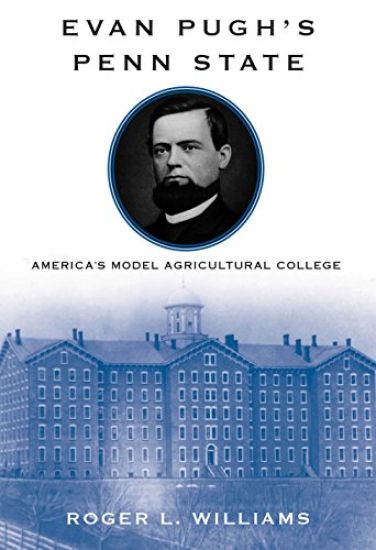
Evan Pugh’s Penn State

Roger L. Williams

Pennsylvania State University Press
2018
sidottu
When Evan Pugh became the first president of Pennsylvania’s Farmers’ High School—later to be known as The Pennsylvania State University—the small campus was in disrepair and in dire need of leadership. Pugh was young, barely into his 30s, but he was energetic, educated, and visionary. During his tenure as president he molded the school into a model institution of its kind: America’s first scientifically based agricultural college.In this volume, Roger Williams gives Pugh his first book-length biographical treatment. Williams recounts Pugh’s short life and impressive career, from his early days studying science in the United States and Europe to his fellowship in the London Chemical Society, during which he laid the foundations of the modern ammonium nitrate fertilizer industry, and back to Pennsylvania, where he set about developing “upon the soil of Pennsylvania the best agricultural college in the world” and worked to build an American academic system mirroring Germany’s state-sponsored agricultural colleges. This last goal came to fruition with the passage of the Morrill Act in 1862, just two years prior to Pugh’s death. Drawing on the scientist-academic administrator’s own writings and taking a wide focus on the history of higher education during his lifetime, Evan Pugh’s Penn State tells the compelling story of Pugh’s advocacy and success on behalf of both Penn State and land-grant colleges nationwide.Despite his short life and career, Evan Pugh’s vision for Penn State made him a leader in higher education. This engaging biography restores Pugh to his rightful place in the history of scientific agriculture and education in the United States.
Frederick Watts and the Founding of Penn State

Frederick Watts and the Founding of Penn State

Roger L. Williams

Pennsylvania State University Press
2021
sidottu
Frederick Watts came to prominence during the nineteenth century as a lawyer and a railroad company president, but his true interests lay in agricultural improvement and in raising the economic, social, and political standing of Pennsylvania’s farmers. After being elected founding president of The Pennsylvania State Agricultural Society in 1851, he used his position to advocate vigorously for the establishment of an agricultural college that would employ science to improve farming practices. He went on to secure the charter for the Farmers’ High School of Pennsylvania, which would eventually become the Pennsylvania State University.This biography explores Watts’s role in founding and leading Penn State through its formative years. Watts adroitly directed the school as it was sited, built, and financed, opening for students in 1859. He hired the brilliant Evan Pugh as founding president, who, with Watts, quickly made it the first successful agricultural college in America. But for all his success in launching the institution, Watts nearly brought it to the brink of closure through a series of ruinous presidential appointments that led to an abandonment of the land-grant focus on agriculture and engineering.Watts’s influence in the agricultural modernization movement and his impact on land-grant education in the United States—both in his role with Penn State and later as US commissioner of agriculture—made him a leader in the history of agricultural and higher education. Roger L. Williams’s compelling biography of Watts reestablishes him in this legacy, providing a balanced analysis of his missteps and accomplishments.
Spotlight on the Child

Spotlight on the Child

Roger L. Bedard; C. John Tolch

Praeger Publishers Inc
1989
sidottu
Although children's theatre has been a part of American culture from early times, historians have not always included it in the documentation of our theatrical heritage. Sometimes more the product of the educator and the social worker than the producer or the theatre artist, theatre with and for young people has been neglected in traditional theatre history studies; yet as early as 1792 Charles Stearns began creating his plays and dialogues for school children. The traditions and success of eighteenth-century school drama inspired social workers to explore similar activities in their playground and settlement house work, and at the end of the nineteenth and the beginning of the twentieth century, professional producers began experimenting more vigorously with the commercial possibilities of children as audience. This book is a collection of essays by leading authorities in the field on various aspects of the historical development of children's theatre in the United States. The discussions focus on the marked differences that have occurred from group to group and examine the ways in which children's theatre began to find definition, as theorists and writers such as Winifred Ward and Charlotte Chorpenning strove to articulate the differences between the child as participant in creative drama and the child as audience member. The introduction provides a review of early concepts and the evolution of present-day thought, and the essays illuminate facets of the rich and varied history of American theatre with and for children. This trailblazing study will serve as the beginning of a fuller understanding of the field and a challenge to others to document the missing pieces.
Chemical Reagents for Protein Modification
First published in 1991, Chemical Reagents for Protein Modification, 2nd Edition provides a unique combination of theoretical and practical considerations for the use of chemical reagents for site-specific modification of proteins. The book is divided into three sections, with the first section describing general techniques, including information on the organic chemistry of the various modification reactions; the separation and characterization of site-specific modified proteins, including applications to proteins separated by electrophoresis followed by blotting; the specific chemical cleavage of peptide bonds in proteins; the separation of peptides by high-performance liquid chromatography and electrophoresis; and the use of chemical reagents to assess conformational change in proteins. The second section provides an encyclopedic description of reagents and reactions for the site-specific modification of individual amino acid residues in proteins. The final section presents descriptions of the use of chemical reagents to label biologically significant sites in proteins, including enzyme active sites and the use of covalent cross-linking to measure protein-protein interactions. Particular emphasis is placed on the use of photoaffinity reagents. The book will be an extremely useful research tool for all investigators interested in the solution chemistry of proteins.
Chemical Modification of Biological Polymers
Examining the chemical modification of biological polymers and the emerging applications of this technology, Chemical Modification of Biological Polymers reflects the change in emphasis in this subsection of biotechnology from the study of protein structure and function toward applications in therapeutics and diagnostics. Highlights The basic organic chemistry of the modification proteins, nucleic acids, oligosaccharides, polysaccharides, and their applicationsNew analytical technologies used to characterize the chemical modification of biological polymersIdentification of in vivo, non-enzymatic chemical modification of biological polymersSpecific chemical modifications to generate biopharmaceutical products This book covers the basics on the organic chemistry underlying the chemical modification of biopolymers, including updates on the use of various chemical reagents. It describes the current status of chemical modification of biological polymers and emerging applications of this technology in biotechnology. These technologies are important for the manufacture of conjugate proteins used in drug delivery, for the preparation of nucleic acid microarrays, and for the preparation of hydrogels and other materials used in tissue engineering.
The Evolution from Protein Chemistry to Proteomics
Largely driven by major improvements in the analytical capability of mass spectrometry, proteomics is being applied to broader areas of experimental biology, ranging from oncology research to plant biology to environmental health. However, while it has already eclipsed solution protein chemistry as a discipline, it is still essentially an extension of classical protein chemistry, owing much of its maturation to prior contributions. Unfortunately, this debt is not always evident in current literature.The Evolution from Protein Chemistry to Proteomics: Basic Science to Clinical Application, in providing a different perspective than other reviews, strengthens the connection between solution protein chemistry and proteomic technology. Towards this end, Roger Lundblad, a long-time leader in protein chemistry and a scientist who has worked in both academics and industry, brings together some seemingly disparate areas into a single volume. Discussing analytical proteomics, expression proteomics, and clinical proteomics (biomarker identification), he provides coverage that is uniquely rich in detail. Lundblad applies this detail to sample preparation for proteomic analysis, including preparation from blood and tissues. He also presents specifics on the prefractionation of samples used to identify specific subproteomes such as phosphoproteomes and glycoproteomes. Comprehensive reviews are provided covering the chemical modification of proteins, including its use for chemical proteomics. Special attention is given to challenges that impede the identification, validation, and development of biomarkers into clinically useful diagnostic analytes. A bestselling author, Lundblad utilizes classical protein chemistry literature in providing an intellectual basis for proteomics that merges current concepts with the existing literature, while providing the technical detail necessary for the effective commercialization of proteomics.
Chemical Reagents for Protein Modification
The use of the chemical modification of proteins has evolved over the past 80 years, benefiting from advances in analytical, physical, and organic chemistry. Over the past 30 years, the use of chemical reagents to modify proteins has been crucial in determining the function and structure of purified proteins. This groundbreaking work is part of the foundation of emerging disciplines of proteomics, chemical biology, structure biology, and chemical proteomics.Chemical Reagents for Protein Modification, Fourth Edition provides a comprehensive review of reagents used for the chemical modification of proteins, representing a major revision of the work presented in previous editions. The completely updated Fourth Edition is substantially larger and includes five new chapters: Alkylating AgentsAcylating AgentsNitration and NitrosylationOxidationModification of Proteins with Reducing Agents There is greatly increased coverage of the chemical modification of cysteine, which is critical for bioconjugate synthesis. The chapter on reduction also provides information necessary for bioconjugate synthesis as well as for the processing of inclusion bodies. The book places emphasis on conditions that affect the specificity of the chemical modification of proteins, such as solvent and temperature. The format has been markedly revised, presenting information based on the chemical nature of the modifying material and on the amino acid residue modified. This new version has increased significance to biopharmaceuticals. Much of the information is in tabular form, which enables the rapid location of cited material.
The Confederate States of America

The Confederate States of America

Roger L. Ransom

WW Norton Co
2006
nidottu
Presents a distinguished historian's theories about how America would be different if the Civil War had ended in a stalemate or a victory for the Confederacy or if Lincoln had lost the 1864 election, in a historical analysis that offers additional insight into key Civil War events. Reprint.
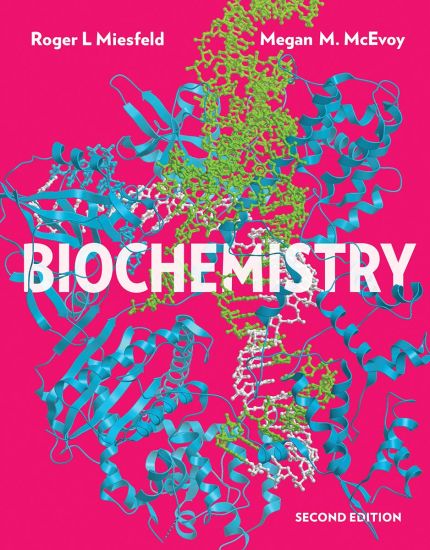
Biochemistry

Biochemistry

Roger L Miesfeld; Megan M McEvoy

WW NORTON CO
2021
muu
Drawing on more than three decades of teaching experience, Roger Miesfeld and Megan McEvoy created a book that is both a learning tool for students and a teaching tool for instructors--one that delivers exceptionally readable explanations, stunning graphics, and rigorous content. Relevant everyday biochemistry examples make clear why biochemistry matters in a way that develops students' knowledge base and critical thinking skills. The second edition includes exciting new Your Turn critical thinking pedagogy, a thoughtful balance of biology and chemistry, a compelling ebook featuring 3D molecular images, videos, animations, and more.
Biochemistry

Biochemistry

Roger L. Miesfeld; Megan M. McEvoy

W. W. Norton Company
2021
irtolehti
Drawing on more than three decades of teaching experience, Roger Miesfeld and Megan McEvoy created a book that is both a learning tool for students and a teaching tool for instructors--one that delivers exceptionally readable explanations, stunning graphics, and rigorous content. Relevant everyday biochemistry examples make clear why biochemistry matters in a way that develops students' knowledge base and critical thinking skills. The second edition includes exciting new Your Turn critical thinking pedagogy, a thoughtful balance of biology and chemistry, a compelling ebook featuring 3D molecular images, videos, animations, and more.
Biochemistry

Biochemistry

Roger L. Miesfeld; Megan M. McEvoy

WW Norton Co
2021
muu
Drawing on more than three decades of teaching experience, Roger Miesfeld and Megan McEvoy created a book that is both a learning tool for students and a teaching tool for instructors—one that delivers exceptionally readable explanations, stunning graphics and rigorous content. Relevant everyday biochemistry examples make clear why biochemistry matters in a way that develops students’ knowledge base and critical thinking skills. The second edition includes exciting new Your Turn critical thinking pedagogy, a thoughtful balance of biology and chemistry, a compelling ebook featuring 3D molecular images, videos, animations, and more.
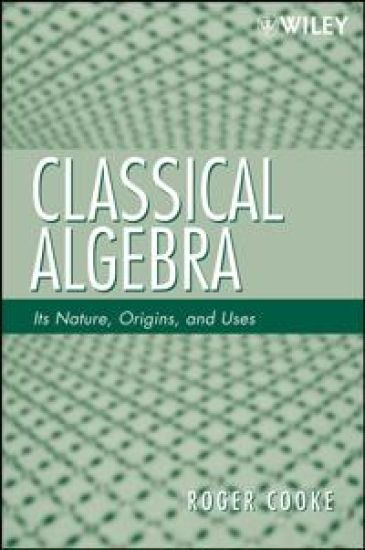
Classical Algebra

Classical Algebra

Roger L. Cooke

John Wiley Sons Inc
2008
nidottu
This insightful book combines the history, pedagogy, and popularization of algebra to present a unified discussion of the subject. Classical Algebra provides a complete and contemporary perspective on classical polynomial algebra through the exploration of how it was developed and how it exists today. With a focus on prominent areas such as the numerical solutions of equations, the systematic study of equations, and Galois theory, this book facilitates a thorough understanding of algebra and illustrates how the concepts of modern algebra originally developed from classical algebraic precursors. This book successfully ties together the disconnect between classical and modern algebraand provides readers with answers to many fascinating questions that typically go unexamined, including: What is algebra about? How did it arise? What uses does it have? How did it develop? What problems and issues have occurred in its history? How were these problems and issues resolved? The author answers these questions and more, shedding light on a rich history of the subject—from ancient and medieval times to the present. Structured as eleven "lessons" that are intended to give the reader further insight on classical algebra, each chapter contains thought-provoking problems and stimulating questions, for which complete answers are provided in an appendix. Complemented with a mixture of historical remarks and analyses of polynomial equations throughout, Classical Algebra: Its Nature, Origins, and Uses is an excellent book for mathematics courses at the undergraduate level. It also serves as a valuable resource to anyone with a general interest in mathematics.
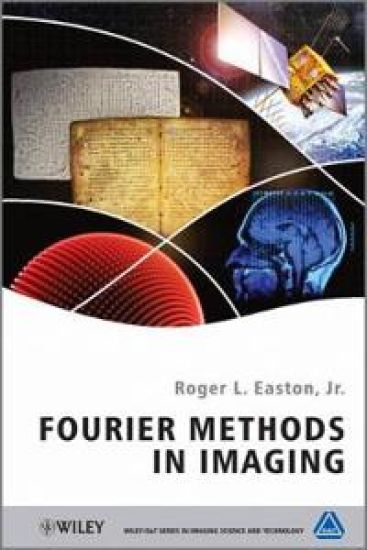
Fourier Methods in Imaging

Fourier Methods in Imaging

Roger L. Easton Jr.

John Wiley Sons Inc
2010
sidottu
Fourier Methods in Imaging introduces the mathematical tools for modeling linear imaging systems to predict the action of the system or for solving for the input. The chapters are grouped into five sections, the first introduces the imaging “tasks” (direct, inverse, and system analysis), the basic concepts of linear algebra for vectors and functions, including complex-valued vectors, and inner products of vectors and functions. The second section defines "special" functions, mathematical operations, and transformations that are useful for describing imaging systems. Among these are the Fourier transforms of 1-D and 2-D function, and the Hankel and Radon transforms. This section also considers approximations of the Fourier transform. The third and fourth sections examine the discrete Fourier transform and the description of imaging systems as linear "filters", including the inverse, matched, Wiener and Wiener-Helstrom filters. The final section examines applications of linear system models to optical imaging systems, including holography. Provides a unified mathematical description of imaging systems.Develops a consistent mathematical formalism for characterizing imaging systems.Helps the reader develop an intuitive grasp of the most common mathematical methods, useful for describing the action of general linear systems on signals of one or more spatial dimensions.Offers parallel descriptions of continuous and discrete cases.Includes many graphical and pictorial examples to illustrate the concepts. This book helps students develop an understanding of mathematical tools for describing general one- and two-dimensional linear imaging systems, and will also serve as a reference for engineers and scientists
Applied Molecular Genetics

Applied Molecular Genetics

Roger L. Miesfeld

John Wiley Sons Inc
1999
nidottu
This text explains the key biochemical and cell biological principles behind some of today's most commonly used applications of molecular genetics, using clear terms and well-illustrated flow schemes. The book is divided into several sections and moves from basic to advanced topics while providing a concise overview of fundamental concepts in modern biotechnology. Each chapter concludes with a Laboratory Practicum describing a hypothetical research objective and the sequence of steps that are most often used to investigate biological questions using molecular genetic methods. In addition, the book provides informative summaries of the latest advances in molecular genetics, using attractive illustrations and a comprehensive reference list. This text also introduces the use of Internet resources through the World Wide Web as a powerful new tool in molecular genetic research. Seven appendices are included in the book, providing a convenient information resource for properties of nucleic acids, protein and restriction enzymes, a description of common E. coli genetic markers and gel electrophoresis parameters, as well as a list of useful Internet address sites.
Telecommunications Transmission Handbook

Telecommunications Transmission Handbook

Roger L. Freeman

John Wiley Sons Inc
1998
sidottu
A complete hands-on guide to designing and implementing all types of telecommunications transmission systems. For more than 23 years, Telecommunications Transmission Handbook has been the guide to designing and building telecommunications transmission systems and the reference of choice among a generation of communications engineers and technicians. Its total systems approach examines each telecommunications transmission specialty as an integral part of a larger system. This book constructs a framework for understanding and exploiting the ways in which each telecommunications specialty affects all the others. It provides: Clear, methodical delineation of key principles, theories, and conceptsLucid explanations of cutting-edge design methodologiesComprehensive coverage of new and emerging technologiesStep-by-step instructions on how to design and implement all types of telecommunications links, systems, and subsystems. Following in this tradition, this Fourth Edition is fully updated to include coverage of important recent developments in telephone transmission, digital networks, microwave systems, radio systems, VSAT networks, meteor burst communication, fiber optics, and more. It also features entirely new chapters on cellular and wireless communication systems, cable and digital television, and low Earth-orbiting satellites. A senior life member of the IEEE, Roger Freeman has lectured at numerous professional conferences and published widely in international telecommunications journals. He gives telecommunications seminars at the University of Wisconsin, Madison.
Practical Data Communications

Practical Data Communications

Roger L. Freeman

John Wiley Sons Inc
2001
nidottu
Wiley Series in Telecommunications and Signal Processing • John G. Proakis, Series Editor Complete coverage of data communication network design for IT specialists Effective data communication is vital to modern businesses. Whether sending data over short or long distances, speed, simplicity, and efficiency are of paramount importance. This new, fully updated Second Edition of Practical Data Communications is an indispensable guide for IT managers, computer scientists, system engineers, or any professional who must design or maintain data communication networks. Professionals will find it useful as a reference for precise terminology, applications, and practices in the field. The book stresses explanation and concepts rather than theory, with current practice as the underlying theme. Roger Freeman emphasizes generalized data networks and their protocols, rather than limiting the scope of the work by concentrating on proprietary systems. While most resources in the field forgo description of the underlying digital network, discussion of PSTN as well as SONET and SDH is included here in order to allow readers to better take advantage of services available from the public network. Other sections feature discussions of: *Fiber-optic transmission *ATM and IP *Frame Relay *LANs and WANs *Last mile broadband *Gigabit Ethernet Written to facilitate an understanding of data communications that emphasizes practical applications rather than theory, Practical Data Communications, Second Edition serves as an excellent tutorial for students or professionals with only basic understanding of the subject.
Fiber-Optic Systems for Telecommunications

Fiber-Optic Systems for Telecommunications

Roger L. Freeman

John Wiley Sons Inc
2002
sidottu
A text that sheds much-needed light on one of telecommunication’s brightest technologies Fiber optics has assumed a dominant place among the available technologies to slake the ever-growing worldwide thirst for bandwidth. As miles and miles of optical fiber cable is being buried underground and under the sea, the demand for those capable of designing and installing fiber-optic systems has also grown. This book gathers all the essential information needed by the network architects, engineers, and craftspeople who plan, install, and maintain fiber-optic systems. Requiring only a basic math and physics background, Fiber-Optic Systems for Telecommunications acts as both a tutorial and practical reference on both theory and practical applications. It discusses: *Loss-limited and dispersion-limited fiber links *Optical networking *Availability and survivability of fiber-optic networks *Dense wave-division multiplexing (DWDM) *Light transmission impairments, including Brillioun scattering, Raman scattering, four-wave mixing, polarization mode dispersion (PMD), and other non-linear effects *Hybrid fiber-coax CATV networks *Fiber-optic link budgets and tradeoffs The text stresses design methods for achieving advanced performance on fiber-optic systems inside cost-effective limits. At the same time, a good dose of practical application is provided to the reader. For example, there is an extensive section on the application of an OTDR (optical time domain reflectometer) for performance measurement and troubleshooting of optical systems. The book examines the maximum capacity of high-quality single-mode fiber. Here, the ITU has made some major contributions in this arena in their G.650 and G.950 recommendations. The author describes the ITU "grid" or wavelength assignment chart for the 1550 nm band. How close can these light carriers be placed before serious performance degradation occurs? He describes ultimate bit rate capacity in this band alone in the hundred of terabits reaching a final bit rate capacity possibly in the low thousands of terabits per second. The author communicates the excitement of such research in his writing.