

Kirjahaku
Etsi kirjoja tekijän nimen, kirjan nimen tai ISBN:n perusteella.
1000 tulosta hakusanalla Rolf Jansen
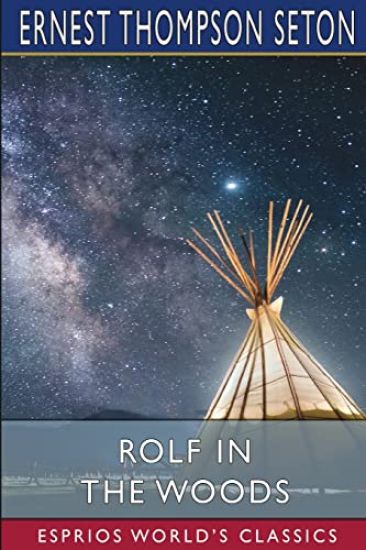
Ernest Thompson Seton (born Ernest Evan Thompson August 14, 1860 - October 23, 1946) was an author, wildlife artist, founder of the Woodcraft Indians in 1902 (renamed Woodcraft League of America), and one of the founding pioneers of the Boy Scouts of America (BSA) in 1910. Seton also influenced Lord Baden-Powell, the founder of one of the first Scouting organizations. His writings were published in the United Kingdom, Canada, the US, and the USSR; his notable books related to Scouting include The Birch Bark Roll and the Boy Scout Handbook. He is responsible for the appropriation and incorporation of what he believed to be American Indian elements into the traditions of the BSA.
Rolf Arthur Max Brandt, Catalogue of the Land and Freshwater Mollusca of Thailand, 1963-1965
Rolf Arthur Max Brandt
Hassell Street Press
2021
nidottu
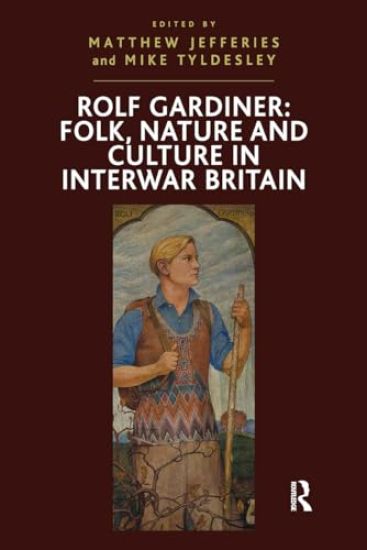
Rolf Gardiner: Folk, Nature and Culture in Interwar Britain
Mike Tyldesley
TAYLOR FRANCIS LTD
2024
nidottu
Folk dancer, forester, poet and visionary, Rolf Gardiner (1902-71) is both a compelling and troubling figure in the history of twentieth-century Britain. While he is celebrated as a pioneer of organic farming and co-founder of the Soil Association, Gardiner's organicist outlook was not confined to agriculture alone. Convinced that a healthy culture and society could only flourish when it was rooted in the soil, Gardiner sought national regeneration too. One of the most colourful and controversial figures of the interwar period, Gardiner believed Britain's future lay not with its doomed empire, but in ever closer union with its 'kin folk, kin tongued' neighbours in Germany, the Netherlands and Scandinavia. Fascinated by the Weimar Republic's myriad youth leagues and life reform movements, Gardiner became an important conduit between North Sea and Baltic. Yet while an enthusiasm for hiking, nudism, folk dancing and voluntary labour camps must have appeared harmlessly eccentric to many in 1920s Britain, by the late-1930s Gardiner's continued engagement with Germany was to have altogether darker connotations. This volume, which brings together seven scholars currently working on different aspects of Gardiner's life and work, eschews a straightforwardly biographical approach and instead focuses on the decades when he was at his most dynamic and radical. Situating Gardiner within the wider political and cultural contexts of the interwar years and exploring youth culture, the origins of the organic movement, Anglo-German relations and British cultural history, it is an essential addition to modern history libraries.
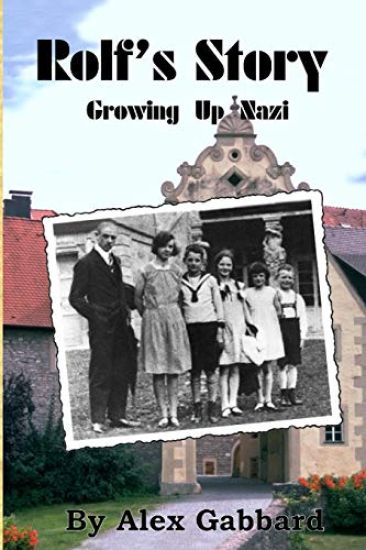
This story is told by Rolf Friedrich Hansen. With his young friends of the small town of Forchtenberg, then separated from them, and finally reunited once again in tragic circumstances, he became engulfed in a long sequence of life shaping events. He tells of his early years as Hitler Youth, then an expert marksman on his way to war in Stalingrad where he was seriously wounded. Once recovered to mobility, he was sent to Munich where his new assignment required participation in the horrors of Stadelheim Prison that was required to carry out sentences prescribed by the Nazi controlled People's Court. Rolf's Story is a gripping drama of life within Hitler's stranglehold of every aspect of life in Germany with strictures placed on every citizen at home and in war.

Rolf's Little Black Book: The Perfect Dating Companion for a Handsome Man Named Rolf. A secret place for names, phone numbers, and addresses.
Wingman Publishing
Independently Published
2019
nidottu
Keep a record of all the girls that catch your eye

Rolf's Little Black Book: The Perfect Dating Companion for a Handsome Man Named Rolf. A secret place for names, phone numbers, and addresses.
Wingman Publishing
Independently Published
2019
nidottu
Keep a record of all the girls that catch your eye
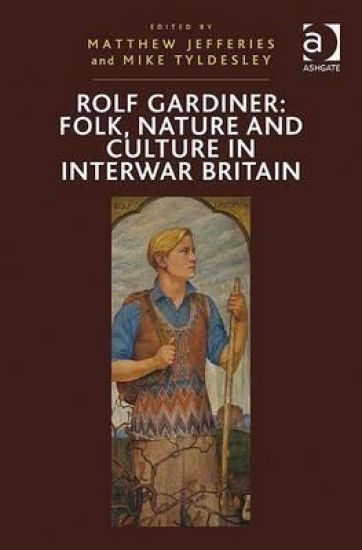
Rolf Gardiner: Folk, Nature and Culture in Interwar Britain
Mike Tyldesley
Ashgate Publishing Limited
2010
sidottu
Folk dancer, forester, poet and visionary, Rolf Gardiner (1902-71) is both a compelling and troubling figure in the history of twentieth-century Britain. While he is celebrated as a pioneer of organic farming and co-founder of the Soil Association, Gardiner's organicist outlook was not confined to agriculture alone. Convinced that a healthy culture and society could only flourish when it was rooted in the soil, Gardiner sought national regeneration too. One of the most colourful and controversial figures of the interwar period, Gardiner believed Britain's future lay not with its doomed empire, but in ever closer union with its 'kin folk, kin tongued' neighbours in Germany, the Netherlands and Scandinavia. Fascinated by the Weimar Republic's myriad youth leagues and life reform movements, Gardiner became an important conduit between North Sea and Baltic. Yet while an enthusiasm for hiking, nudism, folk dancing and voluntary labour camps must have appeared harmlessly eccentric to many in 1920s Britain, by the late-1930s Gardiner's continued engagement with Germany was to have altogether darker connotations. This volume, which brings together seven scholars currently working on different aspects of Gardiner's life and work, eschews a straightforwardly biographical approach and instead focuses on the decades when he was at his most dynamic and radical. Situating Gardiner within the wider political and cultural contexts of the interwar years and exploring youth culture, the origins of the organic movement, Anglo-German relations and British cultural history, it is an essential addition to modern history libraries.
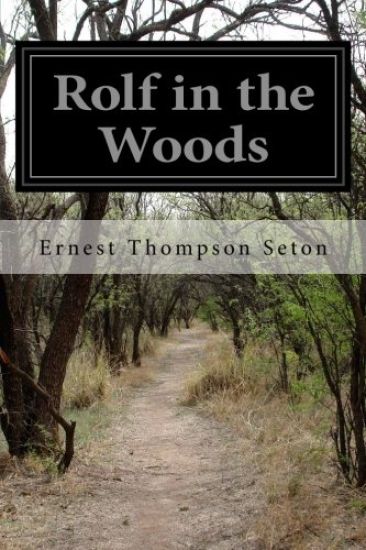


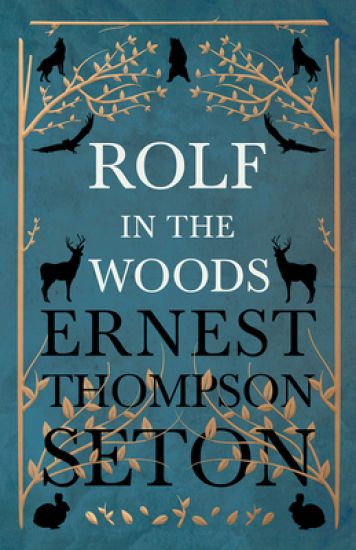
First published in 1911, "Rolf in the Woods" is a classic adventure story by Ernest Thompson Seton. It tells the tale of Rolf, a young teenage orphan with nothing to speak of. He works tirelessly on his authoritarian uncle's farm until one day he meets a Native American called Quonab. They become friends and Rolf learns many great life lessons from him, including outdoors survival and self-defence. However, it's not all fun and adventure in this moving coming-of-age novel. Considered to be among the 100 greatest stories ever written, "Rolf in the Woods" is not to be missed by any fiction lover or collector of Seton's seminal work. Ernest Thompson Seton (1860 - 1946) was an English-born Canadian author and wildlife artist who founded the Woodcraft Indians in 1902. He was also among the founding members of the Boy Scouts of America, established in 1910. He wrote profusely on this subject, the most notable of his scouting literature including "The Birch Bark Roll" and the "Boy Scout Handbook". Many vintage books such as this are becoming increasingly scarce and expensive. We are republishing this book now in an affordable, modern, high-quality edition complete with a specially-commissioned new biography of the author.

Rolf the moose who thought he was a mouse
Anita Hager
Createspace Independent Publishing Platform
2016
nidottu
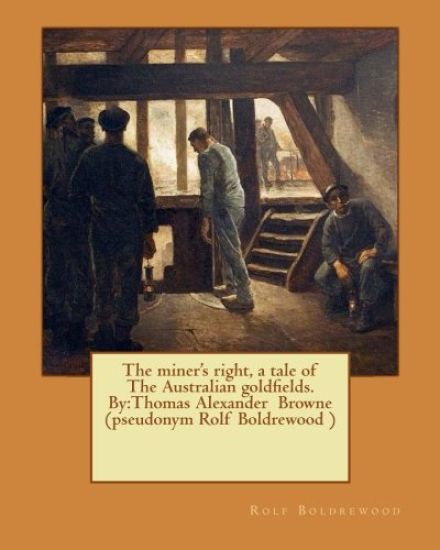
The miner's right, a tale of The Australian goldfields. By: Thomas Alexander Browne (pseudonym Rolf Boldrewood )
Rolf Boldrewood
Createspace Independent Publishing Platform
2016
nidottu
Thomas Alexander Browne (6 August 1826 - 11 March 1915) was an author, who sometimes published under the pseudonym Rolf Boldrewood. He is best known for his novel Robbery Under Arms.Browne was born in London, the eldest child of Captain Sylvester John Brown, a shipmaster formerly of the East India Company, and his wife Elizabeth Angell, n e Alexander. His mother was his "earliest admirer and most indulgent critic . . . to whom is chiefly due whatever meed of praise my readers may hereafter vouchsafe" (Dedication Old Melbourne Memories). (Thomas added the 'e' to his surname in the 1860s). After his father's barque Proteus had delivered a cargo of convicts in Hobart, the family settled in Sydney in 1831. Sylvester Brown took up whaling and built a stone mansion, Enmore, which gave its name to the suburb of Sydney. 1] Thomas Browne was sent to W. T. Cape's school at Sydney, and afterwards to Sydney College, when Cape became its headmaster. One of Browne's closest school friends was a son of Colonel John George Nathaniel Gibbes, MLC, the Collector of Customs for New South Wales, and according to the Dulhunty Papers, Browne spent carefree holidays staying with the Gibbes family at their grand waterside residence on Sydney's Point Piper. When his father moved to Melbourne in 1839, Browne remained at Sydney College as a boarder until 1841 and then was taught by Rev. David Boyd in Melbourne. In 1843, though only 17 years old, Browne took up land near Port Fairy which he named Squattlesamere and was there until 1856. He visited England in 1860 and in 1862-3 had a property, Murrabit run at Lake Boga near Swan Hill, followed by Bundidgaree station on the Murrumbidgee River near Narrandera in the Riverina in 1864. However, bad seasons in 1866 and 1868 compelled Browne to give up squatting, and in 1871 he became a police magistrate and goldfields commissioner. After living in Sydney a short time, in April 1871 he was appointed a police magistrate at Gulgong and gold commissioner in 1872. Browne was an experienced justice of the peace, having acted as chairman of the bench of justices at Narrandera, but in his first years at Gulgong, then one of the richest and largest goldfields in New South Wales, his ignorance of mining and the complicated regulations drew criticism of his competence as commissioner. He was persistently attacked by the Gulgong Guardian And District Mining Record until in 1873 it published an anonymous letter accusing him of bias and corruption. Its editor was thereupon convicted in Sydney of criminal libel and sentenced to six months gaol. The charges against Browne were disproved, and he won favour with the miners by magnanimously interceding with the judge for a light punishment of his libeller. In 1881 Browne was transferred as magistrate and mining warden to Dubbo and to Armidale in 1884. He moved to Albury as chairman of the Land Licensing Board in 1885, serving there as magistrate and warden from 1887-1895 until retiring to Melbourne. He died on 11 March 1915 and was buried in Brighton Cemetery.
The last chance; a tale of the golden West. By: Thomas Alexander Browne (pseudonym Rolf Boldrewood )
Rolf Boldrewood
Createspace Independent Publishing Platform
2016
nidottu
Thomas Alexander Browne (6 August 1826 - 11 March 1915) was an author, who sometimes published under the pseudonym Rolf Boldrewood. He is best known for his novel Robbery Under Arms.Browne was born in London, the eldest child of Captain Sylvester John Brown, a shipmaster formerly of the East India Company, and his wife Elizabeth Angell, n e Alexander. His mother was his "earliest admirer and most indulgent critic . . . to whom is chiefly due whatever meed of praise my readers may hereafter vouchsafe" (Dedication Old Melbourne Memories). (Thomas added the 'e' to his surname in the 1860s). After his father's barque Proteus had delivered a cargo of convicts in Hobart, the family settled in Sydney in 1831. Sylvester Brown took up whaling and built a stone mansion, Enmore, which gave its name to the suburb of Sydney. 1] Thomas Browne was sent to W. T. Cape's school at Sydney, and afterwards to Sydney College, when Cape became its headmaster. One of Browne's closest school friends was a son of Colonel John George Nathaniel Gibbes, MLC, the Collector of Customs for New South Wales, and according to the Dulhunty Papers, Browne spent carefree holidays staying with the Gibbes family at their grand waterside residence on Sydney's Point Piper. When his father moved to Melbourne in 1839, Browne remained at Sydney College as a boarder until 1841 and then was taught by Rev. David Boyd in Melbourne. In 1843, though only 17 years old, Browne took up land near Port Fairy which he named Squattlesamere and was there until 1856. He visited England in 1860 and in 1862-3 had a property, Murrabit run at Lake Boga near Swan Hill, followed by Bundidgaree station on the Murrumbidgee River near Narrandera in the Riverina in 1864. However, bad seasons in 1866 and 1868 compelled Browne to give up squatting, and in 1871 he became a police magistrate and goldfields commissioner. After living in Sydney a short time, in April 1871 he was appointed a police magistrate at Gulgong and gold commissioner in 1872. Browne was an experienced justice of the peace, having acted as chairman of the bench of justices at Narrandera, but in his first years at Gulgong, then one of the richest and largest goldfields in New South Wales, his ignorance of mining and the complicated regulations drew criticism of his competence as commissioner. He was persistently attacked by the Gulgong Guardian And District Mining Record until in 1873 it published an anonymous letter accusing him of bias and corruption. Its editor was thereupon convicted in Sydney of criminal libel and sentenced to six months gaol. The charges against Browne were disproved, and he won favour with the miners by magnanimously interceding with the judge for a light punishment of his libeller. In 1881 Browne was transferred as magistrate and mining warden to Dubbo and to Armidale in 1884. He moved to Albury as chairman of the Land Licensing Board in 1885, serving there as magistrate and warden from 1887-1895 until retiring to Melbourne. He died on 11 March 1915 and was buried in Brighton Cemetery.
The Squatter's Dream: A Story of Australian Life.By: Thomas Alexander Browne (pseudonym Rolf Boldrewood )
Rolf Boldrewood
Createspace Independent Publishing Platform
2016
nidottu
Thomas Alexander Browne (6 August 1826 - 11 March 1915) was an author, who sometimes published under the pseudonym Rolf Boldrewood. He is best known for his novel Robbery Under Arms.Browne was born in London, the eldest child of Captain Sylvester John Brown, a shipmaster formerly of the East India Company, and his wife Elizabeth Angell, n e Alexander. His mother was his "earliest admirer and most indulgent critic . . . to whom is chiefly due whatever meed of praise my readers may hereafter vouchsafe" (Dedication Old Melbourne Memories). (Thomas added the 'e' to his surname in the 1860s). After his father's barque Proteus had delivered a cargo of convicts in Hobart, the family settled in Sydney in 1831. Sylvester Brown took up whaling and built a stone mansion, Enmore, which gave its name to the suburb of Sydney. 1] Thomas Browne was sent to W. T. Cape's school at Sydney, and afterwards to Sydney College, when Cape became its headmaster. One of Browne's closest school friends was a son of Colonel John George Nathaniel Gibbes, MLC, the Collector of Customs for New South Wales, and according to the Dulhunty Papers, Browne spent carefree holidays staying with the Gibbes family at their grand waterside residence on Sydney's Point Piper. When his father moved to Melbourne in 1839, Browne remained at Sydney College as a boarder until 1841 and then was taught by Rev. David Boyd in Melbourne. In 1843, though only 17 years old, Browne took up land near Port Fairy which he named Squattlesamere and was there until 1856. He visited England in 1860 and in 1862-3 had a property, Murrabit run at Lake Boga near Swan Hill, followed by Bundidgaree station on the Murrumbidgee River near Narrandera in the Riverina in 1864. However, bad seasons in 1866 and 1868 compelled Browne to give up squatting, and in 1871 he became a police magistrate and goldfields commissioner. After living in Sydney a short time, in April 1871 he was appointed a police magistrate at Gulgong and gold commissioner in 1872. Browne was an experienced justice of the peace, having acted as chairman of the bench of justices at Narrandera, but in his first years at Gulgong, then one of the richest and largest goldfields in New South Wales, his ignorance of mining and the complicated regulations drew criticism of his competence as commissioner. He was persistently attacked by the Gulgong Guardian And District Mining Record until in 1873 it published an anonymous letter accusing him of bias and corruption. Its editor was thereupon convicted in Sydney of criminal libel and sentenced to six months gaol. The charges against Browne were disproved, and he won favour with the miners by magnanimously interceding with the judge for a light punishment of his libeller. In 1881 Browne was transferred as magistrate and mining warden to Dubbo and to Armidale in 1884. He moved to Albury as chairman of the Land Licensing Board in 1885, serving there as magistrate and warden from 1887-1895 until retiring to Melbourne. He died on 11 March 1915 and was buried in Brighton Cemetery.
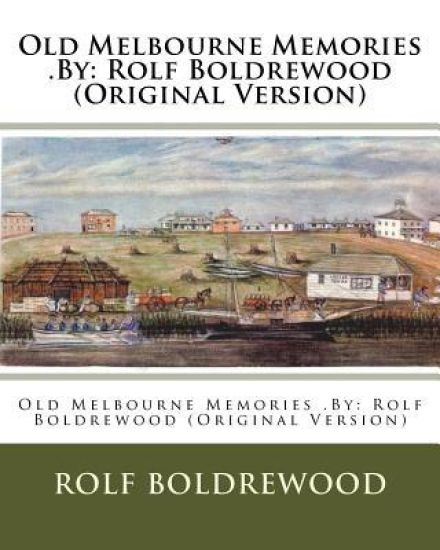
Old Melbourne Memories .By: Rolf Boldrewood (Original Version)
Rolf Boldrewood
Createspace Independent Publishing Platform
2016
nidottu
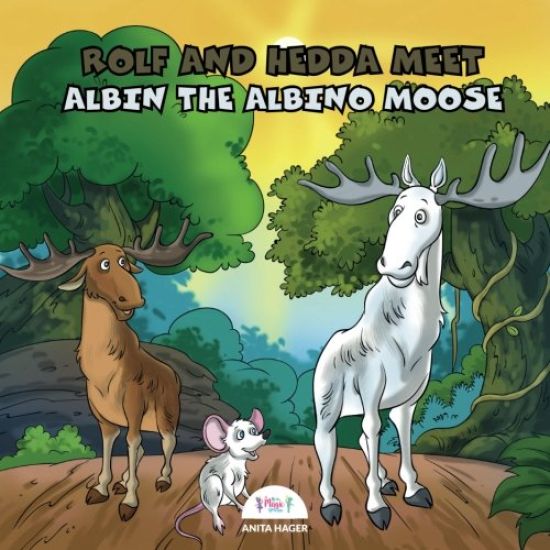
Rolf and Hedda meet Albin the Albino Moose
Anita Hager
Createspace Independent Publishing Platform
2017
nidottu