Kirjojen hintavertailu. Mukana 11 627 335 kirjaa ja 12 kauppaa.

Kirjahaku

Etsi kirjoja tekijän nimen, kirjan nimen tai ISBN:n perusteella.

1000 tulosta hakusanalla Roman Cholij

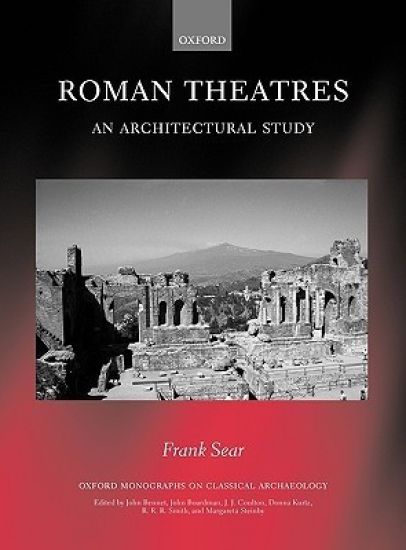
Roman Theatres

Roman Theatres

Frank Sear

Oxford University Press
2006
sidottu
This book is a definitive architectural study of Roman theatre architecture. In nine chapters it brings together a massive amount of archaeological, literary,and epigraphic information under one cover. It also contains a full catalogue of all known Roman theatres, including a number of odea (concert halls) and bouleuteria (council chambers) which are relevant to the architectural discussion, about 1,000 entries in all. Inscriptional or literary evidence relating to each theatre is listed and there is an up-to-date bibliography for each building. Most importantly the book contains plans of over 500 theatres or buildings of theatrical type, as well as numerous text figures and nearly 200 figures and plates.
Roman Imperial Themes

Roman Imperial Themes

P. A. Brunt

Clarendon Press
1990
sidottu
This book comprises sixteen articles published over thirty years, with supplements including two additional essays. Its range is broad, from discussions of Rome's aspirations to world dominion, to studies of provincial administration. The results of these studies suggest that Roman rule was not endeared to the subjects by the lightness of the burdens imposed, nor by the integrity and professional competence of the administrators; both have often been overestimated. The higher orders among the conquered peoples, however, were eventually reconciled by the Roman policy of assimilating them to Romans, and entrusting to them control of local affairs and an increasing influence in central government. Though the attitude of the masses to the empire is virtually unknowable, there was, except in Judaea, no national resistance comparable to that in the British empire, a theory illustrated by detailed consideration of the first-century revolts in Gaul and Judaea. About one-third of the contents of this volume is new.
Roman Papers Volume VII

Roman Papers Volume VII

Ronald Syme

Clarendon Press
1991
sidottu
Before his death in late 1989, Sir Ronald Syme approved the publication of these 59 papers on Roman history which complete this collection of his life's work. Volume VI covers such varied topics as "Human Rights and Social Status at Rome", "Marriage Ages for Roman Senators", "Oligarchy at Rome: A Paradigm for Political Science", "Military Geography at Rome", "Diet on Capri ", "A Dozen Early Priesthoods", and "Some Unrecognized Authors from Spain ". Volume VII contains solely later, unpublished work which was still in manuscript form at the time of Sir Ronald's death. The final item is a spoof on Tacitus, comprising a Latin text on the story of Titus and Berenice with historical commentary. The work is aimed at scholars and students of Roman history, Roman literature, Roman philosophy, and classics.
Roman Papers: Volume VI

Roman Papers: Volume VI

Ronald Syme

Clarendon Press
1991
sidottu
Shortly before his death in September 1989, Sir Ronald Syme approved the selection and publication of these fifty-nine papers. Volume VI, composed of previously published articles and reviews, offers a splendid cross-section of Syme's interests: the Roman revolution; the Augustan aristocracy; Tacitus and Sallust; historical geography; the Roman army; a variety of classical authors (Horace, Ovid, Strabo, Seneca, Justin, the Historia Augusta); the Emperor Hadrian; colonial elites; historiography, ancient and modern; and Roman political thought and society. Volume VII consists of twelve unpublished papers (originally intended to form part of a separate book, `Pliny and Italia Transpadana'), in which the two Plinies and their age are put under searching scrutiny. It is rounded off by a Latin text purporting to derive from a lost book of Tacitus' Histories (duly equipped with commentary); and by an Index to both volumes.
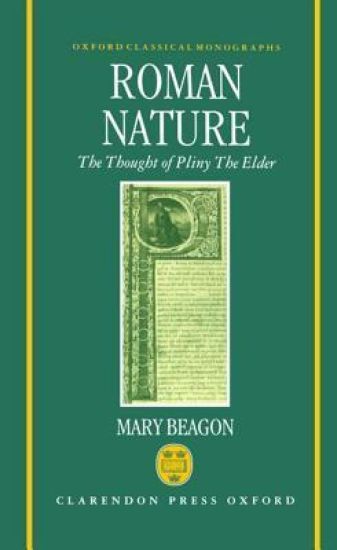
Roman Nature

Roman Nature

Mary Beagon

Clarendon Press
1992
sidottu
Pliny's Natural History has too often been regarded as simply a quarry for quaint stories - a view which has tended to overshadow its overall structure and purpose. Dr Beagon redresses the balance and illuminates the Natural History as the work of an author with an identifiable mode of thinking and a coherent attitude towards his clearly-stated theme, Nature. Taking its cue from Pliny, the book examines his cosmology and in particular his portrayal of the relationship between Nature and the creation he considered her greatest, Man. Author and work are also placed in their wider literary and historical context. Pliny himself emerges no longer as a faceless compiler, but as a character with a valuable contribution to make to an understanding of intellectual attitudes in the first century AD. A more typical Roman than most of the intellectual authors studied today, he can offer a much more accurate picture of the Roman in his `natural' setting.
Roman Culture and Society

Roman Culture and Society

Elizabeth Rawson

Clarendon Press
1991
sidottu
The late Elizabeth Rawson (1934-1988) was a distinguished specialist in the history, society, and culture of the later Roman Republic and Augustan period, whose sudden death at the end of a visit to China came when she was at the height of her powers, and had just been elected as a Fellow of the British Academy. Her papers form a closely related group, published over a short period of time between 1971 and 1989. The topics covered include the workings of Roman politics and society, historical and antiquarian thinking at Rome, and literary and cultural history. They are reproduced here in the order in which they were published, and together form an essential contribution to the understanding of the central period of Roman history.
Roman Papers: Volume IV

Roman Papers: Volume IV

Ronald Syme

Clarendon Press
1988
sidottu
Volumes Iv and V of Roman Papers contain forty-two of Sir Ronald Syme's papers composed between 1981 and 1985. A good many deal with the younger Pliny and Tacitus; other ancient authors examined here include Strabo, the elder Pliny, Statius, Quintilian, and Arrian. Several papers focus on the Spanish provinces and on the Greek east. New light is shed on the 'Hispano-Narbonensian nexus' that emerged under the Flavians and was to form the Antonine dynasty, on the emperor Hadrian and his Antonine successors, and on the usurper Avidius Cassius. There is an Index of Persons for the two volumes at the end of Roman Papers V.
Roman Papers: Volume V

Roman Papers: Volume V

Ronald Syme

Clarendon Press
1988
sidottu
These volumes contain papers composed between 1981 and 1985, many of them dealing with Pliny the Younger and Tacitus, as well as Strabo, Pliny the Elder, Statius, Quintilian, and Arrian. Several others concern the Spanish provinces and the Greek east.
Roman Marriage

Roman Marriage

Treggiari

Clarendon Press
1993
nidottu
Marriage, a fundamental institution in human societies, takes varying forms. This book seeks to explore the practicalities, the cultural assumptions, and the affective possibilities of marriage during the later Republic and the Principate (c.100 BC-AD 235). It takes a fresh view of the interaction of law and reality within Roman marriage, and builds on the accumulation of legal scholarship in the field, as well as on the latest insights into Roman society. Through detailed examination of original sources (which are translated), Professor Treggiari shows that marriage affected a Roman woman's social status and might entail legal consequences. The socio-legal effect on a man as an individual was less striking but it enabled him to father legitimate children, which was the main object of the institution. The creation of new family alignments, shifts in the distribution of property, and the birth of new generations were important for society as a whole. Professor Treggiari also examines the dynamics of the various influences on the choice of partner; behavioural norms; and the motives for divorce.
Roman Historical Myths

Roman Historical Myths

Matthew Fox

Clarendon Press
1996
sidottu
This book offers an enlivening and sophisticated analysis of the pervasive use of historical myth in some of the best-known writers of the Late Republic and Augustan periods - from Cicero in the De Republica and the first book of Livy to Propertius IV and Ovid's Fasti. The chapters on prose narrative uncover an uneasy tension between the desire for accurate historical representation and the legendary character of traditional stories. In the light of modern theories of historical truth, the book argues that the narrative itself expresses a kind of belief in myths, and that this belief is in turn conditioned by historical circumstance. In this way, the accounts of Rome's regal period in both prose and verse bear witness to the uncertainties and upheavals at the end of the republic. At the same time, Dr Fox argues for a more sophisticated relationship between political and textual reality, and concludes that interpretations of political subversion need to be balanced by the sense of destiny and desire for the reinterpretation inherent in recounting the origins of Rome.
Roman Constructions

Roman Constructions

Don Fowler

Oxford University Press
2000
sidottu
Roman Constructions collects together twelve published and unpublished papers on Latin literature and literary theory from the decade 1989 to 1999. The papers share a common 'postmodern' emphasis on the role of the modern scholar and critic in the construction, rather than recreation, of meaning, and attempt to show how this approach works in detailed readings of a number of Latin authors, above all Vergil. The papers deal with such topics as point of view and focalization, intertextuality, historical contextualization, and closure, and each section is introduced by reflections on recent work in these areas subsequent to the original papers. The work makes a plea for classical scholars to accept their historical situatedness and to give up the pretence of scientific objectivity so that they can play a fuller part in the cultural dialogues of the present.
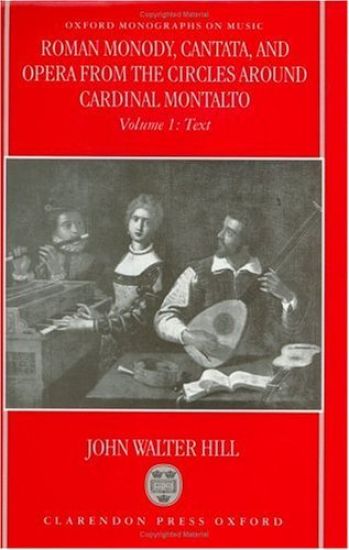
Roman Monody, Cantata and Opera from the Circles around Cardinal Montalto
The subject of this book arises from the author's discovery or identification of ten important manuscripts of early seventeenth-century Italian solo song (monody) previously unexplored by modern scholars. Almost by coincidence, the author's research shows that all ten manuscripts preserve portions of Roman repertoire largely by composers associated with the most significant music patron of the period, Alessandro Peretti, Cardinal montalto. Through extensive archival documentation, Cardinal Montalto's patronage of music is set in the broader context of the network of political, economic, and cultural clientela to which Montalto belonged. Hill documents new explanations of the origin of monody, focusing on the roles of Naples and rome and their unwritten traditions. A thorough analysis of the repertoire itself reveals and explains distinct subgenres of monody that have not previously been distinguished. Music for Battista Guarini's last stage work and for the first Roman opera brought forth. Thus, identified, examined, analysed and placed in context, this repertoire and its genesis call forth a fundamental revision of existing narratives and explanations of the early Baroque vocal music in Rome and the rise of the Italian chamber cantata, next to opera, the most significant musical genre of the seventeenth century.
Roman Law, Contemporary Law, European Law

Roman Law, Contemporary Law, European Law

Reinhard Zimmermann

Oxford University Press
2001
sidottu
Legal history helps us to understand our modern law. It explains why the law has become what it is. It lays open the premises on which the modern law is based. It constitutes a rich source of experience which is as valuable for the development of modern legal doctrines as for law reform. It may also reveal where a wong turn has been taken and thus prevent us from repeating an error. Today, however, historical legal scholarship has acquired an added significance in view of the Europeanization of private law and private law scholarship. It enables us to see the common ground between our modern national legal sustems and to understand existing differences. It makes us aware of the fact that the law has not developed in national isolation and can, therefore, not properly be understood under purely national auspices. It constitutes the foundation for scholarship in comparative law and paves the way towards re-establishing a European legal culture. The focus of these Clarendon lectures is on the "vital connection that ties the present to the past" (Savigny) and on the link between legal history, modern legal doctrine, and comparative law. They aim to recreate an awareness of a fundamental intellectual unity based on a common tradition. Such awareness is of central importance to sustain the process of a Europeanization of private law which we experience today. Lecture One: The End of an Era: Transformation of Scholarship in Roman Law Lecture Two: The Transition from Civil Law to Civil Code: Dawn of a New Era? Lecture Three: A Change in Perspective: European Private Law and its Historical Foundations
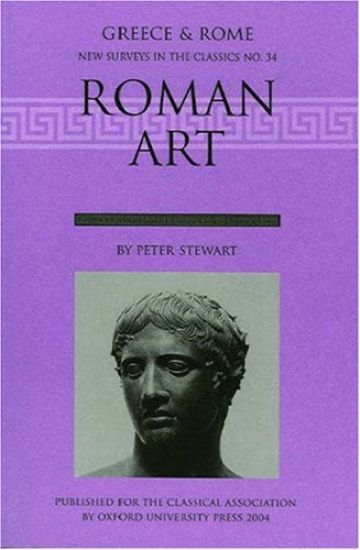
Roman Art

Roman Art

Peter Stewart

Oxford University Press
2004
pokkari
From the faces of emperors to mythological sarcophagi, from imperial propaganda to domestic wall-painting and the earliest Christian images, this New Survey offers an up-to-date, illustrated overview of the history of Roman art. Explaining the material in an accessible and even-handed way, the author seeks not only to introduce the art itself, but also to survey and evaluate the range of approaches adopted by scholars in the field. Organized around the loose categories of portraiture, public monuments, funerary art, domestic art, and late antiquity, the discussion introduces representative monuments and problems in Roman art. It also serves as an accessible, critical survey of the range of approaches adopted by those attempting to explain the works. The text is aimed at students, teachers, and anyone who wants to navigate a path through the complexities of this vast but increasingly popular area of study.
Roman Britain

Roman Britain

Peter Salway

Oxford University Press
2015
nidottu
For four centuries Britain was an integral part of the Roman Empire, a political system stretching from Turkey to Portugal and from the Red Sea to the Tyne and beyond. Its involvement with Rome started long before the Conquest launched by the Emperor Claudius in 43 AD, and it continued to be a part of the Roman world for some time after the final break with Roman rule. Bringing together archaeological investigation and historical scholarship, Peter Salway explores some of the key issues arising from this period in Britain's history, discussing the question of identity at this time and analysing the importance of widespread literacy in Roman Britain. Covering the period from Julius Caesar's first forays into Britain and Claudius' subsequent conquest, as well as Britain under the later Roman Empire, Salway outlines the key events of this time period, providing a focus on society in Roman Britain, and offering a thoughtful consideration of the aftermath of Roman rule. In the new edition of this Very Short Introduction, Peter Salway makes a number of essential updates in light of recent research in the area. He looks at issues of ethnicity, 'Britishness', and post-colonialism, provides alternative theories to the end of the Roman period in Britain, and draws parallels between the history of Roman Britain and a wide range of other periods, territories, and themes, including the modern experience of empires and national stereotypes. ABOUT THE SERIES: The Very Short Introductions series from Oxford University Press contains hundreds of titles in almost every subject area. These pocket-sized books are the perfect way to get ahead in a new subject quickly. Our expert authors combine facts, analysis, perspective, new ideas, and enthusiasm to make interesting and challenging topics highly readable.
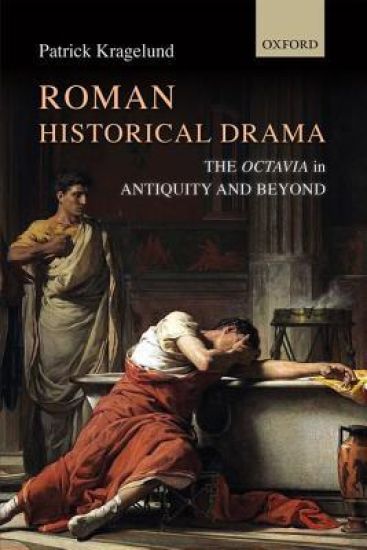
Roman Historical Drama

Roman Historical Drama

Patrick Kragelund

Oxford University Press
2015
sidottu
The Octavia is the only surviving historical drama from ancient Rome. With a plot rich in sex, dynastic intrigue, riots, and murder, the play's characters include the philosopher Seneca, the emperor Nero, the ghost of his murdered mother, his wife Octavia, and his mistress and empress-to-be Poppaea. For centuries dismissed as a feeble, rhetorically overblown closet-drama written without consideration for the demands of plot or stage, the Octavia's dynamic changes of time and setting, its startling interplay of the verbal and visual, and its integration of issues pervading the politics of the period in which it was written, reflect scenic conventions and a notion of the dramatic that radically transforms and expands our knowledge of ancient theatre and the Roman stage. Roman Historical Drama is the first comprehensive interpretation of ancient historical drama in relation to this exciting play, revealing how the Octavia mirrors the genre's traditions by mixing formats and stock characters from traditional tragedy with elements drawn from new developments of the Hellenistic and Roman stage. The volume explores the role and impact of historical (and political) drama in Rome, offering a pioneering reading of the Octavia in relation to ancient performance practice, as well as to the politics of those who in AD 68 brought down the tyrant Nero. In its final section, the volume provides a panoramic survey of the revival and reinvention of classical tragedy in the Renaissance period, tracing the impact of the Octavia from Italy through France to Elizabethan England.
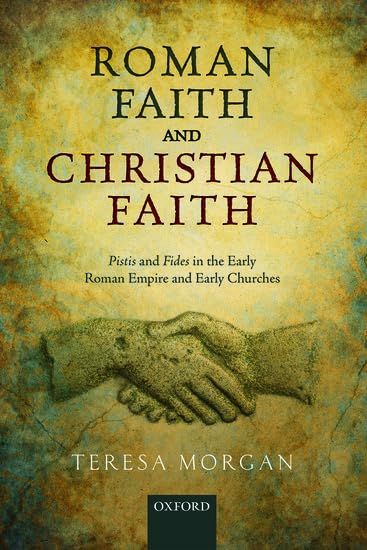
Roman Faith and Christian Faith

Roman Faith and Christian Faith

Teresa Morgan

Oxford University Press
2015
sidottu
This study investigates why 'faith' (pistis/fides) was so important to early Christians that the concept and praxis dominated the writings of the New Testament. It argues that such a study must be interdisciplinary, locating emerging Christianities in the social practices and mentalités of contemporary Judaism and the early Roman empire. This can, therefore, equally be read as a study of the operation of pistis/fides in the world of the early Roman principate, taking one small but relatively well-attested cult as a case study in how micro-societies within that world could treat it distinctively. Drawing on recent work in sociology and economics, the book traces the varying shapes taken by pistis/fides in Greek and Roman human and divine-human relationships: whom or what is represented as easy or difficult to trust or believe in; where pistis/fides is 'deferred' and 'reified' in practices such as oaths and proofs; how pistis/fides is related to fear, doubt and scepticism; and which foundations of pistis/fides are treated as more or less secure. The book then traces the evolution of representations of human and divine-human pistis in the Septuagint, before turning to ^pistis/pisteuein in New Testament writings and their role in the development of early Christologies (incorporating a new interpretation of pistis Christou) and ecclesiologies. It argues for the integration of the study of pistis/pisteuein with that of New Testament ethics. It explores the interiority of Graeco-Roman and early Christian pistis/fides. Finally, it discusses eschatological pistis and the shape of the divine-human community in the eschatological kingdom.