Kirjojen hintavertailu. Mukana 11 244 527 kirjaa ja 12 kauppaa.

Kirjahaku

Etsi kirjoja tekijän nimen, kirjan nimen tai ISBN:n perusteella.

1000 tulosta hakusanalla Ronald Erdman

Ronald Reagan's Journey

Ronald Reagan's Journey

Edward Yager

Rowman Littlefield Publishers
2006
nidottu
In this new work, Edward Yager examines Ronald Reagan's political development from New Deal liberal to conservative Republican. Yager assesses the influences that provoked Reagan's transformation, beginning with the core values that he acquired during his youth and their relationship to his later political development. Throughout his lifetime, Reagan's family and friends played a significant role in debating political ideas and advancing Republican arguments. Ronald Reagan's Journey focuses on these important relationships as well as the intellectual influences on Reagan's politics during the 1950s. In tracing Reagan's political development, Yager argues that Reagan's presidency cannot be fully understood and evaluated without significant attribution to the spiritual, political, and economic beliefs that he formed during his journey from Democrat to Republican.
Ronald Dworkin

Ronald Dworkin

Michael Kelly

Polity Press
2014
nidottu
This volume provides a comprehensive view of the central issues in contemporary semantic theory. New articles by leading researchers in the field give an introductory account of previous work along with a presentation of new innovations and results.
Ronald Dworkin

Ronald Dworkin

Stephen Guest

Edinburgh University Press
1997
nidottu
The second edition of Stephen Guest's important study of this seminal thinker. Fully updated and with substantial additional material, this is a lucid and comprehensive introduction and critical assessment of Dworkin's prolific contributions to legal and political philosophy.
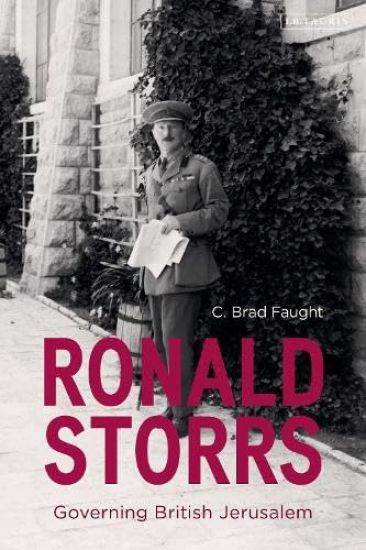
Ronald Storrs

Ronald Storrs

C. Brad Faught

BLOOMSBURY PUBLISHING PLC
2026
sidottu
Called by T.E. Lawrence, ‘the most brilliant Englishman in the Middle East’, Ronald Storrs was a prominent British diplomat and governor who played a leading role in the Anglo-Egyptian government and the Arab Bureau in the years immediately before and during the First World War. In 1917, Storrs became Military Governor of Jerusalem under the British Mandate, in his words, the first such governor ‘since Pontius Pilate’. This book tells the story of Storrs’s life in the Middle East by weaving together international affairs, regional geopolitics, statecraft and biography to reassess his influence on British policy during the early years of the twentieth century. During this period, he witnessed the rise of Arab nationalism, the end of the Ottoman Empire and the emergence of Zionism in Palestine. Storrs’s governorship of Jerusalem came at a critical juncture in the city’s post-war history, and C. Brad Faught analyses his attempts to forge a working peace between Arabs and Jews while seeking also to preserve and protect the Holy City’s many sacred spaces. Storrs’s record as a colonial governor is examined, and the sharp divisions within Jerusalem’s body politic – some of which were created or exacerbated by Britain’s own policies – are explored. Included in the book are many of the leading figures in British and Middle East politics of the time, such as Edmund Allenby, Gertrude Bell, Winston Churchill, King Faisal, Sharif Hussein, David Lloyd George, Chaim Weizmann and Lawrence, By probing the life of an important but understudied British diplomat, the book makes an important contribution to deepening our understanding of the complicated history of the modern Middle East.
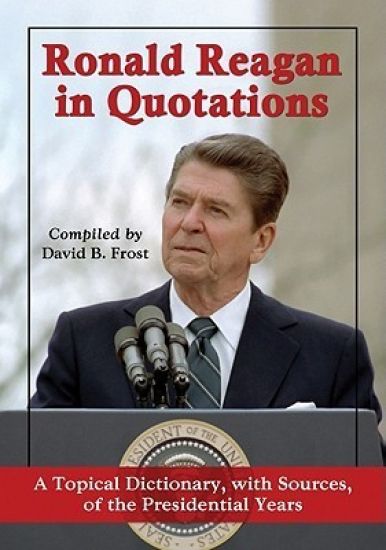
Ronald Reagan in Quotations
President Ronald Reagan's folksy way with words and evocative delivery earned him the moniker ""The Great Communicator."" From witty political challenges like ""Go ahead, make my day"" to legendary international demands such as ""Mr. Gorbachev, tear down this wall,"" Reagan's idioms have become engrained in America's historical lexicon. This encyclopedic compilation gathers 2500 quotations from speeches and other public addresses that Reagan delivered, either in person or on radio or television, during his eight years as president. Organized topically into more than 60 primary subject areas, the entries reveal Reagan's policy thought on issues from abortion to welfare reform. Each includes information on the title, date, venue, and audience of the speech from which the phrase is taken. The most comprehensive collection of Reagan quotations available, this accessible work offers new and revealing insights into the mind and heart of the fortieth president.
Ronald Bladen

Ronald Bladen

Robert S. Mattison; Mark di Suvero

Abbeville Press Inc.,U.S.
2019
sidottu
The first monograph on a pivotal figure of postwar American art. Best known for his monumental sculptures, Ronald Bladen (1918–1988) was regarded as an artistic forerunner by such minimalist artists as Donald Judd, Sol Lewitt, and Carl Andre. But in contrast to the matter-of-fact work of these artists, Bladen’s sculptures are charged with emotional power. They fill entire rooms, pressing outward against the walls and ceiling; their themes include the force of gravity, the dynamism of planar surfaces, the impact of scale, and confrontation with the viewer. This splendidly illustrated book presents a comprehensive overview of Bladen's career: his breakthrough works such as Untitled (Three Elements), a standout at the Jewish Museum’s legendary Primary Structures exhibition of 1966; his monumental outdoor commissions of the late 1960s through the 1980s; and his reflective wall reliefs of 1980s. Bladen’s drawings and working models are discussed in detail, and his early career as a painter is considered in the light of his later sculptural oeuvre. Art historian Robert S. Mattison’s thoughtful analysis of Bladen’s art is informed not only by extensive archival research but also by numerous interviews with Bladen’s contemporaries, including fellow artists like Bill Jensen, Alex Katz, and Dorothea Rockburne. In addition, this volume collects several of the most important critical essays on Bladen, by Irving Sandler, April Kingsley, Bill Berkson, and Naomi Spector. The full scholarly apparatus includes an illustrated chronology of the artist's life and career. Today, Bladen's works are in the collections of the Museum of Modern Art, the National Gallery of Art, Storm King Art Center, and the Staatliche Museen zu Berlin, among many others. His grasp of the expressive power of mass and abstract form continues to influence sculptors from Richard Serra to Ursula von Rydingsvard. Here, finally, is a book that reveals and elucidates the full extent of his achievement.
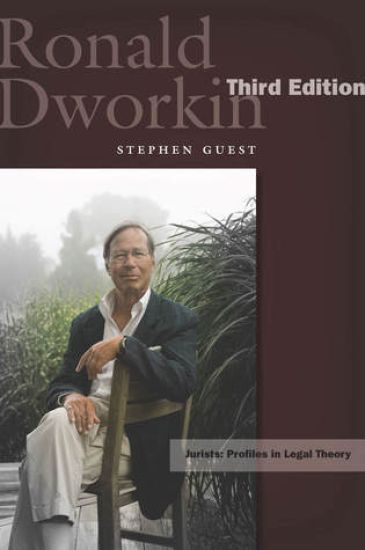
Ronald Dworkin

Ronald Dworkin

Stephen Guest

Stanford Law and Politics
2012
sidottu
Ronald Dworkin is widely accepted as the most important and most controversial Anglo-American jurist of the past forty years. And this same-named volume on his work has become a minor classic in the field, offering the most complete analysis and integration of Dworkin's work to date. This third edition offers a substantial revision of earlier texts and, most importantly, incorporates discussion of Dworkin's recent masterwork Justice for Hedgehogs. Accessibly written for a wide readership, this book captures the complexity and depth of thought of Ronald Dworkin. Displaying a long-standing commitment to Dworkin's work, Stephen Guest clearly highlights the scholar's key theories to illustrate a guiding principle over the course of Dworkin's work: that there are right answers to questions of moral value. In assessing this principle, Guest also expands his analysis of contemporary critiques of Dworkin. The third edition includes an updated and complete bibliography of Dworkin's work.
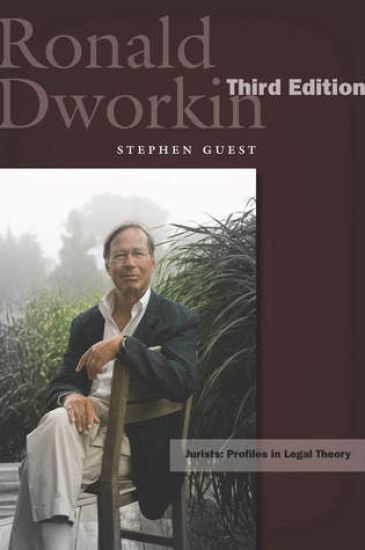
Ronald Dworkin

Ronald Dworkin

Stephen Guest

Stanford University Press
2012
pokkari
Ronald Dworkin is widely accepted as the most important and most controversial Anglo-American jurist of the past forty years. And this same-named volume on his work has become a minor classic in the field, offering the most complete analysis and integration of Dworkin's work to date. This third edition offers a substantial revision of earlier texts and, most importantly, incorporates discussion of Dworkin's recent masterwork Justice for Hedgehogs. Accessibly written for a wide readership, this book captures the complexity and depth of thought of Ronald Dworkin. Displaying a long-standing commitment to Dworkin's work, Stephen Guest clearly highlights the scholar's key theories to illustrate a guiding principle over the course of Dworkin's work: that there are right answers to questions of moral value. In assessing this principle, Guest also expands his analysis of contemporary critiques of Dworkin. The third edition includes an updated and complete bibliography of Dworkin's work.
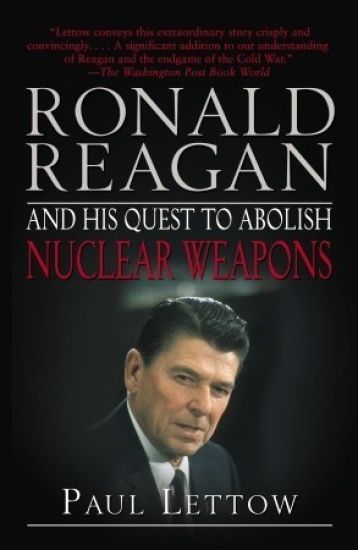
Ronald Reagan and His Quest to Abolish Nuclear Weapons
In Ronald Reagan and His Quest to Abolish Nuclear Weapons, Paul Lettow explores the depth and sophistication of President Ronald Reagan's commitment to ridding humankind permanently of the threat of nuclear war. Lettow's narrative spans the start of Reagan's presidency and the 1986 Reykjav k summit between Reagan and Soviet leader Mikhail Gorbachev, during which America's Strategic Defense Initiative (SDI) was a defining issue. Lettow reveals SDI for what it was: a full-on assault against nuclear weapons waged as much through policy as through ideology. While cabinet members and advisers played significant roles in guiding American defense policy, it was Reagan himself who presided over every element, large and small, of this paradigm shift in U.S. diplomacy.Lettow conducted interviews with several former Reagan administration officials, and he draws upon the vast body of declassified security documents from the Reagan presidency; much of what he quotes from these documents appears publicly here for the first time. The result is the first major work to apply such evidence to the study of SDI and superpower diplomacy. This is a survey that doesn't merely add nuance to the existing record, but revises our very understanding of the Reagan presidency.
Ronald Reagan

Ronald Reagan

Peter Wallison

Basic Books
2004
pokkari
An icon of the twentieth century, Ronald Reagan has earned a place among the most popular and successful U.S. presidents. In this compelling firsthand account of Reagan's presidency, Peter J. Wallison, former White House Counsel to President Reagan, argues that Reagan took office with a fully developed public philosophy and strategy for governing that was unique among modern presidents. "I am not a great man," Reagan once said, "just committed to great ideas." Wallison shows how Reagan's unyielding attachment to certain key ideas-communicated through his speeches-created a cohesive administration and revived the spirit of the nation. In Ronald Reagan , Wallison describes what it was like to be on Reagan's White House staff and how Reagan's attachment to principle produced both the best and worst days of his presidency. Updated with a new epilogue.
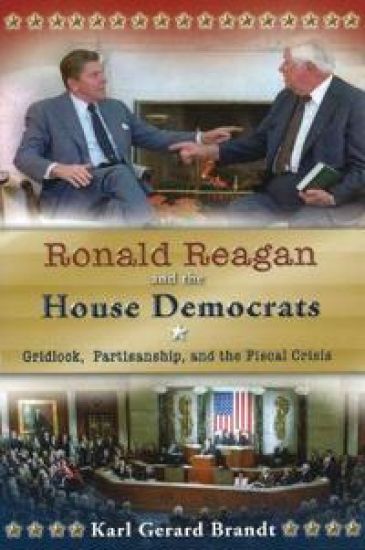
Ronald Reagan and the House Democrats

Ronald Reagan and the House Democrats

Karl Gerard Brandt

University of Missouri Press
2009
sidottu
When Democrats in the House of Representatives locked horns with President Ronald Reagan over the latter's fiscal policies, the ensuing conflict reinforced the seismic shift in the political landscape that the 1980 election had brought. Karl Brandt now tells the story of how the New Deal Democratic coalition was able to sustain itself in the face of an unprecedented Republican assault - in a conflict whose reverberations are still being felt today. After a bipartisan conservative House coalition passed Reagan's budget and tax cuts in 1981, conservative Democrats became worried about the increasingly large deficits produced by REaganomics and questioned the administration's spending priorities. In one of the few studies of congressional politics in the 1980s, Brandt describes the House Democratic leadership's efforts to rebuild party unity while facing challenges from conservative Democrats, the Reagan administration, and the emerging fiscal crisis.He tells how Democrats worked hard to rein in party conservatives, to craft consensus-oriented policies palatable to all Democrats, and over the coming years to force the president and the Senate to compromise over fiscal policy. Drawing on primary source materials unavailable in the 1980s - including transcripts from closed-door meetings and internal House documents - Brandt chronicles the events that resulted in the explosion of the fiscal crisis, examines the growth of an intensely partisan political environment, and provides insight into the dynamics of creating a national budget. He cuts through conservative rhetoric to show how Reagan's fiscal policies deepened federal deficits and reveals how the partisan struggles of the Reagan years redefined the Democrats along more centrist lines.When the dust had settled, the Democratic Party had become more unified in the face of budget conflict and had proved that it could practice fiscal conservatism and make tough budget choices when necessary. Carefully argued and thoroughly researched, Brandt's work brings historical perspective to this important chapter in recent history as it explores conflicting visions of the economy, American society, and the very future of the nation.
Ronald Reagan & Public Lands

Ronald Reagan & Public Lands

Texas A M University Press
1989
sidottu
The federal government holds a vast domain of American land. Does it hold these acres in trust for future generations and for the planet itself? Or does it hold them as a resource for economic development and growth? Indeed, should it hold them at all? These questions became a focal point for New Right politics in the 1980 presidential election that brought Ronald Reagan into the White House. The Sagebrush Rebellion and the New Right attempted to convince the public that environmentalism threatened the nation's wellbeing. Environmentalists sought new ground for fighting back. In this cogent analysis of the public lands debate, Brant Short looks at the New Right's positions and the strategies for advancing them, the origins of dissatisfaction in the Sagebrush Rebellion, and the opposition that arose as a new conservation consensus was formed. Short's approach places the contemporary conservation debate clearly within the context of environmental issues that have confronted Americans throughout our history. The perspective he offers on recurring rhetorical strategies illuminates the continuing schism over how our public lands should be used and maintained.
Ronald Reagan & Public Lands

Ronald Reagan & Public Lands

Charles Short

Texas A M University Press
2006
nidottu
The federal government holds a vast domain of American land. Does it hold these acres in trust for future generations and for the planet itself? Or does it hold them as a resource for economic development and growth? Indeed, should it hold them at all? These questions became a focal point for New Right politics in the 1980 presidential election that brought Ronald Reagan into the White House. The Sagebrush Rebellion and the New Right attempted to convince the public that environmentalism threatened the nation's wellbeing. Environmentalists sought new ground for fighting back. In this cogent analysis of the public lands debate, Brant Short looks at the New Right's positions and the strategies for advancing them, the origins of dissatisfaction in the Sagebrush Rebellion, and the opposition that arose as a new conservation consensus was formed. Short's approach places the contemporary conservation debate clearly within the context of environmental issues that have confronted Americans throughout our history. The perspective he offers on recurring rhetorical strategies illuminates the continuing schism over how our public lands should be used and maintained.
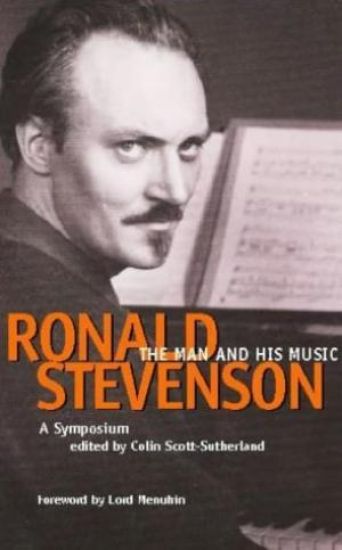
Ronald Stevenson

Ronald Stevenson

Toccata Press
2005
sidottu
This collection of essays covers virtually all of Stevenson's enormous output and features contributions from leading authorities. Ronald Stevenson is one of Britain's leading composers, and almost certainly its most prolific. He is best known for his massive Passacaglia on DSCH - at 80 minutes long, the biggest single-movement work in the piano literature. But he has an enormous number of other fine works to his credit: a vast corpus of original and exciting works for the piano, the instrument of which he is an acknowledged master, a number of innovative and impressive scores for orchestra [including four concertos], many attractive pieces of chamber music, and over two hundred songs. All of them testify to Stevenson's enduring belief in the value of melody. Stevenson is also one of the last representatives of the great tradition of Romantic composer-pianists - the tradition that embraced Paderewski and Busoni, two figures with whom he feels a particularly affinity, and whose heritage he has extended, both as performer and creative personality, into the modern age. This collection of essays covers virtually all of Stevenson's enormous output. It features contributions from a number of leading authorities: Malcolm MacDonald on the orchestral music, Ates Orga on the piano works, Alistair Chisholm on the chamber music, Derek Watson on the songs, Harold Taylor on Stevenson's pianism, Jamie Reid Baxter on the choral music and on Stevenson's position in Scottish culture. It also reproduces a selection of Stevenson's exquisite piano miniatures, in facsimiles of the composer's calligraphic script. In a Foreword written shortly before his death, Lord Menuhin describes Stevenson as 'one of the most original minds in the composition of music' and predicts that 'his music will be appreciated more and more'. This book is a major step in that process of discovery. COLIN SCOTT-SUTHERLAND has contributed several articles on RonaldStevenson's work to various journals, and a chapter on his music to British Music Now.
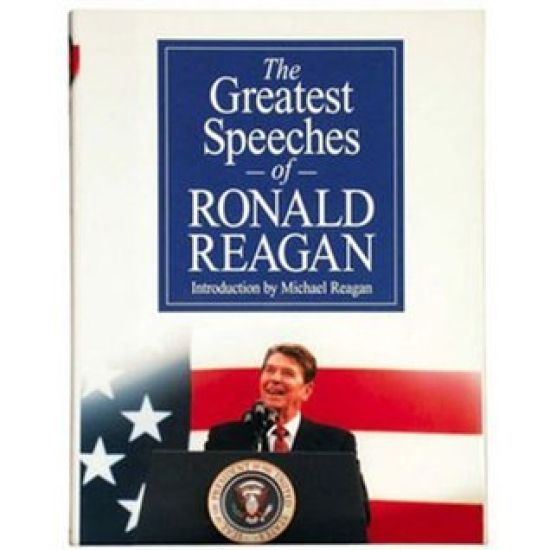
The Greatest Speeches of Ronald Reagan

The Greatest Speeches of Ronald Reagan

Ronald Reagan

NewsMax Media, Incorporated
2022
sidottu
With twenty-eight speeches spanning the Reagan era, The Greatest Speeches of Ronald Reagan provides readers with a direct source into President Reagan’s profound belief in God, freedom, individualism, limited government, and his great love for his country. Ronald Wilson Reagan, the fortieth president of the United States, was also one of America's greatest orators. Known as “The Great Communicator,” he shared his vision of the greatness of America while guiding the nation to an unprecedented prosperity and renewed vigor.When President Reagan assumed the presidency in 1981, America’s economy ebbed with 12 percent inflation and 8 million unemployed. Reagan’s predecessor spoke of a national “malaise”. Abroad, America’s adversary, the Soviet Union, was expanding its influence. The Soviet Union’s nuclear weapons capability surpassed that of the United States and previous nuclear arms treaties were failures.President Reagan’s goals were simple:To reduce the size of the federal governmentLower taxesStabilize the economyRestore the belief of the American people in their governmentWin the Cold WarWhen President Reagan left office in 1989, these goals had been achieved:Americans were enjoying the longest uninterrupted span of prosperity in the nation’s history.After a massive military build-up, the largest in peacetime, President Reagan had negotiated a nuclear arms treaty that greatly reduced the threat of nuclear war. By expanding the military, he achieved peace through strength and set the stage for the demise of the Soviet Union.From the time he arrived on the political scene in 1964-throughout his presidency and beyond, Ronald Reagan used his speeches to inspire and reinvigorate America. When he spoke, Reagan said he was preaching a sermon. The American people saw his vision of America and his dreams for the future, and they overwhelmingly responded; he was re-elected in 1984 by the largest number of electoral votes in the nation’s history.In this collection of twenty-eight speeches spanning the Reagan era, with an Introduction from his son, Michael Reagan, you may read for yourself his inspirational sermons. From his first speech in the political arena in 1964 to his Last Letter to America, informing Americans of his Alzheimer’s disease, Ronald Reagan’s words show a profound belief in God, freedom, individualism, limited government, and his great love for his country.