Kirjojen hintavertailu. Mukana 11 699 587 kirjaa ja 12 kauppaa.

Kirjahaku

Etsi kirjoja tekijän nimen, kirjan nimen tai ISBN:n perusteella.

1000 tulosta hakusanalla Ronald J. Stephens

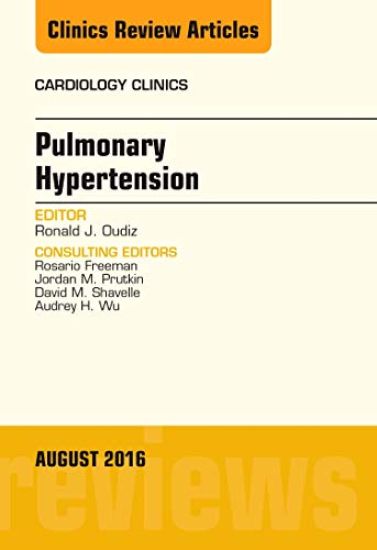
Pulmonary Hypertension, An Issue of Cardiology Clinics

Pulmonary Hypertension, An Issue of Cardiology Clinics

Ronald J. Oudiz

Elsevier - Health Sciences Division
2016
sidottu
This issue of the Cardiology Clinics entitled "Pulmonary Hypertension" is an in-depth review on the subject edited by Dr. Ronald J. Oudiz. The topics covered will include: classification of pulmonary hypertension, epidemiology and pathophysiology, diagnosis, and management in Groups I-V. There are also sections devoted to issues faced in pediatrics and pregnancy, as well as a section on patient support, among other topics.
Japan's New Party System

Japan's New Party System

Ronald J Hrebenar

TAYLOR FRANCIS LTD
2020
sidottu
The authors of this book have joined together for a third time to produce a book on Japanese political parties and elections. The first two books under the title of The Japanese Party System were also published by Westview Press in 1986 and 1992. This book, Japan's New Party System, has a different purpose than the previous volumes. The first two books had as their task the presentation of a vast amount of material on the various parties of the 1955-1993 party system. Since 1955, Japanese politics and parties had been rather uneventful and predictable; consequently, many Japanese political scientists preferred to study other nations. Decade after decade, the Liberal Democratic Party (LDP) ruled Japan while the permanent opposition party, the Japan Socialist Party GSP) revolved around it but could never even come close to replacing it in power on the national level. All of this changed in 1993 after the LOP split, new parties emerged and formed a non-LOP government, and a new party system began. This book is about the Second Party System and how Japanese politics has changed from the old LOP-dominated First Party System.
Japan's New Party System

Japan's New Party System

Ronald J Hrebenar

TAYLOR FRANCIS LTD
2022
nidottu
The authors of this book have joined together for a third time to produce a book on Japanese political parties and elections. The first two books under the title of The Japanese Party System were also published by Westview Press in 1986 and 1992. This book, Japan's New Party System, has a different purpose than the previous volumes. The first two books had as their task the presentation of a vast amount of material on the various parties of the 1955-1993 party system. Since 1955, Japanese politics and parties had been rather uneventful and predictable; consequently, many Japanese political scientists preferred to study other nations. Decade after decade, the Liberal Democratic Party (LDP) ruled Japan while the permanent opposition party, the Japan Socialist Party GSP) revolved around it but could never even come close to replacing it in power on the national level. All of this changed in 1993 after the LOP split, new parties emerged and formed a non-LOP government, and a new party system began. This book is about the Second Party System and how Japanese politics has changed from the old LOP-dominated First Party System.
The Creative Qualitative Researcher

The Creative Qualitative Researcher

Ronald J. Pelias

Routledge
2019
sidottu
The Creative Qualitative Researcher is designed to help readers see the range of possibilities of creative scholarship. The phrase "creative qualitative researchers" points toward scholars who call upon their literary skills to evoke the emotional and intellectual complexity of their subjects; who deploy their vulnerable, relational, and reflexive selves to expose and change problematic cultural practices; and who engage their embodied ideological and ethical sensibilities as researchers.Part I introduces chapters on four qualitative methods: autoethnography, performative writing, narrative inquiry and poetic inquiry. Each of these four method chapters presents the method written in the style it features, provides writing prompts for exploring the chapter’s themes, and offers written examples of the method. Part II, divided into four chapters, aims to develop creative qualitative research skills relevant to the methods discussed in Part I. Chapter 5 discusses empathy and ethics; Chapter 6 is a primer on creative writing; Chapter 7 identifies some alternative ideas for using the words of others; and Chapter 8 focuses on collaborative improvisation to compose scholarly work. Each of the chapters in Part II includes a large number of writing exercises, prompts and strategies to assist scholars in becoming better creative researchers. By the end of the book, readers will know what creative research might entail and will have a clear understanding of the methods. Working with the various writing strategies, readers will see the potential of creative research and gain skills for its use.
The Creative Qualitative Researcher

The Creative Qualitative Researcher

Ronald J. Pelias

Routledge
2019
nidottu
The Creative Qualitative Researcher is designed to help readers see the range of possibilities of creative scholarship. The phrase "creative qualitative researchers" points toward scholars who call upon their literary skills to evoke the emotional and intellectual complexity of their subjects; who deploy their vulnerable, relational, and reflexive selves to expose and change problematic cultural practices; and who engage their embodied ideological and ethical sensibilities as researchers.Part I introduces chapters on four qualitative methods: autoethnography, performative writing, narrative inquiry and poetic inquiry. Each of these four method chapters presents the method written in the style it features, provides writing prompts for exploring the chapter’s themes, and offers written examples of the method. Part II, divided into four chapters, aims to develop creative qualitative research skills relevant to the methods discussed in Part I. Chapter 5 discusses empathy and ethics; Chapter 6 is a primer on creative writing; Chapter 7 identifies some alternative ideas for using the words of others; and Chapter 8 focuses on collaborative improvisation to compose scholarly work. Each of the chapters in Part II includes a large number of writing exercises, prompts and strategies to assist scholars in becoming better creative researchers. By the end of the book, readers will know what creative research might entail and will have a clear understanding of the methods. Working with the various writing strategies, readers will see the potential of creative research and gain skills for its use.
The Japanese Party System

The Japanese Party System

Ronald J Hrebenar

Routledge
2020
sidottu
“This is a nuts and bolts textbook in the best sense of the term. … It is bound to be a great boon both to teachers and students of contemporary Japanese politics.” —from the Foreword by Haruhiro Fukui This timely volume is the first book in nearly twenty-five years to focus on the party system of Japan. In the past two decades, the Japanese political scene has undergone a dramatic transformation. What had been a two-party system proliferated during the 1960s and 1970s into a seven-party system. This book provides a comprehensive look at all of Japan’s current major and minor national-level parties. For the first time in English, detailed analyses are presented on the Democratic Socialists, the Clean Government party (KÅmeitÅ), and the New Liberal Club. Thorough coverage is provided for parties in the “1955 System”—the ruling Liberal Democratic party and the two long-term opposition parties, the Socialists and the Communists. Many of the new miniparties that have appeared in recent elections are also discussed. Japanese Political Parties gives readers a solid understanding of party histories, leadership, and internal organization, as well as a look at prospects for the future. The party discussions are preceded by three chapters on the laws and political forces affecting Japanese politics. Chapter 1 describes the basic characteristics of the Japanese party system since 1945 and provides an overview of Japanese voting behavior and political values. Chapter 2 describes the “rules of the game”—the electoral laws—and discusses the ongoing political problem of malapportionment. Chapter 3 interprets data on political finance in contemporary Japan. Along with a wealth of information and interpretation, the authors offer insight into the common patterns Japan shares with democracies around the world, placing the Japanese system within the larger context of world party systems. Designed for courses on Japanese politics, this text should also prove useful to students of comparative politics and political parties.
The Japanese Party System

The Japanese Party System

Ronald J Hrebenar

TAYLOR FRANCIS LTD
2024
nidottu
“This is a nuts and bolts textbook in the best sense of the term. … It is bound to be a great boon both to teachers and students of contemporary Japanese politics.” —from the Foreword by Haruhiro Fukui This timely volume is the first book in nearly twenty-five years to focus on the party system of Japan. In the past two decades, the Japanese political scene has undergone a dramatic transformation. What had been a two-party system proliferated during the 1960s and 1970s into a seven-party system. This book provides a comprehensive look at all of Japan’s current major and minor national-level parties. For the first time in English, detailed analyses are presented on the Democratic Socialists, the Clean Government party (KÅmeitÅ), and the New Liberal Club. Thorough coverage is provided for parties in the “1955 System”—the ruling Liberal Democratic party and the two long-term opposition parties, the Socialists and the Communists. Many of the new miniparties that have appeared in recent elections are also discussed. Japanese Political Parties gives readers a solid understanding of party histories, leadership, and internal organization, as well as a look at prospects for the future. The party discussions are preceded by three chapters on the laws and political forces affecting Japanese politics. Chapter 1 describes the basic characteristics of the Japanese party system since 1945 and provides an overview of Japanese voting behavior and political values. Chapter 2 describes the “rules of the game”—the electoral laws—and discusses the ongoing political problem of malapportionment. Chapter 3 interprets data on political finance in contemporary Japan. Along with a wealth of information and interpretation, the authors offer insight into the common patterns Japan shares with democracies around the world, placing the Japanese system within the larger context of world party systems. Designed for courses on Japanese politics, this text should also prove useful to students of comparative politics and political parties.
Drug Synergism and Dose-Effect Data Analysis
Not since this author's bestselling Manual of Pharmacologic Calculation-long out of print-has there been a reference available for drug data analysis, and even that work did not deal with drug combinations. Although pharmacologists and most other scientists know what synergism is, mainstream textbooks tend to neglect it as a quantitative topic. Few researchers are familiar with the quantitative methodology needed to differentiate synergistic responses from the simply additive responses expected from drug combinations or a single drug's interaction with endogenous chemicals. In Drug Synergism and Dose-Effect Data Analysis, noted pharmacologist, mathematician, and author Ronald J. Tallarida finally brings these methods to light. Drawing on statistical theory and methods but keeping the special needs of the pharmacologist in mind, he begins his treatment with dose-response relations, the statistical analysis of the data, and the models that describe them. He also offers the only modern presentation of probit and logit analysis and provides detailed calculation methods not found in typical statistics books. Numerous examples accompany a presentation that clearly illustrates the calculations and experimental design considerations for modern drug analysis. You'll find the conceptual background, the algorithms, and new research developments. In short, Drug Synergism and Dose-Effect Data Analysis has everything you need to perform, with confidence, the quantitative analysis of dose response data.
Introduction to Software Engineering

Introduction to Software Engineering

Ronald J. Leach

CRC Press
2020
nidottu
Practical Guidance on the Efficient Development of High-Quality SoftwareIntroduction to Software Engineering, Second Edition equips students with the fundamentals to prepare them for satisfying careers as software engineers regardless of future changes in the field, even if the changes are unpredictable or disruptive in nature. Retaining the same organization as its predecessor, this second edition adds considerable material on open source and agile development models.The text helps students understand software development techniques and processes at a reasonably sophisticated level. Students acquire practical experience through team software projects. Throughout much of the book, a relatively large project is used to teach about the requirements, design, and coding of software. In addition, a continuing case study of an agile software development project offers a complete picture of how a successful agile project can work.The book covers each major phase of the software development life cycle, from developing software requirements to software maintenance. It also discusses project management and explains how to read software engineering literature. Three appendices describe software patents, command-line arguments, and flowcharts.
Writing Performance, Identity, and Everyday Life
Writing Performance, Identity, and Everyday Life invites the reader into Ronald J. Pelias’ world of artistic and everyday performance. Calling upon a broad range of qualitative methods, these selected writings from Pelias submerge themselves in the evocative and embodied, in the material and consequential, often creating moving accounts of their topics. The book is divided into four sections: Foundational Logics, Performance, Identity, and Everyday Life. Part I addresses the methodological underpinnings of the book, focusing on the ‘touchstones’ that inform Pelias’ work: performative, autoethnographic, poetic, and narrative methods. These directions push the researcher toward empathic engagement, a leaning toward others; using the literary to evoke the cognitive and affective aspects of experience; and an ethical sensibility located in social justice. Parts II–IV focus on artistic and everyday life performances, including discussions of the disciplinary shift from the oral interpretation of literature to the field of performance studies; empathy and the actor’s process; conceptions of performance; the performance of race, gender, and sexuality; and performances in interpersonal relations and academic circles. By the end, readers will see Pelias demonstrate the power of qualitative methods to engage and to present alternative ways of being. Pelias’ work shows us how to understand and feel the evocative strength of thinking performatively.
Lessons on Aging and Dying

Lessons on Aging and Dying

Ronald J. Pelias

Routledge
2020
nidottu
Lessons in Aging and Dying: A Poetic Autoethnography captures the experience of being elderly and facing the end of life. The book presents a collection of poems about life’s end accompanied with narrative commentary. Organized as 73 lessons, they can be read as personal curiosities, momentary realizations, farcical departures, embarrassing fears, therapeutic encounters, experiential truths, hopeful conjectures, and inevitable destinations.This book is a poetic inquiry that calls upon the lyrical in narrative and poetic forms to enter its subject. It also is an autoethnography that examines culture through the deployment of the self. Framed by introductory and concluding remarks, the book is organized around three developmental stages. The initial pages, "Beginnings," recognize the author’s birth into the end, a time when he knew he had arrived at a place beyond middle age. The middle unit, "From Here to There," displays an unsettled settling in, driven by an ongoing tension between resistance and acquiescence. It serves as a transitional stage into "Endings," the final section that anticipates death’s imminent arrival and speculates about how author might meet his end. Together, these units provide opportunities for identification, speculation, and resistance.Published as part of the prestigious autoethnographic series Writing Lives: Ethnographic and Autoethnographic Narratives, and written by one of the foremost academics in the fields of communication and performance studies, this text is particularly suitable for students and researchers in subjects such as relational and family communication, gerontology and end-of-life care, and performance studies.
Lessons on Aging and Dying

Lessons on Aging and Dying

Ronald J. Pelias

Routledge
2020
sidottu
Lessons in Aging and Dying: A Poetic Autoethnography captures the experience of being elderly and facing the end of life. The book presents a collection of poems about life’s end accompanied with narrative commentary. Organized as 73 lessons, they can be read as personal curiosities, momentary realizations, farcical departures, embarrassing fears, therapeutic encounters, experiential truths, hopeful conjectures, and inevitable destinations.This book is a poetic inquiry that calls upon the lyrical in narrative and poetic forms to enter its subject. It also is an autoethnography that examines culture through the deployment of the self. Framed by introductory and concluding remarks, the book is organized around three developmental stages. The initial pages, "Beginnings," recognize the author’s birth into the end, a time when he knew he had arrived at a place beyond middle age. The middle unit, "From Here to There," displays an unsettled settling in, driven by an ongoing tension between resistance and acquiescence. It serves as a transitional stage into "Endings," the final section that anticipates death’s imminent arrival and speculates about how author might meet his end. Together, these units provide opportunities for identification, speculation, and resistance.Published as part of the prestigious autoethnographic series Writing Lives: Ethnographic and Autoethnographic Narratives, and written by one of the foremost academics in the fields of communication and performance studies, this text is particularly suitable for students and researchers in subjects such as relational and family communication, gerontology and end-of-life care, and performance studies.

A Map to the End of Time

A Map to the End of Time

Ronald J. Manheimer

WW NORTON CO
1999
nidottu
Teaching philosophy to retired people should be a path to wisdom, Ron Manheimer thought. He was right, but in an unexpected fashion. His lively Socratic "dialogues" with older people led him into hilarious and provocative conversations with a colorful cast of fellow seekers: from his bon vivant Danish mentor Augie Nielsen to his strong-willed elderly student Hildegard, from his ironic teenaged daughter Esther to his wisecracking Uncle Joe. Like James Carse in Breakfast at the Victory, Manheimer reinvigorates the ancient tradition of using storytelling to explore truth. What is romantic love? How do we shape the stories we tell ourselves about our own pasts? Does the purpose of life become clearer in old age? How do we find common meanings across religious, ethnic, and generational divides? What is the essence of a person? What does it mean to live a "full" life? Showing how ideas and lives can illuminate one another, Manheimer's engaging narratives address these questions while providing an inviting exploration of the ideas of thinkers from Plato and Aristotle to Kierkegaard, John Stuart Mill, and Martin Buber. A great teacher, Manheimer shows how these philosophers might provide the footgear for treading everyday paths of human experience, on our inevitable journeys to "the end of time."
Practicing Therapy

Practicing Therapy

Ronald J. Chenail; Anthony Heath; Anne Hearon Rambo

WW Norton Co
1993
nidottu
Designed for family therapists, this book offers stories, exercises, self-assessments and evaluative techniques to improve observational skills, enhance clinical work and encourage meaningful research. The authors discuss their views on hearing stories, observing data and analyzing speech, creating an engaging and learning experience.
Treatment Collaboration

Treatment Collaboration

Ronald J. Diamond; Patricia L. Scheifler

WW Norton Co
2007
nidottu
A guiding principle is that collaboration, rather than coercion, is most likely to promote, achieve, and sustain recovery. Diamond and Scheifler discuss the often-competing agendas of these groups of people: "what does everyone want out of this relationship" and "how can we make these relationships easier and more beneficial for the client?" The book will also speak to each group of readers, explaining how they can participate more effectively in the process. For example, what questions should a therapist be asking of the psychiatrist; how is the best way to communicate? What is the best way to forge a strong relationship? What should the consumer do to make sure that she is getting the best treatment? Important topics addressed include: how to set goals with clients so that everyone is on the same page with the treatment regimen; how to manage inevitable conflicts that will arise; helping clients deal with medication side effects; working with clients to choose when medication is changed; how to focus on recovery as a goal and not just medication management.
Instant Psychopharmacology

Instant Psychopharmacology

Ronald J. Diamond

WW Norton Co
2009
nidottu
This handbook is the ideal source for therapists, social workers, clergy, and clients seeking to stay current on the essentials of psychopharmacology. The third edition of our perennial bestseller, this book discusses a wide variety of newly available medications, how they work, how they differ from the older medications, and their advantages and disadvantages. In addition to covering antipsychotic medications, antidepressant medications, mood-stabilizing medications, and antianxiety and sleeping-aid medications, this new edition also discusses a variety of miscellaneous medications, such as those appropriate for treatment of PTSD, ADHD, Alzheimer’s disease, and alcohol and substance abuse. It also helpfully includes up-to-date lists of medications by both generic and brand names, as well as by class and by cost. This thoroughly revised and updated edition is a must-have for all nonmedical therapists and clients who need to understand the latest developments in psychopharmacology.
The Medication Question

The Medication Question

Ronald J. Diamond

WW Norton Co
2011
nidottu
This important volume provides a thorough overview of a range of mental disorders, describing how they are affected by various medications and other interventions, to foster a strong alliance between family, patient, and clinician. Diamond asks us to step well back from the brink of the "doctor knows best" mentality, addressing a more basic and radical question: Do I (or does my family member) really need medication, and if so, why, what, when, how and for how long? What is the problem for which I might be considering taking medication? Diamond faces the facts that some individuals do not benefit from medication, that taking medication regularly should never be the goal of treatment (as it often seems to be), and that medication in some conditions may have meaning and utility for the person even when there is no proven clinical indication for it. This book is an invaluable guide to medications—including complementary and herbal products—that you might consider for various psychiatric and psychological conditions. Clinicians, clients, and family members alike will learn to collaborate, negotiate, create individualized treatment plans, and share in the decision-making process about whether to medicate or not.
Rethinking the Welfare State

Rethinking the Welfare State

Ronald J. Daniels; Michael J. Trebilcock

Routledge
2005
sidottu
Rethinking the Welfare State offers a comprehensive and comparative analysis of social welfare policy in an international context, with a particular emphasis on the US and Canada.The authors investigate the claim that a decentralized delivery of government supported goods and services enables policy objectives to be achieved in a more innovative and efficient way, but at a lower cost. Secondly they examine the effectiveness of the voucher system as a solution to problematic welfare concerns. While this system has shown much promise in improving welfare, there have been problems for institutions unable to attract enough voucher-assisted consumers to ensure their survival.In this context, the authors examine major social programmes such as food stamps, primary and secondary education, post-secondary education, labour market training, childcare, healthcare, legal aid, low-income housing, long-term care and pensions.
Rethinking the Welfare State

Rethinking the Welfare State

Ronald J. Daniels; Michael J. Trebilcock

Routledge
2005
nidottu
Rethinking the Welfare State offers a comprehensive and comparative analysis of social welfare policy in an international context, with a particular emphasis on the US and Canada.The authors investigate the claim that a decentralized delivery of government supported goods and services enables policy objectives to be achieved in a more innovative and efficient way, but at a lower cost. Secondly they examine the effectiveness of the voucher system as a solution to problematic welfare concerns. While this system has shown much promise in improving welfare, there have been problems for institutions unable to attract enough voucher-assisted consumers to ensure their survival.In this context, the authors examine major social programmes such as food stamps, primary and secondary education, post-secondary education, labour market training, childcare, healthcare, legal aid, low-income housing, long-term care and pensions.