Kirjahaku
Etsi kirjoja tekijän nimen, kirjan nimen tai ISBN:n perusteella.
1000 tulosta hakusanalla Rosemarie Chauvin
A book on the experience of reading the works of Samuel Beckett. After a life of writing about Victorian novelists, Rosemarie Bodenheimer found herself entranced by the work of Samuel Beckett. In this book she shares her journey of discovery with readers who may or may not be familiar with Beckett's novels and stories. She follows his trajectory from the first unpublished novel, Dream of Fair to Middling Women, through the great post-war trilogy of Molloy, Malone Dies, and The Unnamable, and on to the ever more experimental inventions in the shorter, later fictions, and monologues. Through readings of his work alongside extracts from his published correspondence, Beckett emerges as a sympathetic human figure, a poet of productive doubt, and a brilliant stylist of mood changes and second thoughts. Bodenheimer considers Beckett's treatments of memory, nostalgia, and grief, and the forms he finds to convey those essential human experiences while avoiding melodrama or sentimentality. His dramatized relationship with his own writing is a crucial part of that emotional landscape. His playful jousts with the conventions of novel-writing show how, from the start, Beckett challenged the notion of character and other inherited novel conventions. The book also emphasizes his dismantling of the autobiographical "I" his moving narratives of attachment and loss, and the inimitable mixture of comedy and pathos he creates by inventing outlandish situations to which his characters respond in very recognizable human ways.
Written in the form of a back-and-forth dialogue between the two authors, this book is about the relationship between feeling and thinking in Dickens's novels. It presents Dickens as a psychological thinker, whose generative thought may be conscious, unconscious, half-conscious, or in transit between one state and another. This Dickens is always in live process, improvizing from one monthly number to the next, subtly revizing as he goes, shifting moods, tenses, and tones from one paragraph or sentence to the next, as what he writes sparks off what he suddenly, newly, thinks. The chapters approach this inquiry through close readings of chosen passages, including studies of telling revisions in Dickens's manuscripts that reveal the power of his deepened second thoughts. They also draw on selected moments from his personal letters and prefaces when these more casual writings prove to be sketches or rehearsals for thoughts and feelings that achieve new life when they are transformed into fiction. The book concentrates on four novels of his great middle period: Dombey and Son, David Copperfield, Bleak House, and Little Dorrit, while making excursions into earlier and later Dickens novels, notably A Tale of Two Cities and Our Mutual Friend. The experiment of intense but informal conversation between the authors also models the relationship between feeling and thinking in the act of reading and responding to powerful moves in fiction.
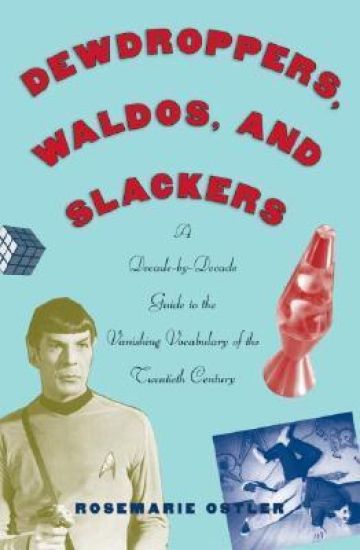
Every era of the twentieth century from the "Roaring Twenties" to the "Me Decade" brought its own fads and trends and the language to go with them: fresh youth slang, up-to-the-minute buzzwords, and colorful catch phrases. Most of this new vocabulary exploded into the vernacular, only to fizzle a few years later as newer trends and more current events demanded their own terminology. Giving yesterday's words another chance to sparkle before they retire for good, Dewdroppers, Waldos, and Slackers focuses on language that still resonates with the mood of its times. A nostalgic word trip through the highs and lows of American English from the last century, this book pays special attention to words that enjoyed a brief vogue only to end up abandoned and nearly forgotten: jet jockeys, keypunch operators, the bugged-out and the slackers. All these words have a place here in engaging essays, arranged by decade, that put them in their historical and sociological context. While the twentieth century is over, this book will help us appreciate the words that were left behind.
From a very young age we are told not to stare, and one hallmark of maturation is the ability to resist (or at least hide) our staring behavior. And yet, rarely do we master the impulse. Despite the complicated role it plays in our development, and its unique brand of visual enticement, staring has not been considered before as a suitable object for socio-cultural analysis. What is it about certain kinds of people that makes it impossible to take our eyes off them? Why are some visual stimuli irresistible? Why does staring produce so much anxiety? Drawing on examples from art, media, fashion, history and memoir, Garland-Thomson defines staring, explores the factors that motivate it, and considers the targets and the effects of the stare. A bodily inventory then enumerates how stares actually operate in daily life. A section on "Bodies" focuses on the question of size and scale as key indicators of normalcy, while certain body parts show themselves to be disproportionately arresting, as passages on "Faces" "Hands" and "Breasts" reveal. A concluding chapter on "Beholding" considers the frisson at play between starer and staree and offers an alternative way of understanding visual communication between people. Featuring over forty illustrations, Staring captures the stimulating combination of symbolic, material and emotional factors that make staring so irresistible while endeavoring to shift the usual response to staring, shame, into an engaged self-consideration. Elegant and provocative, this book advances new ways of thinking about visuality and the body that will appeal to readers who are interested in the overlap between the humanities and human behaviors.
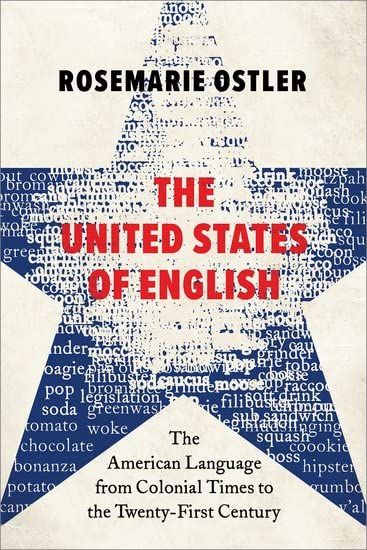
The story of how English became American -- and how it became Southern, Bostonian, Californian, African-American, Chicano, elite, working-class, urban, rural, and everything in between By the time of the Revolution, the English that Americans spoke was recognizably different from the British variety. Americans added dozens of new words to the language, either borrowed from Native Americans (raccoon, persimmon, caucus) or created from repurposed English (backwoods, cane brake, salt lick). Americans had their own pronunciations (bath rhymed with hat, not hot) and their own spelling (honor, not honour), not to mention a host of new expressions that grew out of the American landscape and culture (blaze a trail, back track, pull up stakes). Americans even invented their own slang, like stiff as a ringbolt to mean drunk. American English has continued to grow and change ever since. The United States of English tells the engrossing tale of how the American language evolved over four hundred years, explaining both how and why it changed and which parts of the "mother tongue" it preserved (I guess was heard in the British countryside long before it became a typical Americanism). Rosemarie Ostler approaches American English as part of the larger story of American history and culture, starting with what we know about the first colonists and their speech. Drawing on the latest research, she explores the roots of regional dialects, the differences between British and American language use, the sources of American slang, the development of African American English, current trends in political language, and much more. Plentiful examples of the American vernacular, past and present, bring the language to life and make for an engaging as well as enlightening read.
In Conversation with Willa Cather
Rosemarie Bodenheimer; Philip Davis
Oxford University Press
2026
sidottu
Complete Chemistry for Cambridge IGCSE® Revision Guide
RoseMarie Gallagher; Paul Ingram
Oxford University Press
2015
nidottu
The Complete Chemistry for Cambridge IGCSE® Revision Guide Third Edition is for the previous syllabus, last examination 2022. The guide provides everything students need to build exam confidence, including practice questions and answers, as well as revision and assessment advice from an experienced teacher. The clear and concise format supports students as they prepare for their exams, as well as throughout the year for independent study or homework.
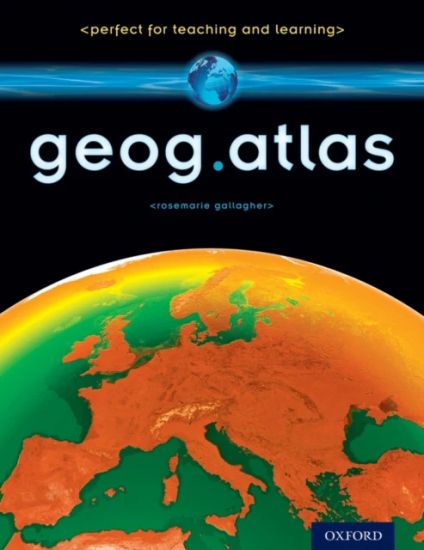
geog.atlas is an engaging atlas of accessible maps and supporting information. It features unique coverage of places likely to appear in the news, such as the Middle East, Afghanistan, and the Falklands. Special maps look at themes like global warming, desertification, and how people spread around the world. Stunning satellite images are placed alongside physical geography maps to aid understanding. 'Did you know?' and 'What if?' circles provide interesting extra information and engaging facts. Full of clearly-labelled maps, straightforward explanations, and advice on how to 'read' maps and understand what they show, it will help improve students' basic locational knowledge, enhance their understanding, and build their confidence. geog.atlas supports teachers whether they're using geog.123 or an alternative course at KS3.
geog.123 is a three-book course for the National Curriculum at Key Stage 3. This 4th edition has been specially written to match the new Programme of Study (for teaching from 2014). geog.123 combines a rigorous approach to content with a light touch, making it the most effective and engaging Key Stage 3 course available. Easy-to-use double-page spreads feature clearly-written objectives, student-friendly language, illustrated step-by-step explanations, up-to-date case studies and place-based examples, and high-quality photos, maps, and diagrams. Each Student Book has a glossary and full index. geog.1 includes coverage of the geological timescale, mapskills, the UK, glaciation, rivers, and Africa. Answers to the 'Your turn' questions are printed in the Teacher's Handbook. Each Student Book is supported by Kerboodle online resources including lesson plans and presentations, animations, worksheets, and assessment materials; an online Student Book; a Teacher's Handbook; a Workbook; and a Workbook Answer Book.
geog.123 is a three-book course for the National Curriculum at Key Stage 3. This 4th edition has been specially written to match the new Programme of Study. geog.123 combines a rigorous approach to content with a light touch, making it the most effective and engaging Key Stage 3 course available. geog.2 includes coverage of GIS, population, urbanisation, weather and climate, coasts, Asia, and Southwest China. Easy-to-use double-page spreads feature clearly-written objectives, student-friendly language, illustrated step-by-step explanations, up-to-date case studies and place-based examples, and high-quality photos, maps, and diagrams. Each Student Book has a glossary and full index. Answers to the 'Your turn' questions can be found in the geog.2 Teacher's Handbook. Supported by Kerboodle resources including lesson plans and presentations, animations, differentiated worksheets, online assessment materials, and an online Student Book; a Teacher's Handbook; a Workbook; and a Workbook Answer Book.
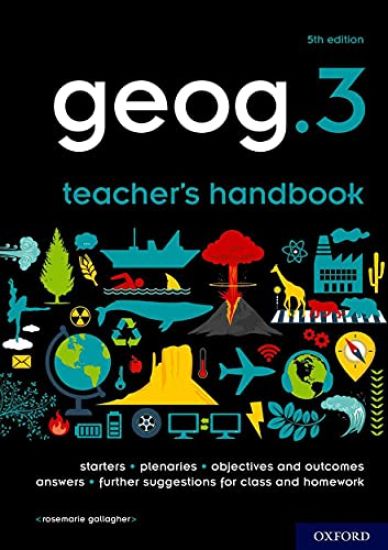
geog.123 is a three-book course for the National Curriculum at Key Stage 3. This 4th edition has been specially written to match the new Programme of Study. geog.3 includes coverage of international development, natural resources, economic activity, rocks, soils and weathering, earthquakes and volcanoes, Russia, and the Middle East. geog.123 combines a rigorous approach to content with a light touch, making it the most effective and engaging Key Stage 3 course available. Easy-to-use double-page spreads feature clearly-written objectives, student-friendly language, illustrated step-by-step explanations, up-to-date case studies and place-based examples, and high-quality photos, maps, and diagrams. Each Student Book has a glossary and full index. Answers to the 'Your turn' questions can be found in the geog.3 Teacher's Handbook. Supported by Kerboodle, which includes online lesson plans and presentations, animations, interactive activities, and differentiated worksheets, and assessment materials; an online Kerboodle Book; a Teacher's Handbook; a Workbook; and a Workbook Answer Book.
Complete Chemistry for Cambridge IGCSE®
RoseMarie Gallagher; Paul Ingram
Oxford University Press
2016
muu
The best-selling Complete Chemistry for Cambridge IGCSE® Third Edition Student Book is matched to the previous IGCSE Chemistry syllabus, last examination 2022. It is trusted by teachers around the world to support understanding and achievement. Written by experienced authors, this book is full of engaging content. Extension material stretches the highest ability students and prepares them to take the next step in their learning. Practice exam questions consolidate student understanding and prepare them for exam success.
geog.1 Student Book
RoseMarie Gallagher; Richard Parish; Janet Williamson
Oxford University Press
2019
nidottu
geog.123 fifth edition is the perfect course to inspire and motivate your geography students. In response to teacher feedback, the resources have been thoroughly revised and updated to provide even stronger preparation for further study. Through new chapters and new spreads, more subject terminology, greater use of GCSE-style command language, and a whole page exam-style questions at the end of every chapter, students are able to build solid foundations in knowledge and skills, giving them the confidence to progress. The course retains the engaging approach that students love, with a unique combination of rigour and accessibility that has made it the number one course for ages 11-14. geog.123 provides a three-year curriculum aligned to the KS3 Programme of Study, which ensures that students know more and remember more, whilst also motivating them and helping them to gain confidence. Kerboodle provides accompanying online support, including digital versions of the Student Book and Teacher Handbook, a comprehensive package of assessment materials ranging from interactive auto-marked quizzes to exam-style assessment papers, and materials to support learning-at-home. The Teacher's Handbooks provide help with planning and vital support for non-specialists teaching at Key Stage 3. The course also includes fill-in workbooks, suitable for use in class or at home.
geog.123 5th edition has been revised and updated to deliver both the Programme of Study for Geography at Key Stage 3 and new teaching and learning needs for greater preparation for GCSE. This Teacher's Handbook provides practical and easy-to-use support for geog.1 Student Book. An ideal resource for all teachers, it is especially helpful for the non-specialist or newly-qualified teacher. It contains objectives and outcomes, key ideas and key vocabulary, starters and plenaries, answers for the Student Book activities, and further suggestions for class and homework.
geog.123 is a three-book course for the National Curriculum at Key Stage 3. This fifth edition matches the Programme of Study while meeting new teaching and learning needs for greater preparation for GCSE study. geog.123 combines a rigorous approach to content with a light touch, making it the most effective and engaging Key Stage 3 course available. Easy-to-use double-page spreads feature clearly-written objectives, student-friendly language, illustrated step-by-step explanations, up-to-date case studies and place-based examples, and high-quality photos, maps, and diagrams. Each students' book has a glossary and full index. geog.2 includes coverage of GIS, population, urbanisation, weather and climate, global warming, coasts, and Asia, and China. Each students' book is supported by online lesson plans and presentations, online resources including animations, videos, and worksheets, online assessment materials, an online student book, a teacher's handbook, and a workbook.
geog.123 5th edition has been revised and updated to deliver both the Programme of Study for Geography at Key Stage 3 and new teaching and learning needs for greater preparation for GCSE. This Teacher's Handbook provides practical and easy-to-use support for geog.2 Student Book. An ideal resource for all teachers, it is especially helpful for the non-specialist or newly-qualified teacher. It contains objectives and outcomes, key ideas and key vocabulary, starters and plenaries, answers for the Student Book activities, and further suggestions for class and homework.
geog.123 is a three-book course for the National Curriculum at Key Stage 3. This fifth edition matches the Programme of Study while meeting new teaching and learning needs for greater preparation for GCSE study. geog.123 combines a rigorous approach to content with a light touch, making it the most effective and engaging Key Stage 3 course available. Easy-to-use double-page spreads feature clearly-written objectives, student-friendly language, illustrated step-by-step explanations, up-to-date case studies and place-based examples, and high-quality photos, maps, and diagrams. Each students' book has a glossary and full index. geog.3 includes coverage of rocks, resources, economic activity, development, tectonics, Russia, and the Middle East. Each students' book is supported by online lesson plans and presentations, online resources including animations, videos, and worksheets, online assessment materials, an online student book, a teacher's handbook, and a workbook.
geog.123 5th edition has been revised and updated to deliver both the Programme of Study for Geography at Key Stage 3 and new teaching and learning needs for greater preparation for GCSE. This Teacher's Handbook provides practical and easy-to-use support for geog.3 Student Book. An ideal resource for all teachers, it is especially helpful for the non-specialist or newly-qualified teacher. It contains objectives and outcomes, key ideas and key vocabulary, starters and plenaries, answers for the Student Book activities, and further suggestions for class and homework.
Extraordinary Bodies is a cornerstone text of disability studies, establishing the field upon its publication in 1997. Framing disability as a minority discourse rather than a medical one, the book added depth to oppressive narratives and revealed novel, liberatory ones. Through her incisive readings of such texts as Harriet Beecher Stowe's Uncle Tom's Cabin and Rebecca Harding Davis's Life in the Iron Mills, Rosemarie Garland-Thomson exposed the social forces driving representations of disability. She encouraged new ways of looking at texts and their depiction of the body and stretched the limits of what counted as a text, considering freak shows and other pop culture artifacts as reflections of community rites and fears. Garland-Thomson also elevated the status of African-American novels by Toni Morrison and Audre Lorde. Extraordinary Bodies laid the groundwork for an appreciation of disability culture and an inclusive new approach to the study of social marginalization.