Kirjojen hintavertailu. Mukana 11 244 527 kirjaa ja 12 kauppaa.

Kirjahaku

Etsi kirjoja tekijän nimen, kirjan nimen tai ISBN:n perusteella.

1000 tulosta hakusanalla Rudolf Ehwald

Rudolf Bultmann

Rudolf Bultmann

Augsburg Fortress
1991
nidottu
Bultmann's pioneering study of the New Testament initiated a new era in biblical studies in the Twentieth Century. Together with Karl Barth, Bultmann broke with liberal theology, but his often misunderstood program of demythologization took him in a radically different direction from Barth. In many respects Bultmann set the agenda for biblical theology in the decades following World War II. This volume concentrates on the key texts and ideas in Bultmann's thought. It presents the essential Bultmann for students and the general reader. Roger Johnson's introductory essay and notes on the selected texts set Bultmann in his historical context, chart the development of his thought, and indicate the significance of his theology in the development of Christian theology as a whole. Substantial selections from Bultmann's work illustrate key themes: God as "Wholly Other" Jesus and the Eschatological Kingdom Existentialist interpretation Kerygma Faith and Modernity in conflict Demythologizing: controversial slogan and theological focus
Rudolf Diesel

Rudolf Diesel

Wilson Charles Morrow

UNIVERSITY OF OKLAHOMA PRESS
1965
nidottu
On February 17, 1894, the Diesel engine was operated successfully for the first time. Since then it has been a prime mover for civilization, and today much of the world depends on it as a source of power. Nowhere, perhaps, is it in more widespread use than in America, where the word ""diesel"" is a part of our language.Rudolf Diesel: Pioneer of the Age of Power is the first English-language publication of Rudolph Diesel's biography. Authors W. Robert Nitske and Charles Morrow Wilson offer a warm and moving account of Diesel from the time of his birth in Paris in 1858 to his mysterious death in 1913. They present Diesel as he was - a man who lived, worked, and invented so far ahead of his time that the world is only now beginning to catch up to him.
Rudolf Otto

Rudolf Otto

Almond Philip C.

The University of North Carolina Press
2011
nidottu
Almond places Otto's theory of religion within the context of his life (1869-1937), looking closely at the significant influences on Otto's thought, among them thinkers as different as Kant and the German Pietists. Elements of Otto's theories are shown to be closely related to the social and intellectual milieu of Germany both before and after World War I. Almond examines Otto's conception of the Holy, of rational and nonrational elements of religion, and compares his views with those of his contemporaries.A UNC Press Enduring Edition -- UNC Press Enduring Editions use the latest in digital technology to make available again books from our distinguished backlist that were previously out of print. These editions are published unaltered from the original, and are presented in affordable paperback formats, bringing readers both historical and cultural value.
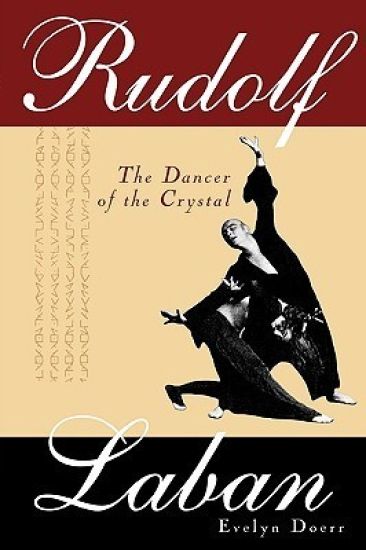
Rudolf Laban

Rudolf Laban

Evelyn Doerr

Scarecrow Press
2007
nidottu
Rudolf Laban, the famed dancer-choreographer and 'founding father' of modern dance, also had experience as a painter, sculptor, and architect, and allowed those skills to influence his innovative choreographic techniques. His important works and his creation of one of the most significant forms of dance notation make him an essential component of dance history. Rudolf Laban: The Dancer of the Crystal examines Laban's training, his teaching experiences, and the discovery and development of his principles of form and movement, paying special attention to his choreographic and philosophical work. Author Evelyn Doerr presents intriguing tidbits of the artist's experience, such as Laban's ambivalent position as the 'dance organizer' of the Nazi party in Germany, embedded in a historical and philosophical context, offering insights to his choreographic processes and the events that shaped his life. The book presents the different stages and elements of Laban's choreography discussing, for example, Laban's "dance-sound-word" instructional approach, his concept of the "movement choir" and examples of its realization, the concepts of eukinetics and choreutics, and a description of how these subjects were taught in Laban's school. Doerr also analyzes important elements in Laban's theories of spatial harmony and of effort, and she investigates his various early systems of dance notation, leading to a detailed explanation of kinetography, Laban's final notational system. A complete bibliography and an appendix of works choreographed between 1897 and 1936 help make this book an important contribution to Laban scholarship and to the dance, theater, and cultural history of Europe in the first half of the 20th century.
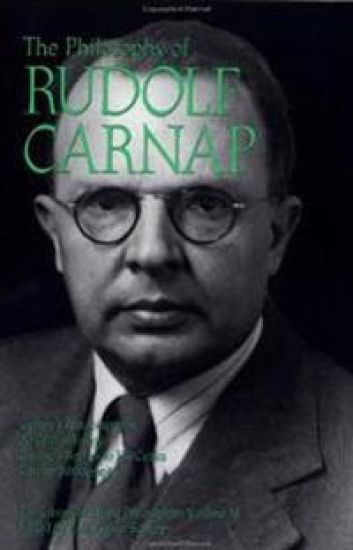
The Philosophy of Rudolf Carnap, Volume 11

The Philosophy of Rudolf Carnap, Volume 11

Rudolf Carnap; Paul Arthur Schilpp

Open Court Publishing Co ,U.S.
1999
pokkari
The first volume of the Library of Living Philosophers (LLP) appeared in 1939, the brainchild of the late Professor Paul A. Schilpp. Schilpp saw that it would help to eliminate confusion and endless sterile disputes over interpretation if great philosophers could be confronted by their capable philosophical peers and asked to reply. As well as a number of critical essays with the chosen philosopher's replies to each essay, each volume would include an intellectual autobiography and an up-to-date bibliography The LLP series has exceeded even Schilpp's expectations, enabling great philosophers to do more than clarify by extending and elaborating their thoughts. A volume in the Library of Living Philosophers is not merely a commentary on a philosopher's work; it is a critical part of that work.
Rudolf Laban

Rudolf Laban

Karen Bradley

CRC Press Inc
2018
sidottu
Rudolf Laban was one of the leading dance theorists of the twentieth century. His work on dance analysis and notation raised the status of dance as both an art form and a scholarly discipline. This is the first book to combine: an overview of Laban’s life, work and in?uences an exploration of his key ideas, including the revolutionary "Laban Movement Analysis" system analysis of his works Die Grünen Clowns and The Mastery of Movement and their relevance to dance theater from the 1920s onwards a detailed exercise-based breakdown of Laban’s key teachings.As a first step towards critical understanding, and as an initial exploration before going on to further, primary research, Routledge Performance Practitioners are unbeatable value for today’s student.
Rudolf Laban

Rudolf Laban

Karen Bradley

CRC Press Inc
2018
nidottu
Rudolf Laban was one of the leading dance theorists of the twentieth century. His work on dance analysis and notation raised the status of dance as both an art form and a scholarly discipline. This is the first book to combine: an overview of Laban’s life, work and in?uences an exploration of his key ideas, including the revolutionary "Laban Movement Analysis" system analysis of his works Die Grünen Clowns and The Mastery of Movement and their relevance to dance theater from the 1920s onwards a detailed exercise-based breakdown of Laban’s key teachings.As a first step towards critical understanding, and as an initial exploration before going on to further, primary research, Routledge Performance Practitioners are unbeatable value for today’s student.
Rudolf Steiner

Rudolf Steiner

Heiner Ullrich

Continuum International Publishing Group Ltd.
2008
sidottu
Rudolf Steiner is indisputably a major thinker in education. Heiner Ullrich's volume offers the most coherent account of Steiner's educational thought. This work is divided into: Intellectual biography; Critical exposition of Steiner's work; The reception and influence of Steiner's work; and, The relevance of the work today.This is a major international reference series providing comprehensive accounts of the work of seminal educational thinkers from a variety of periods, disciplines and traditions. It is the most ambitious and prestigious such project ever published - a definitive resource for at least a generation. The thinkers include: Aquinas, Aristotle, Bourdieu, Bruner, Dewey, Foucault, Freire, Holt, Kant, Locke, Montessori, Neill, Newman, Owen, Peters, Piaget, Plato, Rousseau, Steiner, Vygotsky, West and Wollstonecraft.
Rudolf Polanszky

Rudolf Polanszky

Hans-Ulrich Obrist; Francesco Stocchi

Rizzoli International Publications
2020
sidottu
Rudolf Polanszky s cerebral and uniquely multidisciplinary work embraces the chance occurrences that arise throughout the creative process. The recent works presented in this volume exemplify the canvas-mounted and floor-based assemblages that he has been developing since the 1990s. To make his richly textured assemblages, Polanszky shatters and recombines salvaged industrial materials including acrylic glass, aluminum, silicone, and wire into purely aesthetic forms, freeing them of their original contexts. An essay by Francesco Stocchi considers the artist s work in relation to the concept of the void, while a conversation with the artist by Hans-Ulrich Obrist offers an overview of Polanszky s career. These illuminating texts are accompanied by full-color plates, ample rich details, and photographs of the artist at work in his studio.
Rudolf Steiner Enters My Life

Rudolf Steiner Enters My Life

Friedrich Rittelmeyer

Floris Books
2013
nidottu
"Am I going too far if I declare that not a single one of the opponents took a tenth of the pains I took with anthroposophy before I joined the movement?" -- Friedrich RittelmeyerBorn in southern Germany in 1872, Friedrich Rittelmeyer was a leading figure in the Lutheran church at the beginning of the twentieth century. His was an influential pulpit, and he was a pioneer of a new meditative approach, seeking to re-establish the relevance of the Gospels.His life took an unexpected turn when, in 1911, he encountered Rudolf Steiner for the first time. He spent the next ten years critically appraising and investigating Steiner's ideas. This book is a fascinating and insightful autobiographical account of those years, as well a rigorous scrutiny of anthroposophy.In 1922, he made the decision to leave the Lutheran church and lead a new movement for religious renewal, The Christian Community, in association with Steiner. His final conviction was that Steiner's ideas were truly inspired. First published in English in 1929, this book's honest struggle with key anthroposophical concepts has been influential for generations of people.
Rudolf Hilferding

Rudolf Hilferding

William Smaldone

Northern Illinois University Press
1998
sidottu
Until his death in a Gestapo prison cell, Rudolf Hilferding was one of Europe's most prominent socialist theorists and politicians. A leading economic thinker in the European socialist movement and an important politician in the German Social Democratic Party, he served as Weimar finance minister at the height of the inflation of 1923 and again at the onset of the depression in 1928. At a time when Germany faced one economic and political crisis after another, he led social democracy's efforts to strengthen the republic and to achieve its socialist objectives. This finely crafted intellectual biography illustrates how Hilferding's personal and intellectual journey reflected the failures of social democracy in its confrontation with nazism and communism. After Hitler came to power in 1933, Hilferding in exile continued the struggle against the Nazis. Caught in the maelstrom of the French defeat, in 1940 he was arrested by Vichy authorities and treacherously handed over to the Gestapo. Throughout his eventful life Hilferding analyzed the central issues facing modern socialism, including the development of finance capitalism, the nature of imperialism, the path to socialism, and the organization of socialist parties. For Hilferding, democratic freedom was at the heart of the socialist project, and in rejecting the tyranny of both communism and fascism, he made important contributions to the debate on the nature of totalitarianism. His insights into Marxist theory adn practice are still vital for understanding the development of socialism in the twentieth century.
Rudolf Hilferding

Rudolf Hilferding

William Smaldone

Northern Illinois University Press
2015
pokkari
Until his death in a Gestapo prison cell, Rudolf Hilferding was one of Europe's most prominent socialist theorists and politicians. A leading economic thinker in the European socialist movement and an important politician in the German Social Democratic Party, he served as Weimar finance minister at the height of the inflation of 1923 and again at the onset of the depression in 1928. At a time when Germany faced one economic and political crisis after another, he led social democracy's efforts to strengthen the republic and to achieve its socialist objectives. This finely crafted intellectual biography illustrates how Hilferding's personal and intellectual journey reflected the failures of social democracy in its confrontation with nazism and communism. After Hitler came to power in 1933, Hilferding in exile continued the struggle against the Nazis. Caught in the maelstrom of the French defeat, in 1940 he was arrested by Vichy authorities and treacherously handed over to the Gestapo. Throughout his eventful life Hilferding analyzed the central issues facing modern socialism, including the development of finance capitalism, the nature of imperialism, the path to socialism, and the organization of socialist parties. For Hilferding, democratic freedom was at the heart of the socialist project, and in rejecting the tyranny of both communism and fascism, he made important contributions to the debate on the nature of totalitarianism. His insights into Marxist theory adn practice are still vital for understanding the development of socialism in the twentieth century.
Rudolf Steiner in the Waldorf School

Rudolf Steiner in the Waldorf School

Rudolf Steiner

SteinerBooks, Inc
1996
nidottu
Lectures and addresses, 1919-1924 (CW 298) This book contains all of the more-or-less informal talks given by Steiner in the Stuttgart school from 1919 to 1924. Included are speeches given by him at various school assemblies, parents' evenings, and other meetings. Steiner spoke here with spontaneity, warmth, and enthusiasm. Readers will find a unique glimpse of the real Steiner and how he viewed the school and the educational philosophy he brought into being. German source: Rudolf Steiner in der Waldorfschule, Vort ge und Ansprachen, Stuttgart, 1919-1924 (GA 298).
Faculty Meetings with Rudolf Steiner

Faculty Meetings with Rudolf Steiner

Rudolf Steiner

SteinerBooks, Inc
1998
pokkari
The Waldorf school movement has its roots in the chaotic period following World War I. Struggling to create the first school, Rudolf Steiner worked on every detail-lesson plans, religious education, school hours, course resources, administration, finance, and child study. Guiding the faculty, Steiner moved toward his goal of creating a vehicle for social transformation. These two volumes span 1919 to 1924 and cover, meeting by meeting, the development of the first Waldorf school. Participating in a work in progress, Steiner deals with an amazing array of problems, frustrations, successes, and failures. His sleeves rolled up and his sight on a vision that he made a reality, Steiner lays the foundations of Waldorf education. This detailed look behind the scenes will interest not only teachers, but also parents, students, and anyone who wants to know how a successful worldwide school movement arose. German source: Konferenzen mit den Lehren der Freien Waldorfschule 1919-1924 (GA 300a-c)
Rudolf Steiner and Christian Rosenkreutz

Rudolf Steiner and Christian Rosenkreutz

Peter Selg

SteinerBooks, Inc
2012
nidottu
"Only in our time has it become possible once again to unlock the sources of Rosicrucian wisdom and allow them to flow into the whole of culture... Christian Rosenkreutz has always lived among us and he is with us today too as the guide of spiritual life.... "The spiritual stream related to Christian Rosenkreutz offers the most potent assistance to those who strive to understand the Christ impulse." --Rudolf SteinerRudolf Steiner spoke often of the relationship of Anthroposophy or Spiritual Science to Rosicrucianism, but he spoke less of the being of Christian Rosenkreutz himself. As he said, "To speak of Christian Rosenkreutz presumes a profound trust in the mysteries of the life of the spirit--a trust or faith not in the person of Christian Rosenkreutz, but in the mysteries of spiritual life." For Steiner, Christian Rosenkreutz was active in at least three ways. First, as one of the "great leaders of humanity," he worked to bring esoteric spirituality into the modern world and to lead it into the future. Second, as "the greatest teacher of Christianity" he worked to bring to humanity true "heart knowledge" of Christ through the continued unveiling of the Mystery of Golgotha in the etheric. Third, as a concrete, particular individual being, Steiner had a living, actual, personal relationship with him. As such, because of our failure to understand, Steiner called him "a noble martyr...who, through his way of working, endured, and will in future endure, more than any other person. I say 'person, ' for the suffering of Christ was the suffering of a god."In the first part of this inspiring book--a work of devotion both to Rudolf Steiner and to Christian Rosenkreutz--Peter Selg, as "The Great Servant of Christ Jesus," gives a detailed, chronological, and fascinating account of Steiner's portrayal and, as much as possible, experiences of Christian Rosenkreutz. He shows how Steiner had essentially two teachers: the Master Jesus (Zoroaster) and Christian Rosenkreutz. Moreover, Selg shows how these two, with Rudolf Steiner, unfolded spiritual science for our time. In the second part, he shows how all this culminates, astonishingly and miraculously, in the Michael School as it manifested in the First Class. Rudolf Steiner and Christian Rosenkreutz concludes with an appendix containing the text of the original (1614) Fama, or "Announcement of the Rosicrucian Brotherhood." All those interested in the esoteric foundations of Anthroposophy or in the true meaning of Rosicrucianism will be find this book of great value.
Rudolf Steiner and the Fifth Gospel

Rudolf Steiner and the Fifth Gospel

Peter Selg

SteinerBooks, Inc
2009
nidottu
Rudolf Steiner received The Fifth Gospel--unrecorded events from the so-called lost years of the life of Jesus, obtained by grace and by spiritual research into the akashic record--as a "sacred obligation" to which he experienced a deep sense of responsibility. However, he never finished the project of unveiling it. Had he done so, not only Anthroposophy but also Christianity would have received an enormous spiritual gift: a concrete, soul-filled description of the Mystery of Golgotha. His deeply moving and often startling lectures in 1913 are thus fragmentary, giving the near-tragic impression that, because those who heard or read them did not take them up with sufficient seriousness and inner dedication, humanity has suffered an inestimable loss. "Steiner traveled through various German cities to give personal summaries of the Fifth Gospel. But in each center, he encountered the same "sleepiness." The thorns were already starting to prick; he seemed to begin hiding the content rather than disclosing it. He was forced to see in all clarity that the Fifth Gospel was not being appropriately received." (Andrei Bely) In this dramatic book, Selg tells the story of those lectures. He recounts their background and many of the most important episodes. He illumines and gives context to the excerpts with a profound yet accessible commentary. Most important, he offers insights into their importance to both Steiner and the hearts of those who heard and understood--even those who felt inadequate to the task. Those who has read Steiner's lectures on the Fifth Gospel and wondered about their significance will find here an inspiring guide to further meditation, while those who have not yet read them will find many reasons for doing so and discover a new way of understanding Steiner and his mission. Those unfamiliar with Steiner but wish to fine a meaningful, heartfelt way to Jesus Christ and the Christian mystery will discover a new way of understanding a new path to Christ. As Steiner said: "Knowing something of the significance of what Jesus lived through in preparation for the Mystery of Golgotha depends not so much on being able to recall...the events I have attempted to recount, but more on achieving a profoundly moving and shattering inner impression of what this person Jesus of Nazareth had to suffer in order to approach the Mystery of Golgotha and allow the Christ impulse to flow into earthly evolution. By reawakening these feelings and sensations of suffering in ourselves...we evoke a living impression of the Christ impulse. The more we succeed in reliving the surging, weaving experiences of a being such as Jesus of Nazareth, the more deeply we delve into these mysteries. (The Fifth Gospel)
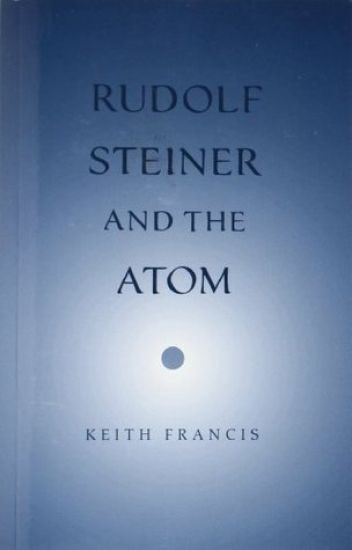
Rudolf Steiner and the Atom

Rudolf Steiner and the Atom

Keith Francis

Adonis Press
2013
nidottu
Can Rudolf Steiner's spiritual science shed any meaningful light on one of the most materialistic of human pursuits: research on the atom?Physics teacher Keith Francis believes it can. He traces the concept of the atom from ancient Greece to contemporary quantum physics, all the time relating this compelling quest to relevant statements made by Rudolf Steiner.He concludes that there are, in fact, many connections and parallels between Steiner's thinking and atomic research, and that each illuminates the other in a revealing and inspiring way.This is an ideal book for Steiner-Waldorf teachers looking for a deeper understanding of science.